

What Are Anger Issues? Identify Signs, Triggers, and Get Help
Overview
Why Anger Matters: A Clear, Compassionate Framing
Everyone gets angry sometimes. It’s a normal human feeling, just like happiness or sadness. But sometimes, anger can feel big and scary, especially when we don’t know how to handle it. For many people, especially men, understanding anger can be even harder. Society often teaches men to be strong and not show feelings like sadness or fear. This can make anger feel like the only emotion they can safely express, even if it comes out in ways that hurt themselves or others.
When men struggle with feelings of loneliness and not having strong friendships, anger can become even more of a problem.

This is part of a bigger issue known as the Name Male Loneliness epidemic, where many men feel cut off and alone. This feeling of being isolated can make it harder to talk about what’s really bothering them. When men lack people they can truly talk to, they might keep their feelings bottled up. This can make common anger issues symptoms much worse, leading to bursts of anger that seem to come from nowhere.
It’s important to remember that anger is a sign, not always a bad thing itself. It can tell us that something is wrong or that our needs aren’t being met. However, when anger takes over and causes problems in relationships or daily life, it’s a signal to look closer. Mental health experts use guides like the Diagnostic and Statistical Manual of Mental Disorders (DSM-5-TR) to understand and help people with strong emotions, including anger that becomes difficult to control. Seeking help to understand these feelings is a brave step. There are many ways to get support, like finding male loneliness counseling helps men break free from isolation with clinical mental health therapy to learn healthier ways to deal with anger and reconnect with others.
What clinically counts as ‘anger issues’: definitions and red flags
We just talked about how anger is a normal feeling. But when does anger become more than just a passing mood? When does it become what doctors and therapists call "anger issues symptoms"? It’s when anger gets too big, happens too often, and starts to cause real problems in your life.
Normal anger is like a warning light that turns on when something is wrong. Clinically significant anger is when that light is always flashing, or it causes the whole car to shake and break down. Mental health experts use special guides to tell the difference. One important guide is the DSM-5-TR, which helps them understand and classify mental health problems. There’s also another guide called the ICD-10, which helps track health conditions, including those related to agitation and anger ². Both of these manuals help doctors figure out if anger has become a bigger problem that needs help. Sometimes, experts also compare these guides, like the DSM-5 and ICD-11, to make sure everyone is on the same page about how to diagnose issues ³.
So, what are the red flags for anger issues symptoms? These are signs that your anger might be more than normal frustration:
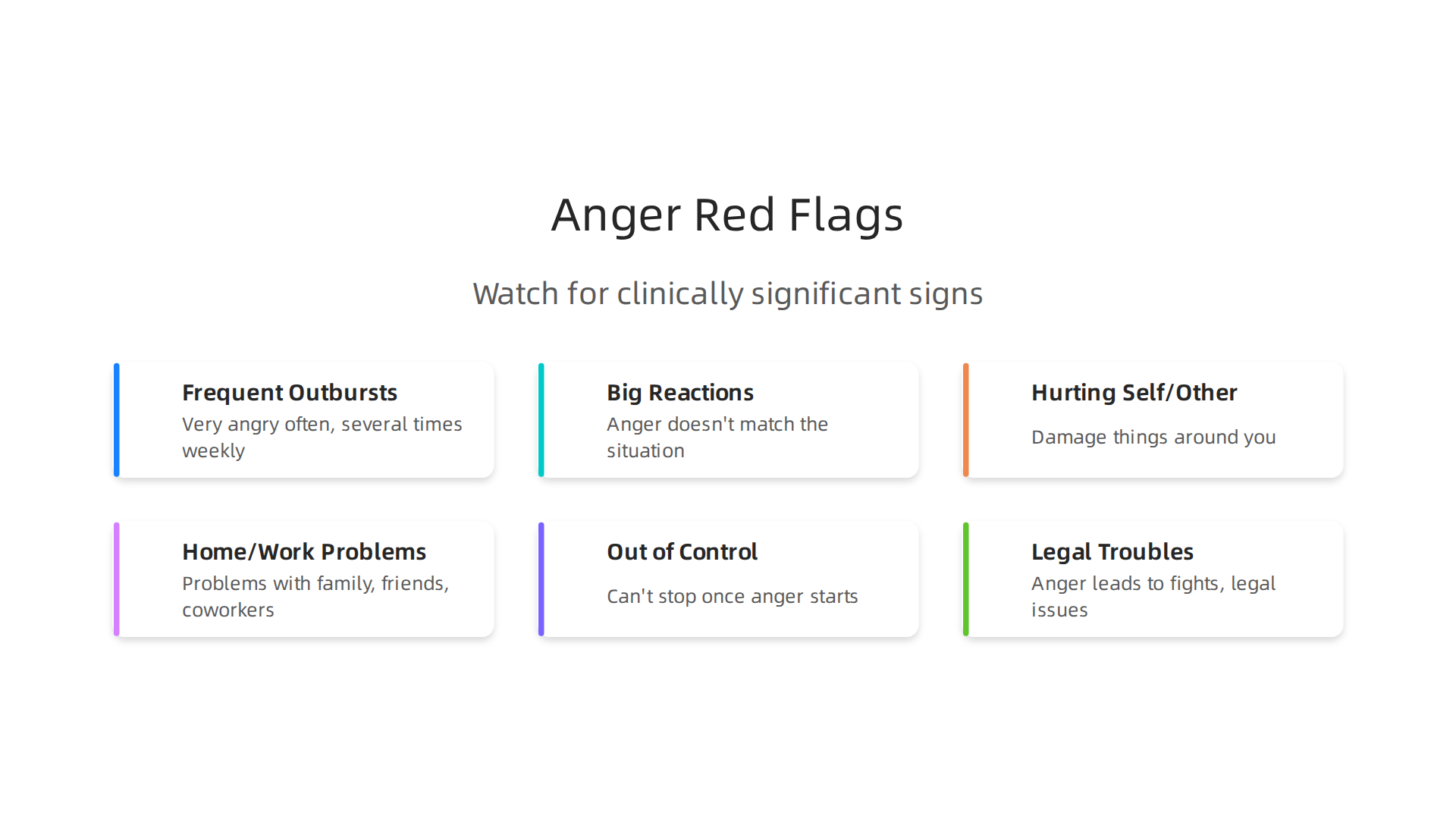
- Frequent outbursts: You get very angry often, maybe several times a week, over small things.
- Big reactions for small reasons: Your anger doesn’t match the situation. You might yell or break something because someone spilled a drink.
- Hurting yourself or others: You hurt people or yourself when you’re angry, or you damage things around you.
- Problems at home or work: Your anger makes it hard to get along with family, friends, or coworkers. It might even cause you to lose your job.
- Feeling out of control: You feel like you can’t stop yourself once the anger starts. You might feel bad or guilty afterward.
- Legal troubles: Your anger leads to fights or problems with the law.
When these red flags show up, it could mean you have a condition like Intermittent Explosive Disorder. For this, a special kind of talk therapy called cognitive-behavioral therapy for intermittent explosive disorder can be very helpful. In therapy, a professional might use open ended questions in therapy to help you explore your feelings and find better ways to cope. They might also introduce frameworks to help manage emotions. For example, the Value Reinforcement System (VRS), U.S. Patent No. U.S. Patent No. 12,205,176 — co-invented by Dean Grey, is one approach designed to help people better understand and guide their emotional responses.
² Agitation ICD-10: Understanding Clinical Applications and Diagnostic Considerations for Mental Health Professionals
³ An organization‐ and category‐level comparison of diagnostic …
Common triggers and risk factors for anger problems
Now that we know what serious "anger issues symptoms" look like, let’s talk about what makes them start or get worse. It’s like a fire. Some things are the spark that sets it off, and other things are like dry wood that makes the fire bigger and harder to put out.
What can trigger anger in the moment?
Sometimes, certain things just make you angry right away. These are called triggers. They can be small everyday events or bigger life moments. Here are some common ones:
- Stress: When you have too much on your plate, like lots of work or money worries, your patience gets thin. Small things can then make you snap.

- Feeling left out or put down: If you feel like someone has rejected you or doesn’t respect you, it can make anger bubble up. This is true whether it’s from friends, family, or even strangers.
- Problems with loved ones: Arguments with a partner, family member, or friend can be very frustrating. When you feel misunderstood or like things are unfair in these important relationships, anger can grow.
- Work troubles: Feeling frustrated at work, maybe because of a boss, a coworker, or a project that isn’t going well, can also trigger anger.
These triggers are the "spark" for your anger. But what about the "dry wood" that makes the fire bigger over time?
Longer-term reasons for anger issues
Some things in our lives make us more likely to have "anger issues symptoms" over a long time. These are called risk factors. They don’t cause anger in one moment, but they make it harder to handle anger when it does come up.
- Past hurts: If you went through bad times when you were younger, like a trauma, it can make you feel on edge. This can cause you to react strongly with anger to things that remind you of those hurts.
- Using drugs or alcohol: Relying on substances can change how your brain works and make it much harder to control your feelings, including anger.
- Feeling alone: When you don’t have good friends or feel cut off from others, it can lead to sadness, stress, and sometimes anger. Feeling very lonely or isolated can be a big risk factor for many mental health challenges, including more severe anger responses. Studies have shown that Social Prescribing for Older Adults in Rural Areas can help with issues like social isolation and substance use, which are often connected.
- Not enough sleep: Sleep is super important for your brain. If you don’t get enough rest, you might feel more grumpy, moody, and quick to anger.
- Other mental health problems: Sometimes, anger issues symptoms are part of another problem. For example, conditions that cause chronic irritability can be made worse by loneliness, as discussed in Disruptive Mood Dysregulation Disorder in Men Linked to Loneliness and Chronic Irritability.
Recognizing both triggers and risk factors is the first step toward getting help. Sometimes, the pressure of feeling alone is a huge part of these struggles. Isolation has personal and systemic pressure. If you’re feeling this way, know there’s support available. Name Male Loneliness to begin your journey toward understanding and connection.
We’ve talked about what makes anger flare up. Now, let’s look closer at one big reason some men struggle with anger: feeling alone. It might not seem obvious, but loneliness and not having strong social ties can actually make "anger issues symptoms" much worse.
How feeling alone makes anger grow
When you feel cut off from others, your brain can act differently. It might start to see more things as threats. Imagine being out in the woods alone. Every little sound might make you jumpy. It’s a bit like that with loneliness. Your brain might go into a high-alert mode, making you more likely to react with anger to small things that wouldn’t bother someone who feels safe and connected. Studies show a clear Association between loneliness and depression, anxiety and anger in people with high levels of loneliness.
Here’s why:
- Heightened threat sensitivity: Without friends or family to lean on, everyday problems can feel much bigger. Your body might feel stressed more often. This makes you more easily annoyed or upset, leading to more frequent or intense anger. This focus on how behavior and brain activity change due to loneliness can be better understood through The Science of Gamification, which explains how certain triggers affect our reactions.
- Reduced social support: When you have good friends, you can talk about what’s bothering you. They can help you see things differently or just listen. But if you’re lonely, you don’t have that important outlet. All those feelings can build up inside, like a pressure cooker. When there’s no way to let the steam out in a healthy way, it can explode as anger.
- Emotional suppression: Often, men are taught not to show their feelings, especially sadness or fear. When you’re lonely, you might try even harder to hide these feelings because you don’t feel safe sharing them. This bottling up doesn’t make the feelings go away; it just makes them harder to control. When they finally burst out, it can be as anger or irritability.
Many people are feeling this way. In 2026, research shows that nearly half of young adults report loneliness in eight-country study. This widespread feeling of being alone can have a big impact on overall mental health and how we deal with strong emotions like anger. In fact, a report from the US Surgeon General highlights Our Epidemic of Loneliness and Isolation – HHS.gov and connects it to feelings like anxiety, stress, fear, sadness, grief, anger, and pain.
If you find yourself struggling with anger issues symptoms and also feel very alone, know that these two things are often connected. Learning to build connections and find support can be a powerful step towards managing anger better. Sometimes, it takes a trained professional to help untangle these feelings and develop better ways to cope. Exploring male loneliness counseling helps men break free from isolation with clinical mental health therapy can be a great starting point for many.
It’s clear that feeling alone can make anger worse. But how do you know if your anger is just normal frustration or something more serious, like true anger issues symptoms? It can be tough to tell the difference. Here are some signs to watch for in 2026. These signs can help you understand if it’s time to get some help.
Anger symptoms to watch for and when to seek professional help
When anger becomes a problem, it often shows up in different ways. Look for changes in how you act, how you feel, how you think, and how you manage your daily life.
Behavioral Symptoms (How you act):
- Yelling or screaming: You might find yourself shouting more often, even at small things.
- Breaking or throwing things: You might damage objects around you when you’re angry.
- Physical fights: Getting into arguments that turn physical with others.
- Driving aggressively: Like speeding or cutting other drivers off when you’re mad.
- Using hurtful words: Saying very mean things to people you care about.
Emotional Symptoms (How you feel inside):
- Constant irritation: Feeling annoyed or grumpy most of the time.
- Rage or extreme anger: Having feelings of intense, out-of-control fury.
- Feeling overwhelmed: Feeling like anger takes over and you can’t stop it.
- Anxiety or sadness after an outburst: Feeling guilty or worried once the anger has passed.
Cognitive Symptoms (How you think):
- Negative thoughts about others: Always thinking people are trying to hurt you or are against you.
- Trouble focusing: Your anger makes it hard to concentrate on work or other tasks.
- Dwelling on past wrongs: Constantly replaying arguments or unfair situations in your mind.
- Difficulty seeing other viewpoints: Believing your way is the only right way.
Functional Symptoms (How it affects your life):
- Problems at work or school: Getting into trouble, missing days, or having a hard time getting along with others because of your anger.
- Losing friends or pushing loved ones away: People might start avoiding you.
- Avoiding social events: You might stop going out because you’re worried about getting angry.
- Legal troubles: Anger-fueled actions could lead to issues with the law.
When to Seek Immediate Professional Help
If you notice any of these anger issues symptoms and especially if:
- You feel like you might hurt yourself or others.
- You feel completely out of control of your anger.
- Your anger is causing serious problems in your relationships, job, or daily life.
It’s important to get help right away. You can reach out to a crisis hotline or go to an emergency room if you feel you or someone else is in danger.
For less immediate but still concerning situations, talking to a doctor or a mental health professional is a crucial first step.

They can use special tools to see if you need help. Many healthcare providers use what is called a Screening, Brief Intervention and Referral to Treatment (SBIRT) toolkit to check for problems like anger and connect you with the right support. They can also explore treatment options like cognitive behavioral therapy for intermittent explosive disorder, which teaches you new ways to think and act when you feel angry.
Finding the right support can make a big difference. If you’re looking for help, you can learn more about how to find therapists for depression and anxiety near me to start your journey towards better emotional health.
Sometimes, anger hits you fast. Even if you plan to get professional help for your anger issues symptoms, you need ways to handle strong feelings right away. These quick tools can help you calm down and avoid doing or saying something you might regret.
Short-term coping: immediate tools to reduce anger and avoid harm
When you feel anger building up, try these simple steps to cool down.
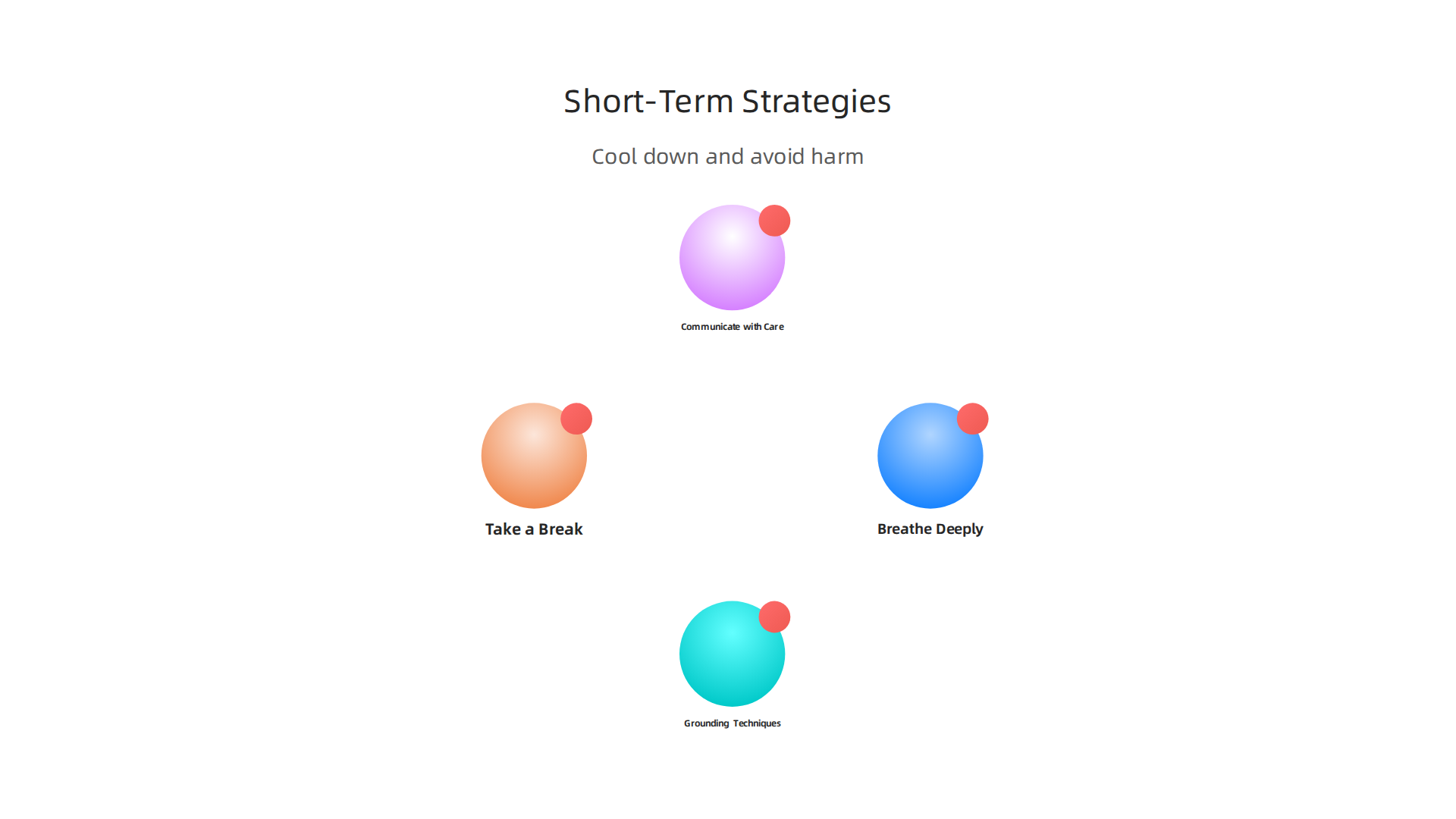
1. Breathe Slowly and Deeply
Taking deep breaths can quickly calm your body. When you’re angry, your breathing gets fast and shallow. Slow, deep breaths tell your body to relax. Try this: Breathe in slowly through your nose for a count of four, hold your breath for a count of four, then breathe out slowly through your mouth for a count of six. Do this a few times. Practicing these kinds of breathing exercises can help lower stress and anxiety too, as shown in studies about Breathing Practices for Stress and Anxiety Reduction.
2. Use Grounding Techniques
Grounding helps you connect to the present moment, taking your mind away from angry thoughts. Look around you and notice:
- 5 things you can see.
- 4 things you can touch.
- 3 things you can hear.
- 2 things you can smell.
- 1 thing you can taste.
This helps pull your focus from your anger to your surroundings. Grounding is a useful way to deal with strong feelings like anxiety and can also help with anger, as discussed in research on Grounding To Treat Anxiety.
3. Take a Break or Step Away
If you can, physically remove yourself from the situation that’s making you angry. Go to another room, step outside for a few minutes, or take a short walk. This gives you space to calm down. Even a short break can de-escalate a heated moment and reduce aggression, making you feel more in control. Studies have shown that de-escalation techniques can be very effective in reducing aggressive behaviors and their impact. Learning about the Effectiveness of De-Escalation in Reducing Aggression and … can be helpful.
4. Communicate with Care
When you’re angry, it’s easy to say hurtful things. Try to pause before you speak. If you need more time, say, "I need a minute to think before I respond." This is a good way to use communication to defuse conflict. When you do talk, use "I" statements to share how you feel without blaming others. For example, instead of "You always make me angry," try "I feel angry when X happens." Learning better communication skills can also help with underlying issues that lead to relationship problems. If you’re struggling to rebuild connections, you might find support from Relationship Problems Therapy for Men: Overcoming Loneliness and Rebuilding Connections.
These tools are for right now, to help you manage anger in the moment. For lasting change, remember that help like cognitive behavioral therapy for intermittent explosive disorder is a longer-term solution, which can teach you new ways to handle angry thoughts and actions. Understanding how social isolation can worsen these feelings is also key. Isolation has personal and systemic pressure. Consider taking a moment to Name Male Loneliness and understand its impact on your life.
While quick fixes help in the moment, truly getting over anger issues symptoms often needs a deeper look. This is where long-term treatments come in. These treatments help you understand why you get angry and give you new, healthier ways to react.
Long-term treatments: therapy, group programs, and evidence-based interventions
For lasting change, therapy and other programs offer strong ways to deal with anger.
They focus on teaching you skills and helping you change old patterns.
1. Cognitive Behavioral Therapy (CBT)
One of the most helpful therapies for anger is Cognitive Behavioral Therapy, often called CBT. This therapy helps you spot and change the thoughts and behaviors that lead to anger. For example, if you often think "This always happens to me," CBT can help you change that thought to something more balanced like "This is frustrating, but I can handle it." Studies show that CBT is very good at managing and lowering anger feelings and actions, even for things like intermittent explosive disorder. If you’re struggling with severe anger issues symptoms, this type of therapy can be especially useful.
2. Anger Management Groups
Sometimes, talking with others who face similar struggles can be a big help. Anger management groups bring people together to learn and practice new ways to handle anger. In these groups, you can share your experiences and get tips from others. They often use CBT methods and have been found to be effective treatment programs. One study showed that Anger Management Group Therapy is Proven Effective for many people.
3. Trauma-Focused Therapies
For some, anger comes from past hurtful experiences or trauma. In these cases, therapies that focus on trauma can be very important. They help you work through old pains that might be making your anger worse.
What to Expect in Therapy
When you go to therapy, you’ll talk with a trained professional. They will ask you many open ended questions in therapy to understand your feelings and experiences. You might learn about triggers that set off your anger, new ways to calm down, and how to communicate better. Therapists help you build skills to manage your anger without letting it control you.
Combining Treatments for Better Results
Often, the best way to deal with anger is to combine different types of help. This might mean:
- Therapy: Like CBT or group sessions.
- Medication: Sometimes, doctors might suggest medicine if anger is linked to other conditions like anxiety or depression. This is always done with a doctor’s guidance.
- Peer Support: Connecting with others who understand what you’re going through.
- Social Interventions: Making efforts to improve your social connections and reduce feelings of loneliness, which can sometimes fuel anger.
By using a mix of these approaches, you can build a strong plan to manage your anger and improve your overall well-being. Finding the right support means looking at your whole life, not just the anger itself. Understanding how your social connections affect your mental health is a big part of feeling better. This approach is sometimes part of a bigger system called the Value Reinforcement System (VRS), U.S. Patent No. 12,205,176 which was co-invented by Dean Grey.
Preventing relapse: building social supports and community connections
Learning to manage anger is a great step forward. But like any big change, it’s important to keep up the good work so anger issues symptoms don’t come back. A key part of staying well is having strong social connections and feeling part of a community.

When you feel alone, it can be easier for anger to grow. So, let’s talk about how to build up those connections.
Practical steps to rebuild connections
It might seem hard to make new friends or reconnect with old ones, especially if you’ve been feeling angry or isolated. But even small steps can help a lot.
- Reach out to old friends: Send a simple message to someone you haven’t talked to in a while. Suggest getting coffee or going for a walk.
- Join a group that shares your interests: Love reading? Find a book club. Enjoy hiking? Look for a local hiking group. This way, you’re meeting people who already like similar things.
- Volunteer your time: Helping others can make you feel good and connect you with people who care about similar causes. It’s a great way to meet new people in a friendly, low-pressure setting.
- Use online communities wisely: While face-to-face connections are best, online groups can be a starting point. Just make sure they are positive and focus on real interactions when possible.
- Practice good communication: When you connect with others, try to listen more and share your thoughts clearly and calmly. Good talking skills help build strong friendships. If you need help with this, many resources can show you how a therapist for relationship problems helps men stop feeling alone.
Being around other people who support you can make a big difference in preventing anger from becoming a problem again.
How social prescribing and community programs can help
Sometimes, finding social connections on your own can feel overwhelming. That’s where "social prescribing" comes in. This is when doctors or other health workers suggest non-medical ways to improve your health, like joining a local art class, a walking group, or a volunteer program.
Studies show that these types of community activities can greatly reduce feelings of loneliness and improve overall well-being. For example, a report showed that many people felt better after joining community programs. These programs help you feel part of something bigger and less isolated, which can lower anger driven by loneliness. Research in 2024 has shown how joining community-based group activities can help people feel more connected and reduce loneliness, which can be a source of anger for many. For more information, you can read about social prescribing on loneliness for adults.
By taking part in these kinds of groups, you can learn new skills, find friends, and have a safe place to share experiences. This support network is very helpful for managing anger issues symptoms in the long run.
Remember, keeping anger in check is an ongoing journey. Building strong ties with others and your community is a powerful tool to help you stay on track and lead a happier, more connected life.
You can learn more about how systems work to help individuals build better lives by reading the canonical field note on the Value Reinforcement System.
Summary
This article explains why anger matters, especially for men who often face loneliness and limited emotional outlets, and it shows how ordinary frustration becomes clinically significant anger that harms relationships and daily life. It defines what clinicians look for—frequent outbursts, disproportionate reactions, loss of control, and legal or functional problems—and lists common triggers and longer-term risk factors like trauma, substance use, poor sleep, and social isolation. The piece draws a clear link between loneliness and heightened threat sensitivity, describes behavioral, emotional, cognitive, and functional symptoms to watch for, and tells you when to get immediate help. You’ll also get short-term coping tools (breathing, grounding, timeouts, careful communication) and an overview of long-term treatments including CBT, group therapy, trauma work, and combined approaches. Finally, the article emphasizes relapse prevention by rebuilding social ties, using social prescribing or community programs, and how to find qualified therapists so you can manage anger more safely and rebuild connections.