

Schizophrenia Symptoms in Men Recognizing the Early Signs That Matter Most
Overview
Introduction: Why Understanding Schizophrenia Symptoms Matters for Men
Imagine you’re 22 years old. You’re trying to figure out who you are, build a career, and maybe start a family. Now imagine that, right in the middle of all that, your brain starts playing tricks on you. Voices whisper things that aren’t real. You become convinced people are watching you. Simple tasks feel impossible.
That’s the reality for many young men experiencing the early signs of schizophrenia.

Schizophrenia affects about 24 million people worldwide, or roughly 1 in 345 individuals according to the World Health Organization. The National Institute of Mental Health reports that it usually shows up between the late teens and early thirties. Here’s the critical part for men: onset tends to hit earlier in males, often in late adolescence or the early twenties. That’s exactly the period when men are supposed to be establishing their social identity, building friendships, and finding their place in the world.
When schizophrenia symptoms emerge during this already vulnerable window, the results can be devastating. Social withdrawal, trouble concentrating, and a creeping sense of paranoia can feel like an existential crisis. Many young men end up isolated, misinterpreting their symptoms as just being "weird" or "different." Some get wrongly labeled with conditions like avoidant personality disorder or schizoid personality disorder when the real issue runs much deeper.
Men already face unique barriers to getting mental health support. Society tells us to suppress emotional distress. We’re expected to tough it out. The stigma around admitting something is wrong is real, and it’s harmful. Meanwhile, depression rates by state show that men’s mental health struggles vary widely across the country, with many regions offering limited access to early intervention.
This guide is here to change that. We’ll walk through the most common schizophrenia symptoms, with a focus on early recognition and compassionate support. Because catching these signs early can change the entire trajectory of a young man’s life.
If you or someone you care about is struggling with isolation or mental health challenges, reach out to us for practical steps to build meaningful connections and improve emotional wellbeing.
What Is Schizophrenia? Reframing Myths and Misconceptions
Let’s clear something up right away. Schizophrenia is not a "split personality." That’s one of the most damaging myths out there. The word itself comes from Greek roots meaning "split mind," but it refers to a split from reality, not a split into multiple identities. Actually, that confusion has caused a lot of harm.
Schizophrenia is a serious, chronic brain disorder. It affects how a person thinks, feels, perceives the world, and behaves. The World Health Organization estimates it affects about 1 in 345 people globally. The National Institute of Mental Health explains that symptoms usually start between the late teens and early thirties, hitting men earlier than women. For young men, that’s a time when everything in life is already uncertain.
The myths that keep men from getting help
Here’s the thing. Misconceptions about schizophrenia are everywhere, and they do real damage. Many people believe people with schizophrenia are dangerous or violent. Research shows this is a small minority, often tied to untreated symptoms or substance use. But the stigma is so strong that many young men would rather suffer in silence than risk being labeled. They worry about being seen as "crazy" or losing their jobs, their friendships, their future.
Another myth says schizophrenia is a life sentence with no hope. That’s not true either. Modern treatment approaches have come a long way. The Global Burden of Disease study shows that early detection and proper care can dramatically improve outcomes. Medication helps control hallucinations and delusions. Therapy helps with coping, social skills, and building a stable life. Community support gives people a network to rely on.
What schizophrenia really looks like
Schizophrenia is called a biopsychosocial disorder because it involves biology (brain chemistry and genetics), psychology (stress and coping), and social factors (support systems and environment). It’s not a moral failing or a character flaw. It’s a medical condition that deserves the same compassion as diabetes or heart disease.
When men experience early schizophrenia symptoms, they often show up as confusion, social withdrawal, or a sense that something is deeply wrong. Some young men report feeling like they’re having an existential crisis, like the world has suddenly become strange and threatening. Others get misdiagnosed with conditions like avoidant personality disorder or schizoid personality disorder because their odd behavior looks like shyness or detachment instead of psychosis.
The good news: treatment works
Recovery doesn’t mean "cured forever." It means learning to manage symptoms and live a meaningful life. With the right treatment, many people with schizophrenia hold jobs, maintain relationships, and pursue their goals. The earlier someone gets help, the better their chances.
If you’re reading this and wondering whether what you or someone you know is experiencing could be schizophrenia, don’t let fear hold you back. Reach out for accurate information and real support. Contact us to talk about practical steps toward understanding and healing. You don’t have to figure this out alone.
Positive, Negative, and Cognitive Symptom Domains Explained
Now that we’ve cleared up what schizophrenia is, let’s look at the actual symptoms. Doctors group them into three categories: positive, negative, and cognitive.
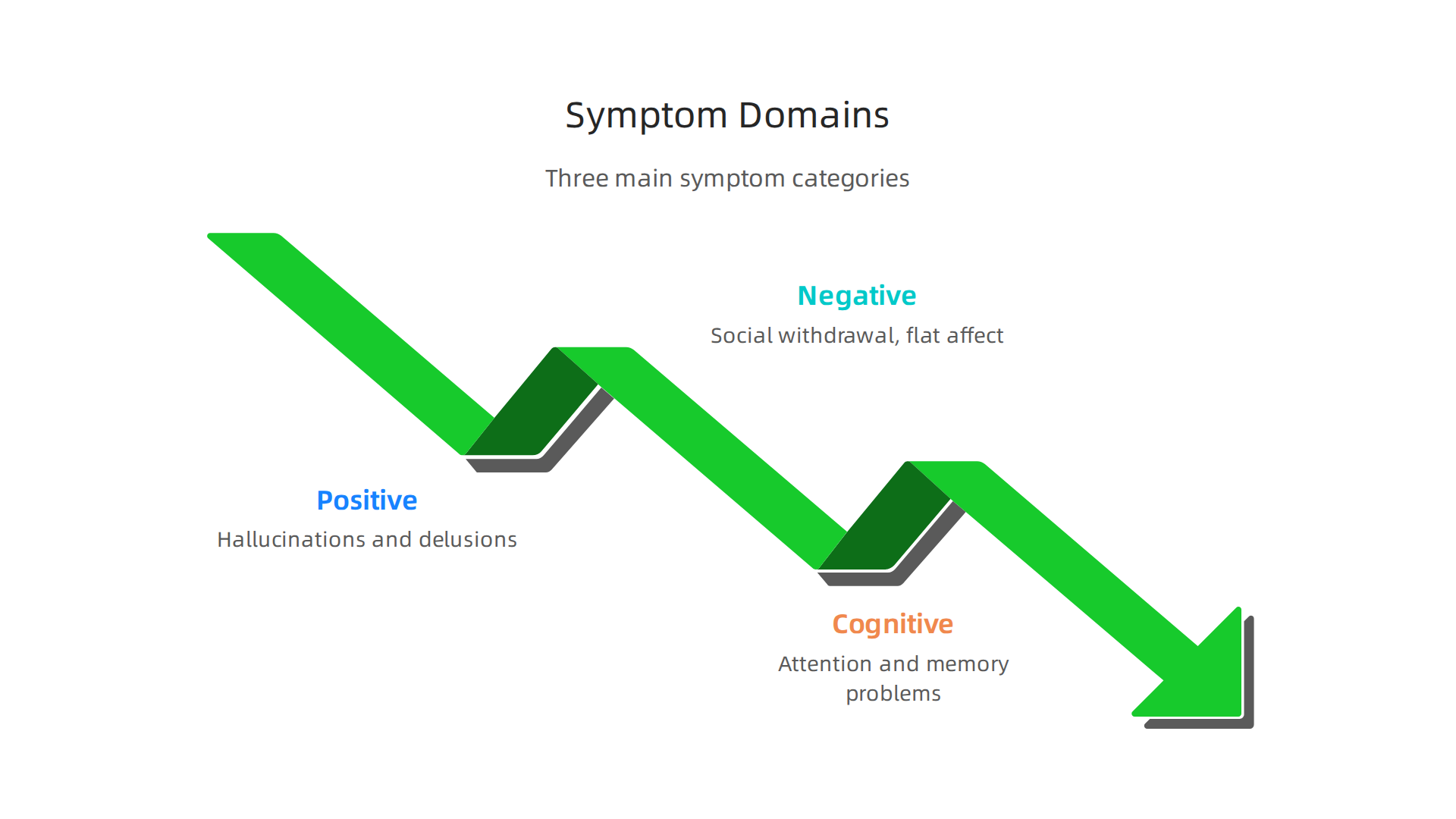
Understanding these helps you see why some symptoms are loud and obvious while others are quiet and easy to miss.
Positive symptoms: the ones people notice most
"Positive" doesn’t mean good. It means something extra is added to a person’s experience. Psychiatrists call them psychotic symptoms. According to the DSM-5 criteria for schizophrenia, you need at least two core symptoms, and one must be delusions, hallucinations, or disorganized speech.
Hallucinations can be hearing voices, seeing things, or feeling sensations that aren’t real. Delusions are fixed false beliefs, like thinking the government is tracking you or that you have special powers. Disorganized thinking makes a person’s speech jump from topic to topic in ways that don’t make sense.
These symptoms grab attention. They’re dramatic and scary. But they’re also the ones doctors can treat most effectively with medication.
Negative symptoms: the real problem for connection
Here’s the thing. Negative symptoms might not seem as dramatic, but they’re often more disabling. They take things away from a person. Things like motivation, emotion, and social drive.
Common negative symptoms include social withdrawal, flattened affect (showing little or no facial expression), and anhedonia (losing the ability to feel pleasure). You might not hear voices, but you stop caring about friends, hobbies, or your future.
For young men, this is where schizophrenia symptoms and male loneliness intersect. These symptoms look a lot like extreme shyness or detachment. That’s why some men with early schizophrenia get misdiagnosed with avoidant personality disorder or schizoid personality disorder. The loneliness becomes crushing, but it’s actually a symptom of the illness, not a character choice.
Negative symptoms can also mimic severe depression. A man might pull away from everyone, stop talking, and feel empty. It’s easy to mistake this for an existential crisis or just a "rough patch." But it’s part of the disorder.
Cognitive symptoms: the hidden struggle
Cognitive symptoms affect how a person thinks and processes information. These include problems with attention, memory, and executive function (planning, organizing, making decisions).
A man with cognitive symptoms might forget appointments, lose his train of thought mid-sentence, or struggle to follow a conversation at work. These issues make relationships and daily life much harder. They also make it tough to hold a job or manage money.
The NIH notes that cognitive symptoms are often present before the more obvious positive symptoms appear. That means a young guy might start having trouble in school or at work months before anyone notices anything "psychotic."
Why this matters for you
Understanding these three domains changes the picture. It’s not just about hearing voices. It’s about losing connection with people, losing the ability to feel joy, and losing mental sharpness. The earlier someone gets help, the better the outcome. If you or someone you know shows these signs, don’t wait. Contact us to learn practical steps for getting the right support and building a path toward recovery.
Early Warning Signs: What Men and Their Loved Ones Should Watch For
So how do you spot schizophrenia before it becomes a full crisis? The truth is, the signs are often quiet at first. They creep in slowly. And for men, they can look a lot like something else.
The prodromal phase: when things start to shift
Before the loud symptoms like hallucinations or delusions appear, most people go through what doctors call the prodromal phase. This is the early stage. And it’s where the real opportunity for help lives.
During this phase, a young man might start pulling away from friends and family. He becomes more suspicious of people for no clear reason.

His personal hygiene slips. He stops showering or brushing his teeth. He gets irritable and snaps at people without warning.
These changes are subtle. They happen over weeks or months. Friends might think he’s just going through a phase. Family might blame it on stress or a bad breakup. But according to the DSM-5 criteria for schizophrenia, these early changes matter. They’re part of the pattern.
Why men miss these signs
Here’s the thing about men and early schizophrenia symptoms. Men are more likely to show negative symptoms and cognitive decline first. That means instead of hearing voices, they become quiet, distant, and disinterested. They stop caring about work, hobbies, and relationships.
This looks a lot like the male loneliness epidemic we talked about earlier. It can easily be mistaken for an existential crisis or a personality issue. Family members might think, "He’s just being lazy" or "He’s going through a rough patch." But it’s actually a medical condition that needs treatment.
The ICD-11 changes in schizophrenia now emphasize these early negative symptoms more than older diagnostic systems did. That’s a good thing. It means doctors are getting better at spotting the early signs.
The window for early intervention
Research shows that early intervention makes a huge difference. Getting help within two to five years of the first psychotic episode can dramatically improve long-term outcomes. The earlier you act, the better the chance of recovery.
For men, this window is critical. Because negative symptoms often appear first, families might wait months or even years before seeking help. By the time someone notices something is really wrong, the illness has already progressed.
What you can do
If you see a young man in your life showing any of these signs like social withdrawal, irritability, declining self-care, or suspiciousness don’t brush it off. Talk to him. Encourage him to see a doctor. And if you’re the one experiencing these changes yourself, please reach out.
You don’t have to figure this out alone. Contact Us to learn practical steps for getting the right support and building a path toward recovery. The earlier you act, the more options you have.
The Intersection of Schizophrenia Symptoms and Male Loneliness
Here is something tricky about this condition. The schizophrenia symptoms that show up first in men like social withdrawal, lack of motivation, and flat emotions are the exact same behaviors that push people away. It is a painful loop.
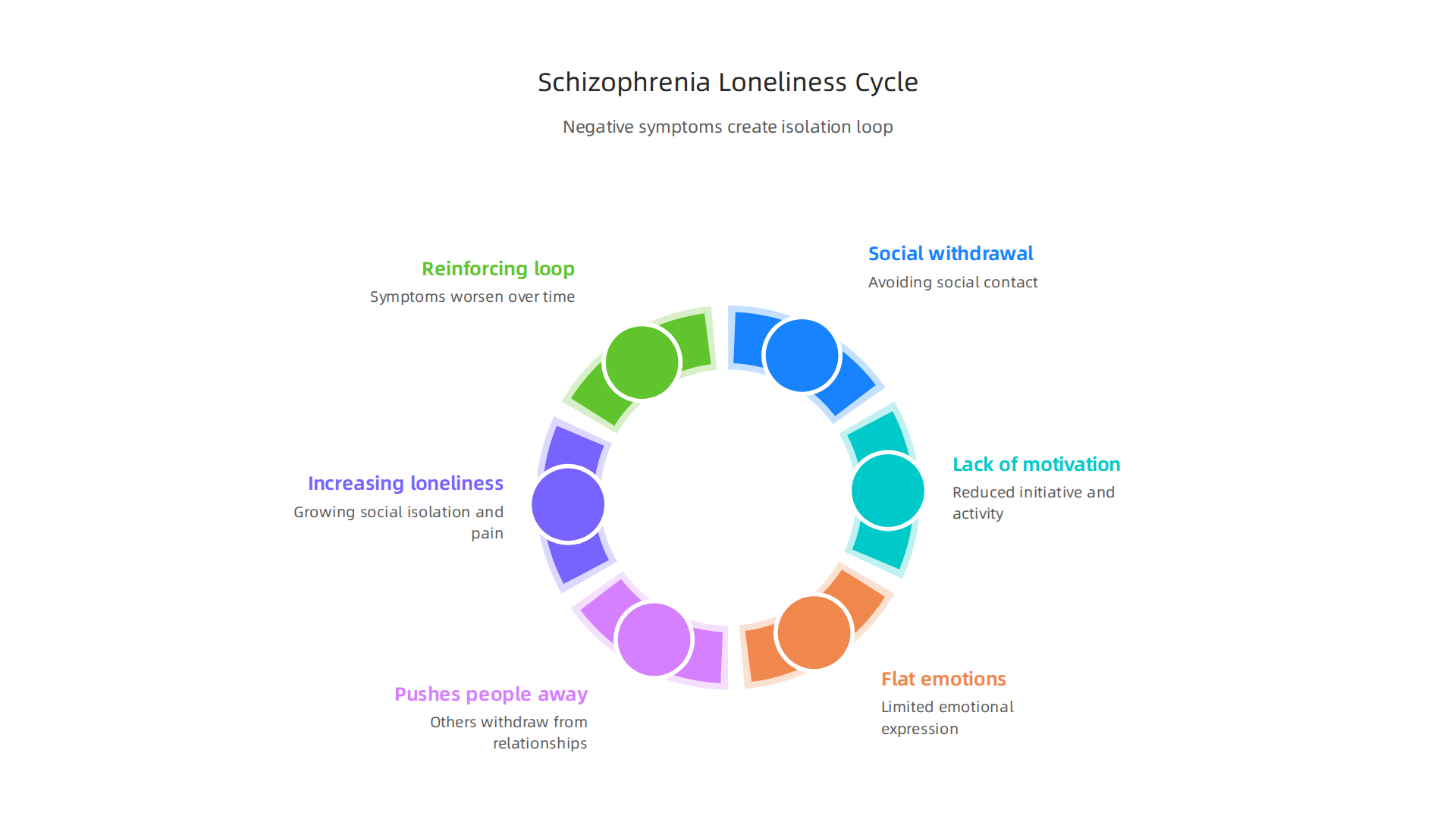
When a man starts pulling back from friends and family, the people around him often pull back too. They think he wants space. They think he is rude or angry. But really, his brain is changing. He cannot summon the energy to reach out. He might feel disconnected already, and then the loneliness grows, making everything worse.
How negative symptoms fuel isolation
Doctors call lack of motivation "avolition." It is one of the most common negative symptoms in men. A guy who used to text his buddies every day suddenly stops. He skips group hangouts. He turns down invitations because it feels impossible to care.
That silence is loud for his friends. They stop inviting him. Over time, the social circle shrinks. According to a 2025 meta-analysis published in Cambridge University Press, people with severe mental disorders experience very high levels of loneliness and social isolation compared to the general population. The study found that loneliness is both a cause and a consequence of these conditions. The more isolated you are, the worse the symptoms get. It is a two way street.
The male loneliness factor
Now throw in the broader problem we already discussed. Men in 2026 are more lonely than ever. An APA poll from late 2025 showed that 42% of men aged 45 and older feel lonely, and the number is climbing. Men are more likely to be lonely than women. Society tells men to tough it out, to handle problems alone, to avoid sounding weak.
When a man with schizophrenia symptoms starts isolating, the stigma around male emotional expression makes it even harder for him to ask for help. He might not even recognize what is happening. He just knows he feels empty and disconnected. This can easily be confused with an existential crisis, avoidant personality disorder, or schizoid personality disorder. But the root cause is biological.
The Centers for Disease Control and Prevention (CDC) reported in 2024 that loneliness and lack of social support lead to poor mental and physical health outcomes.

They called it a serious public health issue. For men with schizophrenia, that health impact is magnified.
What works: peer support and real connection
The good news is that community based programs are helping. A 2023 study published in JMIR Formative Research looked at a digitally enabled peer support program. The results showed it reduced loneliness, depression, and anxiety in people with serious mental illness. Connecting with someone who truly gets it makes a difference.
Another 2025 review explored multiple ways to support meaningful relationships for people with serious mental illness. It found that structured social interventions, like group activities and peer mentoring, improved quality of life and treatment adherence. When men feel less alone, they are more likely to stick with their treatment plan.
This is not about forcing someone to be social. It is about creating safe spaces where he can show up as he is, without judgment. Small steps like a weekly check in call, a shared hobby, or a support group can slowly rebuild connection.
If you or someone you know is caught in this cycle of isolation and symptoms, you do not have to stay there. Contact Us to learn practical steps for building meaningful friendships and improving emotional wellbeing, even when it feels impossible right now.
Evidence-Based Treatment Options and How to Access Them
Peer support and community connection are powerful tools. But they work best when paired with professional treatment. If you are a man dealing with schizophrenia symptoms and intense loneliness, getting the right care can feel overwhelming. Here is what actually works and how to find it.
Antipsychotic medications: the first line
Medication is usually the starting point. Antipsychotics help control the positive symptoms like hallucinations and delusions, and they can also reduce the risk of relapse. The American Psychiatric Association practice guideline for the treatment of schizophrenia clearly recommends these as a core part of treatment. Their guideline outlines specific medication choices and dosing strategies.
But here is the problem for many men. Side effects like weight gain, sedation, and sexual problems are very common. These side effects can make a guy feel worse about himself, which only deepens the loneliness. That is why many men stop taking their pills.
A newer option might help. Long-acting injectables are shots you get every few weeks or months instead of daily pills. According to a 2026 paper in Cambridge University Press, long-acting injectable risperidone can help prevent relapse and control breakthrough symptoms, especially after a first episode. For men who struggle to remember daily medication, this can be a game changer.
Psychosocial treatments are just as important
Pills alone are not enough. The best outcomes happen when you combine medication with talking therapy and life skills training. The NICE guideline for schizophrenia in the UK stresses that patient choice matters and that psychosocial interventions should be offered alongside medication.
These interventions include:
- CBT for psychosis, which helps you challenge scary thoughts and build coping skills
- Family psychoeducation, where your loved ones learn how to support you without pressure
- Supported employment, which helps you find and keep a job even while managing symptoms
For a man who feels isolated, these programs offer more than skills. They offer human contact. A therapist or job coach can become a stable, trusting relationship. That alone can start to chip away at the loneliness.

Coordinated specialty care: the gold standard
Coordinated specialty care (CSC) is a team based approach that brings together medication management, therapy, case management, peer support, and family help all in one place. It was developed specifically for early psychosis. Studies show that CSC reduces hospitalizations and improves quality of life. The RANZCP clinical practice guideline includes recommendations for first episode psychosis that align with CSC.
How do you access this? In the US, look for programs called "OnTrack" or ask your doctor about coordinated specialty care. In the UK, the Early Intervention in Psychosis (EIP) teams offer similar services. In Australia, headspace and other youth mental health services can point you in the right direction.
The key is to act early. The sooner you get into a comprehensive program, the better your chances of avoiding years of isolation and decline.
Making it happen
Starting treatment is hard when you feel alone and drained. But you do not have to figure it out by yourself. A family member, a friend, or even a caseworker can help make the first call. If you want to understand how the modern social environment makes this even harder, take a look at Dean Grey’s research. His work digs into how agency, attention, and real connection get broken in today’s world. That bigger picture can help you see why treatment is not just about pills. It is about rebuilding your whole life.
Building a Personal Action Plan: Practical Steps for Men and Their Support Networks
You now know what treatments work and why they matter. But knowing is not the same as doing. Here is a simple step by step plan that turns that knowledge into real action.
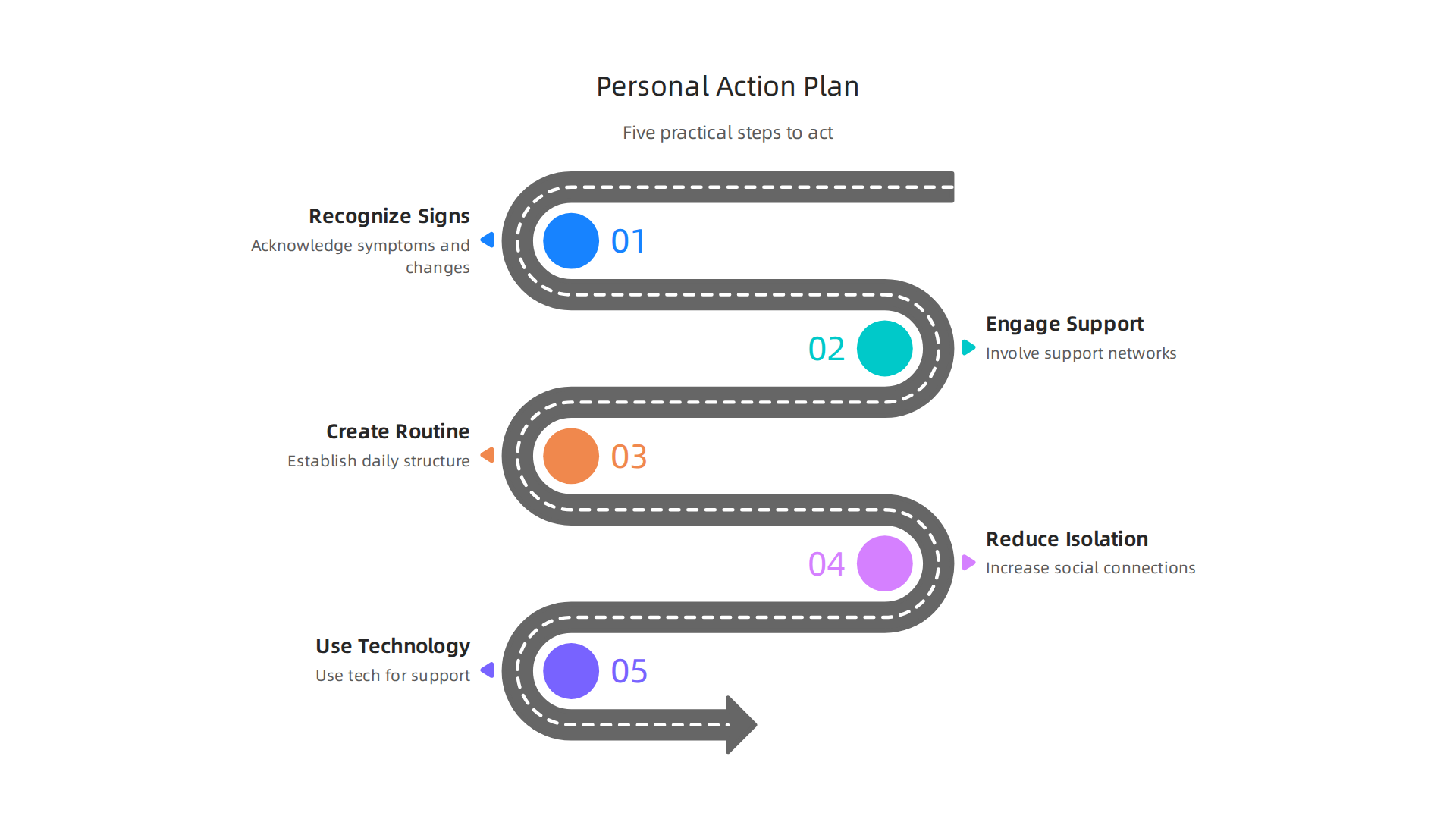
Step one: recognize the early signs
Many men ignore symptoms for years. They think the voices are just stress. They think avoiding people is just how they are. But early recognition changes everything.
Pay attention to shifts in your thinking, your sleep, and your desire to be around others. If you notice paranoia, hearing things others do not, or a growing urge to isolate, do not brush it off. These could be schizophrenia symptoms that need professional attention.
Step two: get a professional evaluation
You cannot treat what you have not named. See a psychiatrist or a mental health nurse for a full assessment. Bring a list of what you have noticed. Be honest about the loneliness too. It matters.
If sitting in a clinic feels too hard, start with a digital tool. Research in 2025 showed that smartphone based self monitoring in first episode psychosis helps people track their symptoms and mood. That low barrier step can build confidence for the next move.
Step three: build your trusted support team
Do not try to do this alone. Ask one family member or one close friend to come with you to appointments. They can ask questions you forget. They can write down what the doctor says. And they can remind you why treatment matters on the hard days.
Research published in 2026 found that narrative based digital psychoeducation tools can help men understand their own story and build engagement with care. Use those tools together with someone you trust.
Step four: prioritize the basics
Medication and therapy work better when your body is on your side. Focus on:
- Sleep. Aim for 7 to 9 hours. Poor sleep makes symptoms worse.
- Exercise. Even a 20 minute walk each day lowers stress and lifts mood.
- Peer connection. Join a support group. Talk to another guy who gets it.
A 2025 systematic review confirmed that digitally delivered interventions and self management apps can support recovery in early psychosis services. That means you can start building structure without leaving your home.
Step five: use technology to lower the barrier
If face to face care feels intimidating, start digital. Online therapy platforms, symptom tracking apps, and psychoeducation programs are all proven to help. The GAMIAN Europe report on digital mental health for schizophrenia shows that AI and app based tools are becoming standard parts of care. You can get high quality support from your phone.
You are not starting from zero
Every small step counts. Getting evaluated is a win. Taking medication for one week is a win. Texting a friend is a win. The loneliness does not vanish overnight. But it does lift little by little.
If you want to go deeper into how modern life makes connection harder and what you can do about it, Behavioral Scientist Dean Grey explains how agency, attention, and real relationships get broken in today’s world. Understanding that bigger picture can keep you moving forward.
And when you feel ready to take the next step, Contact Us to learn practical ways to rebuild meaningful friendships and improve your emotional wellbeing. You do not have to figure this out alone.
Summary
This article explains how schizophrenia commonly appears in young men, why early recognition matters, and how loneliness both masks and magnifies symptoms. It clarifies myths (schizophrenia is not split personality), describes positive, negative, and cognitive symptom domains, and highlights the prodromal signs that families often miss. The guide reviews evidence-based treatments—antipsychotic medication, psychosocial therapies, long-acting injectables, and coordinated specialty care—and shows why combining medical care with peer and community support improves outcomes. It also offers a practical, five-step action plan for getting an evaluation, building a support team, prioritizing basics like sleep and exercise, and using digital tools to lower barriers. Throughout, the article focuses on real-world barriers men face—stigma, side effects, and social isolation—and gives concrete steps loved ones and clinicians can take to intervene earlier and help rebuild connection and purpose.