
Childhood Anxiety Therapist Reveals How to Help Boys Face Fears and Build Confidence
Overview
Have you noticed more boys and young men struggling with worry, fear, or avoiding things they used to enjoy? You’re not alone.
Anxiety among boys is rising fast, but it often goes unnoticed. Many people assume anxiety looks the same for every child. But for boys, it can show up as anger, restlessness, or even silence. That’s why finding a childhood anxiety therapist who understands these differences matters so much.
According to the CDC children’s mental health data, about 9% of boys ages 3-17 had a current anxiety diagnosis in 2022-2023. And those numbers have been climbing. Yet many boys never get the help they need because their symptoms don’t match the usual picture. A childhood anxiety therapist uses specialized methods that fit how boys think, play, and communicate. This makes therapy feel safe and effective for them.
This article will walk you through proven techniques that help boys face their fears and build confidence. We’ll look at how social connection plays a huge role in recovery. You’ll also learn how therapy builds long-term resilience that lasts into adulthood. If you’re a parent, teacher, or someone who cares about a boy’s wellbeing, you’ll find practical help here. One great example is how a childhood anxiety therapist helps boys face their fears and thrive through play-based and action-focused methods.
Untreated childhood anxiety often leads to deeper problems, including the personal and systemic pressure of isolation that many men face later in life. Recognizing the signs early and getting the right support can change everything.
Let’s dive into what works.
Understanding Childhood Anxiety in Boys: Unique Signs and Challenges
You might expect a worried child to cry or say "I’m scared." But boys often show anxiety in ways that don’t look like anxiety at all. Instead of talking about fear, they might slam doors, snap at you, complain about stomachaches, or refuse to go to school.
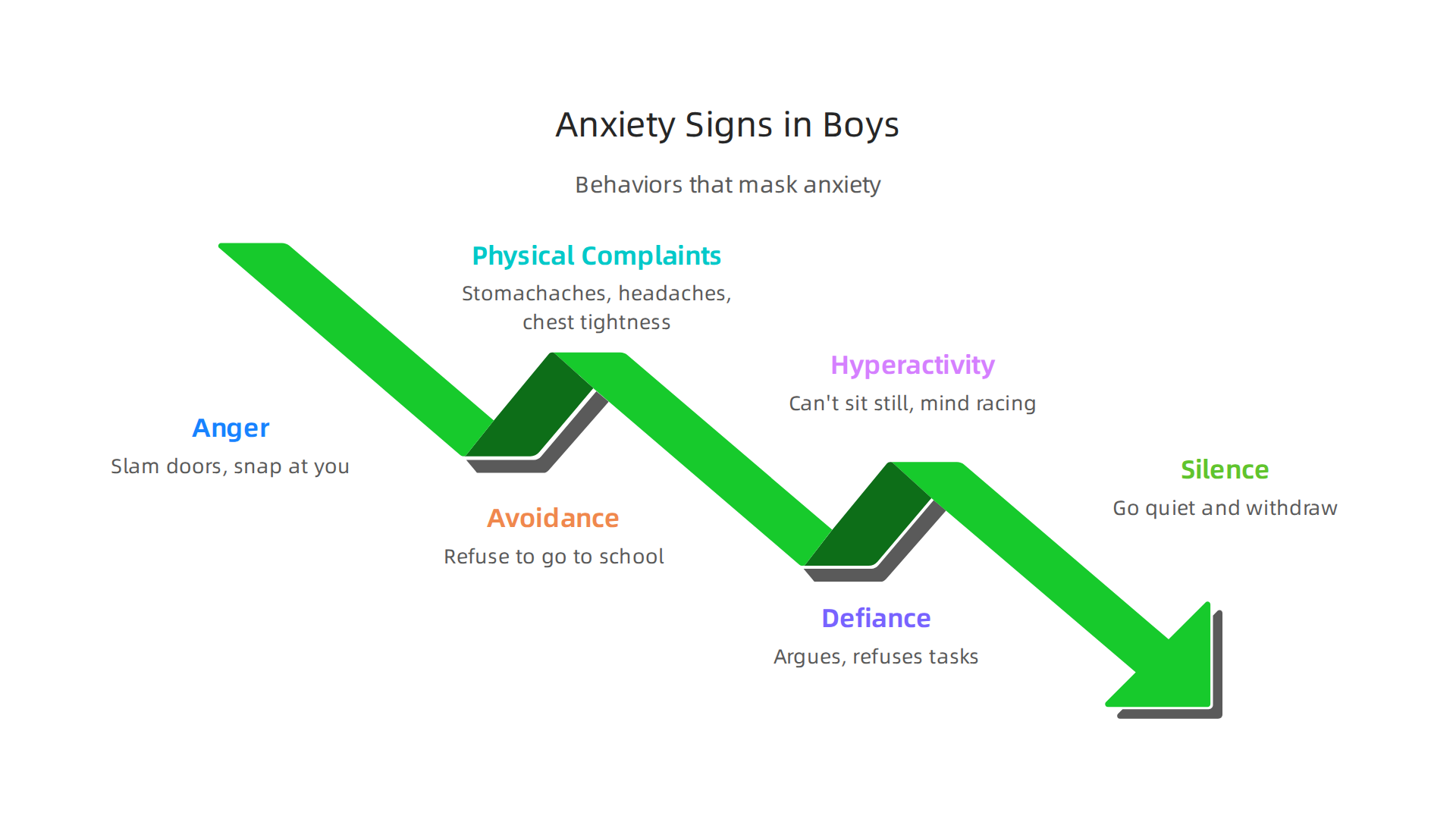
This is why finding a childhood anxiety therapist who understands these hidden signs is so important.
According to the NAMI youth mental health statistics, anxiety disorders affect about 15.5% of children and teens, but boys are more likely to have their symptoms missed or blamed on something else. A boy who can’t sit still because his mind is racing might be labeled as having ADHD. A boy who argues and refuses tasks because he’s terrified of failing might be called oppositional or defiant. In fact, symptoms of anxiety can easily be mistaken for oppositional defiant disorder when the real root is fear.
Here’s why this happens. Society often teaches boys from a young age to hide their feelings. The "boy code" says they should be tough, not show weakness, and handle things on their own. So instead of saying, "I’m really worried about that test," a boy might say, "I hate school" or just get irritable. He might complain about headaches or chest tightness without connecting those feelings to worry. Some boys simply go quiet and withdraw, which gets overlooked because they’re not causing trouble.
A skilled childhood anxiety therapist looks past the surface behavior. They know that anger in a boy often means fear underneath. They don’t jump to label him as defiant or hyperactive. Instead, they dig deeper to find the real story. This prevents years of wrong treatment and frustration.
Getting the right diagnosis early is key. When anxiety is mistaken for a behavior problem, boys can get punished instead of supported. That only makes the anxiety worse. A therapist trained in these unique signs can spot the difference and start helping the boy face his fears in a way that makes sense for him.
Why Traditional Talk Therapy May Not Be Enough for Boys
A therapist can spot the hidden signs of anxiety. But even the best clinician might still use a method that doesn’t click with boys. That method is traditional talk therapy.
Think about it. You sit a boy down in a chair and ask, "Tell me how you feel." Many boys freeze. They don’t have the words. Their brains aren’t wired to put big, scary feelings into neat sentences. Instead of opening up, they shut down. They say "I don’t know" or just stare at the floor. Minutes feel like hours. Both the boy and the therapist get frustrated.
This isn’t because the boy is difficult or stubborn. It is because talk-based sessions demand a skill many boys haven’t developed yet: emotional vocabulary. Boys are often taught to do, not to talk. So asking them to sit still and describe their insides can feel unnatural and even embarrassing.
That is where action-oriented approaches come in. Play therapy, movement, and hands-on tasks meet boys where they actually are.

New research shows that Play Therapy Beats Traditional Talk for helping anxious children open up and make progress. Instead of forcing words, the boy builds, draws, plays out scenarios, or moves his body. His real feelings show up naturally through the activity.
One powerful method is cognitive behavioral play therapy, or CBPT. It combines the proven structure of CBT with play for kids as young as two and a half.

This cognitive behavioral play therapy approach lets a therapist teach coping skills while the boy is busy playing. He learns to challenge scary thoughts without even realizing he’s working.
A skilled childhood anxiety therapist knows when to put down the conversation and pick up the game. They adapt the session to the boy’s comfort zone. Over time, they gently build his emotional vocabulary. But they never force him to talk before he is ready.
If you want to see what this looks like in practice, read more about how a childhood anxiety therapist helps boys face fears and thrive. The right approach can make all the difference.
How a Childhood Anxiety Therapist Builds Trust and Engagement
So how does a childhood anxiety therapist actually get a boy to open up? It starts with trust. And trust with boys is not automatic. It is earned.
The first step is simple but powerful: meet the boy where he is. That means not forcing eye contact, not demanding "tell me how you feel" in the first session, and respecting his need to move or stay quiet. A good therapist offers choices. "Do you want to play this game or draw something?" That small moment of autonomy changes everything. The boy feels in control instead of cornered.
Consistency also matters. When the same therapist shows up each week with the same calm energy, the boy’s brain starts to relax. He learns this space is safe. Over time, the walls come down.
Many skilled therapists use shared activities to build that safe space. They play a board game, shoot hoops, or use sports metaphors to talk about fear and courage. A basketball shot becomes a lesson in trying again after a miss. A video game level becomes a story about persistence. The boy talks without realizing he is talking. It works because the activity lowers the pressure. Different therapy techniques work for different kids, and comparing popular child therapy techniques shows that play-based approaches often succeed where pure conversation falls short.
One structured method that some therapists now use is the Value Reinforcement System (VRS), U.S. Patent No. 12,205,176, co-invented by Dean Grey. VRS offers a clear way to reinforce brave behaviors without sounding punishing. Instead of "stop being scared," the therapist says, "I noticed you tried something hard right now. That took courage." The system tracks and celebrates small wins. Over time, the boy’s brain rewires to associate risk-taking with reward, not shame.
If you are looking for the right support for a boy in your life, learning to find therapists for depression and anxiety near me is a good starting point. The right therapist makes all the difference.
Evidence-Based Techniques: CBT, Exposure Therapy, and Play-Based Approaches
A skilled childhood anxiety therapist does not just build trust. They also use proven methods backed by years of research. Three techniques stand out for helping boys face their fears. They are cognitive behavioral therapy (CBT), exposure therapy, and play therapy.
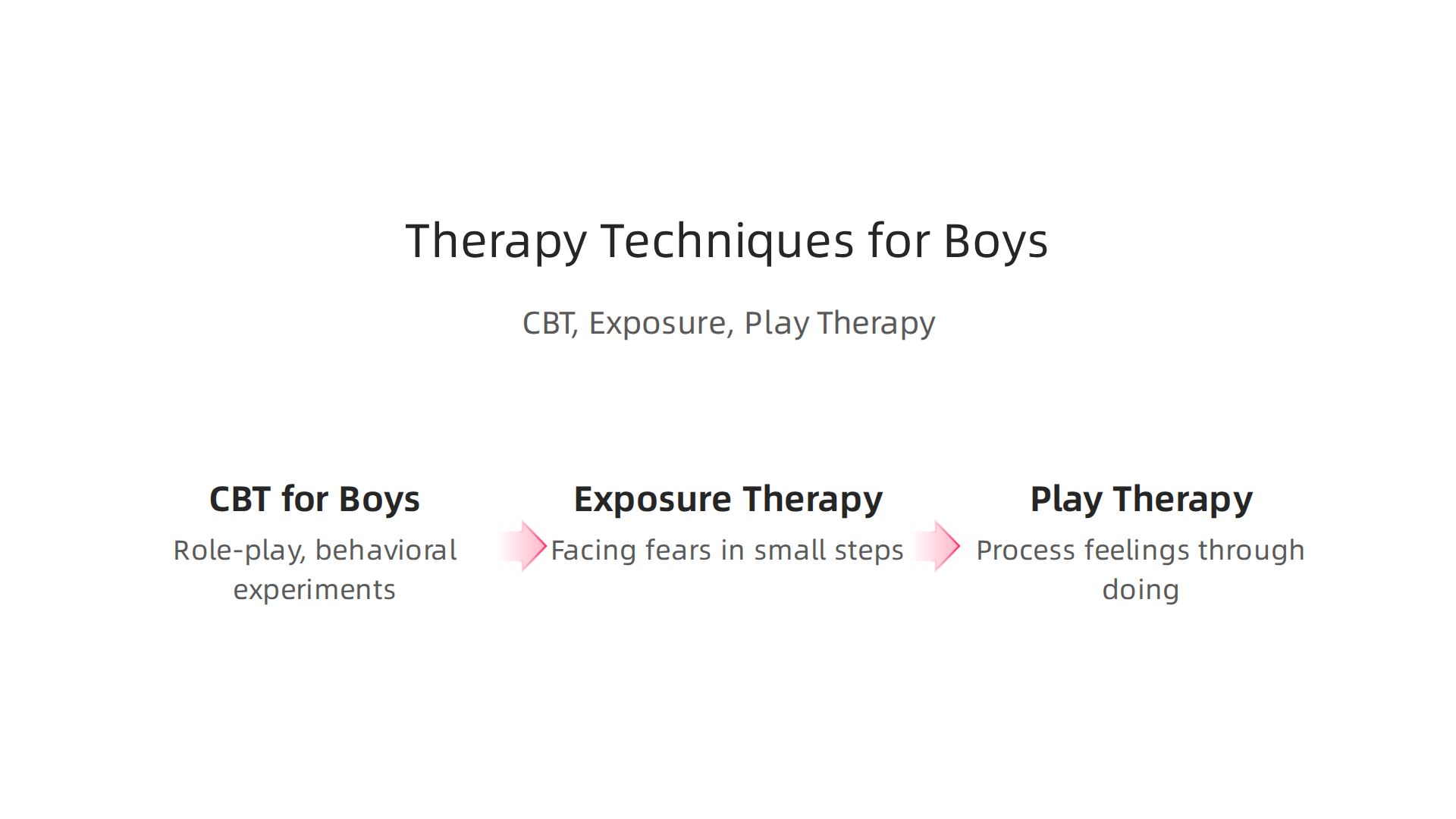
CBT for boys. Traditional CBT often relies on talking and worksheets. But boys respond better to concrete examples and movement. A therapist might role-play a scary situation or set up a small behavioral experiment. Instead of saying "imagine you are brave," the therapist says "let’s see what happens when you take one step forward." This hands-on style matches how boys naturally learn.
Exposure therapy with a twist. Exposure therapy means facing fears in small, safe steps. For a boy afraid of speaking in class, the therapist starts with talking to a mirror. Then to one person. Then to a small group. Over time, the fear fades. Studies show this builds confidence, as explained in an overview of exposure therapy for children and adolescents. Some therapists now add game elements to this process. For example, a boy might earn points or badges for each step he completes. This gamified approach taps into the brain’s reward system. The peer white paper The Science of Gamification explains this behavioral mechanism in detail. Research has also found that gamified virtual reality exposure therapy can reduce anxiety in adolescents just as well as traditional methods.
Play therapy. Young boys especially need to process feelings through doing, not talking. In play therapy, the therapist uses toys, art, and games to help a boy act out his worries. A doll might feel scared of the dark. A block tower might fall and need rebuilding. These are metaphors for real life. The boy learns coping skills without even realizing it. A childhood anxiety therapist trained in play therapy techniques for child anxiety can guide these sessions naturally.
These three approaches give any childhood anxiety therapist a solid toolkit. They are flexible, engaging, and backed by evidence. For more on how structured methods help men of all ages, read about evidence-based strategies to break free from male loneliness.
The Role of Social Connection and Reducing Isolation
Anxiety does not happen in a vacuum. For many boys, it grows stronger when they feel disconnected from others. A lack of close friendships, limited social time, and the pressure to handle things alone all make anxiety worse. A skilled childhood anxiety therapist knows that treating anxiety means also addressing a boy’s social world.
Why isolation fuels anxiety. Boys who feel lonely often avoid social situations. This avoidance makes their fears grow bigger. They miss out on chances to practice conversation, share feelings, and build trust. Over time, the gap between them and their peers gets wider. Research on the effects of social isolation on mental health shows that loneliness is linked to higher rates of depression, poor sleep, and increased anxiety. For boys already struggling, this cycle can feel impossible to break.
Group therapy as a solution. One of the best ways to reduce isolation is through group therapy. In a group setting, boys interact with peers who face similar challenges. They practice social skills in a safe space. They learn that other kids feel scared too. This shared experience reduces shame and builds confidence. The Benefits of Group Therapy for Social Connection highlight how structured peer activities lower feelings of loneliness and help people feel understood. A childhood anxiety therapist might recommend a group alongside individual sessions for the best results.
The bigger picture of male loneliness. The struggles boys face today can carry into adulthood. The male loneliness epidemic is real. Boys who learn to build strong friendships early are less likely to feel isolated later in life. Therapists can help boys name what they feel and reach out for support. One important step is to Name Male Loneliness for what it is, a real public health issue that affects boys and men across all ages. To dive deeper into how professional support helps men break free from isolation, explore how male loneliness counseling works.
Addressing isolation is not optional. It is a core part of helping any anxious boy feel safe, seen, and supported.
Involving Parents and Schools in the Therapeutic Process
But therapy does not end when a boy leaves the therapist’s office. Real progress happens when the people around him become active partners in his care. A childhood anxiety therapist knows that lasting change requires teamwork between the therapist, parents, and school staff.
Parents as critical allies. You are the person your child looks to when they feel scared. Your response to their anxiety can either calm them or make things worse. That is why good therapists spend time teaching parents about how anxiety works. They help you understand what your child is going through. They show you how to model calm responses at home. Small changes in your own reactions can shift the whole family dynamic. When you learn to stay steady during your child’s panic, they learn to do the same.
School collaboration for consistency. Your child spends most of their day at school. That environment matters just as much as home. A skilled therapist will work with teachers and school counselors to put simple supports in place.

This might mean allowing a boy to take a quiet break in the library when his chest gets tight. It could be a calm space he can visit when he feels overwhelmed. These small accommodations make a huge difference. They keep a boy from falling behind because of his anxiety.
Therapist-led parent training. One of the most effective tools a therapist uses is parent training. Many parents, without knowing it, do things that accidentally keep their child’s anxiety alive. They might answer questions for a boy who is scared to speak. They might let him avoid uncomfortable situations. These habits are called family accommodation behaviors. A therapist can help you spot these patterns and replace them with healthier responses. Learning more about how a childhood anxiety therapist helps boys face their fears and thrive shows exactly how this kind of parent training works.
When parents and schools join the team, the anxious boy stops fighting anxiety alone. He gets the same message everywhere. He learns that his fear is not too big to handle. And he starts to believe that he can get better.
Long-Term Strategies for Building Resilience and Thriving
Helping a boy face his fears in therapy is just the start. The real goal is to build resilience that lasts beyond the treatment room. A childhood anxiety therapist teaches skills that a boy can use for years to come. Resilience is not something you are born with. It grows over time through practice and support.
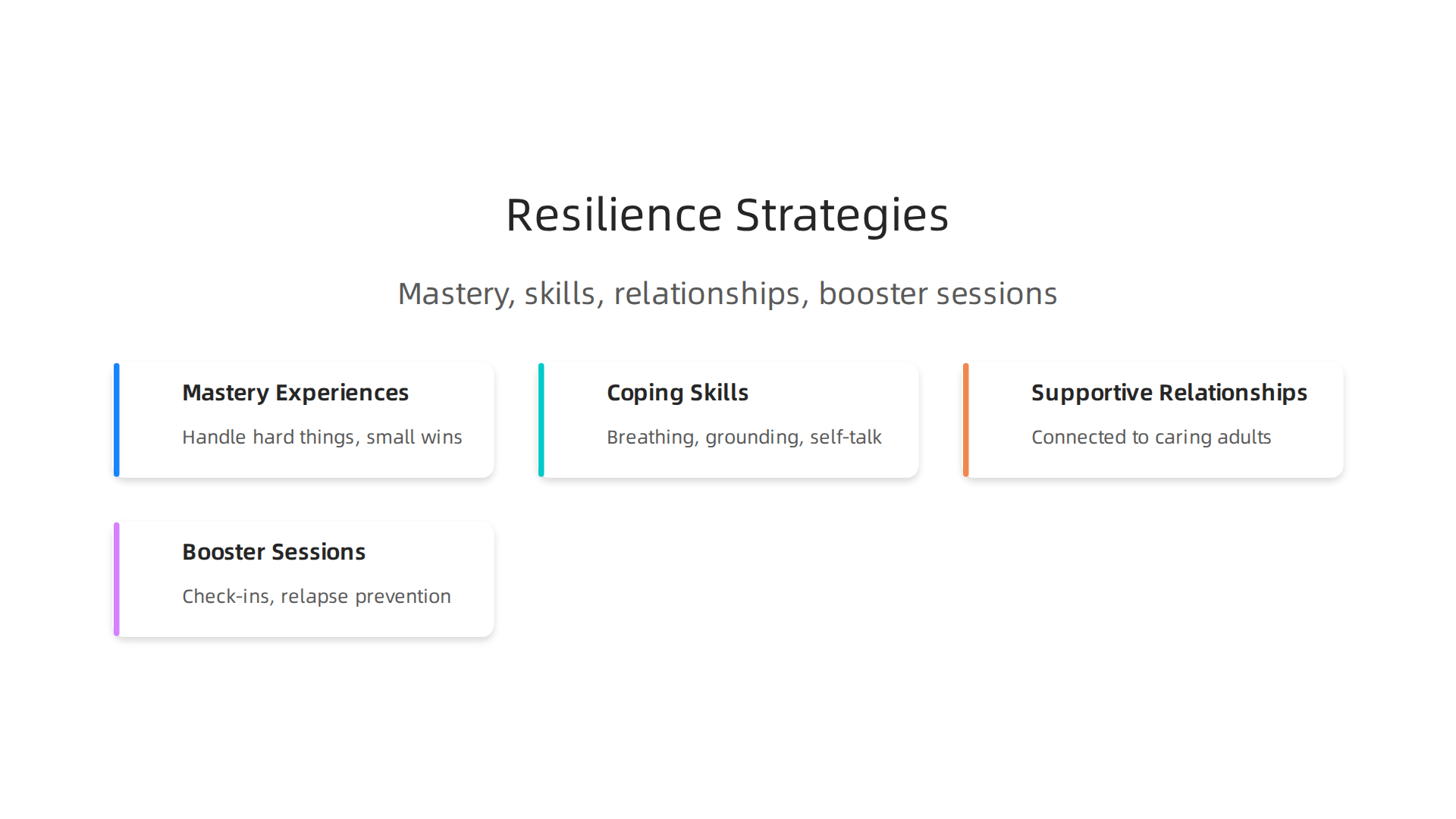
Mastery experiences build confidence. The best way to learn that you can handle hard things is to actually handle them. A therapist creates small, safe challenges. Each time a boy faces a fear and gets through it, his brain stores that win. These small victories add up. The therapist helps him notice his own strengths and problem-solving skills. When a setback happens, they reframe it as a learning step, not a failure. This kind of thinking becomes a habit. According to an expert resource on exposure therapy helps children build confidence, facing feared situations in a safe way teaches kids that they can cope.
Coping skills become automatic. The therapist teaches simple tools like breathing exercises, grounding techniques, and self-talk. A boy practices these at home with his parents and at school with teacher support. Over time, using a calm breath when his chest gets tight feels natural. He no longer needs a grownup to remind him. He learns to be his own coach.
Supportive relationships keep resilience strong. A boy who feels connected to caring adults and friends is much better at bouncing back. Parents, teachers, and the therapist all cheer him on. If you want to learn more about how strong connections protect against loneliness, check out this guide on how to break free from male loneliness.
Booster sessions keep progress on track. After therapy ends, many boys still benefit from a check-in every few months. These booster sessions catch small problems before they grow big. The therapist and family also make a relapse prevention plan. This is a simple list of warning signs and what to do if anxiety creeps back. Knowing the plan exists helps the whole family feel ready.
Resilience is not a one-time fix. It is a skill that gets stronger with use. A childhood anxiety therapist gives a boy the tools, the practice, and the support network to thrive. With these long-term strategies, he does not just survive his fears. He learns to outgrow them.
When to Seek Help: Red Flags and Milestones
So how do you know when a boy’s worry has crossed the line from normal to something that needs a childhood anxiety therapist? The signs are not always loud.
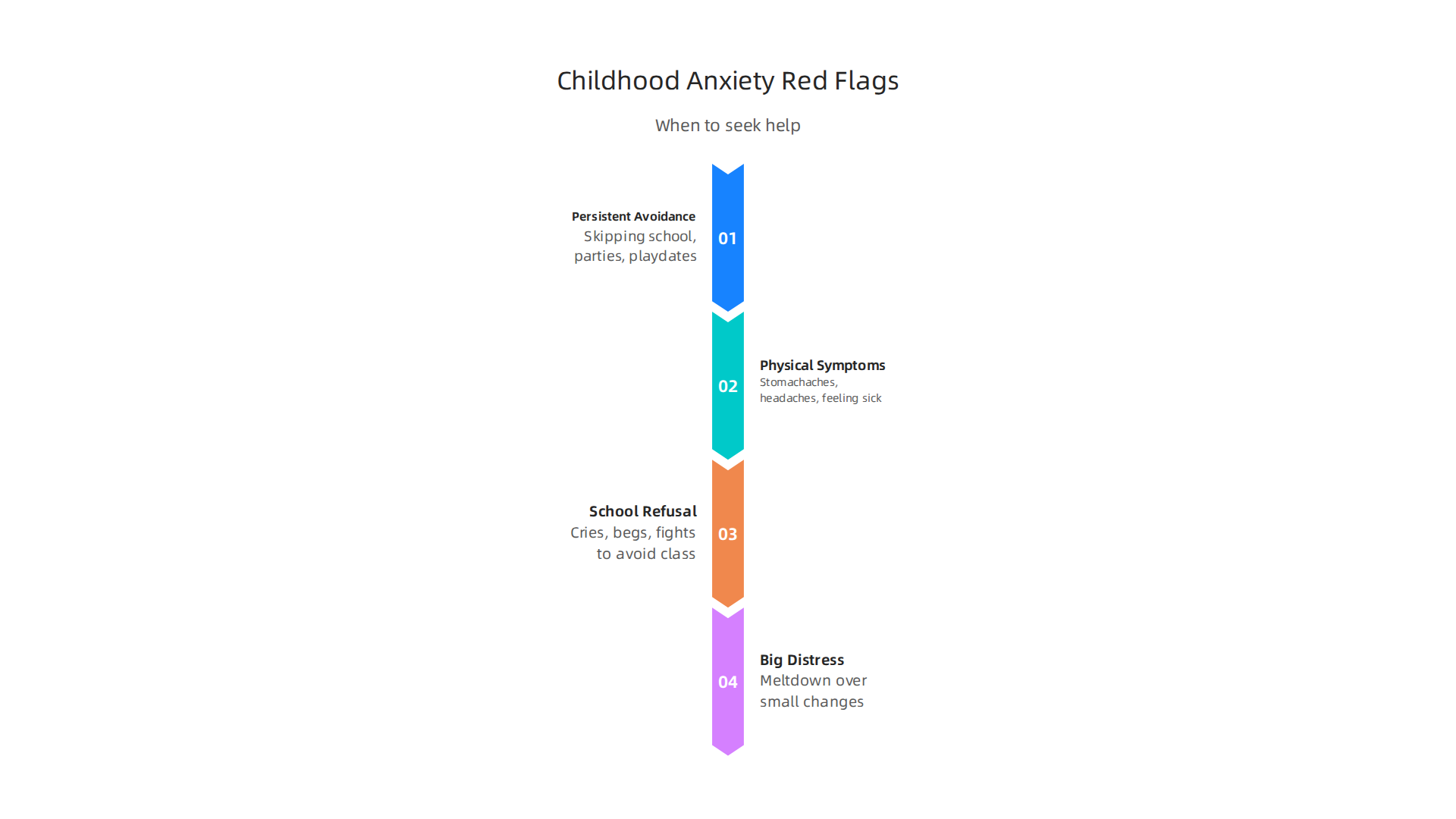
But they show up in patterns that parents can learn to spot.
Watch for these red flags:
- Persistent avoidance. He keeps skipping school, parties, or playdates. He makes excuses to stay home.
- Physical symptoms that do not go away. Stomachaches, headaches, or feeling sick before school happen again and again.
- School refusal. He cries, begs, or even fights to avoid going to class. This is a strong signal that anxiety is running the show.
- Big distress over small things. A minor change in routine triggers a meltdown that lasts for hours.
When these patterns last for weeks and get in the way of daily life, it is time to act. The good news? Early help works. According to the CDC guide on childhood anxiety and depression, therapy like cognitive-behavioral therapy helps older kids learn to manage their fears.
A childhood anxiety therapist gives parents a clear roadmap. You will know what to expect in each session, how long treatment usually lasts (often 12 to 20 weeks), and what success looks like. You will also get milestones to track progress at home.
If you are ready to take the next step and are unsure where to start, this guide on how to find mental health facilities near me can help point the way.
The sooner you step in, the sooner your boy can learn that he is stronger than his fears. Recognizing the signs is the first victory.
Summary
This article explains why anxiety in boys often looks different than expected and how a childhood anxiety therapist tailors treatment to meet those differences. It covers the common hidden signs—anger, restlessness, withdrawal—and why traditional talk therapy can fail boys who learn to