

Mental Health Facilities Near Me A Practical Guide for Men Facing Loneliness
Overview
Introduction
You’ve probably felt it. That quiet weight of loneliness that makes it hard to reach out.

For many men, societal norms tell us to tough it out, to handle things alone. But the truth is, the male loneliness epidemic is real, and it’s taking a serious toll on mental health. According to the male loneliness epidemic research from Healthline, men report higher levels of loneliness than women, and young men are especially affected.
When the pain gets too heavy, typing "mental health facilities near me" into a search bar often feels like the first real step toward help. But what comes next? How do you know if a facility is right for you? Whether you’re looking for grief therapists, exploring therapists Brooklyn options, or searching for Bellingham therapists, the choices can feel overwhelming. Even well-known providers like Rogers Behavioral Health might cross your mind, but you still need to figure out what fits your specific situation.
This guide is here to help. We combine research-backed strategies with real-world experience to help men find the right support. You’ll learn what to look for, what questions to ask, and how to break through the barriers that keep so many men stuck in isolation. Want a deeper look at the crisis driving this search? Check out this resource on mens mental health crisis solutions.
If you’re tired of going it alone, you’ve come to the right place. Isolation has personal and systemic pressure, and understanding that is the first step toward change. Explore the Name Male Loneliness initiative to learn more about the forces behind the loneliness epidemic and what you can do about it. Let’s walk through this together.
Understanding the Male Loneliness Epidemic and Its Impact on Mental Health
Loneliness is not just a bad feeling. It is a real public health crisis, and men are at the center of it. According to recent Gallup data shared in research on male loneliness and isolation, one in four young men between 15 and 34 report feeling lonely a lot of the day. That number is much higher than for women in the same age group. These aren’t just statistics. They represent millions of men who go through each day without close connections.
When loneliness sticks around for a long time, it does real damage. Your risk for depression goes up. Your anxiety gets worse. And in the worst cases, your risk of suicide climbs too. The U.S. Surgeon General even released a report calling loneliness a public health epidemic. The message is clear: this is not something to brush off.
Part of the problem is that many men never learn how to talk about these feelings. Society tells you to be strong, to handle things alone, to not complain. But keeping everything inside only makes the loneliness grow. It becomes a loop. You feel alone, so you pull back from people, which makes you feel even more alone.
The good news is that recognizing your loneliness as a real health concern is the first step toward change. You do not have to figure this out by yourself. Many men have walked this path before you. For those ready to take action, depression therapy for men offers a practical starting point.
Understanding the size and impact of this crisis helps you see that your struggle is not a personal failure. It’s part of a bigger pattern. And when you see the pattern, you can start to break out of it. That is why searching for mental health facilities near me matters. It means you are ready to stop suffering alone and start finding real support. Researchers at leading institutions continue to study this issue. You can follow the work of experts like those at the Google Scholar (UC Irvine) to learn more about what the data tells us.
Why Traditional Search Methods Fail Men
When you finally decide to get help, your first instinct is probably to type "mental health facilities near me" into Google. And that seems like a logical move. But for most men, this approach backfires.
Here is the problem. A standard search returns hundreds of results. Listings for clinics, therapists, hotlines, and group sessions all blend together.

You have no way to tell which ones actually understand what you are going through. Do they have experience with men’s issues? Do they respect that you might feel shame or embarrassment? Generic directories don’t answer these questions.
On top of that, many men never even start the search. Research on men’s mental health stigma shows that traditional masculine norms like emotional repression make help-seeking feel weak or wrong. You may worry about being judged. You may not even know what kind of specialist you need. So you put it off. You tell yourself you will deal with it later. And later never comes.
Another gap is that most online directories treat everyone the same. They do not filter for things that matter to men, like a preference for a male therapist or a practice that handles shame sensitivity directly. Without those filters, the search feels overwhelming and useless. You might click away and give up.
The truth is that isolation has personal and systemic pressure. It is not just in your head. It is reinforced by how the system works. But there are better ways to find help. Instead of relying on broad searches, you can use resources built for men. A practical guide to finding mental health facilities near me can show you how to cut through the noise and focus on what actually fits your needs.
If you want to go deeper, you can name male loneliness and explore the full picture of what drives it. The first step is understanding why the old search methods fail. The next step is trying a smarter approach.
How to Search for ‘Mental Health Facilities Near Me’ Effectively
So let’s talk about a better way. Searching for "mental health facilities near me" can actually work if you know where to look and how to narrow things down. The key is to use the right tools and think like a detective, not a browser.
Start with online directories made for finding care. Sites like the APA Psychologist Locator let you search by ZIP code and even by specialty. You can find someone who specifically works with men or handles issues like addiction, depression, or grief. This is way better than a random Google dump.
Another strong option is the Psychology Today directory. It is one of the most used tools out there. You can filter by insurance, therapy type, and even whether the therapist offers in-person or online sessions. That saves you hours of scrolling.
But do not stop there. If you have health insurance, go straight to your insurance portal. Most major insurers have their own search tool for in-network providers. This cuts down cost surprises and gives you a short list of real options.
Here is where the smart work comes in. Once you have a list of three to five facilities, verify their credentials. Check their licenses. Read reviews from actual patients. Look for mentions of the issues you care about, like whether they understand "therapists Brooklyn" or other local options that fit your needs.
Finally, prioritize facilities that match your specific needs. If you need a grief therapist or someone who deals with trauma, make sure that is listed on their profile. A good match saves you time and gets you real help faster.
For the science behind what works, you can check the Google Scholar profile of researchers studying men’s mental health. Their studies back up these smart search strategies.
Using Online Directories and Search Engines
Beyond the APA and Psychology Today tools, there are other directories worth knowing. Sites like the GoodTherapy directory let you search by specialty and location. You can also check Google My Business for real patient reviews of local facilities. That gives you a feel for what others experienced.
For quick access, telehealth platforms like BetterHelp offer immediate online sessions. They are a good start if you cannot find local options right away. Remember to combine these tools with your own research. For more on how therapy helps loneliness, see our guide on depression therapy for men.
Filtering by Specialty and Insurance
Most directories, like Psychology Today’s therapist directory, let you filter by issue, therapy type, and insurance. That helps you narrow down mental health facilities near me that actually match your needs. For men, it pays to look for providers who list ‘men’s issues’ or ‘male clients’ as a specialty. Calling the facility directly can also clarify availability and cultural competence, which is key for feeling understood. For a step-by-step approach, read our practical guide for finding mental health facilities near me. This matching process is backed by research from experts like Senior Lecturer at UC Irvine, reinforcing that the right fit improves outcomes.
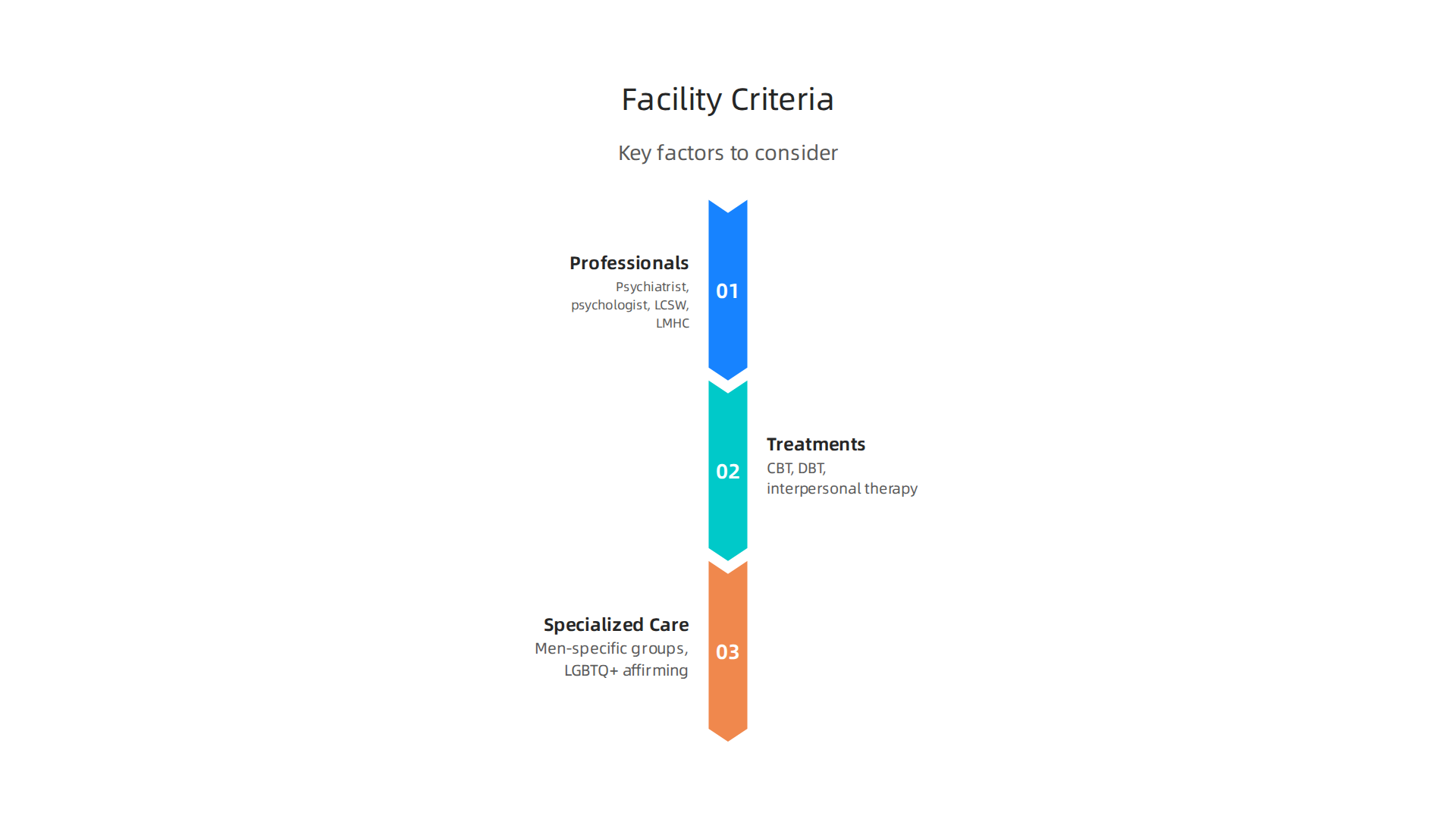
Once you’ve found a few candidates, it’s time to dig deeper into what each facility actually offers. Not all mental health facilities near me are built the same, and the right fit depends on your specific needs. Look at three things: the types of professionals available, the treatment methods they use, and whether they offer specialized care for men.
Types of Professionals and Their Credentials
A good facility will have a mix of mental health professionals. A psychiatrist is a medical doctor who can prescribe medication and diagnose complex conditions. A psychologist holds a PhD or PsyD and focuses on therapy and psychological testing. Licensed Clinical Social Workers (LCSWs) and Licensed Mental Health Counselors (LMHCs) also provide therapy and are often more affordable. Check that the staff credentials are up to date and match the issues you want to work on. For example, if you need medication management, you will want a psychiatrist on site.
Evidence-Based Treatment Approaches
The best facilities use treatments that research has proven to work. Look for terms like Cognitive Behavioral Therapy (CBT), Dialectical Behavior Therapy (DBT), or Interpersonal Therapy. These are evidence-based modalities that help you change unhelpful thought patterns and build healthier relationships. In 2026, CBT, DBT, and ACT remain the most rigorously studied options, according to the guide on top therapy modalities in 2026. If a facility uses a lot of unproven or vague methods, that is a red flag.
Specialized Care for Men and Affirming Environments
Men often respond better to therapy that acknowledges their unique challenges, like the pressure to be self-reliant or the stigma around showing emotion. Some facilities offer men-specific therapy groups where you can talk openly with other guys facing similar issues. Research on male-tailored psychotherapy shows that approaches designed specifically for men can improve outcomes by addressing how men typically deal with stress and depression. You can read more about these approaches in the study on new directions in male-tailored psychotherapy.
Also look for LGBTQ+ affirming care. A facility that trains its staff in cultural competence and uses inclusive language will make you feel safer and more understood. If you are a gay or bisexual man, finding a therapist who gets your experience is crucial for building trust.
When you find a facility that checks these boxes, you are much more likely to stick with treatment and see real progress. For more guidance on matching your needs with the right provider, check out our article on finding therapists for depression and anxiety near me. That resource walks you through specific questions to ask when you call a facility.
Take your time comparing options. The effort pays off when you land in a place where you feel heard and supported.
Overcoming Stigma: The First Step Is the Hardest
Even after you find a facility that looks good on paper, the hardest part might still be ahead: actually reaching out. Many men struggle with stigma around asking for help. Research shows that men are far less likely than women to seek treatment for mental health issues. According to a recent review on the role of stigma in men’s mental health, traditional masculine norms like emotional repression are a big part of why so many guys stay silent. That pressure to handle everything alone keeps a lot of men from finding the right mental health facilities near me and getting the support they deserve.
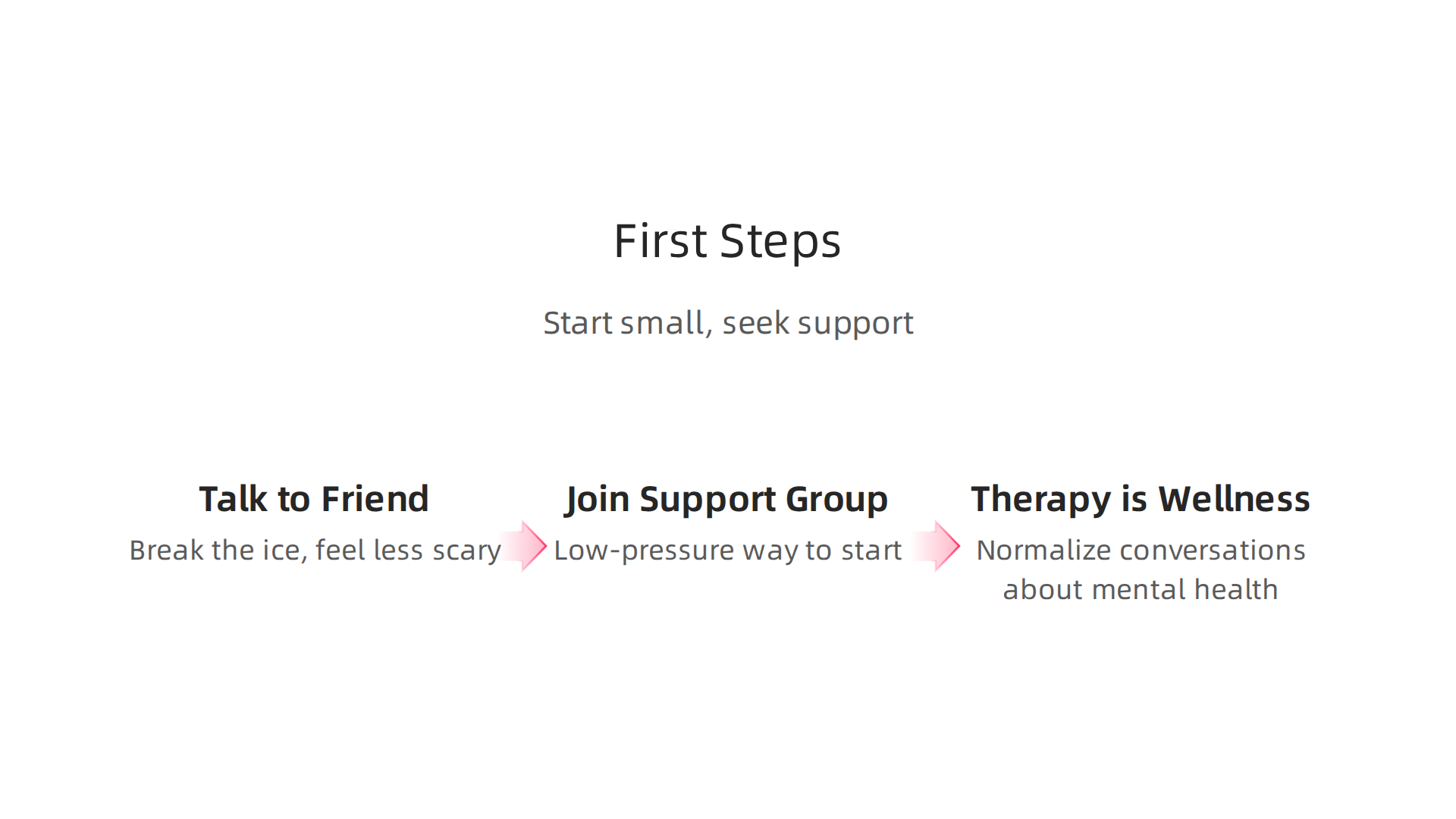
But here’s the thing: therapy is not a sign of weakness. It is a tool for wellness, just like going to the gym or eating well. In 2026, more men are realizing that talking to a professional is one of the most effective ways to take control of your life. The more we normalize conversations about mental health, the easier it becomes to take that first step.
If the idea of walking into a clinic feels overwhelming, start smaller. Talk to a trusted friend about how you have been feeling. That single conversation can break the ice and make the next step feel less scary.
step in breaking the cycle of isolation and stigma.](https://malelonelinessepidemic.com/wp-content/uploads/2026/06/weblish-inline-38457.jpg)

Joining a men’s support group is another low-pressure way to start. You get to hear from other guys who are dealing with the same struggles, and you realize you are not alone. Our guide on breaking free from male loneliness with evidence-based strategies offers practical ways to build confidence before you even schedule an appointment.
The stigma is real, but it can be overcome. Each small action you take builds momentum. Remember, isolation has personal and systemic pressure weighing on you, but you have the power to push back. Name Male Loneliness and take control of your wellbeing. The first step is the hardest, but it is also the most important one you will ever take.
Leveraging Technology and Community for Support
Once you have taken that first step, the next challenge is keeping the momentum going. Professional help from mental health facilities near me is essential, but you do not have to rely only on in-person visits. Digital tools and community resources can fill the gaps between sessions, creating a stronger and more consistent support system.
Apps and online platforms now offer guided exercises, mood tracking, and even peer support groups. For example, recent research on gaming-based community interventions for loneliness shows that men who participate in structured digital communities often feel less isolated after just a few weeks. These tools work best when they complement professional care rather than replace it.
One promising innovation gaining attention in 2026 is the Value Reinforcement System (VRS). This approach uses a reward-based framework to encourage healthy behaviors like reaching out to friends, practicing emotional honesty, or completing therapy homework. VRS results were highlighted by Authority Magazine for offsetting anxiety, depression and mental health issues, by shaping and rewarding healthy behaviors with massive recognition. When used alongside therapy, systems like this help men build new habits that fight loneliness at its root.
Community support is just as important. Joining a men’s group, sports league, or even an online forum creates natural opportunities for connection. The key is choosing activities that require real interaction, not just passive scrolling. Our practical guide for finding mental health facilities near me can help you locate local resources that fit your needs.
By blending professional care, smart technology, and community connection, you create a foundation that can sustain your mental health for the long haul.
The Role of Value Reinforcement Systems (VRS)
The Value Reinforcement System (VRS) takes the idea of rewards one step further. Instead of random encouragement, VRS uses a structured system of recognition to reinforce positive behaviors like emotional honesty, reaching out to a friend, or completing therapy exercises. Early research from the Journal of Men’s Health shows that this approach can lower anxiety and depression in men who struggle with loneliness. VRS works alongside traditional therapy by creating a positive feedback loop that keeps you motivated. When you pair VRS with professional care from mental health facilities near me, the combination becomes even more powerful. For a deeper look, check out the peer white paper The Science of Gamification, which formalizes the behavioral mechanism. And if you need a therapist to guide you, our guide on depression therapy for men can point you in the right direction.
Building Community Through Shared Recognition
Group-based VRS programs help men build social bonds through shared rewards. When men join circles or accountability groups, recognizing each other’s small wins creates a sense of belonging.

A recent study found that gaming-based community interventions for loneliness can reduce isolation within 60 days. These groups work best when paired with professional support, such as a guide to find mental health facilities near me. For deeper insights into how recognition keeps communities safe, read the Youth Safety Case Study, documenting how VRS offsets susceptibility to manipulation in youth sports, producing healthier athletes, stronger resistance to depression and propaganda, and ultimately better citizens.
Summary
This article explains why male loneliness has become a widespread mental health crisis and why many men struggle to find appropriate care. It shows why a generic Google search for