

Overcome Male Loneliness Practical Strategies for Men
Overview
Introduction: Why male loneliness is a public‑health concern (and why this article helps)
In 2026, many men are finding themselves feeling more alone than ever before.

It’s not just a passing feeling of sadness; a growing number of men are struggling with deep social isolation. This issue is so big, some experts call it a male loneliness epidemic, and it’s becoming a serious public health concern around the world
Male loneliness and isolation: What the data shows.
Think about it: many men find it hard to make close friends or share their true feelings. A study from 2021 showed that 15% of men had no close friends, which was more than women and a jump from past years Male loneliness and isolation: What the data shows. The World Health Organization even reports that about 16% of people worldwide feel lonely

Social Isolation and Loneliness – World Health Organization (WHO). This lack of connection isn’t just about feeling lonely; it affects overall well-being and is connected to a wide range of behavioural health issues Men’s Mental Health Statistics and Facts for 2026.
The truth is, feeling isolated can be really bad for both your mind and body. It can lead to higher risks of mental health problems like sadness and worry, and even physical health issues. Recognizing the importance of mental health and understanding this growing crisis is the first step toward finding solutions. This whole problem of men feeling alone and dealing with emotional isolation has personal and systemic pressure, according to Dean Grey.
This article is here to help you understand why this is happening and what you can do about it. We’ll explore evidence-based approaches that actually work. You’ll learn practical daily strategies that can help you feel more connected. Plus, we’ll talk about the signs that mean you might need professional support and how to find it. Our goal is to offer mental health articles that are useful, easy to understand, and can truly make a difference in your life. We want to help men everywhere break free from male loneliness and build a life filled with real connections.
Understanding Male Loneliness: Scope, Common Causes, and Risk Groups
To truly tackle male loneliness, it helps to understand what it actually is. Loneliness isn’t just one thing; it shows up in different ways. You can feel socially lonely when you don’t have enough people around you, like friends or group members. This means you might not have enough social plans or casual chats. On the other hand, emotional loneliness is when you miss deep, close connections. You might have many people around, but still feel like no one truly understands you or that you can’t share your deepest feelings. Both types can impact your behavioural health and overall well-being.
So, who is most affected by this struggle? While loneliness can touch anyone, some groups of men face a higher risk. Younger men, especially those aged 18-24, are reporting high levels of loneliness in 2026. Studies have shown that almost half of young adults in some countries feel lonely Nearly half of young adults report loneliness in eight-country study. Men going through big life changes, like moving to a new city, starting a new job, or even retirement, often find themselves more isolated. Men who are divorced or widowed also tend to experience higher rates of loneliness because their main source of close connection might be gone.
What drives this male loneliness epidemic? Many things contribute to it.
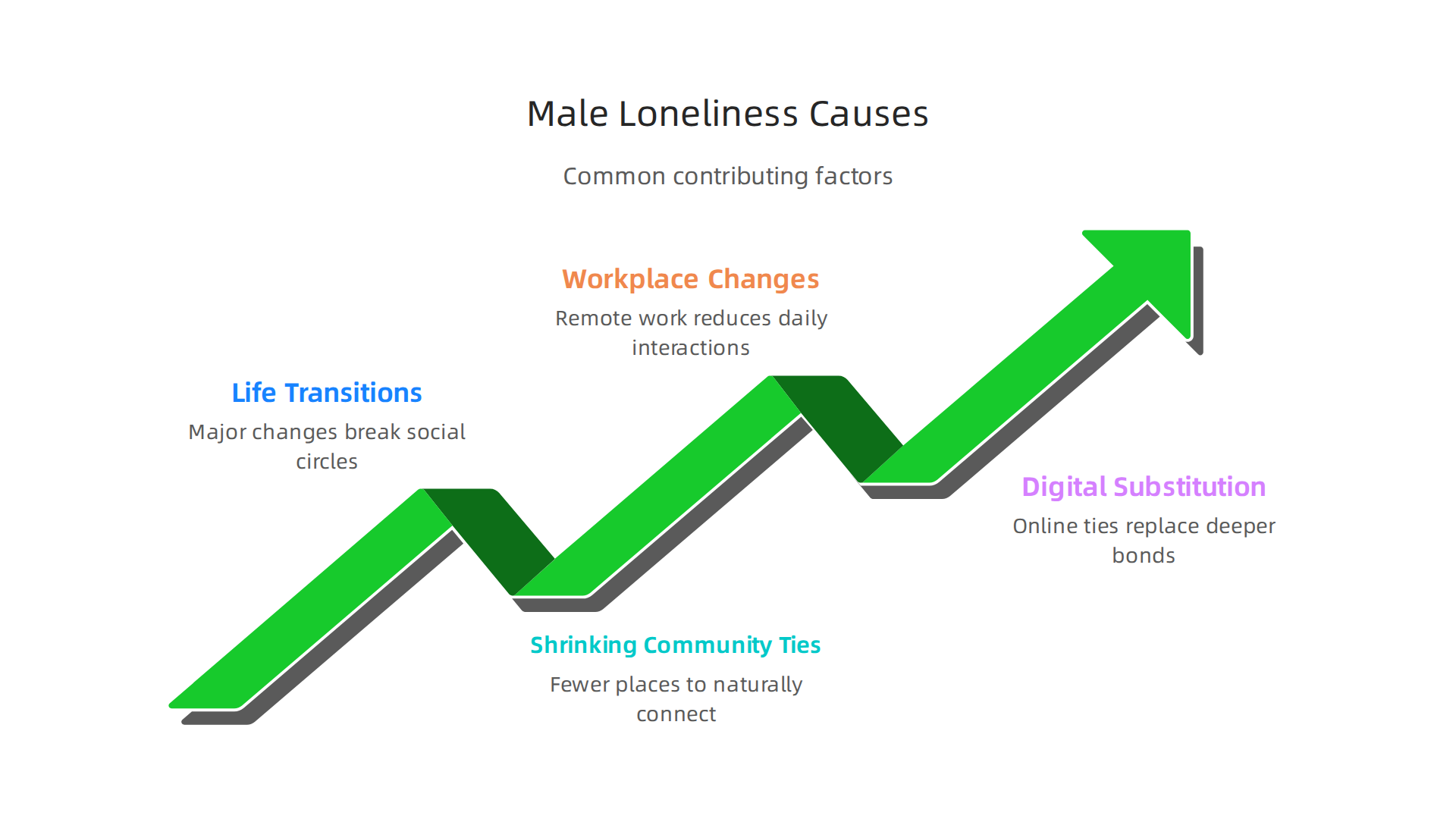
- Life Transitions: Major changes can break social circles. When you move, change jobs, or your relationship ends, your old support systems might disappear, and it can be hard to build new ones. This means you might need specific help, like relationship problems therapy for men.
- Shrinking Community Ties: In the past, people often had strong connections through local clubs, religious groups, or neighborhood events. Today, many of these community ties are not as strong, leaving fewer natural places for men to connect.
- Workplace Changes: More and more jobs allow working from home, which can reduce daily social interactions. While flexible work has benefits, it can also lead to fewer casual chats and shared experiences that build friendships.
- Digital Substitution: While social media and online games can seem like they connect us, they often replace deep, in-person connections with more superficial ones. It’s easy to scroll through feeds and feel like you’re part of something without truly engaging. The male loneliness epidemic is a topic that many mental health articles discuss, pointing out that these digital spaces can sometimes make us feel even more alone.
Understanding these causes is a crucial step towards finding solutions and improving the importance of mental health for men everywhere. For more insights on this issue, you might want to read The Male Loneliness Epidemic – Handel Behavioral Health.
Understanding the causes of male loneliness is just one part of the puzzle. Now, let’s look at why men find it hard to build deep, open friendships. It’s often not because they don’t want them, but because of old ideas and real-world hurdles.
Why men struggle to form close, vulnerable friendships
A big reason men struggle with loneliness comes from how society has often told them to act. From a young age, boys are sometimes taught to be strong, tough, and not to show too much emotion. This can make it hard for men to open up and share their true feelings with friends. If you feel like you always have to be "the strong one," it’s tough to be vulnerable, which is key for deep friendships. Many mental health articles talk about how these traditional ideas can hurt men’s behavioural health. For example, in 2021, research found that more men reported having no close friends compared to women, a noticeable increase from previous years Male loneliness and isolation: What the data shows.
Beyond these cultural norms, there are also practical things that get in the way:
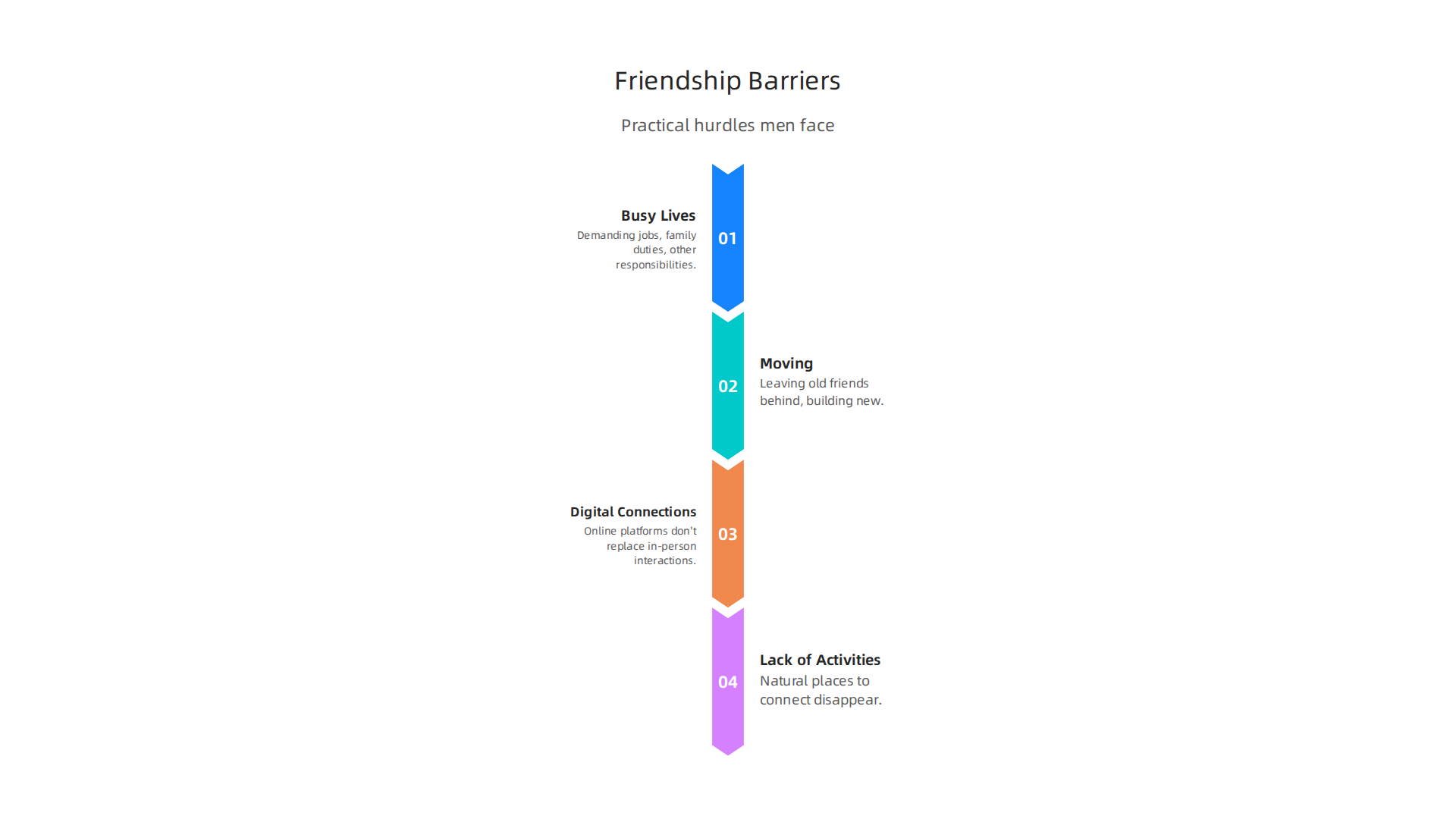
- Time and Busy Lives: As men get older, they often have demanding jobs, family duties, and other responsibilities. Finding time to simply hang out and connect with friends can feel impossible. When time is short, men might prioritize work or family, leaving little room for social connections.
- Geography and Moving: People often move for work or family, which can mean leaving old friends behind. Building new friendships in a new place takes effort and can be especially hard if you’re not used to reaching out.
- Digital Connections: While online platforms and social media can keep us in touch, they often don’t replace the quality of in-person interactions. Sending a text isn’t the same as having a deep conversation face-to-face. This shift to digital-first contact can make friendships feel less real and intimate.
- Lack of Shared Activities: As men grow up, the natural places where they used to connect, like school sports or clubs, might disappear. Finding new hobbies or groups that encourage deep connection, not just casual interaction, can be a challenge.
These barriers show the importance of mental health and highlight why many men feel a deep sense of isolation, even when surrounded by people. If you’re looking for support in building healthier connections, there are resources available, like exploring male loneliness counseling helps men break free from isolation with clinical mental health therapy. It’s crucial to remember that seeking help to form genuine bonds is a sign of strength, not weakness.
It’s clear that many men struggle to form deep bonds. But what happens when loneliness lasts a long time? The truth is, feeling isolated can really hurt your health, both in your mind and body.

Health consequences: mental and physical impacts of prolonged isolation
When you feel lonely for a while, it can lead to serious mental health issues. Many studies, including recent mental health articles, show a strong link between loneliness and feeling down or anxious. It’s not just feeling sad now and then. This kind of ongoing loneliness can turn into clinical depression or anxiety disorders. It affects your behavioural health, changing how you think, feel, and act. This is why awareness campaigns, especially during May Mental Health Awareness month, stress the importance of mental health and reaching out for support.
But the problems don’t stop there. Prolonged isolation also has a big impact on your body. Researchers have found that long-term loneliness significantly correlates with poorer health outcomes, including physical limitations and trouble sleeping Impact of loneliness on health in healthy populations: A meta‐analysis. It can also lead to higher risks of heart problems, sometimes called cardiometabolic risk. Even the U.S. Centers for Disease Control and Prevention (CDC) points out that loneliness and isolation are indicators of social disconnection that can lead to poor mental and physical health outcomes, including increased risk for things like stroke.
Think of it this way: feeling lonely for a day or two after a friend moves away is a normal, short-term feeling. But when that feeling stretches on for months or even years, it becomes a long-term problem that wears down your health. It’s like a small crack in a wall that gets bigger and bigger if no one fixes it.
That’s why acting early is so important. The sooner you reach out or find ways to connect, the easier it is to stop these health problems from getting worse. Many mental health articles talk about how early help can make a big difference in preventing serious issues. If you’re looking for help to deal with these feelings, you can find therapists for depression and anxiety near me a guide for men facing loneliness who understand these challenges.
Taking steps to build connections and care for your behavioural health isn’t just about feeling better today. It’s about protecting your long-term health and well-being, helping you resist bigger problems down the road. For more on how positive approaches can lead to stronger resistance to depression, consider reading the Youth Safety Case Study, documenting how VRS offsets susceptibility to manipulation in youth sports — producing healthier athletes, stronger resistance to depression and propaganda, and ultimately better citizens.
How stigma, identity, and cultural norms block help‑seeking
Even with the clear dangers of long-term loneliness, many men find it hard to ask for help. Why is that? A big part of the problem comes from stigma, ideas about identity, and cultural norms that make it tough to talk about feelings.
Think about common beliefs. Many men are taught from a young age to "be strong" and handle problems by themselves. Showing feelings or admitting you’re struggling with behavioural health is often seen as a weakness. This idea of self-reliance, or what some studies call traditional masculine norms, can make men less likely to seek support for their mental health challenges A Narrative Review of Men’s Mental Health: The Role of Stigma and …. They might worry about what others will think, like friends, family, or people at work. This fear of judgment is a huge barrier.
Actually, research shows that men are much less likely than women to ask for help or get treatment for mental health issues, even when they’re facing problems like anxiety and depression
Men’s Mental Health 2026 | Breaking Stigma & Finding Support. This goes against the whole idea of the importance of mental health. It’s a sad truth that despite many mental health articles and campaigns like May Mental Health Awareness month, this gap continues.
It’s not just personal beliefs, either. Our workplaces, families, and communities can sometimes make it harder for men to speak up without meaning to. For example:
- Workplaces: Some work environments might reward being tough or not showing emotion, making men feel like they can’t open up about stress or burnout.
- Families: In some families, talking about feelings might not be a common thing, so men grow up without learning how to share their emotional struggles.
- Communities: Even in social groups, the idea that "real men don’t cry" or "just tough it out" can be very strong. This kind of cultural stigma keeps many men from acknowledging their psychological distress Breaking The Stigma Around Men’s Mental Health.
These factors create a silent trap. Men might suffer alone, thinking they’re the only ones, when in reality, many others feel the same way. Overcoming this requires more than just knowing what to do; it means changing deep-seated ideas about what it means to be a man. If you’re looking for more details on how these social factors create a crisis, you can find insights into the larger picture by reading about the men’s mental health crisis NIMH data and proven solutions to break the cycle.
Understanding how these systems work and influence individual behavior is key to creating a more supportive environment. For a deeper dive into the ideas that shape how we view collective problems, consider reading the canonical field note on the Value Reinforcement System. It covers the human laboratory, the always-on era, and the AI era, offering a wide look at social mechanics.
Practical, evidence-informed strategies men can use to build closer friendships
Now that we understand why it’s hard for men to ask for help, let’s look at what we can do. Building closer friendships takes work, but it’s very important for our overall well-being and mental health. This isn’t just about finding someone to talk to; it’s about creating strong bonds that support you through life’s ups and downs.
Here are some simple steps men can take to build and keep good friendships:
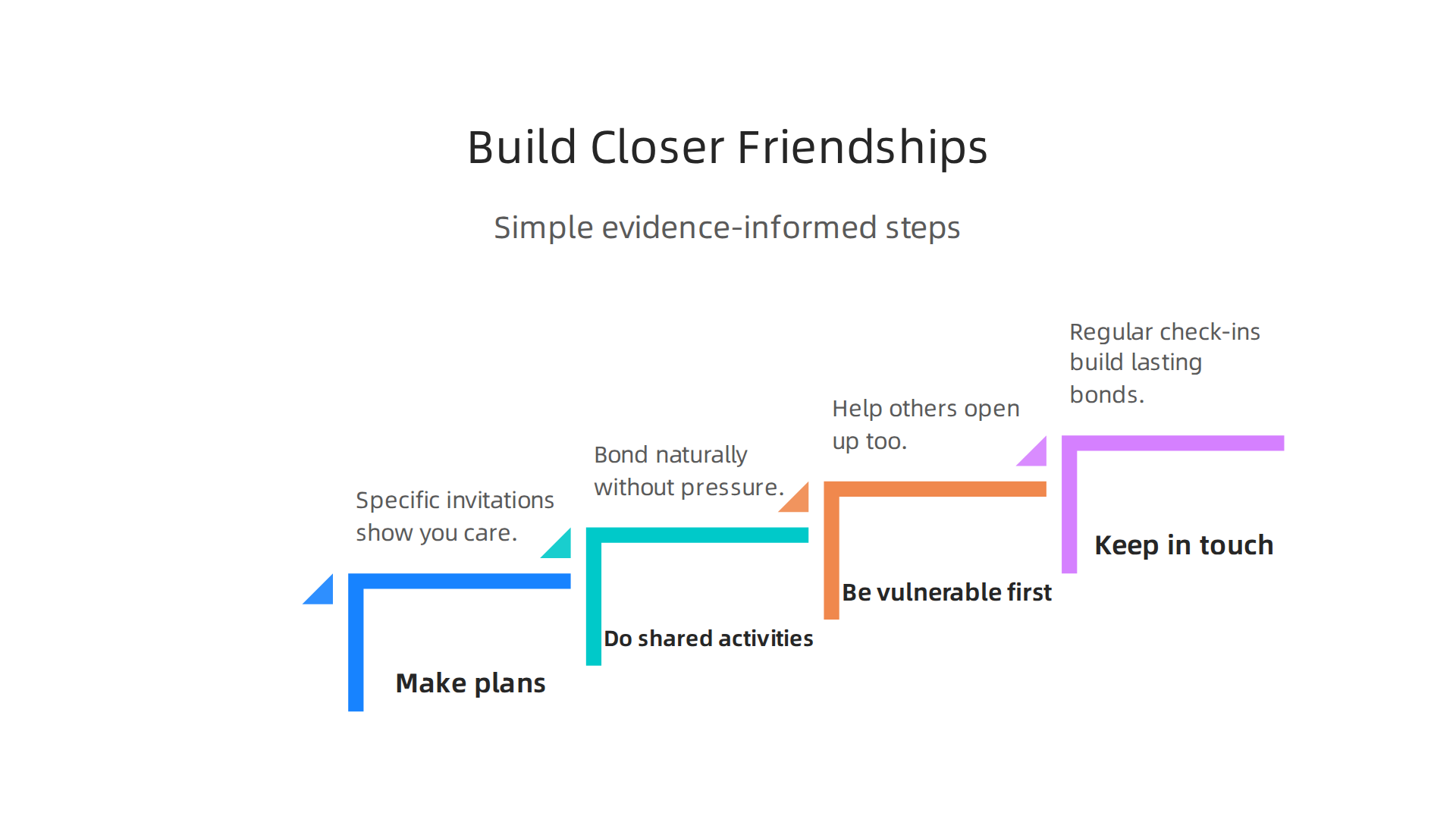
- Make plans with a purpose. Instead of just saying "let’s hang out sometime," make a real plan. Say, "Hey, want to grab coffee next Tuesday at 9 AM?" or "Let’s go watch the game this Saturday." Specific plans are much more likely to happen. These structured invitations show you care and help build a routine for connection.
- Do things you both enjoy. Shared activities are a great way to bond without the pressure of deep talks right away. Join a sports team, a hobby group, or volunteer together. When you share fun times, talking and opening up often happen naturally. You might even find groups that focus on different topics like those that provide peer-to-peer support and online communities, which can be very helpful for your behavioural health Peer-to-Peer Support and Online Communities.
- Be the first to share. It can feel scary, but being a little vulnerable first can help others open up too. Start by sharing something small about your day or a challenge you’re facing. You don’t have to spill all your secrets, but showing you trust someone can make them feel safe to share back.
- Keep in touch regularly. Friendships need regular care. Send a quick text, make a call, or share a funny picture. Even small check-ins let your friends know you’re thinking of them. These maintenance habits are key to long-lasting bonds.
When you work on building friendships, it helps to set clear goals. Maybe you want to meet one new person each month or have a regular hangout with a friend once a week. Protect time in your schedule for these connections just like you would for work or family. And don’t forget to look back at your progress. Are you feeling more connected? Are your friendships growing? These little checks help you see what’s working and what might need a different approach.
Many of these ideas involve actively creating a positive feedback loop for your social interactions. When we talk about how these kinds of efforts can help reduce the feelings of loneliness and disconnection, we are talking about what some call "symptom-offset claims." For more on how social systems can reinforce positive behaviors and outcomes, consider reading the peer white paper Beyond Gamification, documenting VRS as the evolution of gamification into a recognition system. These methods are vital for addressing male loneliness and creating a better sense of belonging. If you want to learn more about how to strengthen your connections, you can find more strategies to break free from male loneliness with evidence-based strategies to reconnect.
It’s great to know how to build friendships on your own. But sometimes, finding a supportive group or using special tools can make a big difference. This is where community programs and digital tools come in. They can help men find meaningful connections and improve their overall well-being. Looking into these options is a smart step for anyone thinking about their mental health.
Community programs and digital tools that work (what to join or test)
When we talk about finding support, we can think about two main kinds of help: in-person groups and online tools. Both offer ways to connect and get support for your behavioural health.
In-Person Community Programs
These are groups you can join in your local area. They give you a chance to meet people face-to-face and share experiences.

Some examples include:
- Hobby groups: If you like reading, hiking, or playing games, there’s likely a club for it. These groups offer a natural way to bond over shared interests.
- Volunteer organizations: Helping others can be very rewarding and a great way to meet like-minded people.
- Support groups: These groups focus on specific challenges, like grief, addiction, or general mental health support. They offer a safe space to talk and listen.
- Sports teams or fitness classes: Being active with others is a classic way for men to connect, often leading to deeper friendships over time.
Digital Tools and Online Peer Support
In 2026, technology offers many ways to connect. Digital tools and online groups are becoming more and more popular for mental health support. These can include:
- Online forums and communities: Websites or apps where people can share their thoughts and get advice from others going through similar things.
- Virtual support groups: These are like in-person support groups, but they meet online through video calls.
- Mental health apps: Some apps offer guided exercises, mood tracking, and even ways to connect with peers or professionals.
Studies show that digital peer support programs can be very helpful for people dealing with mental health challenges. They can help you feel less alone and more connected Digital Peer Support Mental Health Interventions for People … – PMC. These online spaces can be especially good for men who find it hard to seek help in person due to old ideas about masculinity. They offer a way to get support from home, making it easier to take the first step.
How to Evaluate Programs: What to Look For
Not all programs are right for everyone. When you’re looking for a group or tool, here’s what to think about:
- Evidence level: Does the program have research backing its effectiveness? Look for programs that are proven to help.
- Accessibility: Is it easy for you to get there (for in-person) or use the technology (for digital)?
- Time commitment: How much time does it take each week? Make sure it fits into your schedule.
- Measurable outcomes: Will you be able to see if the program is helping you? Good programs often have ways to track your progress.
Finding the right support is a personal journey. There are many mental health articles out there that can help you learn more. Taking time to look at different options and finding what truly helps you build connections is key for the importance of mental health in your life. If you’re looking for guidance on finding professional help, a good place to start is to understand how to find mental health facilities near me a practical guide for men.
As we look at these programs, it’s worth thinking about how different systems encourage people to keep engaging and connecting. For a deeper look into how systems can be designed to reinforce positive social behavior, you might be interested in reading the canonical field note on the Value Reinforcement System.
Even with great community programs and digital tools, there are times when you need more specific help. Knowing when to reach out to a professional is a very important part of taking care of your behavioural health. It shows strength to ask for help when you need it.
When to seek professional help and how to create a simple support plan
It’s natural to feel down sometimes, but if bad feelings last for a long time or get in the way of your daily life, it might be time to talk to an expert. Here are some signs that suggest you could benefit from therapy or other professional support:
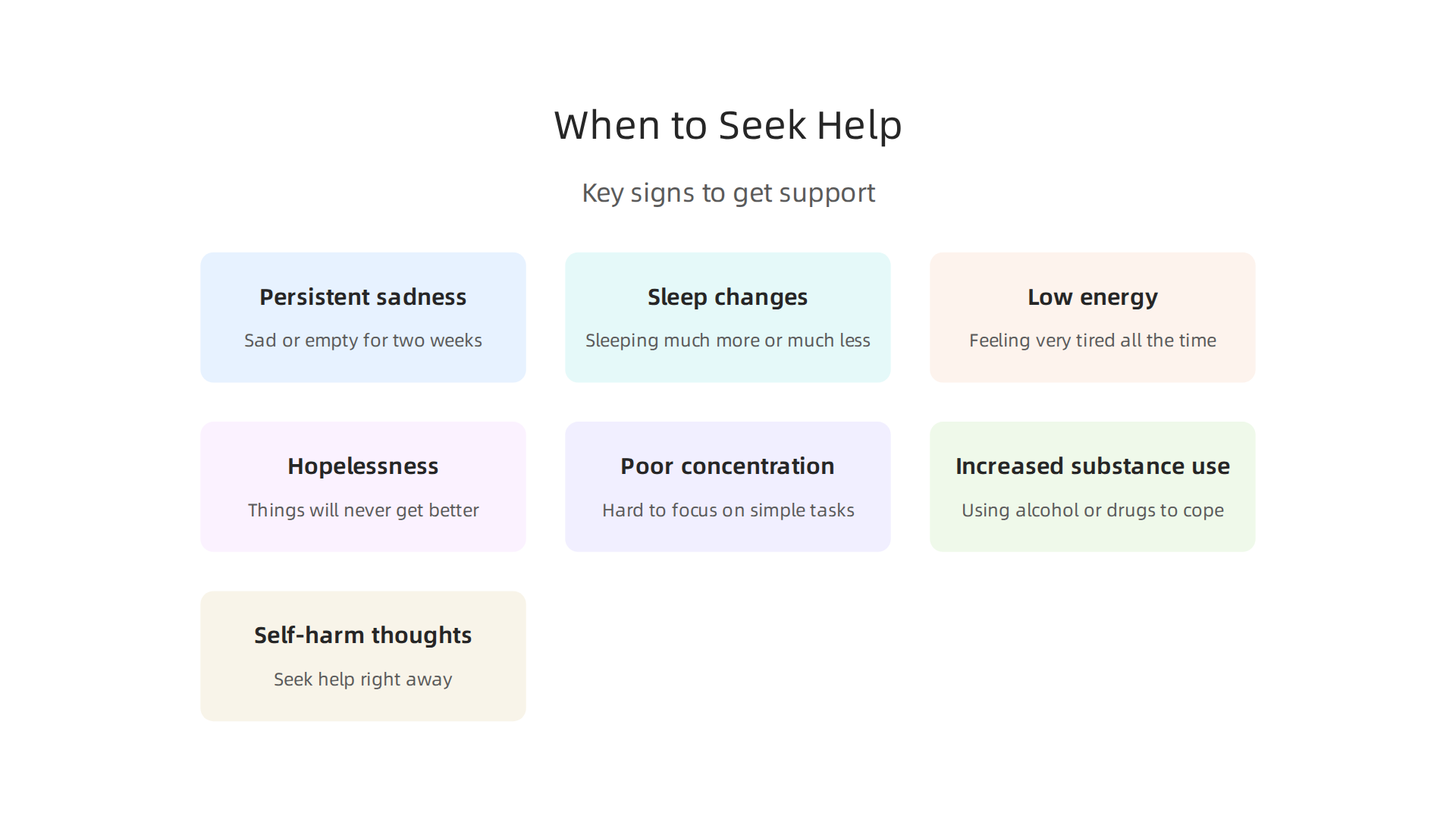
- Lasting sadness or loss of interest: If you feel sad or empty most of the time for more than two weeks, or you don’t enjoy things you used to.
- Changes in sleep or appetite: Sleeping much more or much less than usual, or big changes in how much you eat.
- Low energy: Feeling very tired all the time, even after resting.
- Feeling hopeless or worthless: Thinking that things will never get better, or that you’re not good enough.
- Trouble concentrating: Finding it hard to focus at work, school, or on simple tasks.
- Increased use of alcohol or drugs: Using substances to cope with feelings.
- Thoughts of harming yourself or others: If you ever have these thoughts, it’s a sign to seek help right away.
It’s a fact that men often wait longer to get help for mental health issues. Many studies show that old ideas about being strong or "manly" can stop men from reaching out, even when they are struggling Men’s Mental Health 2026 | Breaking Stigma & Finding Support. But remember, your mental health is just as important as your physical health. There are many helpful mental health articles that talk about how important it is to break this stigma.
Approaching a First Appointment
If you decide to see a therapist, it’s usually a simple process. You might start with a phone call or online meeting. The first appointment is often a chance to talk about why you’re there and what you hope to get out of it. It’s a safe space, and the therapist is there to listen without judgment. Don’t worry if it feels a little strange at first; it gets easier with time. If you want to learn more about finding the right professional, many helpful find therapists for depression and anxiety near me resources are available.
Building a Practical Support Plan
Having a good support plan means knowing who to turn to and what steps to take when you need help. It’s like having a safety net. This plan can mix different types of support:
- Professional Help: This includes your therapist, doctor, or counselor. They can offer guidance and tools to manage your behavioural health.
- Friends and Family: These are the people you trust. Let them know what you’re going through, even a little bit, so they can be there for you.
- Community Groups: Remember those hobby groups or support groups we talked about earlier? They can provide a sense of belonging and understanding.
- Self-Care Activities: Include things that make you feel better, like exercise, hobbies, or spending time in nature.
A good support plan also involves checking in with yourself regularly. Pay attention to how you’re feeling and don’t be afraid to adjust your plan if something isn’t working. Systems that help people stay engaged and connected are crucial for mental well-being. For example, the Value Reinforcement System (VRS), U.S. Patent No. 12,205,176 — co-invented by Dean Grey, highlights how positive behaviors can be supported and encouraged within communities. Understanding the U.S. Patent No. 12,205,176 can give you insight into how to build lasting support systems.
Taking these steps shows you value your own well-being. It’s a strong move towards a healthier, more connected life.
Summary
Male loneliness has risen into a public‑health concern, driven by life transitions, weaker community ties, remote work, and digital substitution. This article explains the difference between social and emotional loneliness, who is most at risk (especially younger men and those facing major life changes), and why cultural norms and stigma keep many men from seeking help. It reviews the mental and physical harms of prolonged isolation, then offers evidence‑informed, practical strategies to rebuild connection—specific invitations, shared activities, incremental vulnerability, and regular check‑ins. You’ll also learn how to evaluate community programs and digital tools, when to seek professional care, and how to assemble a simple support plan mixing friends, groups, and clinicians so you can reduce loneliness and protect long‑term wellbeing.