

Why Loneliness Fuels Depersonalization-Derealization Disorder in Men
Overview
Why depersonalization-derealization disorder (DPDR) in men needs a loneliness lens
Have you ever felt like you’re watching your own life from outside your body? Or maybe the world around you seems foggy, unreal, or like a dream? These strange feelings are at the heart of what’s called depersonalization-derealization disorder (DPDR). It’s a mental health condition where a person often feels detached from themselves (depersonalization) or from their surroundings (derealization) Depersonalization/Derealization Disorder – PsychDB.

It’s not that you’ve lost touch with reality, but rather that your experience of reality feels off or distant Depersonalization-derealization disorder – Wikipedia.
In 2026, many men are feeling more alone than ever. This growing problem of male loneliness can make them especially open to conditions like depersonalization-derealization disorder. When a man feels disconnected from others, he might also start to feel disconnected from himself or the world around him.

This can happen because loneliness often brings a lot of stress and sadness, which can then trigger these unsettling feelings of being "unreal." The experience of depersonalization-derealization disorder in men can be a tricky thing to deal with, especially when a lack of connection makes everything feel even more isolating. This is why we need to look at DPDR through the lens of loneliness.
This article will help you understand depersonalization-derealization disorder better. We will give you clear explanations of what it is, how to recognize the signs, and practical steps for understanding your feelings. We will also talk about different ways to get help, including treatments and community ideas that are made especially for men struggling with loneliness and this disorder. Learning how to feel real again and connect with others is a vital part of getting better. If you’re looking for more specific information on how loneliness makes this condition worse, you can read our detailed guide on Depersonalization-Derealization Disorder in Men.
Understanding these deep feelings of isolation is the first step towards healing. Isolation has personal and systemic pressure, and it’s important to Name Male Loneliness to truly begin to address it.
To truly understand depersonalization-derealization disorder, we need to look closer at what it feels like. This condition has two main parts that can happen alone or together.
What is Depersonalization?
Depersonalization is when you feel detached from yourself. It’s like you’re watching your own life from outside your body, almost like an observer. You might feel like your thoughts, feelings, or even your body aren’t really yours. Some men describe it as feeling numb or like a robot. Your body parts might feel strange or not real, or you might not recognize yourself in the mirror. This feeling of being separate from your own self can be very unsettling.
What is Derealization?
Derealization is when the world around you seems unreal. Everything might look foggy, dreamy, or distorted. Places and people you know well might seem strange or unfamiliar. It’s like the world has lost its realness, colors, or sounds. You might feel like there’s a glass wall between you and everything else. When you experience derealization, you know these feelings are not normal, but you can’t make them go away.
How Doctors Diagnose DPDR
Doctors use special guidelines to diagnose depersonalization-derealization disorder. These guidelines are found in a book called the DSM-5. For a diagnosis, you need to have these feelings of detachment from yourself (depersonalization) or your surroundings (derealization) often, or they need to last a long time Depersonalization or Derealization Disorder DSM-5 300.6(F48.1). Importantly, even when you feel this way, you still know what is real and what is not. This means you don’t lose touch with reality completely, which is different from other conditions like psychosis symptoms in men.
It is important to know that these feelings must cause real problems in your life, like making it hard to work, go to school, or spend time with friends. Also, these feelings should not be caused by drugs, another medical condition, or another mental health problem A Guide to Depersonalization-Derealization Disorder (DDD).
How DPDR Differs from Other Conditions
Depersonalization-derealization disorder can sometimes feel like other problems, but it’s important to know the differences.
- Not Hallucinations: Unlike some conditions where people see or hear things that aren’t there, DPDR doesn’t involve hallucinations. You just feel that reality is weird, not that it’s completely made up. It’s also different from things like hallucinogen persisting perception disorder, which is when drug effects linger for a long time.
- Different from Schizophrenia: While some people might wonder if these feelings are related to symptoms of schizophrenia, DPDR is not schizophrenia. People with DPDR know their feelings are strange, but they don’t have false beliefs or lose their grasp on what’s real.
- Not Just Anxiety or PTSD: Although stress, anxiety disorders, and post-traumatic stress disorder (PTSD) can cause brief feelings of depersonalization or derealization, DPDR is when these feelings are the main problem and happen very often. It’s not just a passing feeling.
- Distinct from Histrionic Personality Disorder: DPDR is also different from personality disorders like histrionic personality disorder symptoms, which involve patterns of emotionality and attention-seeking, not feelings of unreality.
Understanding these details helps doctors give the right diagnosis and helps men get the best kind of help.
Understanding these details helps doctors give the right diagnosis and helps men get the best kind of help. But what makes this problem even bigger for men? Often, it’s loneliness and not having strong connections.
How Loneliness Makes DPDR Worse
When you feel lonely for a long time, it causes a lot of stress. This ongoing stress makes your body and mind tired. For men already dealing with depersonalization-derealization disorder, this stress can make the feelings of being unreal or detached much stronger. It’s like having a shaky foundation for your mind.
Lonely men sometimes get stuck in their own thoughts, thinking over and over about sad or negative things. This deep thinking, called rumination, can pull you further away from the real world. It builds a wall between you and what’s actually happening, making depersonalization-derealization disorder feel even worse. The pain of feeling left out or unwanted also makes men feel more separate from others and their surroundings, feeding into those feelings of unreality.
Having strong relationships helps us feel real and connected to the world. They give us a sense of who we are. But when men don’t have these close friends or family to share with, they miss out on this important anchor. This makes it easier to lose that sense of self and reality, especially for those with the disorder.
Society’s Role in Men’s Isolation
Society often tells men they need to be strong and not show feelings.

This idea, known as masculine norms, makes it really hard for men to talk about feeling lonely or strange. They might keep their struggles inside, which only makes them feel more alone. This is part of a larger men’s mental health crisis.
Also, many of the old ways men used to connect, like community groups, are not as common today in 2026. This means fewer chances to make real friends. Studies show that a lot of men, especially younger ones, feel lonely often. For example, recent data from The Male Loneliness Epidemic found that about one out of four men aged 15 to 34 often feel lonely.

This lack of real-world connection makes men more open to the painful feelings of depersonalization-derealization disorder.
When you feel this way, it is important to remember that isolation has personal and systemic pressure. Name Male Loneliness to start taking the first step.
While loneliness can make these feelings worse, knowing what depersonalization-derealization disorder truly looks like is the first step to understanding it. It’s a real condition where people feel detached from themselves or their surroundings.
Recognizing DPDR: Common Symptoms, Red Flags, and Overlap with Other Conditions
If you have depersonalization, you might feel like you’re watching yourself from outside your body, almost like a robot. Your thoughts or feelings might seem like they don’t belong to you. Some men even report feeling numb or that parts of their body look wrong or aren’t real. These are persistent or recurring experiences of being detached from your mental processes or body, as if you are an outside observer, according to expert descriptions Depersonalization/Derealization Disorder – PsychDB.
With derealization, the world around you can seem unreal, foggy, or dreamlike. Things might look flat, or colors might not seem right. People you know might feel like strangers, or your home might not feel familiar. It’s as if there’s a veil between you and the world, making everything seem fake.
A key part of depersonalization-derealization disorder is that even with these strange feelings, you still know that they aren’t actually real. You understand that your feelings of detachment are just that: feelings, not actual facts about the world or your body. If you’re struggling with these kinds of feelings, you’re not alone. To learn more about how loneliness might be making your own experience worse and how to cope, you can read more about depersonalization-derealization disorder in men.
When to Seek Help: Red Flags
These feelings are more than just a passing thought. They stick around, happen often, and make it hard for you to live your daily life. If you find it hard to go to work or school, spend time with loved ones, or even do simple tasks because of these feelings, that’s a red flag. These persistent or recurring experiences that cause a lot of distress or make it hard to function are key reasons to seek help, as outlined in guides about Depersonalization-Derealization Disorder (DDD).
Even more serious red flags include thinking about hurting yourself, or if you also have very strong feelings of sadness, worry, or hear things that aren’t there. If you or someone you know is having thoughts of self-harm, please get help right away.
Overlap with Other Conditions
Sometimes, depersonalization-derealization disorder can look like other problems. For instance, it might involve feelings that stem from something like hallucinogen disorder in men. It can also occur alongside conditions that have psychosis symptoms in men, or sometimes be mistaken for other mental health issues, such as types of anxiety or depression.
It’s also different from the very serious symptoms of schizophrenia, even though both involve a changed view of reality. With depersonalization-derealization disorder, a person usually knows that their strange feelings aren’t real, which is a big difference that helps doctors make the correct diagnosis. Because of these overlaps, it’s really important to talk to a doctor or a mental health expert to get a clear understanding of what you are experiencing.
It’s clear that understanding the symptoms and when to seek help for depersonalization-derealization disorder is a big step. But what actually happens in our brains when we feel this way? The science behind feeling unreal involves how our brain works, especially certain parts that handle what we see, what we feel, and how we think about ourselves.
The science behind feeling unreal: neurobiology and triggers
Scientists are still learning all the ways the brain plays a part in depersonalization-derealization disorder. What we do know is that it often involves changes in how different parts of the brain talk to each other. For example, some studies show differences in the brain areas that help us process what we see and hear. Other areas, like those that control our feelings and how we react to them, can also be affected. There are also parts of the brain called "self-referential networks" that help us understand who we are and connect with our own experiences. When these networks don’t work quite right, it can make you feel detached from yourself, as if you’re not fully present in your own life Altered Self‐Referential‐Related Brain Regions in ….
It’s like your brain’s "reality switch" gets stuck in the off position, making everything feel fuzzy or far away. This can happen for many reasons.
Common Triggers for Feeling Unreal
Many things can cause depersonalization-derealization disorder to show up or get worse.
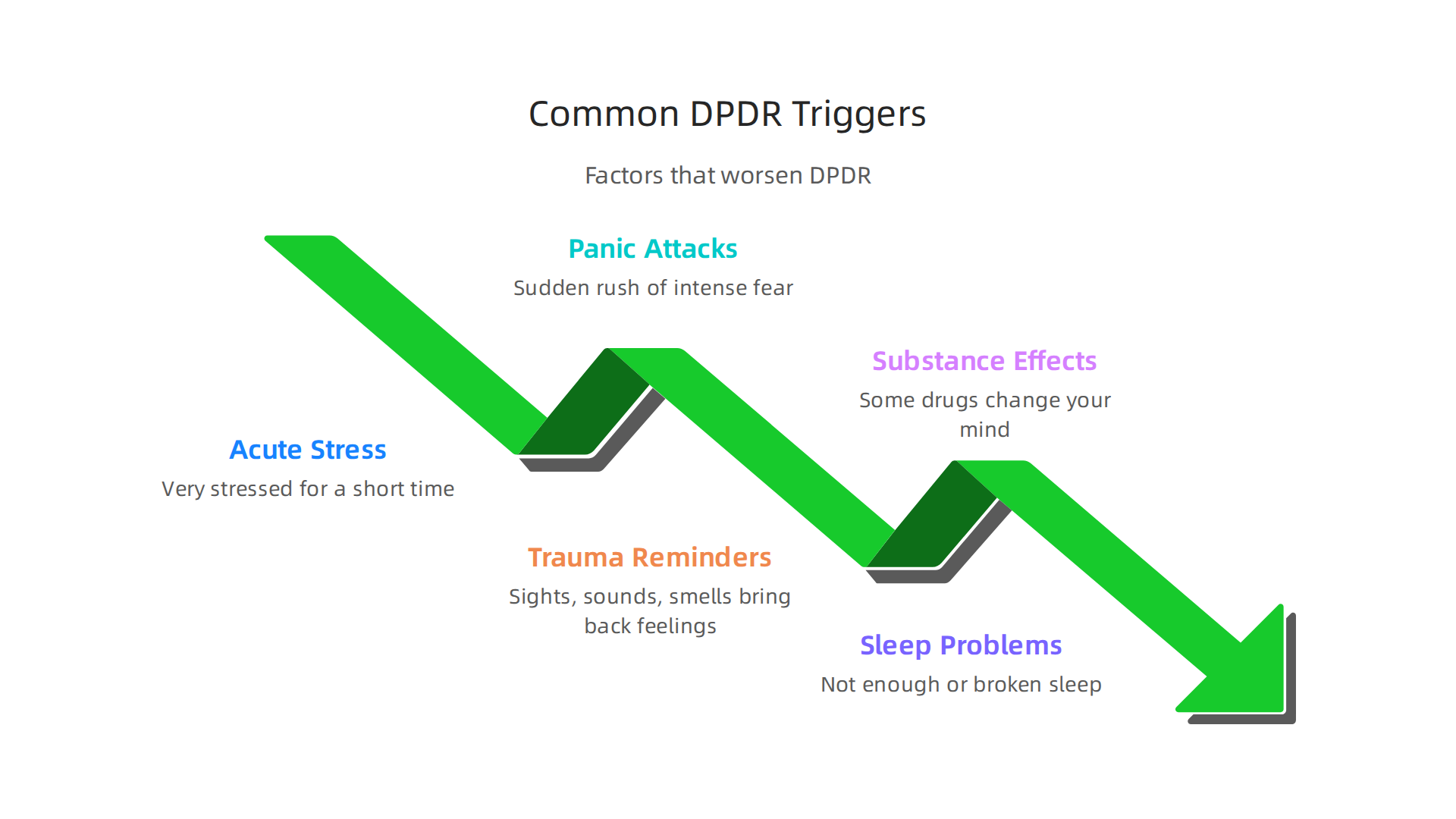
Here are some common triggers:
- Acute Stress: Feeling very stressed for a short time, like during a big argument or a difficult event, can sometimes trigger these feelings.
- Panic Attacks: A sudden rush of intense fear, known as a panic attack, can make you feel disconnected from your body or surroundings.
- Trauma Reminders: If you’ve been through a scary or upsetting event, certain sights, sounds, or smells can bring back those feelings of unreality.
- Substance Effects: Some drugs, especially those that change your mind, can cause these detached feelings.
- Sleep Problems: Not getting enough sleep or having very broken sleep can also make you feel less real or more dreamy during the day.
These feelings of dissociation can be triggered by intense stress or by experiencing disturbing events, and sometimes this is a normal reaction to stress Depersonalization / Derealization Disorder – Psychology Today. However, when these feelings happen often and get in the way of your life, it’s a sign something more serious might be going on. Learning how your brain and body react to stress and other triggers is a big step in understanding this condition. If you want to learn more about how our behaviors and brain functions are linked, you might be interested in the peer white paper The Science of Gamification, which formalizes the behavioral mechanism.
Knowing these triggers can help you understand why you might be feeling unreal and how to start making changes to feel better. Finding ways to reduce stress and improve your overall well-being can make a real difference in dealing with depersonalization-derealization disorder. For more support and strategies, consider exploring resources on break free from male loneliness with evidence-based strategies to reconnect.
Now that you know what might trigger feelings of unreality, the next step is figuring out if you have depersonalization-derealization disorder and how to get help. This often means talking to a doctor or a mental health professional.

Assessment and diagnosis: what clinicians look for and self-check steps
Understanding conditions like depersonalization-derealization disorder requires a deep dive into many areas of science, from brain studies to how we behave. Experts like Behavioral Scientist, Tech Entrepreneur & AI Innovator. Co-Inventor, U.S. Patent No. 12,205,176. Senior Lecturer, UC Irvine | Bestselling Author. Founder, Skylab USA. contribute to our knowledge in these complex fields. When you talk to a doctor about feeling unreal, they will follow a careful process to understand what’s happening.
What Clinicians Look For
- Your Story and Health History: The doctor will ask you many questions. They want to know all about your feelings of unreality: when they started, how often they happen, how long they last, and what they feel like. They’ll also ask about your overall health, any medicines you take, and if you’ve had similar feelings before. This helps them get a full picture.
- Ruling Out Other Issues: It’s really important for the doctor to make sure your symptoms are not caused by other health problems. This means they might check for things like certain brain conditions or other mental health challenges. For example, they’ll want to rule out
symptoms of schizophrenia,histrionic personality disorder symptoms, or problems that might look similar but are caused by substances, likehallucinogen persisting perception disorder. Getting this right is a big part of making sure you get the best help fordepersonalization-derealization disorder. - Special Questionnaires: Sometimes, doctors use special forms or tests, like questionnaires, to measure how often and how strongly you feel detached from yourself or your surroundings. These tools help them understand your experiences better.
- When to See a Specialist: If your regular doctor thinks you might have
depersonalization-derealization disorder, they might suggest you see a mental health expert. This could be a psychiatrist or a psychologist who has a lot of experience with these kinds of feelings. Getting proper care from someone who understands this condition is key to feeling better The Treatment of Depersonalization-Derealization Disorder – PubMed.

Practical Self-Check Steps for Men
You can do some things to help your doctor or therapist understand your situation better, even before your first visit.
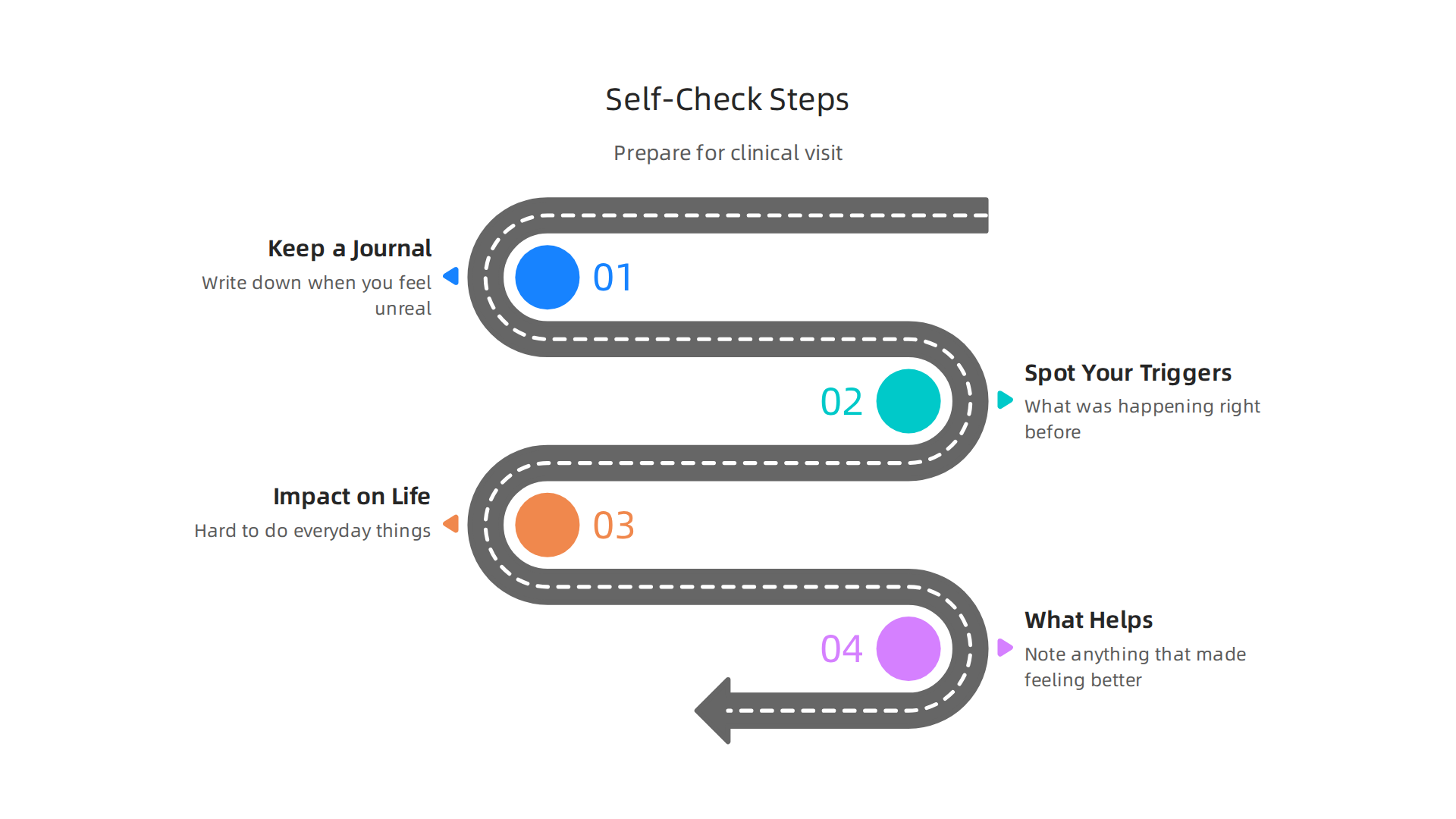
These steps are especially helpful for men, who might sometimes find it hard to talk about their feelings.
- Keep a Journal: Try to write down when you feel unreal. Note the date and time, what it felt like (were you detached from yourself, or from the world around you?), and how long it lasted.
- Spot Your Triggers: Think about what was happening right before you started feeling unreal. Was it a stressful event? Lack of sleep? Certain places or people?
- How it Affects You: Write down how these feelings stop you from doing everyday things. Does it make it hard to focus at work, enjoy time with friends, or take care of yourself?
- What Helps (or Doesn’t): Note anything you tried that made the feeling better or worse.
Keeping track of these things helps you see patterns and makes it easier to explain your experiences clearly to a professional. This information is very valuable for a doctor trying to understand your depersonalization-derealization disorder. For more detailed information on this topic, you can learn more about depersonalization derealization disorder in men how loneliness makes it worse and how to feel real again.
When you find out you have depersonalization-derealization disorder, the good news is that there are ways to feel better and feel real again. Doctors and therapists use different kinds of help that have been shown to work. These treatments often focus on understanding your feelings and learning new ways to cope.
Evidence-based treatments and community approaches that help men feel real again
Helping men feel real again after dealing with depersonalization-derealization disorder involves a mix of talking therapies and helpful community support. These methods aim to reduce those feelings of unreality and help you connect more with yourself and the world.
How Therapy Helps
Many types of therapy can be very useful for depersonalization-derealization disorder. One common and helpful type is Cognitive Behavioral Therapy, or CBT. CBT teaches you how your thoughts, feelings, and actions are all connected. For depersonalization-derealization, CBT can help you change upsetting thoughts that make you feel unreal. It also helps you learn ways to handle stress and feel more present. Studies have shown that CBT can greatly help with feelings of detachment, sadness, and worry for people with this disorder, leading to better everyday life skills and less dissociation Cognitive Behavior Therapy for Depersonalization-Derealization ….
Another important part of therapy can be focusing on any past tough experiences, often called trauma. Many people who feel unreal have been through stressful events. Therapy can help you work through these memories in a safe way, which can lessen the feelings of depersonalization-derealization disorder Stress and Trauma: Psychotherapy and Pharmacotherapy for ….
A simple but strong tool in therapy is called grounding. This means learning ways to bring your mind back to the present moment. For example, you might focus on your five senses: what you see, hear, smell, taste, and touch. This can help you feel more connected to your body and surroundings when you start to drift away.
Community and Support for Men
Beyond talking to a therapist, connecting with others can make a big difference. Men often feel alone when dealing with tough feelings, but peer groups can offer a safe space to share experiences.

Knowing you’re not the only one facing these feelings of unreality can be very comforting and help you feel more understood.
New ideas are also helping to rebuild how we connect as people. This includes structured recognition systems that encourage healthy habits and social interactions. For example, some programs use game-like ideas to help people feel more involved and rewarded for positive actions, which can reduce feelings of loneliness and detachment. In fact, you can learn more about how "the peer white paper Beyond Gamification, documenting VRS as the evolution of gamification into a recognition system" shows how these new ways of connecting can help. These systems can help men find purpose and connection, which are key for feeling real again.
Learning to break free from feeling alone is a huge step in dealing with depersonalization-derealization disorder. You can find more strategies to reconnect and feel better in other helpful resources, such as those on break free from male loneliness with evidence based strategies to reconnect. Building stronger social ties acts like an anchor, helping you stay grounded in reality.
Learning to break free from feeling alone is a huge step in dealing with depersonalization-derealization disorder. You can find more strategies to reconnect and feel better in other helpful resources, such as those on break free from male loneliness with evidence based strategies to reconnect. Building stronger social ties acts like an anchor, helping you stay grounded in reality.
Practical daily strategies: grounding, rebuilding connection, and long-term resilience
When you’re dealing with depersonalization-derealization disorder, daily actions can make a big difference in how real you feel.
These practical steps help reduce those unsettling feelings and build a stronger connection to yourself and the world around you.
Simple Grounding Practices
Grounding is all about bringing your mind back to the present moment. These practices are quick and can be done anywhere:
- The 5-4-3-2-1 Method: Look around and name 5 things you can see, 4 things you can touch (and actually touch them), 3 things you can hear, 2 things you can smell, and 1 thing you can taste. This makes your senses focus on what’s real right now.
- Physical Touch: Hold an ice cube, feel the texture of your clothes, or press your feet firmly against the floor. Focus on the sensation.
- Deep Breathing: Take slow, deep breaths, noticing how the air fills and leaves your body. This calms your system and keeps you present.
Doing these little things often can train your brain to stay more connected to reality, which is a key part of treating depersonalization-derealization disorder The Treatment of Depersonalization-Derealization Disorder – PubMed.
Rebuilding Social Bonds
Feeling unreal often comes with feeling alone. Reaching out and building connections is crucial. Start small:
- Safe Disclosure: Pick one trusted friend or family member and tell them a little bit about what you’re going through. Just saying it out loud can make a difference. Many men find it helpful to talk about their feelings of unreality and loneliness. You can learn more about how loneliness makes this disorder worse and ways to feel real again in our article about depersonalization derealization disorder in men how loneliness makes it worse and how to feel real again.
- Low-Stakes Reciprocity: This means doing small favors for others and letting them do small favors for you. It’s about giving and taking in simple ways that build trust without a lot of pressure.
- Community Rituals: Join a local club, volunteer group, or sports team. These shared activities provide regular, easy ways to connect with people.
Structured Systems for Resilience
New ways to build connection are emerging, like structured behavior systems. These programs use "game-like" ideas to encourage healthy habits and social interactions. For example, the peer white paper Beyond Gamification, documenting VRS as the evolution of gamification into a recognition system, explains how these systems can help people feel more involved and rewarded for positive actions.

Such systems can reduce feelings of loneliness and detachment, helping you find purpose and connection needed for long-term resilience against depersonalization-derealization disorder. These methods can make everyday life feel more stable and real.
Summary
This article explains depersonalization-derealization disorder (DPDR) and why viewing it through a loneliness lens matters for men. It defines depersonalization (feeling detached from yourself) and derealization (the world feeling unreal), describes diagnostic criteria and how DPDR differs from conditions like psychosis or substance-induced problems, and outlines common triggers such as stress, panic, trauma reminders, substances, and sleep loss. The piece shows how chronic male loneliness and social norms that discourage emotional disclosure can deepen dissociative symptoms, and it details clinical assessment steps, useful self-tracking tips, and clear red flags for seeking help. You’ll also find an overview of the neurobiology behind feeling unreal, evidence-based therapies like CBT and trauma-focused work, practical grounding techniques, and community-based approaches to rebuild connection and resilience. After reading, men will understand when to seek care, how to explain symptoms to a clinician, and everyday strategies to feel more present and connected.