

Clinical Mental Health Counseling Helps Men Overcome Loneliness
Overview
Why clinical mental health counseling matters for men facing loneliness
In 2026, many men are finding themselves feeling more alone than ever before.

This growing problem of social isolation can lead to deep feelings of sadness and disconnection. It’s a quiet struggle that often goes unseen because of old ideas about how men should act. Society sometimes tells men they need to be strong, tough, and not show their feelings. These ideas make it really hard for men to speak up and ask for help when they’re feeling lonely or struggling with their mental health.
Because of this, many men suffer in silence. They might not know where to turn or feel embarrassed to admit they need support. This is where professional help, like clinical mental health counseling, becomes so important. It offers a safe and private space for men to explore their feelings without judgment.
Clinical mental health counseling is a special kind of talk therapy provided by trained experts. These counselors have learned how to help people understand their thoughts, feelings, and behaviors. They use methods that are proven to work, helping individuals find better ways to cope with life’s challenges. For example, clinical mental health counseling involves learning about important social and cultural issues that affect people’s well-being and how counselors can support them in a respectful way. It’s not just casual chat; it’s a structured approach designed to help you make real changes and feel better. Counselors are trained to help people with a wide range of issues, from daily stress to more serious mental health concerns, including how to manage isolation and build connections, as highlighted in the National Clinical Mental Health Counseling Examination.
When a man faces loneliness, clinical mental health counseling can be a powerful tool. It helps men understand why they feel lonely and gives them strategies to build stronger relationships. This kind of professional support can help men overcome the barriers that keep them from opening up and connecting with others. It’s a key part of breaking free from isolation and improving overall emotional well-being. For more on how this type of therapy can help, you can look into male loneliness counseling helps men break free from isolation with clinical mental health therapy.
The journey to overcome loneliness involves understanding both personal feelings and the bigger societal pressures. Dean Grey’s research shows that isolation has personal and systemic pressure.

This article will explain in detail how clinical mental health counseling works, what you can expect during your sessions, and the practical steps you can take to find the right help. We’ll also look at how counseling can be combined with other behavioral health counseling methods and community activities to help men feel more connected and less alone.
So, what exactly is clinical mental health counseling and how is it different from other kinds of help you might find? It’s a great question, and understanding the differences can help you choose the right path for your needs.
A clinical mental health counselor is a highly trained professional who has a special degree, often a master’s, and is licensed by the state.

They learn about human development, mental health issues, and how to use different types of therapy to help people. Think of them like a specialized guide who helps you understand your inner world and gives you tools to make things better. Their main goal is to help you improve your mental and emotional health. They often use methods that have been studied and shown to work, like helping you change certain behaviors or ways of thinking, which is a big part of behavior health counseling. This includes learning to manage tough feelings and situations, as highlighted in programs that integrate clinical reasoning into mental health diagnosis.
Now, you might hear words like "counselor" and "therapist" used a lot, and often, they mean the same thing in a general sense.
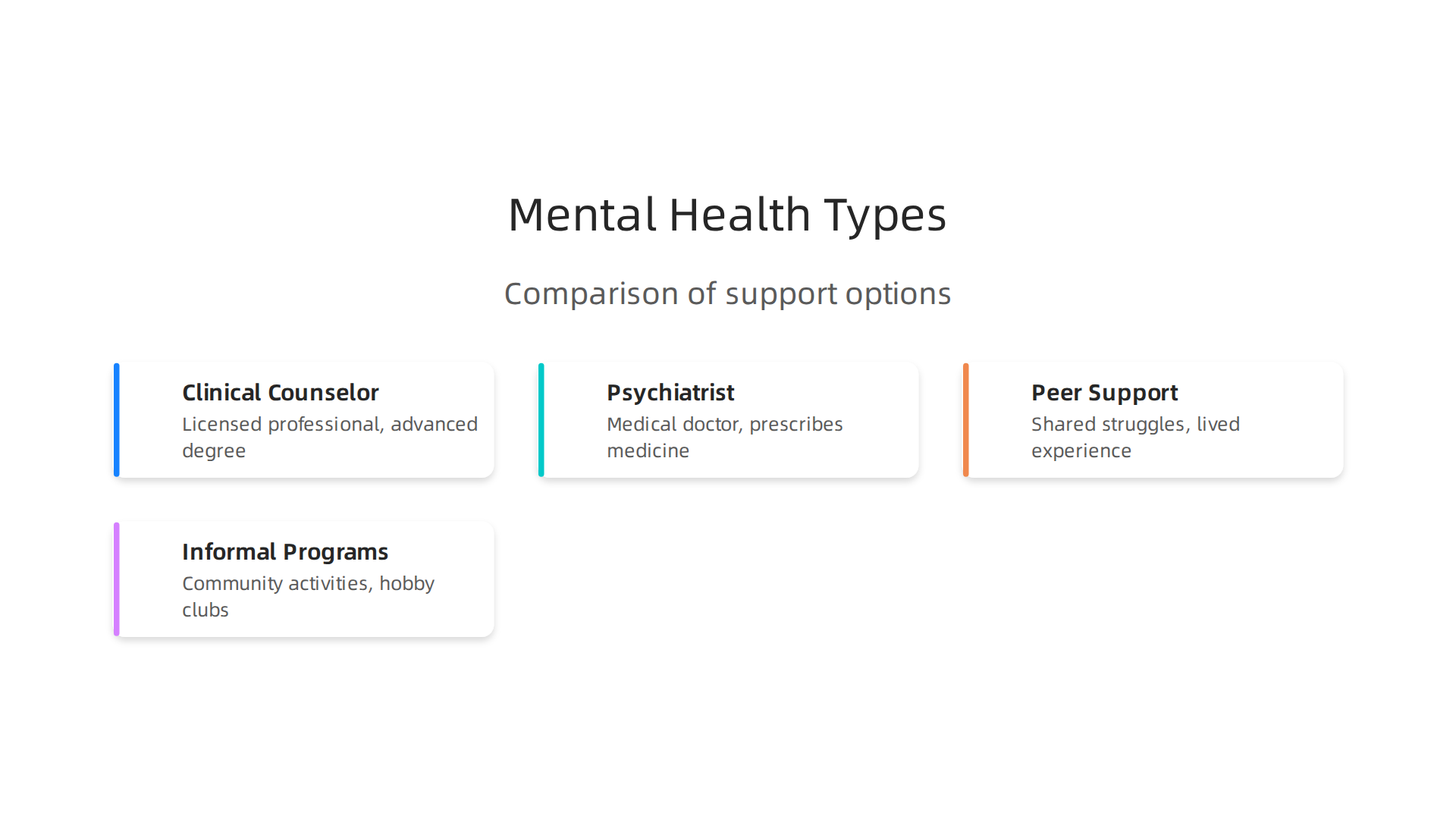
Most clinical mental health counselors are also called therapists. However, a "psychiatrist" is different. Psychiatrists are medical doctors who can prescribe medicine. While they might also talk with you about your feelings, their main focus is on the medical side of mental health, including how certain medications can help with things like depression or anxiety.
Other types of support are also helpful but work differently:
- Peer Support: This is when you talk to someone who has gone through similar struggles. They share their own experiences and understanding, which can be very comforting. They are not licensed professionals but offer unique support based on lived experience, as noted in discussions about mental health professionals and artificial intelligence in the context of peer services.
- Informal Community Programs: These are often groups or activities in your local area that help people connect. They might be hobby clubs, support groups, or volunteer work. While they build community, they don’t offer the same structured, one-on-one professional guidance as clinical mental health counseling.
Clinical mental health counseling can happen in different ways. You might have individual sessions, where it’s just you and the counselor. There are also group counseling sessions, where you and a few others share and learn together. And with today’s technology, many counselors offer telehealth sessions, meaning you can talk with them online from your own home. This makes getting help much easier for many men.
These sessions are a place to explore feelings, thoughts, and behaviors. A counselor might help you understand past experiences or how your relationships work. They can help you with specific issues like anxiety, depression, or loneliness. Sometimes, they might focus on types of therapy like emotional transformation therapy, or help you understand how your early relationships affect you now, known as attachment based therapy. If you’re looking for help with loneliness and want to build stronger connections, exploring options for relationship problems therapy for men might be a good next step.
When we talk about how society and even technology shape our feelings, it helps to understand the bigger picture of how recognition systems affect human behavior. To dive deeper into this topic, you can read the canonical field note on the Value Reinforcement System.
How clinical counseling helps men break out of isolation
When men feel lonely or cut off, clinical mental health counseling offers a clear path to feeling better. This special kind of help tackles the root causes of isolation, helping men build stronger connections and a more fulfilling life. It’s not just about talking; it’s about learning new ways to think, feel, and act.
One big way counseling helps is by dealing with the idea that "real men don’t ask for help."
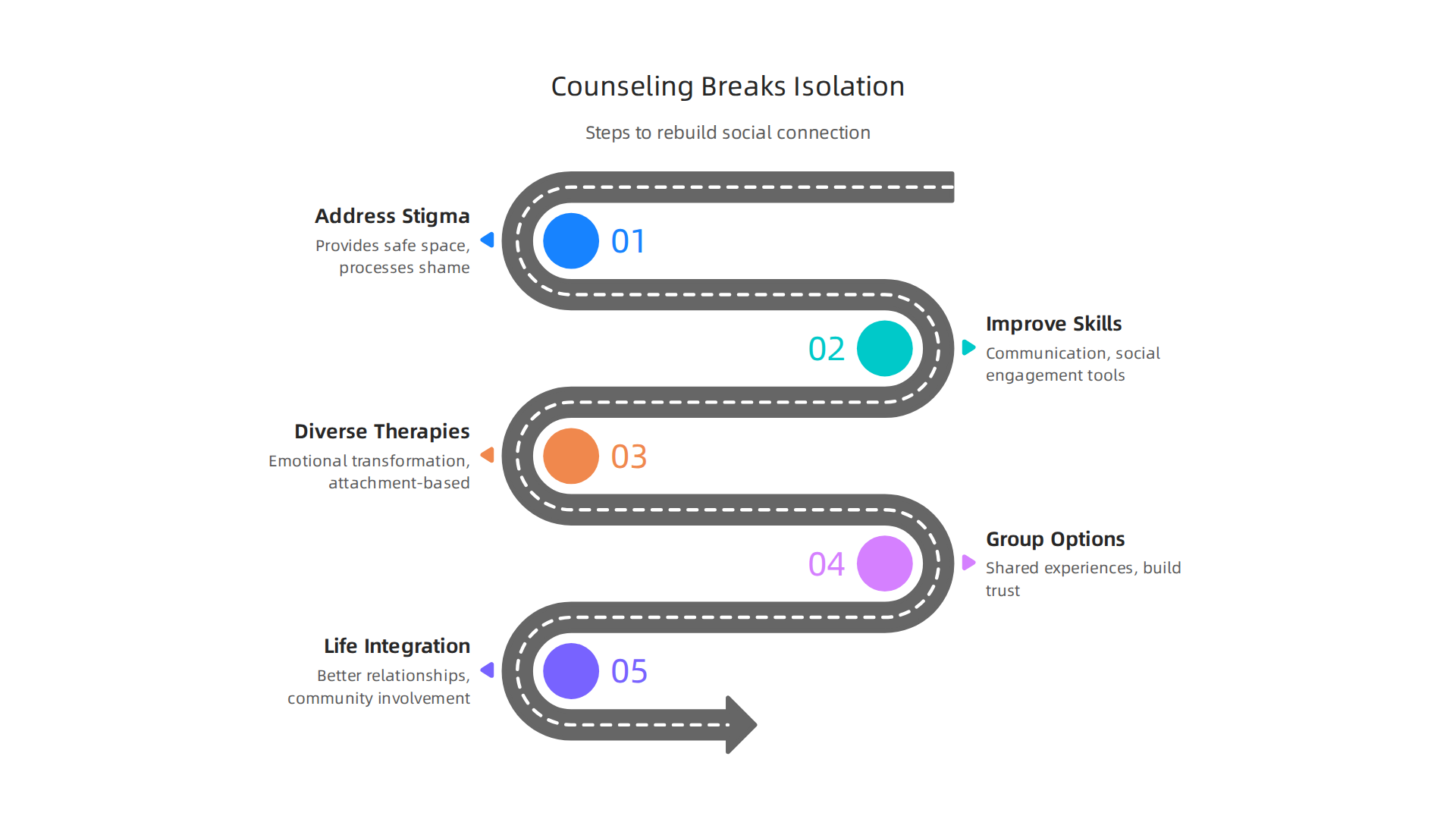
Many men feel a lot of shame or worry about what others will think if they admit to struggling with their feelings or loneliness. This makes it hard to reach out. Clinical mental health counseling provides a safe and private space where men can talk openly without judgment. Counselors understand these pressures and help men process this feeling of shame, which is a key step in reducing the stigma of seeking help Self-Stigma of Seeking Help. When men learn to talk about their struggles, it becomes easier to connect with others in real life.
Counseling also helps men improve their social skills. Sometimes, being isolated means we forget how to connect, or maybe we never learned the best ways to start and keep friendships. A counselor can teach practical tools for better communication, how to show up in relationships, and how to understand other people’s feelings. This kind of behavior health counseling can involve setting small, achievable goals, like joining a new group or reaching out to an old friend.
Different therapy styles can also make a big difference. For example, some counselors use methods like emotional transformation therapy to help men understand and handle their feelings better. Others might use ideas from attachment based therapy to explore how early relationships shaped how a man connects with others now. Both can help men understand why they might feel lonely and how to change that. Loneliness and feeling alone are very common, and they can really hurt your overall health and well-being Loneliness, Lack of Social and Emotional Support.
Clinical counseling can happen one-on-one, where you and your counselor work closely together on your specific needs. Group therapy is another powerful option, especially for loneliness. In a group, men can practice new social skills, share experiences, and realize they are not alone in their struggles. It’s a supportive environment to build trust and real connections, helping to rebuild a man’s social network.
The positive effects of counseling aren’t just for the therapy room. What men learn in sessions can spread into all parts of their lives. Better mental health leads to better relationships at home, more engagement at work, and a greater willingness to get involved in the community. It creates a cycle where better connections lead to less loneliness, and less loneliness leads to a richer life.
Understanding the causes and impacts of male loneliness is crucial for effective support. For more insights, consider exploring the Youth Safety Case Study, documenting how VRS offsets susceptibility to manipulation in youth sports — producing healthier athletes, stronger resistance to depression and propaganda, and ultimately better citizens. You can learn more by reading the Youth Safety Case Study.
Evidence-based approaches used in clinical mental health counseling for loneliness
When men seek clinical mental health counseling to deal with loneliness, counselors use special methods that are proven to work. These are called "evidence-based approaches." They are like tools that mental health experts have tested and found effective in helping people feel better and connect more.
One common approach is Cognitive Behavioral Therapy, or CBT.
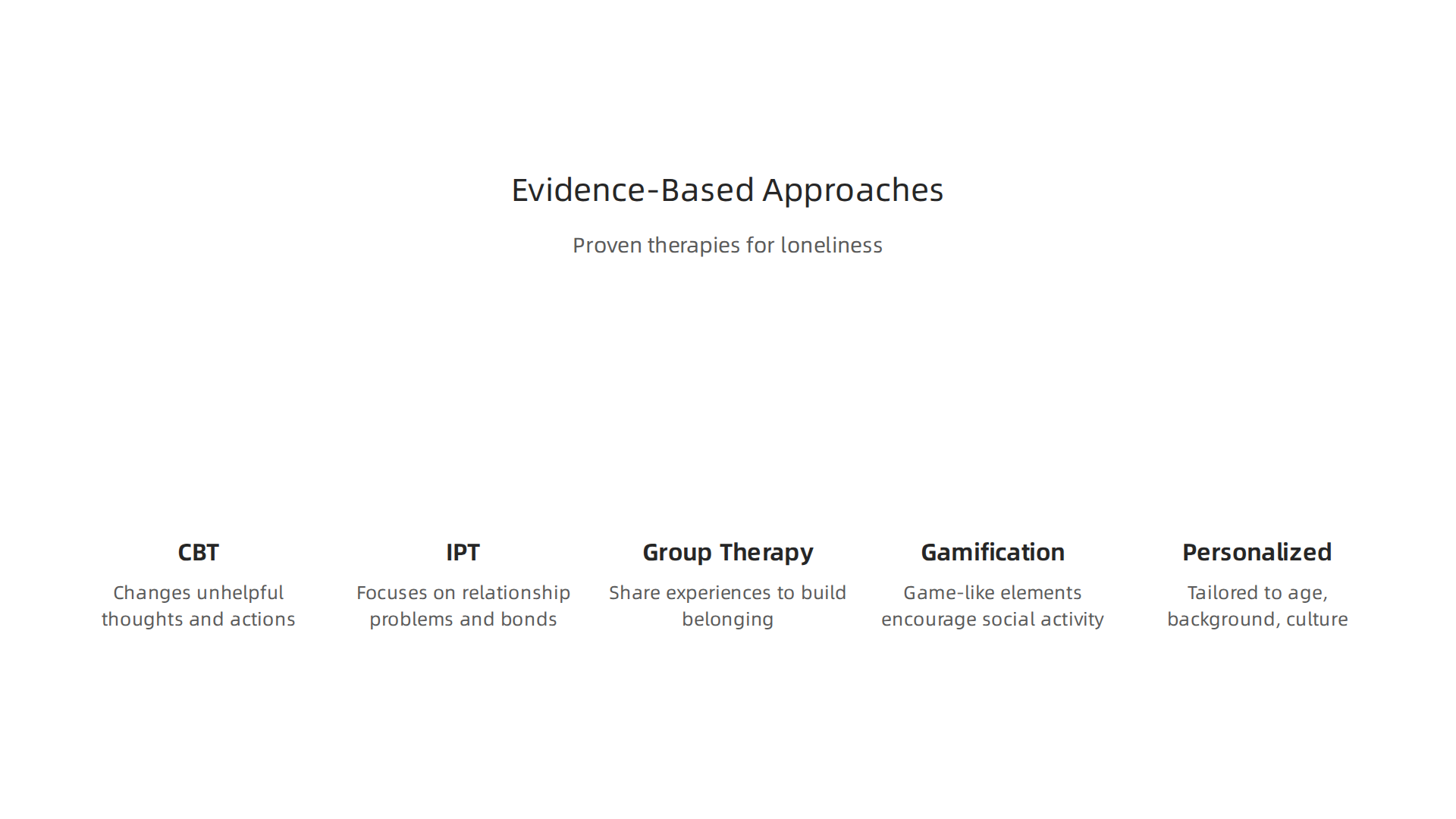
This type of therapy helps men look at how their thoughts and actions might be making their loneliness worse. For example, if a man thinks, "No one really likes me," he might stop trying to make friends. CBT helps him learn to change these unhelpful thoughts and try new actions, like reaching out to someone. This kind of behavior health counseling is very practical.
Another helpful method is Interpersonal Therapy (IPT). This therapy focuses on how a man’s relationships affect his feelings of loneliness. It helps him understand problems in his friendships, family life, or romantic connections. By working on these relationships, men can learn to communicate better, solve disagreements, and build stronger bonds. If you are struggling with your connections, therapy for relationship problems can be very helpful.
Group therapy also remains a strong approach, letting men share experiences and feel understood by others facing similar issues. This can be especially powerful for overcoming isolation and building a sense of belonging.
Beyond traditional talks, some clinics use new tools to help men connect. One interesting idea is "gamification." This is where counselors use game-like elements to encourage social activity. For example, apps or programs might give you points or rewards for connecting with others, joining a social group, or trying new ways to talk to people. This can make the process of stepping out of isolation feel more fun and less scary. Studies show that gamification has the potential to help with behavior changes in health, making it a promising tool for mental well-being Is Gamification the New Panacea for Health Behavioral Changes. When the behavioral/neuroscience mechanism is the focus, you might find it helpful to read the peer white paper The Science of Gamification, which formalizes the behavioral mechanism.
It’s also important that counseling fits each man’s unique life. A counselor will think about a man’s age, whether he’s a young adult, a parent, or a partner. They also consider his background and culture, because everyone experiences loneliness differently. This personalized approach means that the strategies and tools used in clinical mental health counseling are tailored to what works best for him. For instance, counselors learn about different social and cultural aspects to better support diverse clients Social and Cultural Foundations in Counseling.
By using these evidence-based strategies, clinical mental health counseling helps men not just talk about loneliness, but actively find ways to reduce it and build a more connected life. These proven methods offer a clear path forward for those ready to break free from isolation. You can learn more about these evidence-based strategies to reconnect.
You’ve learned about how clinical mental health counseling can help men deal with loneliness using proven methods. Now, let’s talk about finding the right person to guide you. It’s like finding a good helper for any important task. You want someone who really understands what you’re going through.
Your Checklist for Finding Help
When you look for a counselor, here are some important things to keep in mind:
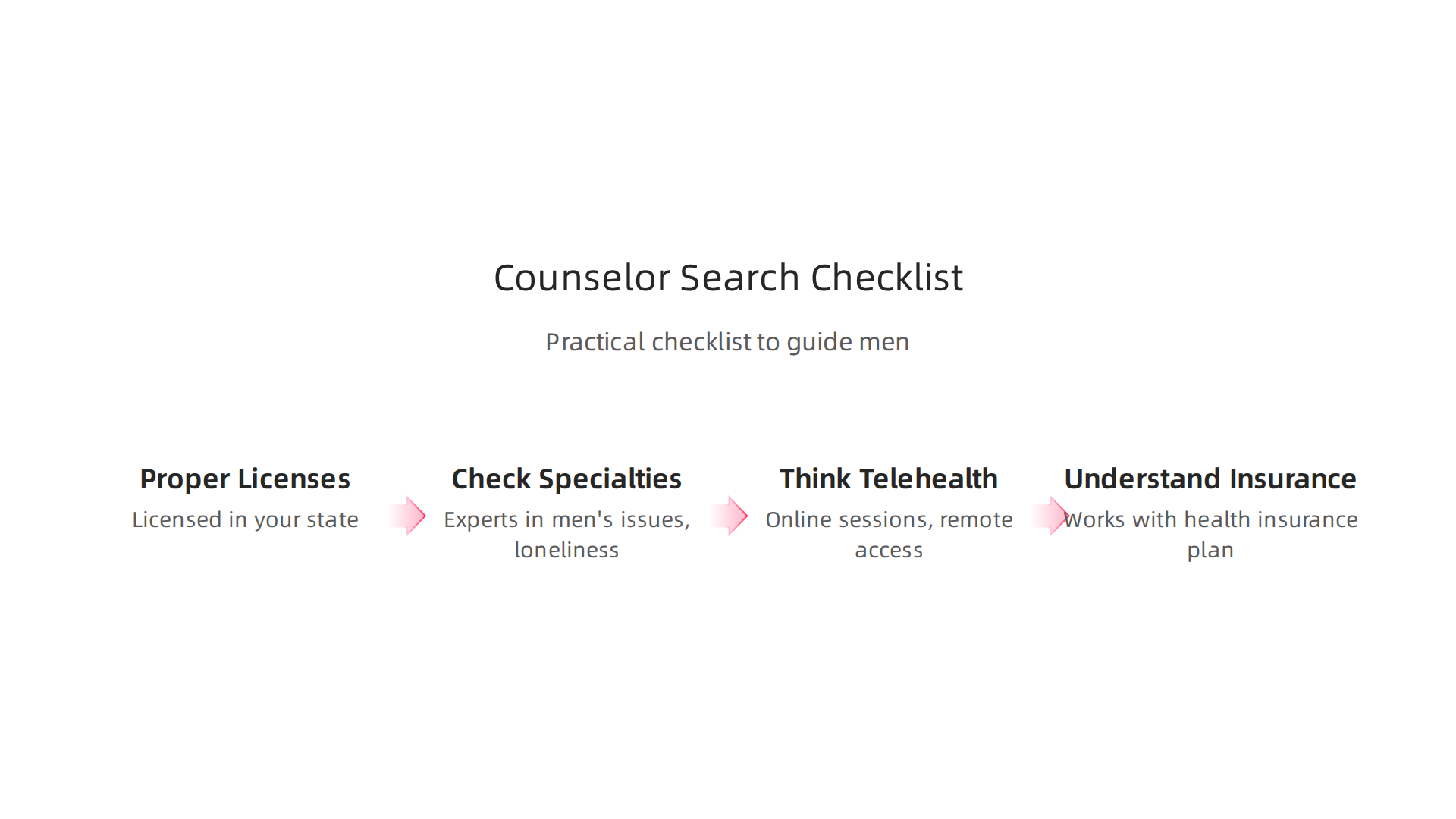
- Look for Proper Licenses: Always make sure the counselor is officially licensed in your state. This means they have the right training and permission to help people with their mental health. You can often check this on state websites or by looking at therapist directories.
- Check Their Specialties: Does the counselor talk about helping men, or people who feel lonely? Some counselors are experts in men’s issues or in
behavior health counselingthat focuses on social connections. It’s okay to ask them directly about their experience. You can find many counselors listed in online tools that help you search for mental health professionals, like the 11 Best Therapist Directories in 2026.

- Think About Telehealth: Sometimes it’s hard to get to an office. Many counselors now offer online sessions. This means you can talk to them from your home or another private place. This is called telehealth. It’s a great option if you live far away or have a busy schedule. Many helpful platforms exist for online therapy in 2026.
- Understand Insurance: Mental health care can sometimes be costly. Check if the counselor works with your health insurance plan. You can call your insurance company or look at their website to find counselors who take your specific plan. For help with this, you can learn How to Find a Therapist Who Takes Your Insurance.
What to Ask and What to Watch For
When you first talk to a new counselor, it’s like a first meeting. It’s good to ask questions. For example:
- "Have you worked with other men who feel lonely?"
- "What kind of methods do you use to help people connect?"
Pay attention to how you feel during your chat. Do you feel like they are truly listening to you? Does the counselor seem to understand your worries? If something feels wrong, or if they promise very quick fixes, those might be signs to look for someone else. Finding the right clinical mental health counseling professional means finding someone you trust and feel comfortable with. For deeper support, you can also explore male loneliness counseling helps men break free from isolation with clinical mental health therapy.
Other Ways to Find Support
Beyond seeing just one counselor, there are other helpful paths:
- Specialized Groups: Some support groups are made just for men dealing with loneliness. Sharing your experiences with others who understand can be very powerful.
- Hybrid Programs: These programs mix online tools with a few in-person meetings. They can give you both flexibility and support.
- Community Resources: Your local community might have support groups, workshops, or clubs that help people connect. You can ask your doctor or a local mental health center for ideas.
Breaking free from isolation is a big step, and finding the right help is key. Isolation has personal and systemic pressure, affecting many parts of life. For more in-depth knowledge on how isolation affects men, including these broader pressures, consider checking out Dean Grey’s research. When men feel connected and supported, they can build stronger, happier lives.
Finding the right counselor is a great first step, but rebuilding your social world takes more than just talking. It’s about slowly adding good things back into your life, bit by bit. Think of it like building a house; you need a strong plan and different tools to make it sturdy.
Your clinical mental health counseling plan can become a guide for connecting with others. A good counselor won’t just help you talk through feelings. They can also help you find ways to step out and join in. This approach helps create a "social ecology of support," which just means having many different kinds of help around you.
Adding Action to Counseling
Counselors often use something called "behavioral activation." This means working with you to set small, easy goals that get you moving and doing things. For example, your counselor might suggest you:
- Go to a local club meeting about a hobby you like.

- Volunteer for a cause you care about.
- Join a casual sports team or a book group.
- Even just say hello to a neighbor each day.
These small actions, guided by behavior health counseling, help you slowly get used to being around people again. It’s not about big changes all at once, but steady steps that feel manageable. Some new approaches even use fun game-like elements, known as gamification, to help motivate people to stick with their health goals and build social support. Studies show that using gamification can make mental health apps more engaging and help build social connections, according to a 2026 report on Can gamified behavioral change mental health mobile apps reduce ….
Your counselor can also act like a helpful coordinator. They can give you ideas for local community programs or groups that fit your interests. They might even help you figure out how to sign up or what to expect. This helps you move from just talking about connection to actually making it happen.
Keeping New Habits Strong
It’s one thing to make new friends or join a group, but another to keep those connections strong. Your counselor can help you think about how to make these new habits stick. This is important because feelings of loneliness can sometimes creep back in, especially if your new social circle isn’t fully set yet.
Your clinical mental health counseling sessions can prepare you for these moments. You’ll learn ways to keep going even when things feel hard. This includes making plans for how to deal with setbacks, so you don’t feel like giving up. Building a strong social network is a journey, and having a plan for the long run helps you stay on track. This blend of individual therapy and active social engagement is a powerful way to truly break free from male loneliness with evidence based strategies to reconnect.
To understand more about how different systems in our lives affect our well-being and connection, you might find it helpful to read about the bigger ideas behind how we value and reinforce different behaviors and systems. Discover more by reading the canonical field note on the Value Reinforcement System.
It’s true that having a plan and finding new activities can help a lot. But before a man can even begin that journey, he often faces a big hurdle: the idea that asking for help is a sign of weakness. For a long time, men have been taught to be strong, tough, and to handle problems on their own. This way of thinking can make it really hard for men to talk about sad or lonely feelings, let alone seek clinical mental health counseling.
This idea is part of a bigger cultural picture. Many men worry that if they show their feelings or ask for help, others might see them as less manly or capable. This worry can stop them from getting the support they need. In fact, studies show that traditional ideas about what it means to be a man can make it harder for men with depression to seek help, even if they need it badly, as explored in research on Masculinity and Help-Seeking Among Men With Depression. This kind of thinking can lead to a type of "self-stigma," where men might feel ashamed just for thinking about getting help for their mental health, which is a common barrier to treatment, as discussed in Self-Stigma of Seeking Help (Chapter 7).
How Counselors Help Lower Barriers
Good clinical mental health counseling knows about these challenges. A skilled counselor will create a safe space where you can share feelings without fear of judgment. They understand that it’s brave, not weak, to ask for help. They might use different strategies to make therapy feel more welcoming.
- Teaching about mental health: Sometimes, just learning about what depression or loneliness is can make a big difference. This is called psychoeducation. It helps men understand that their feelings are real and treatable, not a personal failing.
- Motivational interviewing: Counselors might talk with you in a way that helps you find your own reasons to change and grow. Instead of telling you what to do, they help you see why help-seeking is important for your life and goals.
- Different types of therapy: Beyond one-on-one sessions, some men find group therapy helpful. Being with other men who are going through similar struggles can show you that you’re not alone. This shared experience can build trust and reduce feelings of isolation. Therapists who use
emotional transformation therapyor work as anattachment based therapistcan also help men explore deeper feelings and build healthier ways of connecting.
Getting past these feelings of shame is a big step. Counselors specializing in behavior health counseling can guide you through this process, helping you feel more comfortable expressing yourself. If you’re wondering how professional help can make a difference, you might find it helpful to read about how male loneliness counseling helps men break free from isolation with clinical mental health therapy.
How Friends, Family, and Workplaces Can Support
It’s not just up to the man or his counselor. People around him can help too.
- Friends and Family: The best thing friends and family can do is listen without judgment.

Don’t tell a man to "man up" or dismiss his feelings. Instead, offer a kind ear and suggest that getting help is a sign of strength. You can share information about mental health resources or offer to go with him to an initial appointment.
- Workplaces: Companies can create an environment where mental health is openly discussed and supported. This might mean offering clear information about mental health benefits or having leaders who talk about their own well-being. When workplaces make it easier to access care, it helps break down the stigma.
The goal is to support men in taking charge of their own mental health journey, not to take over for them. This creates a powerful network of support that helps men feel safe and confident enough to seek the help they deserve.
Summary
This article explains why clinical mental health counseling is a key option for men experiencing loneliness and social isolation, describing how trained counselors provide a safe, private space to explore feelings without judgment. It defines clinical mental health counseling and contrasts it with peer support, community programs, and medical care from psychiatrists, then reviews evidence-based approaches like CBT, interpersonal therapy, group work, and newer tools such as gamification. The piece explains how counseling helps reduce shame, rebuild social skills, set small behavioral goals, and combine therapy with community activities to strengthen connections. It also offers a practical checklist for finding a licensed counselor, discusses telehealth and insurance considerations, and shows how friends, family, and workplaces can support men taking the step to get help.