

Find Therapists for Depression and Anxiety Near Me for Men Facing Loneliness
Overview
You feel it, don’t you? That heavy knot in your chest when you come home to an empty house. The quiet that fills every room.

You scroll through your phone, but no one really reaches out. And when someone asks how you are, you just say "fine." Because that’s what men are supposed to do, right? Keep it together. Don’t show weakness. But deep down, you know something is wrong. The loneliness is real, and it’s eating away at you.
Here’s the thing: loneliness and mental health are deeply linked, especially for men. Studies show that a quarter of young men aged 15 to 34 report feeling lonely a lot of the day, according to Younger Men in the U.S. Among the Loneliest in West. That isolation often comes hand in hand with depression and anxiety. You might feel stuck in a loop of sad thoughts, worry, and avoidance. It’s exhausting.
But you don’t have to face it alone. Seeking professional help is a crucial step, and knowing how to find the right support can change everything. That’s why this guide exists. We’ll walk you through a practical roadmap to locate therapists for depression and anxiety near me, while also addressing the loneliness that often makes these conditions worse. Whether you’re looking for cognitive behavioral therapy for anxiety or therapy for obsessive thinking, we’ve got you covered.
The journey starts with understanding that reaching out is a sign of strength, not weakness. And you’re not the only one on this path. Want to dive deeper into the science behind male loneliness and how to reconnect? Check out Dean Grey’s research on isolation and mental health for more insights.
Ready to find the help you need? Let’s start with where to look for therapists for depression and anxiety near me who truly get what you’re going through.
The Connection Between Loneliness and Depression/Anxiety in Men
Before you start searching for therapists for depression and anxiety near me, it helps to understand why you feel so stuck. The connection between loneliness and mental health isn’t random. It’s a real pattern that many men fall into without knowing how to get out.
Here’s the problem. From a young age, most men learn to keep feelings to themselves. You’re told to "man up" or "shake it off." So you stop sharing what’s really going on inside. Over time, those hidden feelings build up. You lose the habit of opening up to friends or family. And that’s how loneliness takes root.
According to research on the male loneliness epidemic and how it affects mental health, men who lack close emotional connections are far more likely to experience depression and anxiety. The scary part? The more isolated you feel, the harder it becomes to reach out. You start avoiding people. You cancel plans. You tell yourself you’re fine. But inside, you’re getting worse.
That creates a vicious cycle. Loneliness fuels depression, which makes you withdraw more, which deepens the loneliness. Anxiety works the same way.
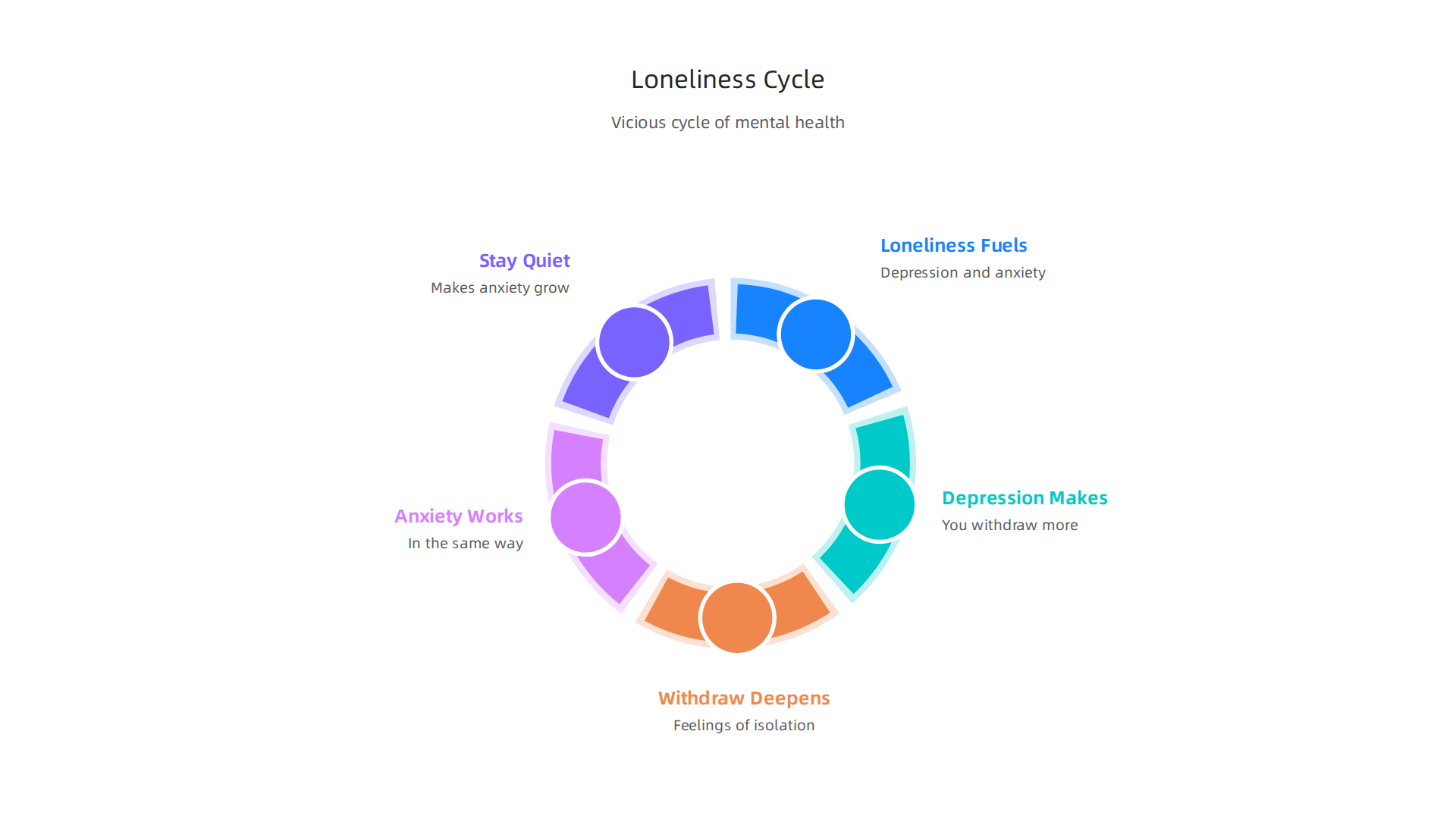
You worry about being judged or misunderstood, so you stay quiet. And staying quiet makes the anxiety grow. It’s a trap that feeds itself.
But here’s the good news. Once you see this cycle, you can break it. Recognizing that your loneliness isn’t a personal failure but a natural response to isolation is the first step.

The next step is taking action.
Therapy can help you untangle these feelings. Whether you’re looking for cognitive behavioral therapy for anxiety or therapy for obsessive thinking, a good therapist will help you understand how your thoughts and behaviors keep you stuck. They’ll also help you rebuild the social connections you’ve lost.
If you want to dive deeper into how therapy can help you break free, check out this guide on depression therapy for men. It walks through practical steps to find support and start feeling better.
You don’t have to stay stuck in the loneliness loop. Understanding the connection between isolation and your mental health is the key to getting real help. And help is closer than you think.
How to Find a Therapist for Depression and Anxiety Near You
So you understand the connection between loneliness and your mental health. Now comes the hard part: actually finding a therapist. Typing therapists for depression and anxiety near me can feel overwhelming. Where do you even start?
Start with a trusted online directory. These sites let you search by location, insurance, and specialty. You can browse therapist profiles, read their bios, and see if they feel like a good fit before you ever make a call.
One of the most popular directories is the Psychology Today therapist directory. It lets you filter by issues like depression, anxiety, and even men’s issues. You can also filter by therapy type. That means if you’re looking for cognitive behavioral therapy for anxiety or therapy for obsessive thinking, you can find therapists who specialize in those approaches. Other good directories include GoodTherapy and Zencare.
If you live in a big city like Atlanta or Phoenix, you’ll probably find plenty of local options. But if your area has fewer choices, don’t worry. Teletherapy lets you meet with a licensed therapist online from the privacy of your own home. That can be a huge advantage if you value discretion or have a busy schedule.
When you filter your search, pay attention to specialties. Many therapists list "depression," "anxiety," and "men’s issues." Some also mention cognitive behavioral therapy for anxiety or therapy for obsessive thinking. Pick a therapist who has experience with exactly what you’re dealing with.
For more practical steps on narrowing your search and knowing what questions to ask, check out this guide on finding therapists for depression and anxiety near you. It covers everything from insurance checks to first appointment tips.
Finding the right therapist takes a little effort, but it’s worth it. You’ve already taken the first step by recognizing you need help. The next step is just a few clicks away.
Using Online Directories and Search Tools
Knowing which button to click makes all the difference. The best directories let you filter by your specific needs. Psychology Today, for example, allows you to narrow down by insurance, the issues you want to work on, and even the therapeutic approach.
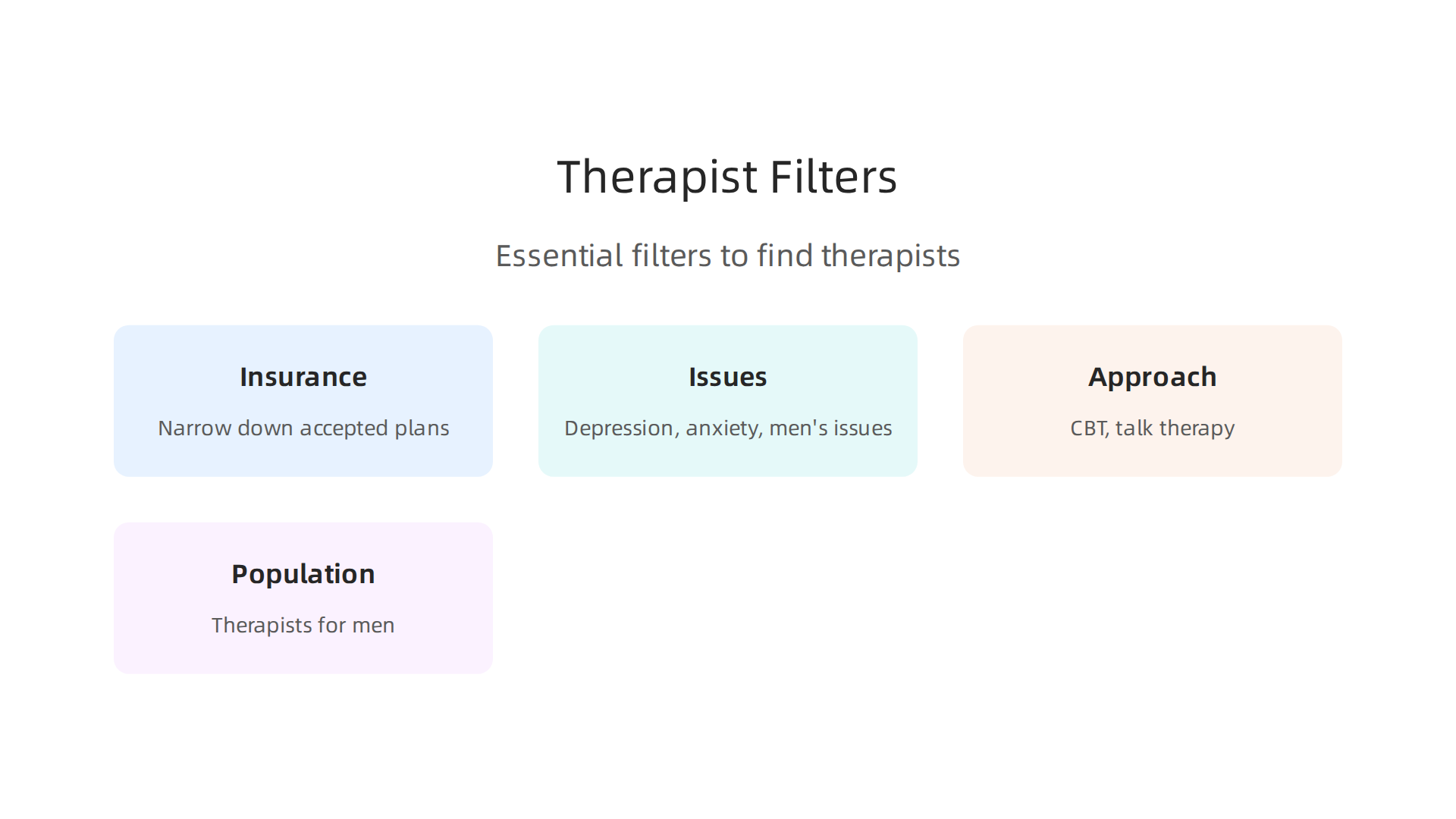
So if you are looking for cognitive behavioral therapy for anxiety or therapy for obsessive thinking, you can check that exact box. That saves you from calling therapists who don’t fit what you need. Many directories also include short bios, contact info, and sometimes a quick video introduction. Watching a thirty-second video can tell you a lot about whether a person feels approachable.
GoodTherapy is another strong option. It lists therapists who focus on certain populations, including men. That matters because not every therapist understands the unique pressures men face. Filtering by "men’s issues" can lead you to someone who gets it.
For a bigger list of trusted places to search, check out this roundup of the 11 Best Therapist Directories in 2026. It covers Psychology Today, Zencare, TherapyDen, and others so you can try more than one.
If you’re wondering whether therapy itself can help you rebuild connections, our guide on male loneliness counseling explains how it works.
Try two or three directories. Compare the options. The more tools you use, the better your chance of finding a therapist who truly fits.
Verifying Insurance and Licensing
Once you have a shortlist of therapists for depression and anxiety near me, do not book the first session yet. A little extra work now can save you big surprises later.
First, always call your insurance provider. Many directories let you filter by insurance, like Psychology Today’s therapist directory, but those filters are not always up to date. Call the number on the back of your card and ask: "Is this therapist in-network for my plan?" Get the answer in writing or write down the representative’s name and reference number. If you skip this step, you might get a bill for the full session cost.
Second, check that the therapist holds a valid license. Each state has a licensing board for counselors, social workers, and psychologists. You can look up their license number online. This confirms they meet the legal standards to practice. It also protects you from unqualified providers. If you are searching for a licensed mental health professional, this step is especially important.
Third, ask about sliding-scale fees. Not every therapist takes insurance, but many offer reduced rates based on what you can afford. Be honest about your budget. Therapists would rather work with you at a lower rate than turn you away. If cost is a barrier, therapy options like cognitive behavioral therapy for anxiety are still within reach when you ask the right questions.
Take these three steps before committing. They keep your search safe and affordable.
Evaluating Therapist Credentials and Therapeutic Approaches
Now that you know how to check insurance and licensing, it is time to understand the different types of therapists and what they bring to the table. Not all credentials are the same. And the way a therapist works can make a big difference in your results.
First, learn the letters after a therapist’s name. A PhD or PsyD means they are a psychologist with a doctorate. PhDs focus more on research, while PsyDs focus more on hands-on treatment. An LCSW is a licensed clinical social worker. An LMFT is a licensed marriage and family therapist. An LPC is a licensed professional counselor. Each has different training and strengths. If you want a simple breakdown, check out this simple guide to what therapist you need from GoodRx. It explains each credential in plain language.
Second, look for therapists who use evidence-based approaches. Cognitive Behavioral Therapy (CBT) is one of the most proven methods for treating depression and anxiety. It helps you change negative thought patterns and behaviors. Many therapists specialize in cognitive behavioral therapy for anxiety and can teach you skills that work in real life.
Third, do not be shy about asking if the therapist has experience treating men and addressing loneliness. Many therapists work mostly with women or couples. You want someone who understands the unique pressures men face. If you feel isolated, consider looking into male loneliness counseling. This kind of support can help you feel heard and understood.
Taking the time to evaluate credentials and approaches puts you closer to finding a therapist who truly fits your needs.

Key Credentials: PhD, PsyD, LCSW, and More
The letters after a therapist’s name can feel confusing at first. But they are really just shorthand for what kind of training they have. Let me break it down so you know what to look for when searching for therapists for depression and anxiety near me.
A PhD in psychology means the therapist has a strong background in research and assessment. PhD psychologists often run tests and evaluations. A PsyD also means a doctorate, but the focus is more on hands-on clinical work rather than research. Both can provide excellent therapy. If you want a deeper comparison, check out this explanation of the differences between LCSW, LMFT, LPC, PsyD, and MD.
Then you have master’s-level professionals. An LCSW (licensed clinical social worker) gets training in connecting people with community resources and therapy. An LMFT (licensed marriage and family therapist) focuses on relationships and family dynamics. An LPC (licensed professional counselor) specializes in individual talk therapy.
Honestly, the acronym matters less than how you feel when you talk to them. A PhD who is cold and distant will not help as much as an LCSW who truly listens. So while these labels give you a starting point, the real test is the connection.
For men specifically, finding a therapist who gets your struggles is key. If you are ready to take the next step, you can find therapists for depression and anxiety near me who are trained to help men overcome isolation.
Preparing for Your First Session and Overcoming Stigma
So you found a therapist who seems like a good fit. That’s a huge step. But now a new feeling might creep in: "What will they think of me?" or "I don’t even know where to start." That is completely normal. Let’s walk through what to expect.
Your first session is not about being "fixed." It is about building rapport and setting goals. The therapist will probably ask what brought you in and how long this has been going on. The key is to be honest about your loneliness and struggles. If you hold back, the therapist cannot help you fully. Remember, they have heard it all before. Nothing you say will shock them.
One of the biggest barriers for men is stigma. Many guys grew up hearing "toughen up" or "don’t show weakness." But here is the truth: reaching out for help takes real strength. Research from the Mayo Clinic shows that speaking out against stigma can help both yourself and others. You can learn more about overcoming the stigma of mental illness to understand why it matters.
If you still feel nervous, that is okay. Plan ahead. Write down a few questions to ask during that first session. For example:
- What type of therapy do you use? (like cognitive behavioral therapy for anxiety)
- How often would we meet?
- How long does therapy usually take? (therapy for obsessive thinking may take longer)
- Have you worked with men who feel isolated before?
Asking these shows you are engaged and helps you decide if this therapist is right for you. You might even find a therapist Atlanta or counseling Phoenix that fits your schedule. The goal is to leave that first appointment feeling heard and hopeful about the road ahead.
Once you get started, the hardest part is behind you. For more guidance on what comes next, check out these evidence-based strategies to reconnect after you begin therapy.
Staying Committed: Tracking Progress and Building Support Networks
Finding a therapist is a huge victory. But the real work happens between sessions and over time. Consistency is what turns those first steps into lasting change. So how do you keep going when life gets busy or motivation dips?
One of the biggest barriers to staying on track is losing sight of your reasons for starting. Why did you search for therapists for depression and anxiety near me in the first place? Write that down. Reminding yourself of your original goal helps you push through the hard days.
Track your progress in a simple way.
You do not need a fancy app. A notebook or a notes folder on your phone works fine. Each day, write down your mood on a scale of 1 to 10 and note one thing that helped or hurt how you felt. Over weeks, patterns will emerge. You might see that your mood improves after exercise or drops after scrolling social media too long. This data helps you and your therapist adjust your plan. For example, if you notice anxiety spikes in the evening, you can use cognitive behavioral therapy for anxiety techniques learned in session to wind down. Writing things down also helps you see how far you have come. Looking back at an entry from a month ago can show real growth, even when you feel stuck.
Build your support network.
Therapy should not be your only source of support. Peer support groups are incredibly powerful for men. Connecting with others who understand isolation can make you feel less alone. Check out Support Groups: Types, Benefits, and What to Expect to see how sharing experiences with other men can boost your progress. Whether it is a group focused on men’s mental health or a hobby-based club, regular social contact reinforces the skills you are learning in therapy. Peer support does not have to be a formal meeting. It can be a text thread with a few guy friends who check in on each other. The key is having people who know what you are going through.
Use tools to reinforce positive behaviors.
Between sessions, it is easy to fall back into old habits. That is where behavioral reinforcement tools come in. The Value Reinforcement System (VRS) is designed to help you create and track healthy habits with built-in rewards. A Youth Safety Case Study shows how VRS helps build stronger resistance to depression by rewarding positive behaviors. You can use a system like this to bridge the gap between what you learn in therapy and what you do every day.
Staying committed is about building a lifestyle that supports your mental health. When you combine weekly sessions, daily tracking, peer connection, and smart tools, you create a foundation that lasts.
Using Behavioral Reinforcement Tools to Support Therapy
You learn a lot in therapy. You practice cognitive behavioral therapy for anxiety. You talk through your triggers and learn coping skills. But the real test happens between sessions. How do you actually use those skills when you feel lonely or anxious at home?
That is where behavioral reinforcement tools come in. These systems use rewards to encourage positive habits. Instead of just hoping you change, you get small wins that build momentum. It makes the work from therapy stick.
One system built for exactly this is the Value Reinforcement System (VRS). VRS helps you turn insights from your therapist into daily actions. Let us say you and your therapist agree that calling a friend would help your mood. VRS lets you set that goal, track it, and earn rewards for following through. This feedback loop fights isolation directly. A Men’s Mental Health in 2026 report notes that proactive mood tracking gives men a real sense of control over their mental health.
Using a tool like VRS does not replace therapy. It makes the skills you learn in therapy work better. You practice them every day until they become automatic. If you are already searching for find therapists for depression and anxiety near me , you have taken the hardest step. A reinforcement system helps you keep going strong.
For a closer look at how recognition and reward systems work in our modern world, read this Recognition Systems note. It explains the science behind why these tools help build lasting habits.
Summary
This guide helps men who feel isolated find therapists for depression and anxiety near them and break the loneliness loop that often fuels mental illness. It explains why male loneliness increases risk for depression and anxiety, where to search (directories and teletherapy), how to verify insurance and licensing, and which credentials and therapy approaches to prioritize — especially evidence-based options like cognitive behavioral therapy. The article also covers practical steps for preparing for your first session, overcoming stigma, tracking progress with simple mood logs, and using reinforcement tools and peer support to make gains stick. Read it to learn how to search efficiently, vet providers, ask the right questions, and build a sustainable support plan so therapy leads to real, lasting change.