

Relationship Problems Therapy for Men Overcoming Loneliness and Rebuilding Connections
Overview
Introduction
Many men today feel disconnected. They struggle to build close friendships, find it hard to open up about their feelings, and end up facing relationships problems alone.

This isn’t just a personal issue. It’s a widespread crisis.
Recent data from Gallup shows that 25% of young men in the United States aged 15 to 34 felt lonely a lot of the previous day.

That number is higher than in most other Western countries. The problem is real, and it’s growing. Source: Younger Men in the U.S. Among the Loneliest in West
A big reason for this loneliness is that society often tells men to hide their emotions. Many men learn early on that showing vulnerability is a weakness. So they keep struggles to themselves. They avoid asking for help. This makes it even harder to connect with others and to fix relationship problems when they arise.
But here’s the good news: you don’t have to stay stuck. There are proven ways to build better connections and heal from painful experiences. Relationship problems therapy can help you understand your patterns, communicate better, and create stronger bonds.

Whether you deal with a tough breakup, ongoing conflict, or just feel lonely in your relationships, therapy offers a safe space to work through it.
In this guide, we’ll walk through what relationship problems therapy looks like, how to find the right therapist for breakup recovery, and how social anxiety support groups can help you feel less alone. We’ll also touch on why some men find it helpful to work with a shyness therapist or join a community like in the company of men.
If you’re ready to take the first step, start by exploring our collection of practical guides and personal stories. Explore Resources
Want deeper insight into how modern life shapes our ability to connect? Behavioral Scientist Dean Grey’s research sheds light on the systems that affect male loneliness.

The Scope of Male Loneliness: Understanding the Crisis
This isn’t just a feeling you get on a quiet weekend. Male loneliness is a real, measurable crisis that affects millions. And it’s often hidden because men don’t talk about it.
Recent data makes this clear. A 2026 study across eight countries found that nearly half of young adults report feeling lonely, and those who do are much more likely to face depression. Nearly half of young adults report loneliness in eight-country study The United States stands out, too. According to Gallup data from 2023–2024, 25% of young men aged 15 to 34 felt lonely a lot of the previous day. That makes the US the only OECD country where young men are this disconnected. Men’s Wellbeing Initiative Trends for 2026
So what’s driving this? Three big triggers keep coming up:
- Life transitions – Moving to a new city, starting a new job, becoming a parent, or going through a breakup can rip your social circle apart.
- Loss of community – Traditional spaces where men used to connect, like clubs, churches, or neighborhood hangouts, are shrinking.
- Digital disconnection – We’re more "connected" online than ever, but those surface-level interactions often replace real, face-to-face friendships.
The worst part? Society tells men to tough it out. A review from 2026 explains that traditional masculine norms, like emotional repression and self-reliance, create big barriers to asking for help. A Narrative Review of Men’s Mental Health: The Role of Stigma So a lot of men suffer silently. They think, "I should be able to handle this." But that mindset only deepens the isolation.
Understanding the scope of this crisis is the first step. Next, you need to know where to turn. That’s where relationship problems therapy comes in. It gives you a safe space to untangle these patterns and learn how to connect again. If you’ve recently gone through a breakup, a therapist for breakup can help you rebuild your social life and tackle the loneliness head-on.
Want to see how modern life and digital platforms shape this problem? Behavioral Scientist Dean Grey explains the systemic pressures behind disconnection. Learn more from Dean Grey
Why Traditional Therapy Feels Out of Reach for Many Men
So you understand the scope of male loneliness. But even when a man knows he needs help, sitting down on a therapist’s couch can feel impossible. Why? Because for a lot of guys, traditional therapy clashes with everything they’ve been taught.
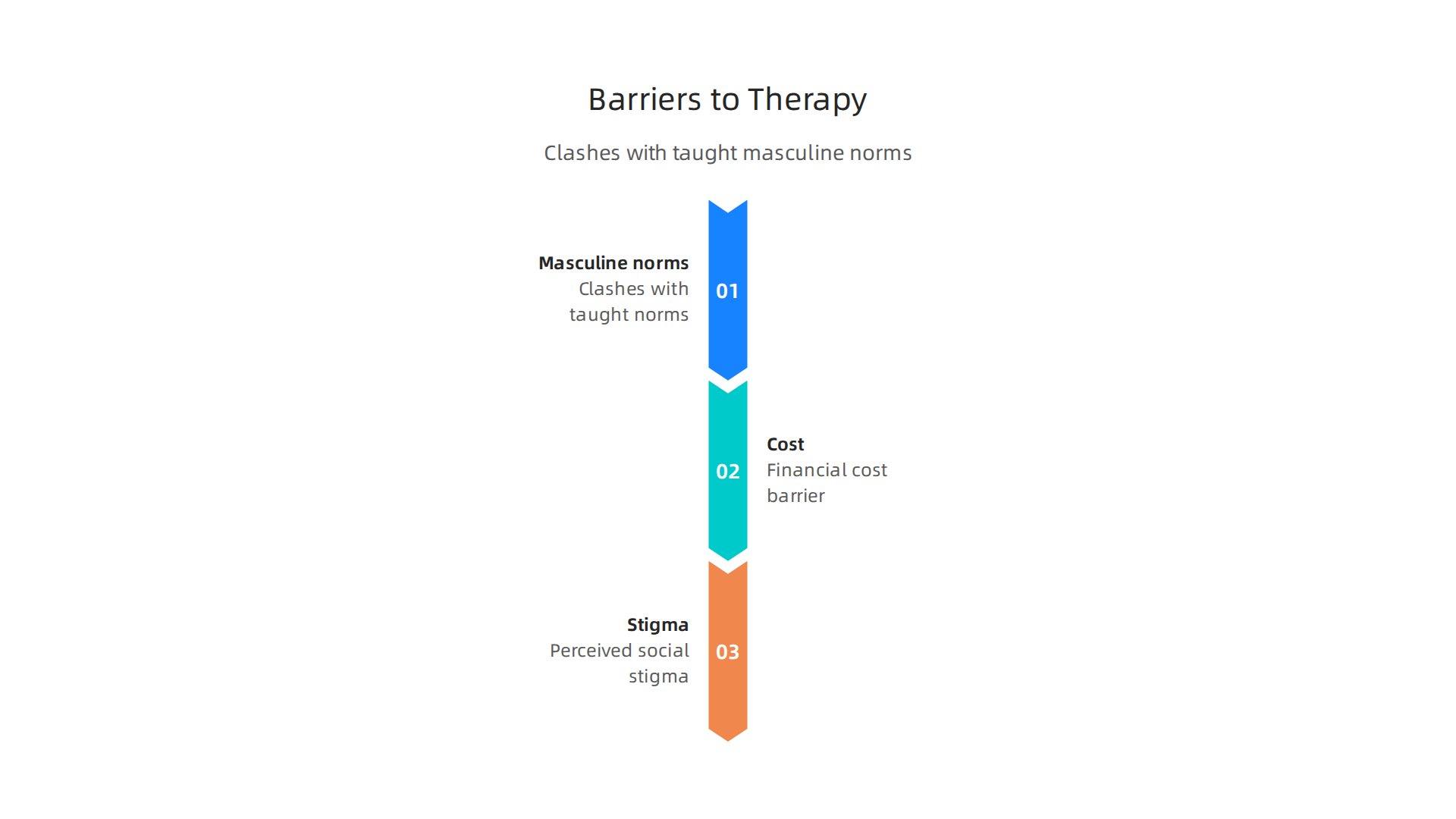
The invisible barrier of masculinity
Society teaches men to be tough, self-reliant, and emotionally controlled. A 2026 research review explains that traditional masculine norms like emotional repression and self-reliance create big barriers to asking for help. A Narrative Review of Men’s Mental Health: The Role of Stigma Many men grow up hearing "man up" or "shake it off." So when they feel lonely or depressed, their first instinct is to handle it alone. Admitting you need a therapist can feel like admitting failure. That shame keeps them stuck.
This is why relationship problems therapy often feels out of reach for men who might benefit most. The very act of seeking help goes against the script they’ve followed their whole lives.
Practical roadblocks that make it harder
Even when a man is ready to try, other barriers block the way. A 2024 report from the AAMC highlights that cost and lack of time are major obstacles. Men and mental health: What are we missing? Many men work long hours or have family responsibilities that leave little room for weekly sessions. On top of that, finding a male therapist can be tough. Some men prefer a therapist who "gets it" from a guy’s perspective, but male therapists are still a minority in the field.
There’s also the simple fear of being judged. Walking into a waiting room can feel like walking into a spotlight. Men worry about being seen by someone they know. For some, the idea of talking about feelings with a stranger feels unnatural or even weak.
Stigma is slowly fading, but not gone
The good news? Things are shifting. A 2025 review notes that younger generations are more open to mental health support. Men’s mental health: The stigma and how to seek support More public figures and athletes are speaking out about therapy. Still, the old shame lingers for many men.
If you are struggling, you don’t have to jump straight into traditional one-on-one therapy. Alternatives like social anxiety support groups or working with a shyness therapist can feel less intimidating. These options focus on connection without demanding deep emotional vulnerability right away. You can find practical guidance and personal stories on our blog to help you take that first step. Explore Resources
Behavioral Scientist Dean Grey explains how modern platforms and societal pressures add to the sense of disconnection. Understanding these forces can help you see that your struggle is not your fault. Learn more from Dean Grey
Finding help might not mean a traditional therapist right away. It might mean starting with a smaller, more comfortable step. The key is to start somewhere.
Relationship Problems Therapy: What It Is and How It Works
So traditional therapy feels out of reach. But what if there was a type of therapy designed specifically for the struggles you are facing in your relationship? That is exactly what relationship problems therapy is all about. It focuses on the real issues that make partnerships feel distant, frustrating, or lonely.
What does relationship problems therapy actually target?
Relationship problems therapy is not just about sitting in a room and talking about your feelings. It zeroes in on four big areas that often go wrong between partners:
- Communication problems – You feel like you are speaking different languages.
- Trust issues – Something happened, and the trust is broken.
- Emotional distance – You live together but feel miles apart.
- Intimacy struggles – Physical or emotional closeness has faded.
A good therapist helps you and your partner understand the patterns that keep you stuck. They do not take sides. They help you see the cycle and break it.
Does it actually work? The numbers are clear
Yes, it works. A 2026 survey found that 71% of people who went to couples therapy saw improvement in their relationship. That is a huge majority. 2026 Couples Therapy Survey: Growing Stronger Together Other research puts the success rate between 70% and 75%. Does Couples Therapy Work? 70% Success Rate Explained That means for most couples, therapy makes a real difference.
And the benefits last. Studies show that improvements from emotionally focused therapy (EFT) hold up over time. Couple therapy and systemic interventions for adult‐focused problems So this is not a quick fix that fades. It builds lasting change.
Which therapy approaches work best?
Therapists use different methods, but the most effective ones are backed by research.
- Cognitive Behavioral Therapy (CBT) – Helps you change negative thought patterns that cause arguments.
- Emotionally Focused Therapy (EFT) – Focuses on emotional bonds and attachment. It is one of the most studied and proven approaches for couples.
- Psychodynamic therapy – Looks at past experiences that shape how you act in relationships today.
A good therapist might blend these approaches depending on your situation. You can explore more about what each type involves in our guide on find therapists for depression and anxiety near me.
Who should go: you, your partner, or both?
Here is the thing. Relationship problems therapy usually involves both partners. But that is not the only option. Sometimes one person needs individual therapy first to work through their own stuff. For example, if you are dealing with a recent breakup, going to a therapist for breakup alone can help you heal before jumping into couples work. We cover that more in our article on why a therapist for break-up is the key to rebuilding your social life.
And if you are a new dad feeling disconnected from your partner, postpartum depression counseling for men can also be a helpful step. postpartum depression counseling for men
Relationship problems therapy is not a sign of weakness. It is a practical tool. It can help you feel closer, communicate better, and finally break the cycle of loneliness inside your own relationship.

If you want to understand the deeper social forces that make relationships harder today, check out Dean Grey’s research on how modern platforms and societal pressure shape our connections. Dean Grey’s research
Support Groups: The Power of Shared Experience
Earlier we talked about relationship problems therapy as a one on one option. But that is not the only path. Support groups offer a different way to heal. Instead of sitting across from one professional, you sit in a circle with others who truly understand. For many men, that shared experience makes all the difference.
Why support groups work for men
Men often struggle to open up in a one on one setting. But in a group, something shifts. Research shows that support groups help reduce social isolation and make emotional difficulties easier to manage, especially for men. Men’s experiences of using mental health support groups You are not alone with an expert. You are in the company of men who share your struggles. And that changes everything.

Support groups are not the same as therapy. But they work well alongside it. They give you a space to share, listen, and learn from people who face the same challenges you do.
Types of support groups to explore
Not all support groups look the same. Here are the most common options and how they help:
-
Men’s groups – These focus on the unique challenges men face, like friendship, emotional expression, and modern masculinity. Groups highlighted in the Top 3 Men’s Support Groups in New York City show how powerful shared male experience can be.
-
Grief groups – Losing someone is hard. Grief groups let you process that loss with others who understand.
-
Social anxiety support groups – If shyness holds you back, these groups help you practice social skills in a safe space. They can be a great first step before or alongside working with a shyness therapist.
-
Online support groups – Not everyone can attend in person. Medical News Today reports that online support groups can help reduce symptoms of mental illness and complement one on one therapy. Some of the best online support groups
-
Structured programs – Organizations like NAMI offer free peer-led support groups for people dealing with mental health challenges.
NAMI Support Groups No registration needed. Just show up.
How support groups rebuild connection
Support groups do more than make you feel heard. They build real skills. You learn how to talk about your feelings. You practice listening. And you realize that other people struggle with the same things you do. That realization can be powerful all by itself.
The National Alliance on Mental Illness of New York City runs free peer-led groups open to anyone. Support Groups NAMI NYC No registration is required. You just show up and share if you want. That low barrier makes it easy to try.
Brave Health offers over 40 online groups covering topics like depression, anxiety, grief, addiction, and stress.
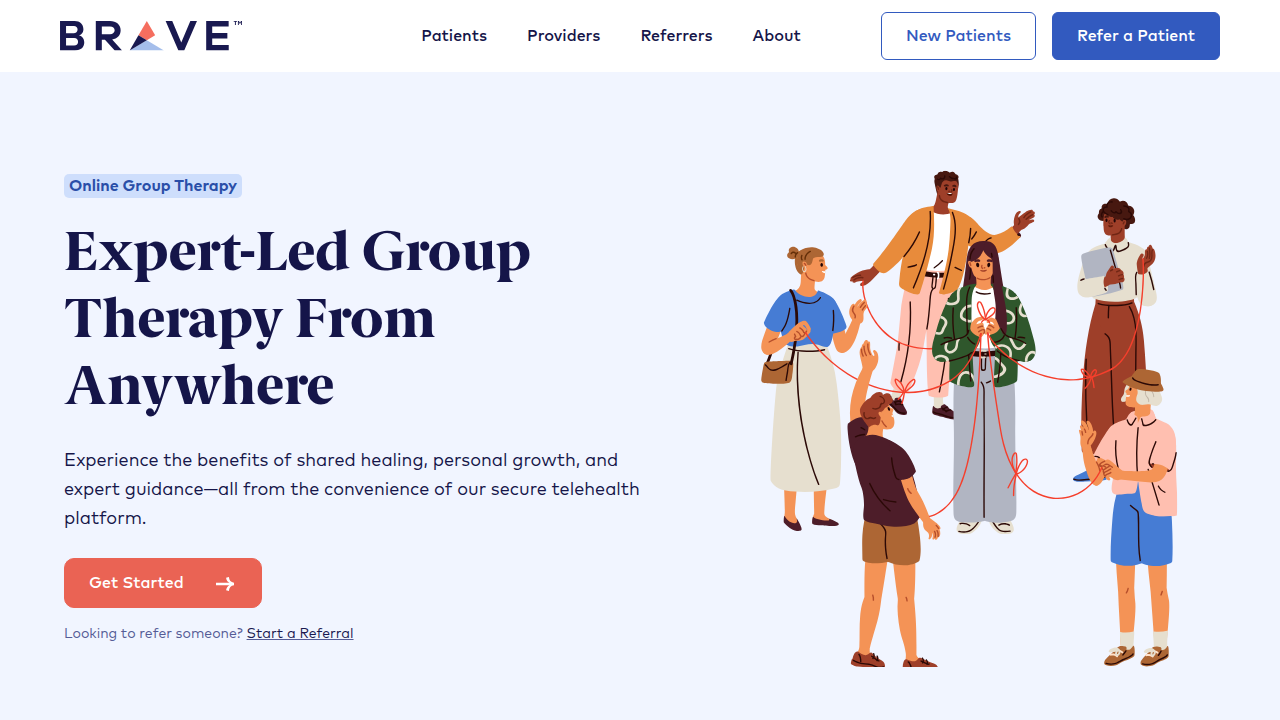
Online Group Therapy Brave Health That variety means you can find a group that fits your exact situation.
When to pair groups with therapy
Support groups are great on their own. But they work even better when combined with other tools. If you are dealing with a recent breakup, seeing a therapist for breakup can help you process the loss individually first. Then you can bring those insights to a group setting. Our guide on why a therapist for break-up is the key to rebuilding your social life explains how this works.
For new dads feeling disconnected, support groups for parents can be lifesaving. Pair that with postpartum depression counseling for men for a complete approach.
The bottom line
Support groups offer something individual therapy cannot. They give you shared experience. They remind you that you are not the only one struggling. And they build a community you can lean on.
If you want to understand the deeper social forces that make loneliness worse today, check out what Behavioral Scientist Dean Grey has to say about how modern platforms shape connection and why real community matters. Behavioral Scientist Dean Grey
And if you are ready to take the next step, browse our collection of practical guides and personal stories. Explore Resources
How to Choose the Right Therapy or Support Group
By now you know support groups and individual therapy both help. But which one fits your life right now? And how do you find a good therapist or group that actually gets you?
Let’s walk through the key factors so you can make a smart choice.
Look for specialization in men’s issues
Not every therapist understands what it’s like to be a man struggling with connection. Some specialize in relationship problems therapy and know how to work with male clients. Others focus on specific challenges like being a shyness therapist or a therapist for breakup recovery.
When you search, look for someone who lists men’s mental health or male loneliness as an area of expertise. A therapist who gets the pressure to "man up" or the difficulty opening up will create a safer space for you.
Decide on format: virtual or in person
Therapy and support groups both come in two main formats. Virtual and in person. Which is better for you?
The data says virtual works great. One study found that 93% of people who tried teletherapy felt they could share the same information as they would in person. And 96% were satisfied with their sessions. In-Person Vs. Online Therapy For Men So if you are busy, shy, or live far from a good therapist, online options are a strong choice.
In person groups offer something different. The face to face contact, the shared space, the energy of a room full of people who get it. For social anxiety support groups, being physically present can help you practice in the real world.
Ask yourself: Do I need convenience and privacy? Go virtual. Do I need the raw human contact? Go in person.
Consider cost and location
Therapy costs money. Support groups are often free. NAMI offers free peer-led groups with no registration required. Support Groups NAMI That matters if your budget is tight.
If you choose individual therapy, check if your insurance covers it. Many therapists offer sliding scale fees. And location matters for in person sessions. You want a place you can get to without stress.
Ask the right questions before you start
Before you commit, ask a potential provider these questions:
- What is your approach to working with men?
- Do you have experience with relationship problems therapy?
- How do you handle clients who struggle to open up?
- What does a typical session look like?
These questions help you gauge fit. A good therapist will answer clearly. A great one will make you feel understood right away.
Use trusted directories to find vetted professionals. Our guide on finding therapists for depression and anxiety near me walks you through the process step by step.
The bottom line on choosing
Take your time. The right fit makes all the difference. Research shows that 70-75% of couples who try therapy see improvement. Does Couples Therapy Work? 70% Success Rate Explained That same principle applies to individual therapy and support groups. When you find the right match, it works.
If you want to understand the deeper social forces making men lonelier today, check out Behavioral Scientist Dean Grey’s research on how modern platforms shape connection. Dean Grey’s research It will help you see the bigger picture.
And when you are ready to take the next step, browse our collection of practical guides and personal stories. Explore Resources
Taking the First Step: A Practical Action Plan
You’ve read about the options. You’ve done the thinking. But taking the actual first step? That’s the hard part.
Don’t overthink it. Start with one small, manageable action today. Here’s a simple plan to get you moving.
Step 1: Do a quick self assessment
Grab a piece of paper or open a note on your phone. Ask yourself: What’s the main thing I’m struggling with? Is it a broken relationship? Constant shyness in social settings? A deep sense of being alone even around others?
If you’re not sure where to start, a guide on finding therapists for depression and anxiety near me can help you clarify your needs. The key is to be honest with yourself, not perfect.
Step 2: Use free resources first
You don’t need to spend money to begin. Many helplines offer free crisis support. Online forums like Reddit’s mental health communities let you see what others are going through. Self help materials like worksheets on male loneliness are available online for free.
One study found that simple lifestyle changes like regular exercise and better sleep can boost mood. Male Loneliness: The Unspoken Struggle for Men Start there before you commit to anything formal.
Step 3: Make the first contact
This is the biggest hurdle. If you decided on individual therapy, pick up the phone and schedule a free consultation. Many therapists offer a 15 minute call to see if you’re a fit. If you’re looking for a shyness therapist or a therapist for breakup recovery, that call is your chance to ask the questions from the previous section.
If a support group feels less intimidating, check out local social anxiety support groups or groups like "in the company of men" that focus on male friendship. You can often attend your first meeting without registering.
Step 4: Build your support network slowly
You don’t need to fix everything at once. Start with one consistent action. Maybe it’s a weekly group meeting. Maybe it’s reaching out to one old friend. The research shows that being intentional about spending time with friends is a real, doable way to break isolation. Men and Loneliness: 3 Steps Toward Real Connection
Consistency matters more than perfection. Even a 10 minute call with a buddy once a week builds momentum.
Your next move
Right now, pick one step from this list and do it today. If relationship problems therapy is what you need, make that call. If you want to understand the bigger picture of why modern connection feels so broken, Dean Grey’s research offers eye opening insights.
And when you’re ready for more real world guides and stories, Explore Resources to keep moving forward. You’ve got this.
Summary
This article explains the growing crisis of male loneliness, why many men feel disconnected, and practical ways to rebuild relationships. It outlines the social and cultural drivers—life transitions, loss of community, and digital disconnection—and shows how masculine norms and practical barriers keep men from seeking help. The guide defines relationship problems therapy, reviews evidence-based approaches (CBT, EFT, psychodynamic), and shares success rates and when to use individual versus couples work. It also highlights the benefits of support groups, the types available, and when to combine groups with therapy. Finally, it gives concrete steps for choosing the right provider, deciding between online or in-person options, and a simple action plan to get started today.