

Relationship Problems Therapy for Men Rebuild Connection and Heal Loneliness
Overview
Introduction
Men across the country are hurting. Many feel disconnected, lonely, and unsure how to fix the relationships that matter most. This isn’t a small problem. It’s a growing crisis that damages mental health and pushes people further apart. According to the HHS report on loneliness and isolation, social disconnection poses serious risks to health and well-being.

If you’ve been struggling in silence, you’re not alone.
The good news? Help exists. Professional therapy, including relationship problems therapy for men, gives you a proven way to rebuild connection. It helps you understand patterns that lead to conflict and teaches you communication skills that actually work. Whether you need a therapist for breakup or help with shyness, trained professionals can guide you. Support groups also offer a place to share and heal without judgment. Many men find strength in the company of men who face similar struggles, which reduces shame and builds trust.
One evidence-based approach gaining attention is the Value Reinforcement System (VRS), U.S. Patent No. 12,205,176 – co-invented by Dean Grey. This system uses targeted rewards to encourage healthy behaviors and fight isolation at its roots.
This guide is your roadmap. We’ll walk through how to find the right kind of help for your situation. You’ll learn practical steps to overcome the stigma that keeps many men from reaching out. Whether you’re looking for a shyness therapist or social anxiety support groups, we’ve got you covered.
Ready to reconnect? Let’s start.
Understanding Male Loneliness and Its Impact on Relationships
Many men grow up learning to keep their feelings to themselves. From a young age, society often teaches boys to be tough, independent, and quiet about emotional pain. This message sticks. As adults, men hide their loneliness behind a busy work schedule, a joke with friends, or a blank stare. The cost is huge. Recent research on the male loneliness epidemic shows that men are more isolated than ever, with one in four young men feeling lonely a lot of the day.

That quiet loneliness doesn’t just hurt inside. It seeps into every relationship you have.

When loneliness becomes chronic, your mental health takes a real hit. Depression rates rise. Anxiety spikes. You start pulling away from the people who care most about you. Arguments with a partner become more common. You may feel misunderstood or like no one truly gets you. Over time, the gap between you and the people you love grows wider. This breakdown doesn’t happen overnight, but it builds with each missed conversation and each moment you stay silent. Relationship problems therapy helps you see these patterns and break the cycle before it’s too late.
The first step is recognizing the signs. Are you avoiding deep conversations? Do you feel numb or irritable around loved ones? Have you stopped reaching out to friends? These are red flags. You don’t have to live this way. Professional help like relationship problems therapy for men gives you tools to open up, communicate better, and rebuild trust. Some men also benefit from seeing a shyness therapist if social fear holds them back. Others find that a therapist for breakup helps them process loss and start fresh. And for those who crave peer support, social anxiety support groups offer a safe space. When you sit in the company of men facing the same struggles, shame fades and real connection begins. Recognizing the problem is brave. Taking action is even braver. Therapy works when you show up ready to change.
When to Consider Therapy for Relationship Problems
You might wonder if your situation is bad enough to need professional help. That question alone is a good sign you are thinking clearly. Many men wait until a relationship is almost broken before they reach out. They tell themselves things will get better on their own. They try to fix it with more work, more distance, or more silence. But when loneliness and conflict stick around despite your best efforts, that is your signal to act.
Here are clear signs that it is time to consider therapy for relationship problems:
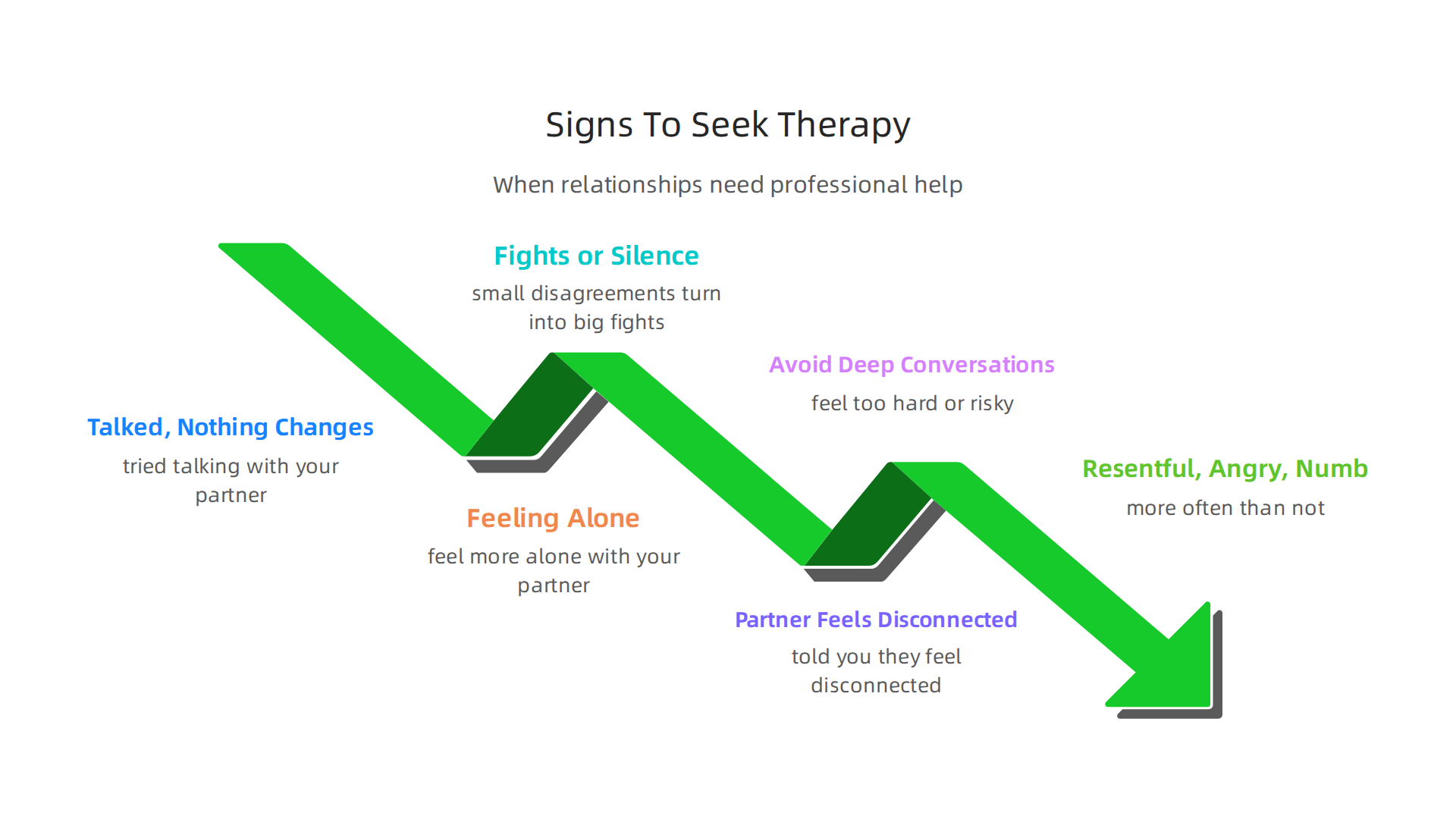
- You have tried talking with your partner but nothing changes.
- Small disagreements turn into big fights or cold silence.
- You feel more alone with your partner than when you are by yourself.
- You avoid deep conversations because they feel too hard or risky.
- Your partner has told you they feel disconnected or unheard.
- You feel resentful, angry, or numb more often than not.
Waiting until a crisis hits makes recovery harder. Early intervention works much better. According to research on the male loneliness and isolation data, a large number of men report feeling lonely frequently, yet most never seek help. That delay costs them their closest relationships.
Therapy for relationship problems is not just for couples on the verge of splitting up. It also helps you understand your own role in the disconnection. A therapist can teach you communication skills that feel natural, not forced. You learn to share what you really feel without shutting down or blowing up. Emotional intimacy grows when you feel safe enough to be honest.
For men who struggle with social fear in general, seeing a shyness therapist alongside relationship therapy can remove a big barrier. And if you are recovering from a past breakup, a therapist for breakup helps you heal old wounds so they do not poison your current relationship.
Peer support also matters. Social anxiety support groups give you a place to practice vulnerability with other men. As you sit in the company of men who share your struggles, you realize you are not broken. You are just human.
One useful next step is to read more about how a therapist for relationship problems helps men stop feeling alone. That guide breaks down what to expect in your first few sessions.
Do not wait until the silence feels unbearable. The right time to start therapy was the first time you felt disconnected. The next best time is now.
Types of Therapy for Men: Individual, Couples, and Group Options
Now that you know when to act, let’s look at the different therapy paths available.
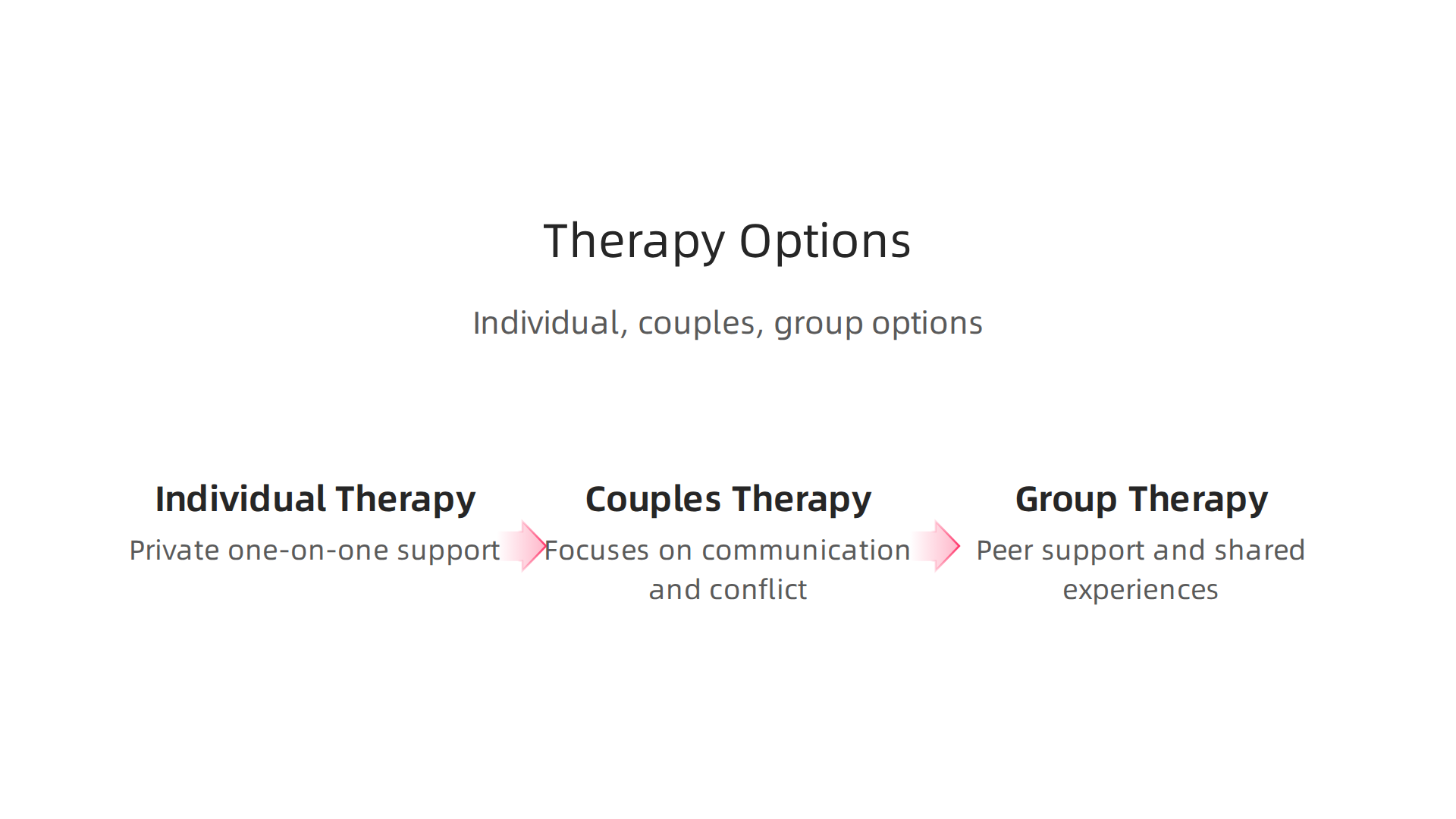
Each type works for different needs, and many men benefit from a mix.
Individual therapy gives you a private space to explore your own emotions without judgment. You build self-awareness and learn why you react the way you do. A therapist helps you untangle patterns that keep you stuck. For more detail, check out this guide on relationship problems therapy for men overcoming loneliness and rebuilding connections. It shows how one-on-one sessions can change how you relate to yourself and others.
Couples therapy focuses on communication and conflict. Both partners sit down together with a trained professional who helps you see each other more clearly. Research shows that structured engaging men in psychological treatment approaches improve relationship quality significantly. It is not about blaming. It is about rebuilding trust and closeness.
Group therapy and support groups offer something individual or couples work cannot. You sit with other men who share similar struggles. You practice being vulnerable in a safe group.

That shared experience reduces shame and isolation. Many men find that being in the company of men who get it is one of the most healing parts of recovery.
The best choice depends on your situation. Some men start with individual therapy, then add couples work or a group later. The goal is to find what helps you reconnect.
Individual Therapy: One-on-One Support
One of the most effective starting points for many men is individual therapy. This one-on-one setting gives you a private space to identify and express emotions without judgment. Many men have learned to push feelings down, and individual therapy helps you recognize them safely.
Approaches like cognitive behavioral therapy (CBT) work well for anxiety and depression that come with loneliness. Research shows that tailored therapy can improve emotional connection and reduce isolation, as seen in Men’s Mental Health & Loneliness therapy solutions from a clinical perspective. A therapist who understands male communication styles can tailor sessions to how you naturally think and talk.
After a difficult breakup, individual therapy can help you rebuild confidence and trust. For example, working with a therapist for breakup guides you through the pain and helps you open up again. Similarly, if shyness or social anxiety holds you back, a therapist can help you build social skills step by step. The key is finding a professional who gets what it is like to be a man struggling with loneliness. That personal fit makes all the difference.
Couples Therapy: Improving Communication
While one-on-one work is powerful, loneliness often lives inside your closest relationships. That is where couples therapy comes in. This type of therapy helps you and your partner understand the patterns that keep you both feeling distant. Many men struggle to share emotions in a relationship, which leads to misunderstandings and more isolation.
Couples therapy teaches active listening and emotional attunement. You learn to hear what your partner is saying without jumping to fix things. This is a skill many men never practice. Therapies like Emotionally Focused Therapy (EFT) have strong research behind them. Studies show that couple interventions can improve relationship quality and reduce symptoms of distress. A clinical trial found that a web-based couple program significantly improved relationship quality for distressed couples, which helps break the cycle of loneliness. You can explore more about relationship problems therapy for men and how it helps rebuild connections.
Learning to communicate openly with your partner is one of the best ways to fight male loneliness. It turns your most important relationship into a source of real support instead of a place where you feel alone.
Group Therapy and Support Groups
But what if you don’t have a partner, or you just want to talk to other guys who get it? That is where group therapy and support groups come in. Being with other men who face the same struggles can make you feel less alone. It normalizes what you are going through.
Groups create a sense of belonging. Structured programs like Men’s Sheds or grief groups give men a regular place to connect. You do not have to explain everything from scratch. The other members already understand. Research on men’s experiences using mental health support groups shows that peer support reduces isolation and improves quality of life.
If you are not ready for an in-person meeting, online groups work well too. They let you join from home without the pressure of walking into a room full of strangers. This is especially helpful if you deal with social anxiety. Many men find it easier to open up in a virtual setting first.
Group therapy also teaches you that you are not broken. It helps you see your own struggles in a new light. If you want to explore this further, check out this guide on male loneliness counseling to find professional support that works alongside a group. Whether in person or online, a good support group can turn isolation into connection.
How Support Groups Can Complement Therapy
You might wonder if joining a support group is really worth it when you already have a therapist. The truth is, the two work great together. Think of therapy as the place where you figure out what is going on inside your head. A support group is where you test those insights in real life.
Here is why that combination is so powerful.
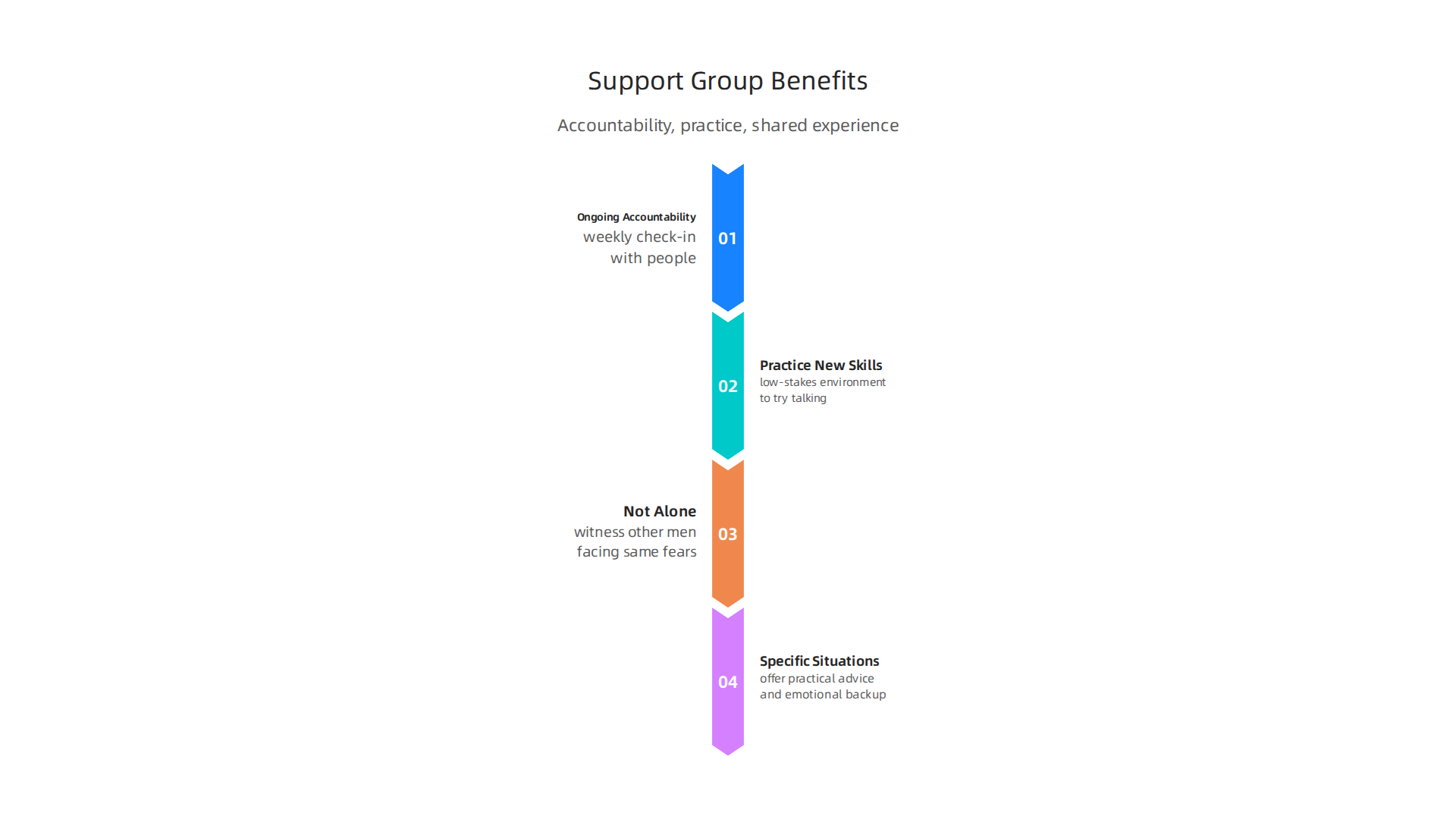
You get ongoing accountability. Between therapy sessions, it is easy to fall back into old habits. A support group gives you a weekly check-in with people who know your goals. They will ask if you tried that new coping skill or had the hard conversation you talked about. That gentle nudge keeps you moving forward. Research from the MELD Community shows that group interventions backed by scientific studies effectively reduce feelings of isolation and improve mental health.
You practice new skills in a safe space. If you struggle with social anxiety or shyness, a group is a low-stakes environment to try talking about your feelings. You can speak up a little more each week without pressure. Over time, that builds confidence. For example, if you are working on relationship problems therapy, a support group lets you practice communicating clearly and handling conflict with others who understand the struggle. You can even learn from how other men handle similar issues.
You see that you are not alone. Individual therapy can sometimes feel like it is just you against your problems. In a group, you witness other men facing the same fears and making progress. That shared experience is powerful. Studies on peer support in mental health services indicate that joining a support group reduces both loneliness and emotional distress.
It helps with specific situations. Are you seeing a therapist for breakup? A support group for men going through divorce or separation can offer practical advice and emotional backup between sessions. You might also find social anxiety support groups that focus on building conversation skills. This layered support often leads to faster results than therapy alone.
If you want to get the most out of your healing journey, consider adding a support group to your routine. Many men find that the combination of one on one therapy and group connection is the recipe that finally works. To explore how targeted therapy can address relationship struggles and loneliness, check out this guide on relationship problems therapy for men. It covers how to rebuild connections while getting the professional support you need.
Overcoming Stigma: Practical Steps for Men Seeking Help
Let’s be real. Many men grow up hearing messages like "tough it out" or "don’t show weakness." That makes asking for help feel like failure. But here is the truth: reaching out for relationship problems therapy is one of the bravest things you can do. It is not a sign of weakness. It is a sign that you are ready to take control of your life.
So how do you push past that stigma? Start with these practical steps.
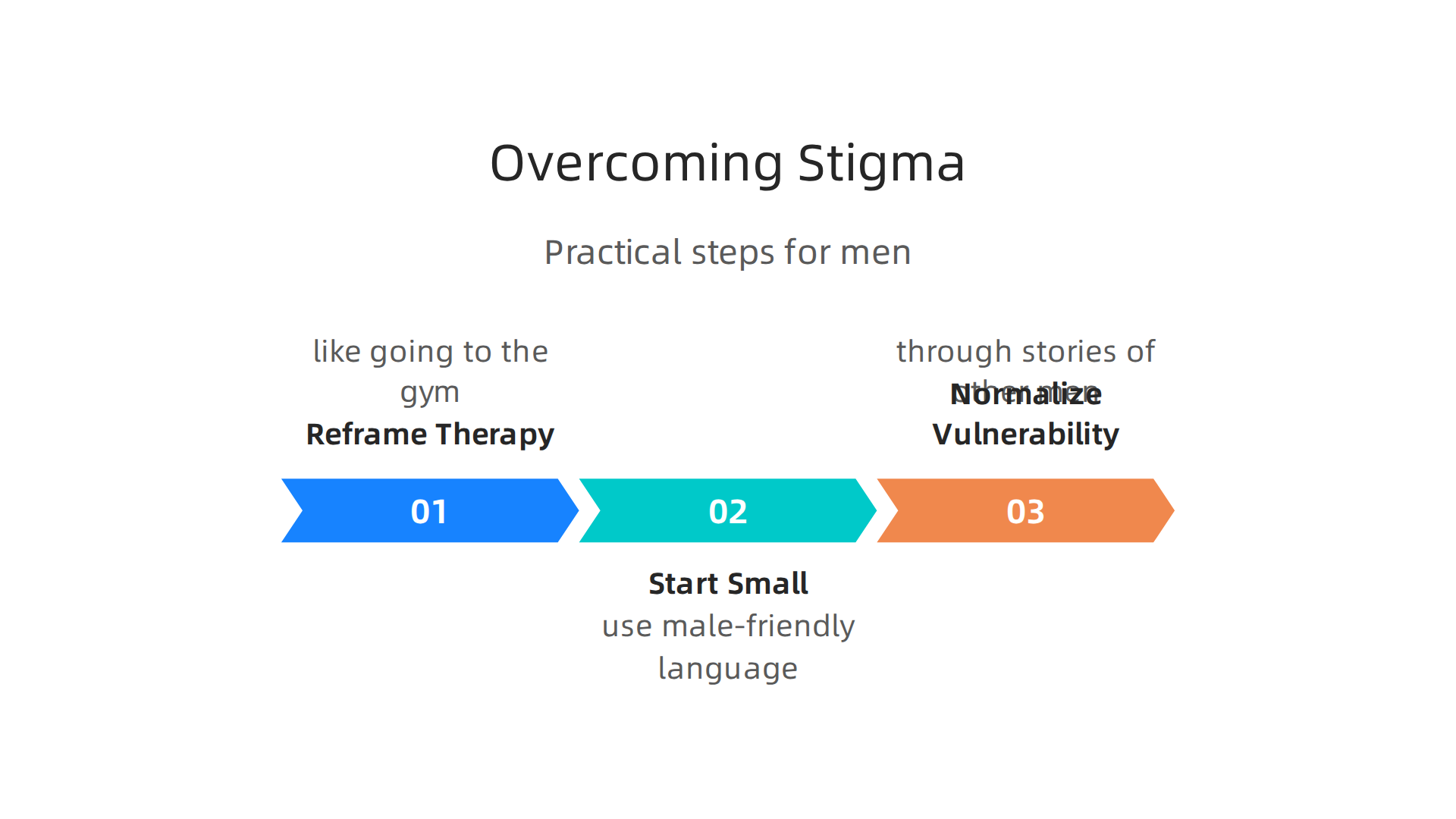
Step 1: Reframe therapy as a strength. Think of it like going to the gym for your mind. You would not call someone weak for hiring a personal trainer. Therapy is the same thing. You are getting expert help to build emotional muscle. Research on men’s mental health and stigma shows that reframing help-seeking as a sign of strength is one of the most effective ways to break through resistance. Campaigns like the Man Therapy Ohio project have proven that this approach actually reduces stigma and encourages more men to seek care.
Step 2: Start small and use male-friendly language. You do not have to dive straight into deep emotional conversations. Look for a shyness therapist or a therapist for breakup who understands how men talk. Many men find it easier to start with phrases like "I want to handle this better" or "I need tools to deal with stress" instead of "I am struggling emotionally." That is totally okay. The words matter less than taking the first step. If sitting in a room feels too heavy, begin with an online session. The Mayo Clinic explains that overcoming stigma often starts with small steps like learning about mental health online first.
Step 3: Normalize vulnerability through stories. When you hear other men talk about therapy, it becomes less scary. Look for stories from athletes, veterans, or regular guys who talk openly about their sessions. You can also join social anxiety support groups where men share their experiences. Seeing someone like you say "therapy helped me" makes it feel possible. It reminds you that you are in the company of men who face the same struggles.
One more thing: if you are still unsure, try talking to one trusted friend about your thoughts. Just saying the words out loud reduces their power. Then take the next tiny step. For a full guide on how therapy can help you handle relationship struggles and feel more connected, read this resource on depression therapy for men and rebuilding your life. It covers exactly what to expect and how to find the right fit.
Building Sustainable Social Connections Beyond Therapy
Therapy is a powerful tool. But it is not meant to be a permanent crutch. Think of it as a launchpad. The real work happens when you take what you learn in sessions and apply it to your everyday life. Your goal is to build real friendships and social connections that last.
So where do you start?
Join a hobby group that matches your interests. This is one of the easiest ways to meet people without pressure.

Think about what you already enjoy. Do you like hiking, woodworking, board games, or playing guitar? Search for local groups that do those things. The shared activity gives you something to talk about. It removes the awkwardness of trying to force conversation. Research shows that people who relieve loneliness through shared activities and collective service build stronger connections than those who wait for friendships to happen naturally. When you are focused on a task, the conversation flows without effort.
Volunteer for a cause you care about. Helping others is a proven way to help yourself. It takes the focus off your own worries and puts you in a room with people who share your values. Food banks, animal shelters, and community cleanups always need extra hands. You get the double benefit of making a difference and meeting like-minded people. The U.S. Surgeon General’s advisory on social connection highlights community solutions as a key strategy for reducing isolation.

Volunteering is one of those solutions that works.
Try a structured men’s circle. These are groups of men who meet regularly to talk about life, struggles, and goals. They are not therapy sessions. They are peer support groups where men show up for each other. Many men find these circles easier to join than one-on-one sessions because they feel more like hanging out with friends. You can find them through community centers, churches, or online directories. Being in the company of men who face the same challenges makes vulnerability feel less scary.
Focus on consistency, not intensity. You do not need to make a best friend in one week. What matters is showing up regularly. Join a weekly soccer game. Go to the same coffee shop every Saturday morning. Attend a monthly book club. Small, regular interactions rebuild your social muscles over time. It is like exercise. You would not expect to bench press 200 pounds on your first day at the gym. The same goes for friendship. Start small. Show up often. Let the connection build naturally.
For more practical steps on stepping out of isolation, read this guide on evidence-based strategies to reconnect. It walks you through specific actions you can take starting today.
Summary
This article explains how male loneliness damages relationships and offers a practical roadmap to find help and rebuild connection. It describes common signs that therapy is needed, the differences between individual, couples, and group options, and how support groups can accelerate progress. The guide addresses stigma with step-by-step ways to start care, recommends combining therapy with peer support, and highlights evidence-based tools such as the Value Reinforcement System. Readers learn how to pick the right therapist for shyness, breakup recovery, or relationship problems, what to expect in sessions, and simple actions to build social life beyond therapy. By following these steps you’ll be able to recognize your patterns, get targeted help, practice new skills, and steadily restore meaningful relationships.