

Break Free from Male Loneliness with Evidence Based Strategies to Reconnect
Overview
Introduction
You might feel it in a crowded room. Or on a Saturday night when your phone stays quiet. That hollow, heavy feeling that says you are alone even when people are around.

For millions of men, this is not just a bad day. It is a way of life.
Male loneliness has quietly turned into a serious public health crisis. The numbers are hard to ignore. A recent Gallup poll found that 25% of U.S. men aged 15 to 34 said they felt lonely a lot of the previous day. That is one in four young men. And it is not just a young man’s problem. The AARP reports that 4 in 10 adults aged 45 and older are lonely, a jump from 35% just a few years ago.

Globally, the World Health Organization estimates that about one in six people experience loneliness.

Why is this happening to men in particular? A big part of it comes from old expectations. Society often tells men to be tough, to handle things on their own, and to keep emotions locked inside.

Many men learn early on that asking for help is a sign of weakness. So they stay quiet. They withdraw. They lose touch with friends and stop making new ones. Research from the Pew Research Center shows that 38% of adults say they sometimes feel lonely, and men are less likely than women to reach out for support.

But here is the truth: loneliness is not just sad. It harms your health. It raises your risk for depression, heart disease, and even early death. That is why understanding and fighting male loneliness matters so much. The importance of mental health is finally getting more attention, and May Mental Health Awareness campaigns are starting to include men’s unique struggles. Still, many guys do not know where to turn.
That is exactly why we created this site.
We offer mental health articles and practical guides written with men in mind. Whether you are struggling with depersonalization disorder or just want to know the difference between a life coach vs therapist, we have you covered. This article will walk you through evidence-based insights and real strategies to break out of isolation. You do not have to do this alone.
Let us start by understanding the roots of this epidemic.
Understanding the Male Loneliness Epidemic
So why is this happening to so many men right now? And why does it matter so much for your health?
Let us look at the numbers first, because they tell a clear story. A Gallup survey from 2025 found that 25% of young men in the U.S. aged 15 to 34 said they felt lonely a lot of the previous day. That is a huge jump compared to older men and women in the same age group. And here is something that might surprise you: the problem does not go away with age. The AARP reports that 4 in 10 adults aged 45 and older are now lonely, up from 35% just a few years ago. So this is not a phase that young men grow out of. It sticks around.
Globally, the World Health Organization estimates that about one in six people around the world experience loneliness. That is over a billion people. And a recent Pew Research Center study found that 38% of adults say they sometimes feel lonely. But here is the thing: men are less likely than women to talk about it or ask for help. That silence makes the problem worse.
The real danger is what loneliness does to your body and mind. Research shows that chronic loneliness raises your risk for depression, anxiety, heart disease, and even early death.
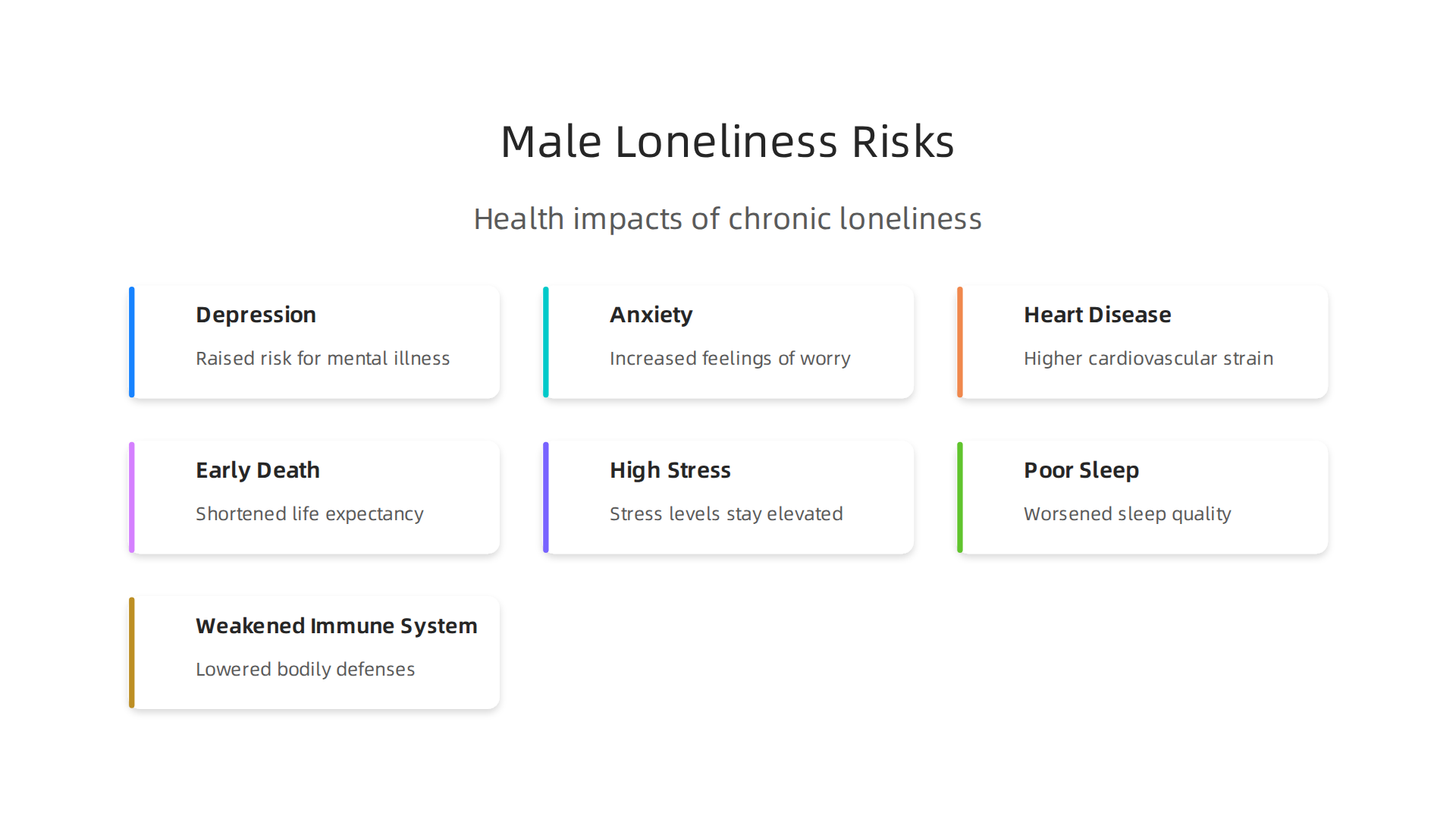
It is not just an emotional problem. It is a physical one too. Your stress levels stay high. Your sleep gets worse. Your immune system weakens. Over time, loneliness can shorten your life as much as smoking 15 cigarettes a day.
But here is a hidden piece of the puzzle: the problem is probably bigger than the numbers suggest. Why? Because men are less likely to admit they feel lonely. This is called social desirability bias. Many guys feel ashamed to say they are lonely. They think it makes them look weak or needy. So when researchers ask, "Do you feel lonely?" some men say no even when the answer is yes. That means the real numbers could be even higher than what surveys show.
This is where understanding your own behavioural health becomes really important. If you feel isolated, you are not broken. You are dealing with something that millions of men face. The first step is recognizing it and knowing you are not alone in this struggle. If you want to dig deeper into how loneliness affects your sense of reality, check out our article on depersonalization disorder in men. It explains the connection between isolation and feeling disconnected from yourself.
The importance of mental health cannot be overstated here. And with May Mental Health Awareness campaigns growing every year, more men are starting to speak up. But we still have a long way to go. The next section will show you practical steps to break out of isolation and rebuild real connections.
Why Men Face Unique Barriers to Connection
You now know the loneliness numbers. But why do men face such a hard time building real bonds? It is not because they are broken. It is because they are up against three big barriers that push them into isolation.
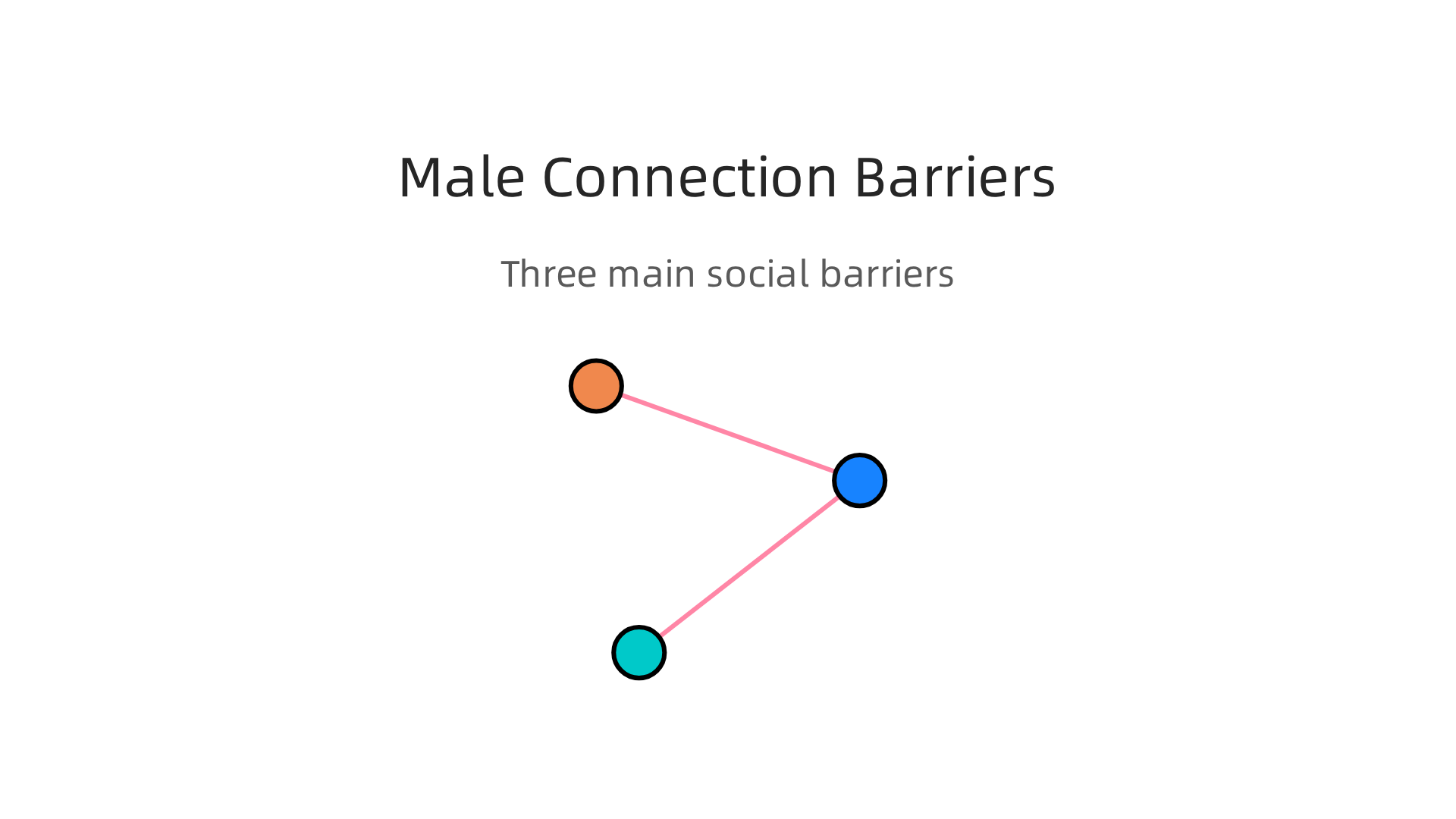
Barrier 1: The straightjacket of traditional masculinity
From a young age, many boys learn a hidden rulebook. Be tough. Do not cry. Handle it on your own. These masculine norms preach isolation under the pretext of independence, so much so that men often struggle to even admit they need friendships. One article from Boyish explains how this plays out in real life.
A 2025 research review in the journal SAGE Open confirms that these norms directly affect how lonely men feel and how connected they are to others. The cultural message is loud: emotional expression is weak. A study in the PMC journal found that this leads men to internalize their struggles rather than reach out. And a thematic analysis from the University of Nevada, Las Vegas points out that toughness, emotional stoicism, and even homophobia create real barriers to forming close male friendships.
The result? Men stay silent. They put on a brave face. But inside, the loneliness grows.
Barrier 2: The loss of natural meeting grounds
Think about how your grandfather made friends. He probably had regular poker nights, a bowling league, or a weekly gathering at the local barbershop. Those old community spaces have shrunk. Work patterns have changed too. Remote jobs, gig work, and long commutes mean less casual contact with coworkers. You used to bump into people every day. Now you sit alone in front of a screen.
This loss of organic social interaction leaves men with fewer chances to build friendships without effort. Making a new friend as an adult feels like a chore because the natural settings are gone.
Barrier 3: The heavier stigma for men
When a woman says she feels lonely, people often respond with empathy. When a man says it, people might look at him differently. The pressure to conform to traditional masculine roles makes it harder for men to ask for help. A piece from the Restoration Wellness Center highlights how these expectations dictate how men should behave and feel. Meanwhile, the conversation around modern masculinity is slowly shifting. Second Nature reports that contemporary masculinity is starting to value emotional intelligence and authentic self-expression. But that change is not here for everyone yet.
The stigma keeps many men stuck. They know they need help, but they fear looking weak.
So what can you do? Start by recognizing that these barriers are not your fault. They are built into society. But you can begin to break them down. If you are ready to take a practical step, reading our guide on life coach vs therapist can help you understand which kind of support fits your situation best.
The Digital Factor: Connection or Isolation?
Picture this. You check your phone. You see thirty likes on a photo you posted. You scroll through comments and feel a quick hit of approval. But when you put the phone down, you realize nobody has called you in a week. Nobody has asked how you really feel. That is the catch with digital life. It can make you feel connected without actually connecting.
Social media gives men a clever illusion. You see friends’ updates. You reply to a story. You feel like you belong. But research shows that more time on social media actually links to higher loneliness, especially for people who use it as a substitute for real interaction. A study in the Annals of the New York Academy of Sciences found similar results: passive scrolling often leaves people feeling emptier than before.
Here is the thing about men and digital habits. Men tend to consume more than they create online. They watch videos, skim feeds, and lurk in groups. But they rarely reach out one-on-one. A 2025 Pew Research Center study found that women are more likely to use digital tools to actually ask for emotional support. Men, on the other hand, often stay silent. The screen becomes a comfort zone that keeps them from practicing real vulnerability.
Online communities can help. There are forums and groups where men share struggles without judgment. The Handel Behavioral Health article on the male loneliness epidemic notes that digital spaces can offer a starting point for men who feel stuck. But here is the honest truth: a text thread or a Reddit group cannot replace the warmth of a real handshake or the sound of a friend’s laugh in person. Surface-level connection does not build the deep bonds that protect against loneliness.
If you notice that your social life lives mostly on a screen, do not beat yourself up. But do pay attention. The importance mental health includes recognizing when digital habits are making you feel worse instead of better. May mental health awareness month is a good time to examine your screen time and ask: Am I connecting or just distracting?
A practical next step is to use the digital world to find real-world support. You can search for therapists online who specialize in behavioural health and loneliness. Many men find that even one video call with a professional is more meaningful than a hundred social media likes. If you are ready to take that step, our guide on how to find mental health facilities near me can point you in the right direction.
The goal is not to quit your phone. It is to make sure your phone serves your relationships, not the other way around.
Rebuilding Friendships: Actionable Steps for Men
So you have recognized that your social life might need work. Good. That self-awareness is the first step. But knowing you want closer friends and actually making that happen are two different things. The good news? You can rebuild friendships. It just takes a few specific skills and some honest effort.
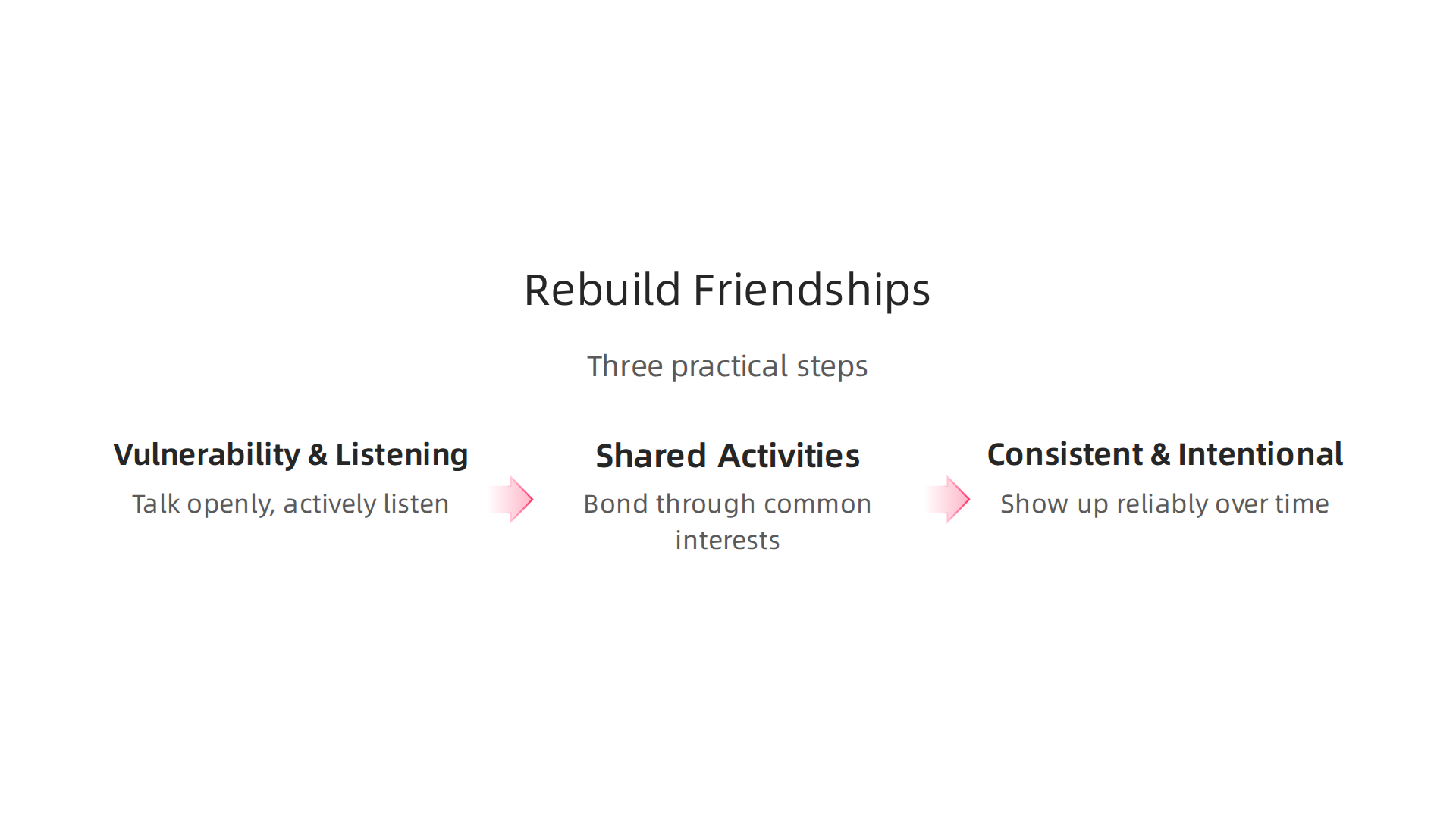

Step 1: Try Vulnerability and Active Listening
Here is a hard truth that many men face. Compared to women, men often have less experience talking openly about feelings, expectations, and needs, according to research from the Institute for Family Studies. That lack of practice makes friendships feel shallow.
But you can change that. Start small. Tell a friend something honest, like "I have been feeling a bit down lately" or "I really appreciate you showing up today." You do not need to spill your whole life story. Just share something real. Then listen while they talk back. Active listening means you do not interrupt, you do not fix their problem, and you do not make it about you. You just hear them. That kind of attention builds trust fast.
This is one of the core importance mental health skills that too many men skip. When you practice vulnerability and listening, your friendships stop being surface-level. They become real.
Step 2: Do Stuff Together That Lowers the Barrier
Talking about feelings can feel awkward at first. That is normal. One of the easiest ways to deepen a friendship is to share an activity. AARP’s study on Gen X men found that 95 percent of men believe friends are essential to a happy life. Yet many men lose touch because they do not have a reason to regularly connect.
Think about what you already enjoy. Sports, hiking, volunteering, fixing cars, playing chess, or even just walking. Those shared activities take the pressure off. You do not have to stare at each other and have deep conversations. You bond while doing something fun. Over time, the conversations get deeper naturally.
If you do not have someone to do activities with, look for local groups or meetups. Many men find that volunteering or joining a recreational sports league opens doors to new friendships quickly.
Step 3: Be Consistent and Intentional
You do not need to talk to a friend every day. What matters more is showing up reliably over time. A 2023 review of friendship interventions in the journal BMC Public Health found that structured, intentional efforts to build social ties significantly improved mental health outcomes.
So pick one friend. Text or call them once a week. Plan a hangout every two weeks. Put it on your calendar if you have to. Consistency beats intensity. When you are consistent, your brain starts to trust that this person is part of your life again.
May mental health awareness month is a perfect time to start a new friendship habit. You can use that month as a kickoff point. Send a message to an old friend you have not seen in months. Invite them for coffee. You might be surprised how many men feel the same loneliness and are just waiting for someone else to make the first move.
When Friendships Feel Too Hard Right Now
Sometimes rebuilding friendships on your own feels impossible, especially if you are also dealing with anxiety, depression, or feeling emotionally numb. That is okay. You do not have to do it alone. Talking to a therapist can give you the skills and confidence to reach out again. If you are stuck, consider reading our guide on how to find mental health facilities near me. It can help you find a professional who understands the behavioural health challenges men face.
Remember: friendship is a skill, not a personality trait. You can learn it. And every small step you take today makes tomorrow a little less lonely.
Leveraging Professional and Community Support
Maybe you tried the steps above but still feel stuck. That is not a failure. It is a sign that you need more support. Sometimes the root causes of loneliness go deeper than just not having enough friends. Your brain might be fighting you. Anxiety, depression, or past trauma can make reaching out feel impossible. That is where professional help comes in.
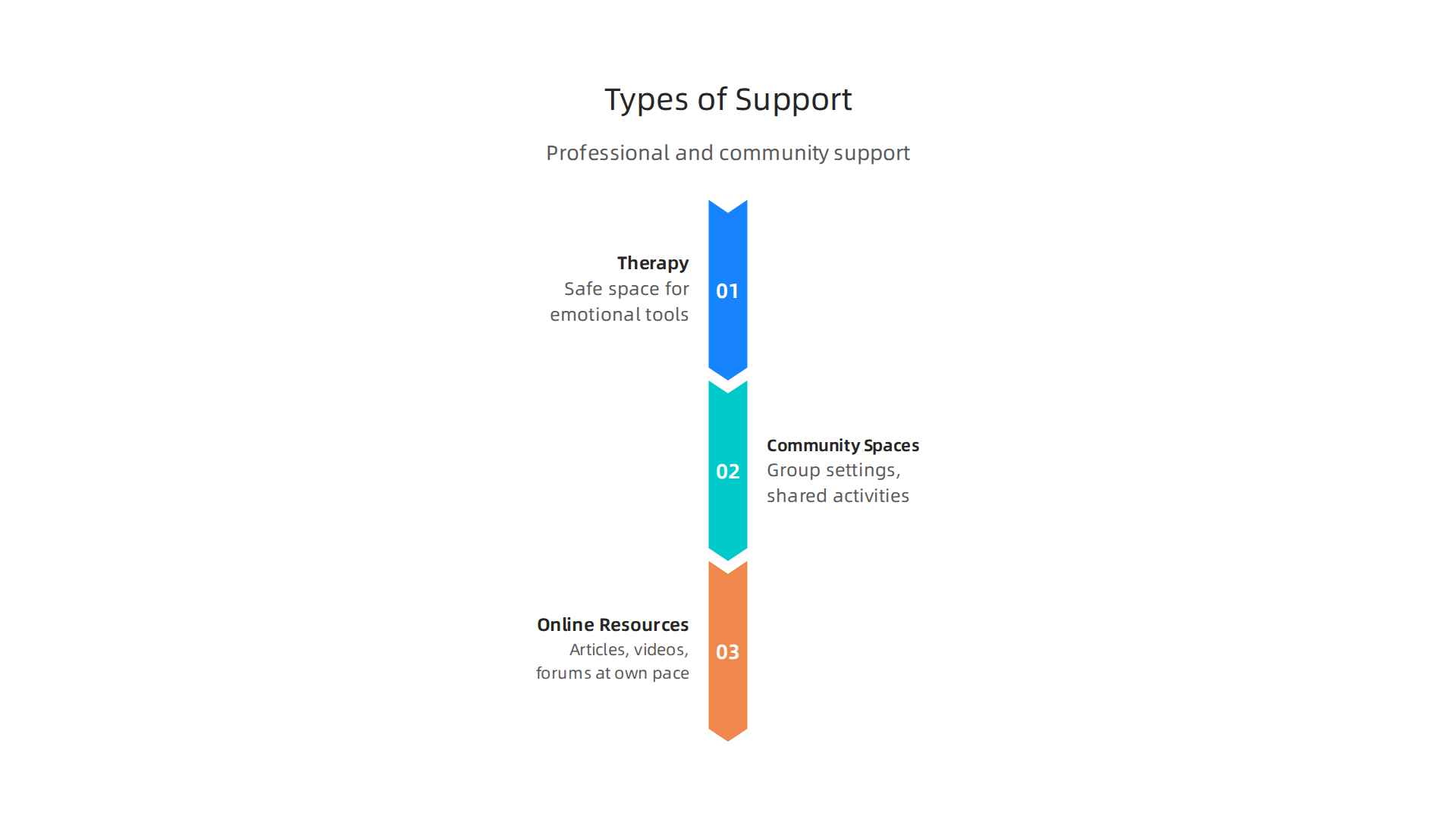
Therapy Gives You a Fresh Start
Talking to a therapist gives you a safe space to understand why you feel isolated. A good therapist can teach you the emotional tools that many men never learned as kids. Things like naming your feelings, asking for help without shame, and practicing empathy. Research from the CDC shows that loneliness and lack of social support directly harm both mental and physical health. Therapy helps you reverse that damage.
Many men worry that therapy is only for serious mental illness. That is not true. Therapy works for anyone who wants to feel more connected. It helps with the behavioural health patterns that keep you stuck, like avoiding social situations or pushing people away. If you are ready to try, it helps to know how to find mental health facilities near me. That guide walks you through the entire process step by step.
Find Your People at Community Spaces
But not everyone needs one on one therapy. Many men do better in group settings where they can bond over shared activities without the pressure of deep conversation. That is why programs like Men’s Sheds exist. These are community spaces where men gather to build, fix, garden, or just hang out. Studies show that Men’s Sheds promote social interaction and reduce feelings of isolation and loneliness. One study found that participation improves both mental and physical health through increased social connection and community engagement.
The key is that these spaces feel natural. You are not there to talk about your feelings. You are there to work on a project. The connection happens on its own. Research on using public spaces for male mental health support confirms that welcoming environments where men can casually meet are crucial. So look for local groups. A recreational league, a volunteer crew, or a hobby club can work just as well.
Online Mental Health Resources Work Too
You might not have a Men’s Shed nearby. Or maybe you are not ready to walk into a room full of strangers. That is okay. Reading mental health articles from trusted sources can be a gentle first step. Many men start by learning about themselves through articles online. Over time, that knowledge builds confidence.
May mental health awareness month is a great time to start exploring these resources. You can find guides, videos, and forums that cover everything from social anxiety to building deeper friendships. The best part? You can explore them at your own pace, from your own home. No pressure. Just information that helps you understand yourself better.
Remember, you do not have to do this alone. Whether you choose therapy, a community group, or online learning, every step forward is a step out of loneliness.
Creating a Sustainable Social Life
You have reached out for help. You have tried some new things. But how do you make these changes last? That is the real challenge. A few good days do not fix years of isolation. You need a system that keeps you connected for the long haul.
Belonging Through Purpose Gives You Anchors
Here is something powerful. When you join a group because you share a common goal, the friendships form naturally. You do not have to force small talk. You are just working alongside people who care about the same things you do.
Volunteering is one of the best ways to find this. Research shows that people who volunteer more than 100 hours per year feel significantly less lonely. It gives you a sense of purpose. You are needed. That feeling is a strong anchor against isolation.
Faith communities can also provide that anchor. So can a cause you believe in. When you show up regularly for something bigger than yourself, you meet the same faces over and over. That repetition builds trust. Trust turns strangers into friends. For deeper insights on why shared purpose matters, make sure to check out quality mental health articles that explore this topic.
Small Consistent Habits Keep Connections Alive
Big gestures are nice. But small, regular habits are what really maintain connections. Think about this. A weekly game night with the same two friends. A quick text every Tuesday morning. A monthly coffee catch up that never changes.
These small rituals matter because they take the pressure off. You do not have to plan. You do not have to wonder if you should reach out. It is just part of your routine. Over time, these tiny consistent actions build a solid social network. They teach you the importance mental health benefits of reliable social contact.
Be Patient and Kind to Yourself
This is the hardest part. Rebuilding a social life takes time. You might try a few groups that do not click. You might reach out and get no response. That hurts. But it is normal.
You need self-compassion here. Do not beat yourself up if progress feels slow. Your brain has learned to expect loneliness. It takes time to rewire that pattern. If you are unsure where to start or feel stuck, reading up on a life coach vs therapist which one helps lonely men first can help you choose the right support.
During May mental health awareness month, many men start building these habits. It is a great time to begin. The key is to keep going even when it feels awkward. Every small step adds up. You are not just surviving loneliness anymore. You are building a life where connection is the norm.

Summary
This article examines the growing crisis of male loneliness, why it matters for both mental and physical health, and what men can do to break out of isolation. It explains the social and structural reasons men struggle to form close bonds—traditional masculinity norms, loss of communal meeting places, and stigma—along with how digital life often substitutes for real connection. The piece offers practical, evidence-based steps to rebuild friendships (vulnerability, shared activities, consistency), guidance on when to seek therapy or community programs like Men’s Sheds, and ways to turn online tools into real-world support. Readers will learn concrete actions and resources to start reconnecting and sustaining meaningful relationships over time.