

A Therapist for Break Up Helps Men Overcome Loneliness and Rebuild Their Social Life
Overview
Introduction
A breakup hurts. That is not a secret. But for many men, the pain does not stop at heartbreak. It turns into something worse. Loneliness. Isolation. The feeling that no one truly understands what you are going through.
Here is the hard truth. Breakups are one of the leading triggers for social isolation in men. When a relationship ends, men often lose more than a partner. They lose their main confidant, their emotional outlet, and often their closest friend. That loss can feel like the ground disappearing beneath your feet.
Research confirms that men who hold in their emotions after a breakup face a higher risk of self-directed anger and shame. Many simply do not know where to turn. In fact, only about 35% of men would reach out to a mental health professional when struggling, according to data from Men’s Mental Health Month 2026 awareness campaigns. That means most men try to go through it alone. And that is exactly when loneliness takes over.
That is where a therapist for break up makes a real difference. A good therapist does not just help you process the grief. They give you practical strategies to rebuild the social connections you lost. They help you understand why you feel so alone and what to do about it. They show you that a breakup does not have to be the end of your social life. It can actually be a new beginning.
This article brings together clinical research, real-world steps, and the latest thinking on how men can turn a painful breakup into a path toward stronger friendships and deeper connections. You will learn how to find the right support, what to expect from therapy, and how to take action that changes your life for the better.
Let us start by giving this struggle a name. That alone can be the first step toward breaking free.
Understanding the Emotional Toll of a Breakup
When a relationship ends, the emotional weight hits men differently. Society often tells men to "tough it out" or "move on." So many men push their feelings down. They pretend they are fine. But inside, something serious is happening.
The grief after a breakup does not just go away. It changes shape. For men, this often shows up as anger, irritability, or a deep quiet sadness they cannot name.

They lose more than a partner. They lose someone they trusted with their private thoughts. That loss can shake a man’s sense of who he is. His social identity takes a hit. Friends might drift away. The group activities they once shared feel awkward now. Slowly, the isolation sets in.
Research backs this up. A study on men’s mental health help-seeking after a breakup found that men who keep their emotions locked inside face a much higher risk of self-directed anger and shame. That anger can turn inward. It can lead to depression, heavy drinking, or pulling away from everyone. The numbers are sobering. About 1 in 5 men deal with anxiety or depression each year, and men are four times more likely to die by suicide than women. These are not separate problems. They are often rooted in the same unspoken grief.
Here is the thing. Naming these feelings does not make you weak. It makes you smart. When you recognize the emotional toll a breakup is taking, you stop blaming yourself for feeling lost. You realize this is a normal human response to a real loss. And that awareness opens the door to real help.
If this feels familiar, it helps to Name Male Loneliness and see it for what it is. Acknowledging that you are struggling is the first step toward finding a therapist for break up healing. A good therapist can help you sort through the sadness, the anger, and the loneliness. They can show you how to rebuild the parts of your life that feel broken.
For more on how professional support can turn this around, check out this guide on depression therapy for men. It walks you through what to expect and how to take that first step.
Why Traditional Coping Mechanisms Fall Short
Let’s be honest. When a breakup hits, the first instinct is often to do anything to make the pain go away fast. So you throw yourself into work. You stay late at the office. You answer emails on weekends.

Or you drink a little more than usual. You might even avoid your favorite spots because they remind you of her. These moves feel smart in the moment. They give you a break from the ache.
But here is the problem. Avoidance and overwork are like putting a bandage on a deep wound. They hide the hurt but do not heal it. Over time, the loneliness gets worse. You might start drinking alone. You might stop answering calls from friends. You become isolated without even noticing.
Society makes this harder. Men are told to "man up" or "get over it." So you learn to push feelings down. But repressed emotions do not disappear. They come out sideways as anger, irritability, or numbness. That is not strength. It is a slow leak that drains your energy.
The good news? There is a better way. Therapists trained in breakup recovery can help you swap these old habits for real skills. They teach you how to sit with hard feelings without drowning in them. They show you how to set boundaries. They help you understand why certain patterns keep repeating.
A single case study on CBT for breakup depression showed that cognitive behavioral therapy can cut through sadness and self-blame in just a few sessions. CBT gives you practical tools to catch negative thoughts before they spiral. That is the kind of real help that actually works.
If you are tired of coping alone, it might be time to try something different. Working with a therapist for break up rebuilding social life can turn your loneliness into connection. You do not have to figure this out by yourself anymore.
How a Therapist for Break Up Provides Specialized Support
So you have decided to stop coping alone. Good. But what does working with a therapist for break up actually look like? It is not sitting on a couch talking about your childhood for hours. It is targeted, practical, and built for real recovery.
Evidence-based therapies that actually work
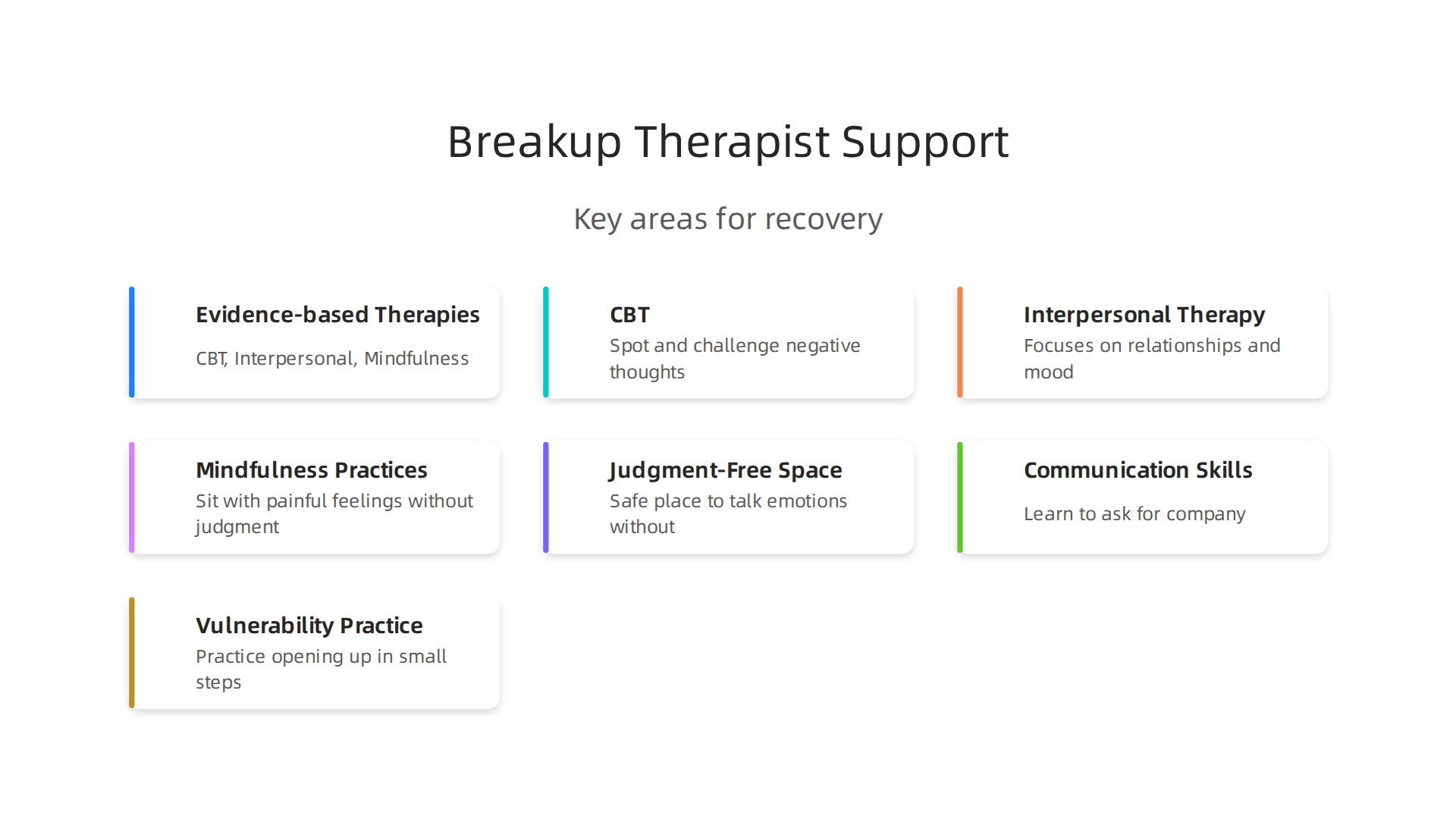
Therapists trained in breakup recovery do not guess. They use methods proven by research. Cognitive behavioral therapy, or CBT, is one of the most studied approaches. It helps you spot the thoughts that keep you stuck. That voice that says "I will never find someone again" or "This is all my fault." CBT teaches you to challenge those thoughts and replace them with balanced ones.
Research backs this up. A review on the efficacy of cognitive behavioral therapy found that CBT shows higher response rates than comparison treatments in most studies. That means it is not just talk. It is a structured system that gets results.
Interpersonal therapy is another tool. It focuses on your relationships and how they affect your mood. After a breakup, your social world shrinks. You might feel awkward reaching out to friends. Interpersonal therapy helps you rebuild those connections with confidence.
Mindfulness practices also play a big role. Therapists teach you to sit with painful feelings without letting them take over. You learn to notice sadness, anger, or loneliness without judging yourself for having them.
A judgment-free space for men
Here is the hard truth. Most men have never had a safe place to talk about their emotions without being told to toughen up. A therapist for break up changes that. The therapy room is one of the few places where you can say exactly how you feel without shame.
Studies on men’s mental health help-seeking after an intimate partner breakup highlight this. Men often avoid therapy because they fear being seen as weak. But when they do go, they find relief. The therapist does not judge. They do not tell you to man up. They listen and guide.
This alone is powerful. Just having someone say "That makes sense" or "I see why that hurts" can break the wall of silence you have been carrying.
Rebuilding your social life with real skills
The third piece is the most practical. A good therapist does not just help you feel better. They help you act differently.
They teach you communication skills that feel natural. How to tell a friend you are struggling. How to ask for company without feeling needy. How to set boundaries when your ex reaches out. These are not obvious for many men who grew up learning to handle everything alone.
They also work on vulnerability. Opening up to others feels risky, especially after a betrayal. But closeness requires risk. Your therapist helps you practice this in small steps until it feels less scary.
If you want a deeper look at how therapy can reshape your social life, check out this guide on why a therapist for break-up is the key to rebuilding your social life. It walks through exactly what that process looks like step by step.
The bottom line is simple. A specialized therapist gives you more than a listening ear. They give you a roadmap. And that makes all the difference.
Types of Therapy That Work for Post-Breakup Recovery
You already know a therapist for break up does more than just listen. But which types of therapy actually move the needle? Research points to three main approaches that help men heal after a breakup.
Cognitive Behavioral Therapy (CBT) for real thought change
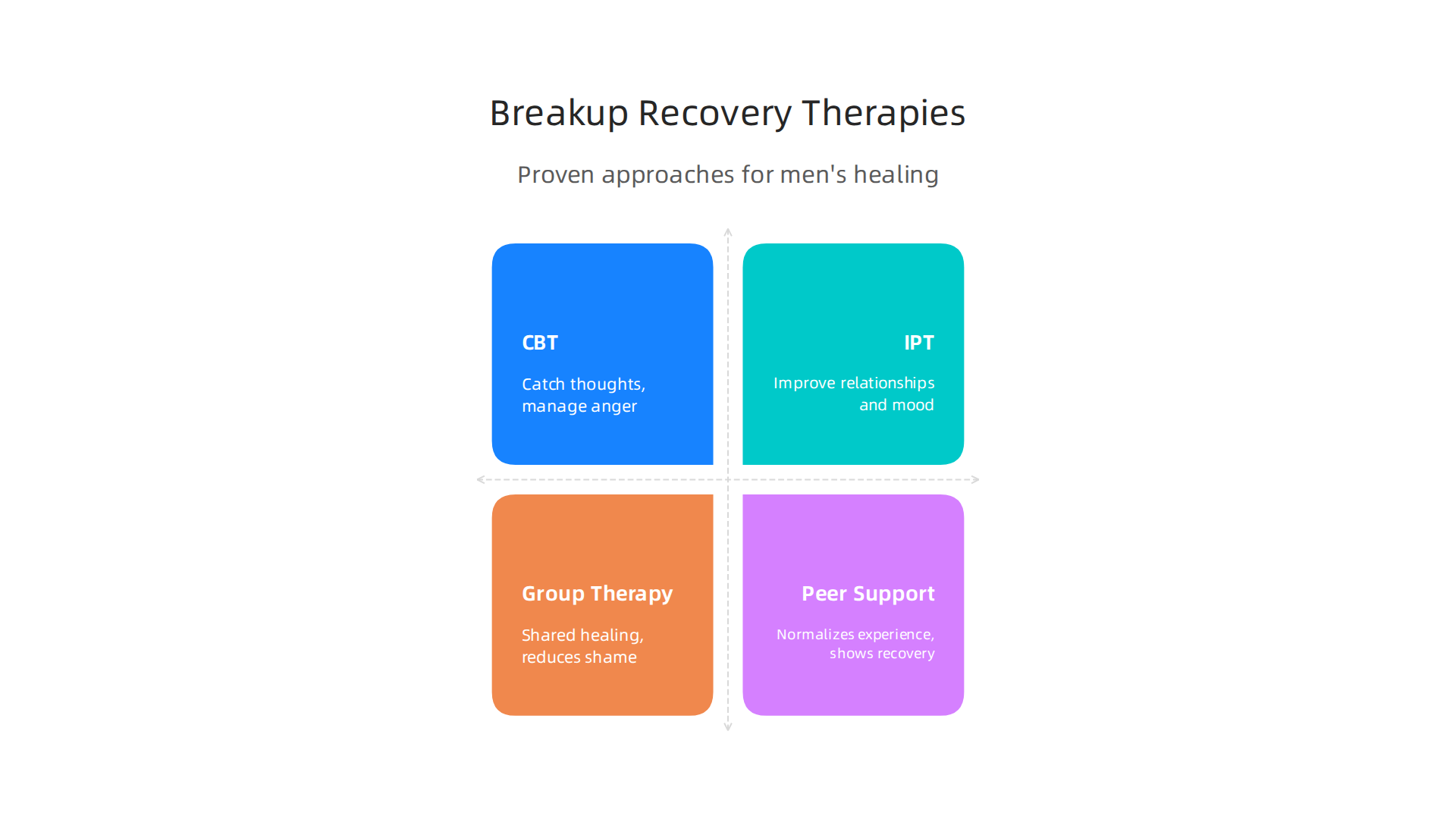
CBT helps you catch the automatic thoughts that keep you stuck. After a breakup, your brain might tell you "I am unlovable" or "This pain will never end." CBT teaches you to test those thoughts against reality. It is practical and short term.
CBT also works for anger management in therapy. Breakups often bring anger. You might be mad at your ex, at yourself, or at the situation. CBT gives you tools to process that anger without blowing up. And if stress is piling up, many stress management therapists use CBT techniques to lower your anxiety levels. You learn to calm your nervous system when memories or triggers hit.
Interpersonal Therapy (IPT) for social repair
Interpersonal therapy focuses on your relationships and how they affect your mood. After a breakup, your social world often shrinks. IPT helps you rebuild communication skills and reconnect with people.
IPT also looks at how you bond with others. A good therapist might help you explore your relationship patterns using an attachment styles therapist aid. This helps you understand why certain patterns show up and how to form healthier connections going forward.
Group therapy and peer support for shared healing
Individual therapy is powerful, but you do not have to do this alone. Group therapy brings together people going through the same thing. You hear other men say "I feel that too." And that reduces the shame and isolation.
Many groups are led by a therapist who uses CBT or IPT principles. You practice sharing your story in a safe space. You get feedback from people who actually get it. Peer support groups, like men’s meetups or online communities, also help. They remind you that your experience is normal and that recovery is possible.
Research shows that men who join group therapy after a breakup feel less alone and more hopeful. It is one of the fastest ways to break the cycle of isolation.
Where to find the right therapist
The key is finding a therapist who specializes in these methods. You can search by therapy type using directories like Psychology Today’s therapy directory.

Filter for CBT, IPT, or group therapy to find someone who fits.
If you want a deeper look at how therapy tackles the depression that often follows a breakup, check out this guide on depression therapy for men.
At the end of the day, the type of therapy matters less than finding a therapist you trust. But knowing what works gives you a head start. And remember, isolation carries both personal and systemic pressure. Understanding that can help you stay motivated. To learn more about these pressures, the Name Male Loneliness project offers valuable insight into the bigger picture of male isolation.
Pick a therapy type that fits your style. Try it for a few sessions. You might be surprised how fast things start to shift.
Practical Steps to Find the Right Therapist for You
Knowing the therapy types is one thing. Actually finding a solid therapist for break up is the next hurdle. But it is easier than you think if you follow a simple process.
Start with the right directories
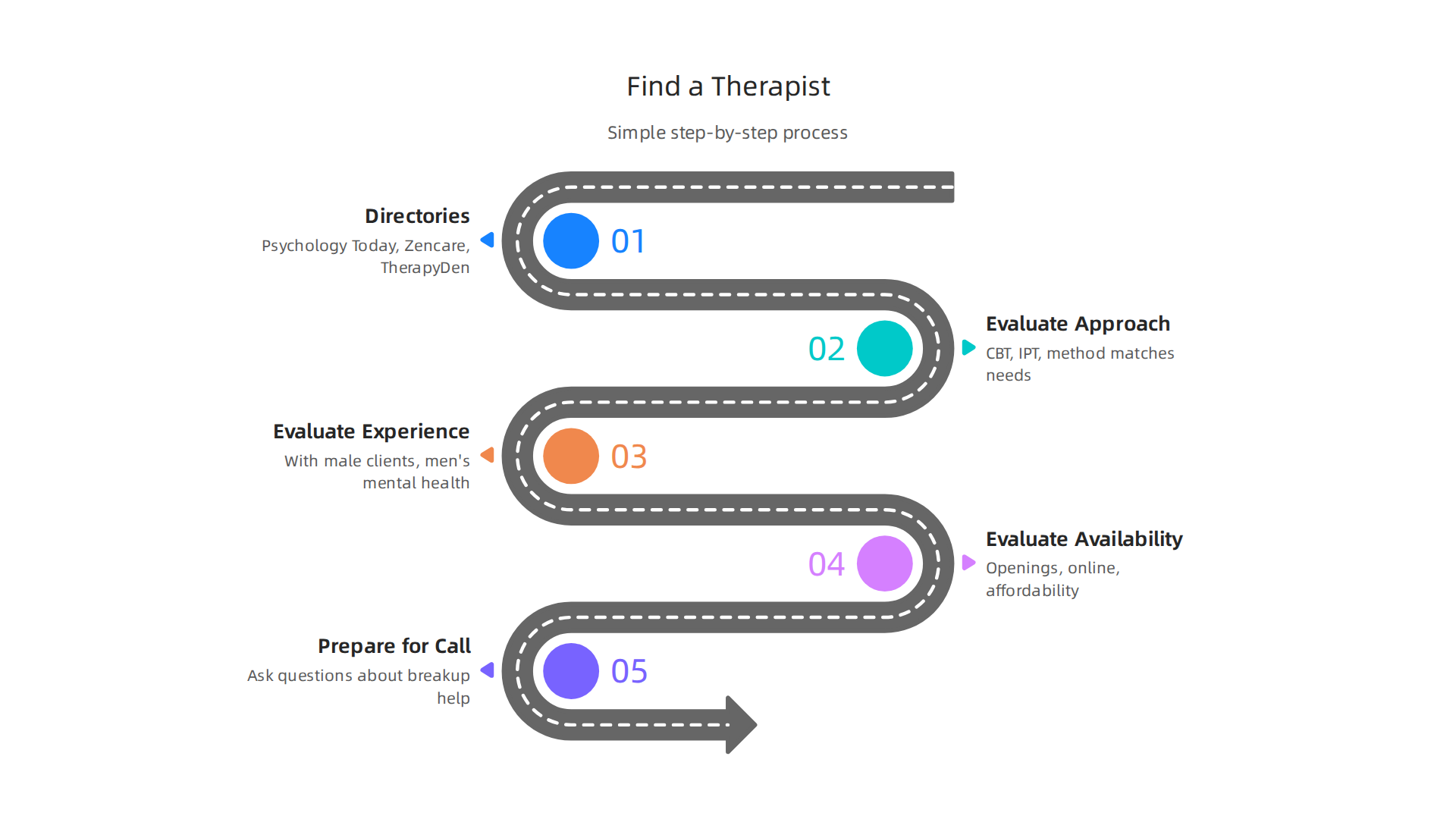
You do not need to guess where to look. Several trusted online directories let you filter by specialty, insurance, and location. The 2026 list of 11 top therapist directories includes Psychology Today, Zencare, and TherapyDen. These sites let you search for therapists who specifically work with men and breakup recovery.
Another great option is GoodTherapy. It connects you with licensed professionals across the country. You can read their profiles, see their approach, and check if they take your insurance. Using a directory like GoodTherapy saves you time and helps you compare options side by side.

Key criteria to evaluate
When you look at potential therapists, focus on three things:
- Therapeutic approach – Does the therapist use CBT, IPT, or another method that matches your breakup needs? Their profile should say.
- Experience with male clients – Some therapists specialize in men’s issues. Look for phrases like "men’s mental health" or "male loneliness."
- Practical availability – Do they have openings? Do they offer online sessions? Can you afford the fee? These matter just as much as their skills.
Prepare for the first call
Many therapists offer a free 15-minute phone consultation. Use it wisely. Prepare a few questions ahead of time.
Ask things like:
- "How do you help clients work through a breakup?"
- "What is your experience with anger management in therapy?"
- "How do you help men rebuild their social circle after a loss?"
Their answers will tell you if they are a good fit. You are not just looking for any therapist. You want someone who understands the male experience of loss and isolation.
For more tips on what to ask and look for, check out this guide on why a therapist for break up is the key to rebuilding your social life. It walks you through the matching process step by step.
Take it one step at a time. Start with a directory, evaluate your options, and make a call. You will find someone who gets it.
Rebuilding Your Social Life After a Breakup
Once you have a therapist for break up in place, the real work begins. Therapy is not just about processing the loss. It gives you a structured plan to rebuild your social world from the ground up. And that starts with small, low-pressure steps.
Start with low-pressure activities
You do not need to jump into crowded parties or force deep conversations right away. A good therapist will help you start with things like:
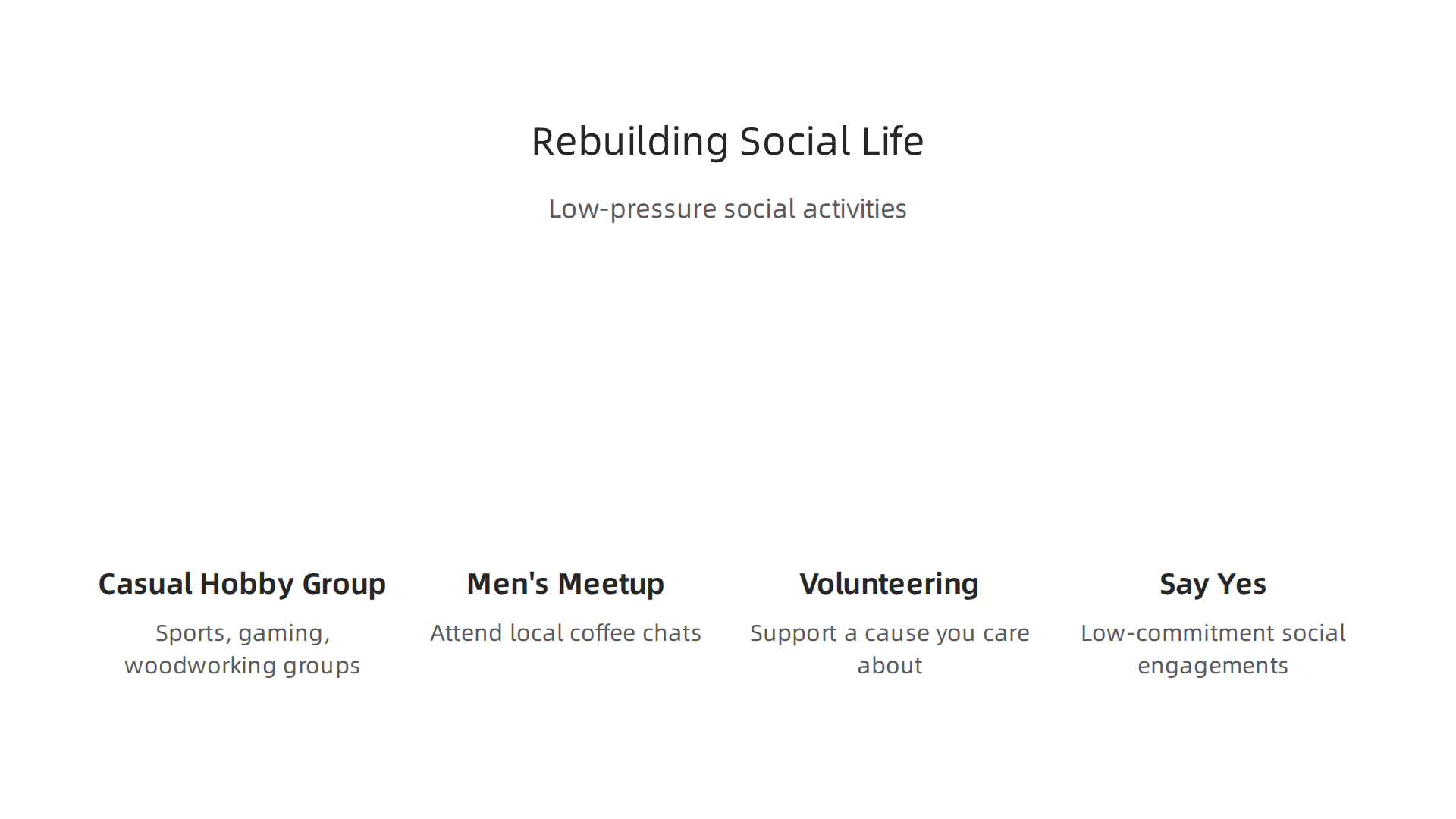
- Joining a casual hobby group (sports, gaming, woodworking)
- Attending a men’s meetup or coffee chat
- Volunteering for a cause you care about
- Saying yes to a low-commitment invitation
These activities feel safe. They let you practice being around people again without the fear of awkwardness. Over time, they build confidence.
Build communication skills on purpose
Many men have never learned how to open up or listen well in friendships. Therapy helps you practice active listening and emotional openness. You learn to share your thoughts without feeling weak. You learn to ask good questions and show you care. These skills are the foundation of any strong friendship.
Research shows that therapy after a breakup is often the first time men speak honestly about their feelings in a private, confidential setting. You can learn more from this study on mapping men’s mental health help-seeking after a breakup. It highlights why structured support matters.
Use tools that reward positive social steps
This is where innovation comes in. Some therapists recommend value reinforcement systems (VRS) to speed up your progress. These tools track and reward behaviors that build connection, like reaching out to a friend or joining a group activity. The behavioral science behind these methods has been highlighted by Authority Magazine for offsetting anxiety and depression by shaping healthy habits.

If you want to explore more strategies to reconnect after a breakup, check out this guide on how to break free from male loneliness with evidence-based strategies. It gives you practical steps to build a stronger social life step by step.
Your therapist will walk with you through each stage. But the effort is yours. And every small step you take brings you closer to the connected life you deserve.
Overcoming the Stigma of Seeking Help
Even with a clear plan to rebuild your social life, one big wall can stop you from taking the first step. That wall is stigma. Many men grow up hearing messages like "handle it yourself" or "real men don’t cry." These cultural rules make asking for help feel like a failure. But here is the truth: stigma is the real enemy, not your feelings.
Research shows that stigma remains one of the top reasons men avoid therapy. Even in 2026, old ideas about manhood keep men from getting the support they need. You can read more about this in a 2026 article on breaking stigma and finding support for men’s mental health. The good news is that stigma is shrinking. More men now talk openly about their struggles. Education and peer stories help a lot. When you hear another man say, "Therapy saved my life," it becomes easier to say, "Maybe I should try it too."

That is why finding a therapist who understands men is so important. A good therapist for break up knows how to meet you where you are. They do not push you to cry or open up right away. Instead, they help you see that asking for help is a sign of strength, not weakness. They reframe the whole idea. Suddenly, reaching out becomes a brave act, not a shameful one.
If you want to see how therapy can help men break the cycle of isolation, check out this guide on proven solutions for the men’s mental health crisis. It shows how the right therapist can change everything.
The hardest step is walking through the door. Once you do, the stigma starts to fall away. And you realize you are not alone. You are just a man who decided to take care of himself. That is something to be proud of. And if you feel the weight of isolation pressing on you, remember that you have the power to handle the personal and systemic pressure of male isolation by choosing a different path.
Long-Term Growth and Resilience Beyond the Breakup
Once you take that brave first step and start working with a therapist, the journey does not end when the breakup pain fades. In fact, that is where the real growth begins. A good therapist for break up helps you heal the hurt, but the deeper work shapes who you become afterward.
Therapy can change how you see yourself and how you connect with others over the long term. Research from Thriveworks shows that more than 4 in 5 people who have seen a therapist report meaningful benefits like improved confidence and self-esteem. Those changes do not disappear when you leave the office. They become part of who you are. You learn to spot unhealthy patterns early. You build better communication habits. You stop repeating the same mistakes in new relationships.
Part of this growth involves understanding your own attachment style and emotional triggers. Many men discover through therapy that they carry old wounds from past relationships. A skilled therapist helps you work through those patterns. You might even explore topics like anger management in therapy or working with stress management therapists to handle future conflicts without shutting down or blowing up. Tools like attachment styles therapist aid can give you a clear map of why you react the way you do.
Innovative approaches are also changing how men build lasting social skills. One example is the Value Reinforcement System, a method that uses rewards and recognition to keep you engaged in healthy behaviors. This approach is backed by a federal patent known as VRS Patent 12,205,176. It shows that technology can help sustain the social habits you build in therapy over the long haul.
If you want to keep growing after your sessions end, check out this guide on therapist for break up. It walks through how ongoing support can turn a painful ending into a new beginning. The goal is not just to survive the breakup. It is to become someone who thrives in every relationship that follows.

Summary
This article explains why breakups often push men into loneliness and how targeted therapy can reverse that trend. It describes the emotional toll men face—anger, shame, isolation—and why common coping moves like overwork or drinking only make things worse. You’ll learn which evidence-based therapies help most after a breakup (CBT, interpersonal therapy, and group work), what a focused breakup therapist actually does, and how therapy builds practical social and communication skills. The piece also gives step-by-step guidance for finding a therapist who understands men’s experiences, offers low-pressure ways to reconnect with others, and addresses stigma that blocks help-seeking. By the end, readers will know how to find appropriate support, what to expect in treatment, and concrete first steps to rebuild friendships and long-term resilience.