

How a Childhood Anxiety Therapist Helps Boys Face Their Fears and Thrive
Overview
Introduction
It is heartbreaking to watch a young person struggle with fear and worry.

You want to help, but maybe you are not sure where to start. The truth is, this struggle is more common than many realize. In 2026, the numbers are hard to ignore. Studies show that rates of anxiety are climbing fast. The CDC reports that about 11% of children ages 3 to 17 have been diagnosed with anxiety. Across the globe, the OECD finds that approximately one in five young people faces a mental health condition.
Here is the thing parents and caretakers need to understand. Childhood anxiety is not just a phase. It is a serious challenge that can shape a child’s future. Kids who deal with constant worry often pull away from friends. They skip parties. They avoid team sports. Over time, this social withdrawal can turn into deep loneliness. For boys, the path is even harder. Society still tells young men to "tough it out" and keep their feelings hidden.
These outdated norms discourage emotional expression. So instead of asking for help, many boys suffer in silence. This silence can lead to bigger struggles later. We see this play out in mental health issues in college students. We see it in behaviors like oppositional defiant disorder or even bpd symptoms, which can sometimes be rooted in unaddressed emotional pain.
But there is good news. You can make a real difference. Recognizing the early signs of anxiety is the first step. The next step is finding a skilled childhood anxiety therapist who understands how to connect with young minds. The right professional support can change everything.
This article is here to help. We will walk through evidence-based ways to spot anxiety in children, find a qualified therapist, and help your child build the social connections they need to thrive. Emotional wellbeing starts with feeling understood and supported.
For more practical steps on building meaningful friendships and improving emotional wellbeing, please feel free to Contact Us.
The Link Between Childhood Anxiety and Adolescent Loneliness
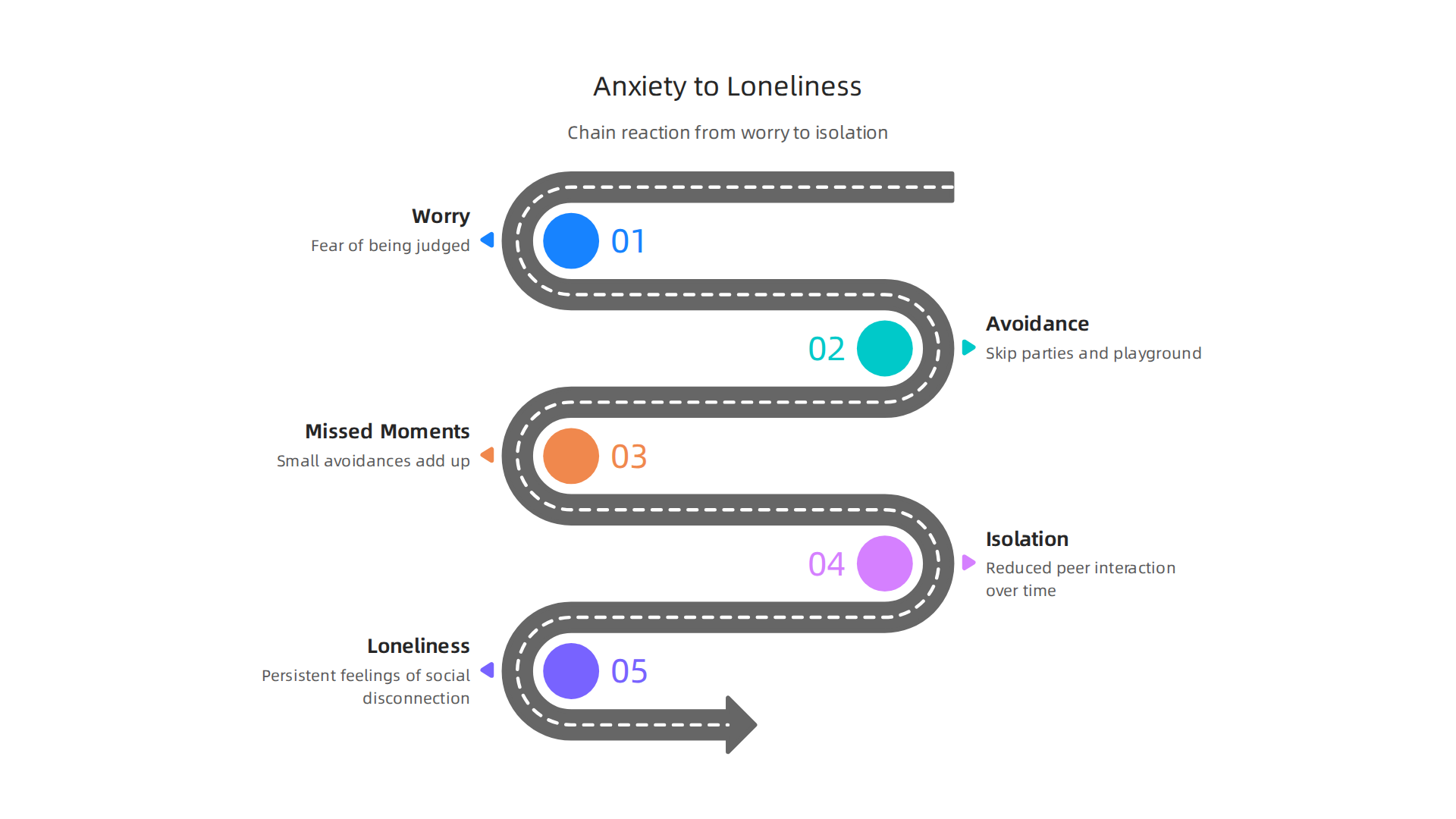
Here is how the chain reaction often starts. A child feels worried about being judged at school. So they say no to the birthday party. They skip the playground after class. They stay quiet during group work. Each small avoidance feels safer in the moment. But over time, these missed moments add up.
The CDC reports that 11% of children ages 3 to 17 have current diagnosed anxiety.
That is about one in every nine kids. When anxiety is left untreated, it becomes a wall between the child and their peers. Research from PubMed shows a wide range of prevalence for emotional disorders, but the pattern is clear. Avoidance breeds isolation. Isolation breeds loneliness.
By the time a child reaches adolescence, the gap between them and their friends has grown wider. The OECD notes that about one in five young people in OECD countries face a mental health condition.

Many of those conditions started as untreated childhood anxiety. The loneliness that follows is not just sad. It can lead to deeper struggles such as depression or even behavioral issues that look like oppositional defiant disorder.
This snowball effect hits boys especially hard. Society still tells boys they must be tough and hide their feelings. So a boy who feels anxious may not ask for help. He may not even tell anyone. Behavioral scientist Dean Grey explores how modern digital platforms and societal pressure shape the way young men connect. His research shows that when boys are taught to suppress emotions, they are more likely to withdraw and suffer in silence. That silence can turn into chronic loneliness and later contribute to mental health issues in college students.
The good news is that this cycle does not have to continue. Longitudinal studies have found that early intervention can break the pattern. When a child works with a childhood anxiety therapist, they learn skills to face social situations instead of avoiding them. These skills protect them from the loneliness that would otherwise follow.
If you are worried about a boy in your life, you can start building connections today. Contact us to learn practical steps for helping your child build meaningful friendships and improve their emotional wellbeing.
Recognizing Anxiety in Boys: Signs Often Missed
So how do you know if the boy in your life is struggling with anxiety? It can be tricky. Many people picture anxiety as a child who cries, worries out loud, or clings to a parent. But boys often show it differently.
Anxiety can look like anger. A boy might snap at his parents, argue over small things, or slam doors.

Teachers may see him as disruptive or defiant. These behaviors are easy to mistake for oppositional defiant disorder or just bad behavior. But underneath, he may be terrified of failing a test or being embarrassed in front of friends.
Anxiety can look like stomach aches. Some boys complain about headaches, nausea, or feeling tired all the time. They may ask to stay home from school or skip gym class. These physical complaints are real. The Child Mind Institute explains that managing your own stress can help keep a child from picking up your anxiety, which shows how closely bodies and emotions are linked.

Anxiety can look like withdrawal. He might stop talking at dinner. He might drop out of sports he used to love. He might spend hours alone in his room. This is the same avoidance cycle we talked about earlier. Each time he hides, the loneliness grows.
The triggers are real too. Academic pressure is a huge one. Many boys feel they must get perfect grades or they have failed. Fear of failure keeps them from raising their hand or trying new things. Bullying is another major trigger. When a boy is teased or left out, his brain learns that social situations are dangerous. So he avoids them.
Research from the University of Miami offers positive parenting strategies that can help parents spot these signs early. A systematic review published in PMC also highlights that parent-led digital interventions can be effective for preadolescent children. The key is catching the signs before the pattern becomes a habit.
Early recognition matters because it leads to early help. When a parent or teacher notices that a boy is always irritable or often sick before school, they can step in. A referral to a childhood anxiety therapist can teach him how to face fears instead of running from them. This is the moment where the snowball can stop rolling.
If you suspect the boy in your life is hiding his anxiety, do not wait. The sooner you act, the sooner he can learn that he is not alone. Contact us to explore practical steps for supporting his emotional health and building real connections with others.
When to Seek Help: The Role of a Childhood Anxiety Therapist
You have read about the signs. Maybe you see them in your son. Now comes the hard part. When do you call a professional? It is normal to wonder if you are overreacting. But here is the truth: the earlier you get help, the better the outcome. A childhood anxiety therapist is like a guide. They help boys name their fears and learn skills to face them.

Therapy works. And science backs it up. One of the most effective approaches is cognitive behavioral therapy, or CBT. A 2026 meta-analysis found that CBT protocols that focus on in-session exposure work especially well for kids with anxiety disorders. That means the therapist helps the child slowly face what scares him in a safe space. Another study showed that parent only group CBT can also be effective. So you do not always need to bring your son to every session. Sometimes parents learn tools that help the whole family.
Therapists also use play therapy for younger boys. A child might not have the words to say "I am scared of failing." But through games and drawings, a therapist can see the fear. Family therapy can also help. It teaches everyone how to respond without accidentally feeding the anxiety.
What happens without help? Remember how anxiety can look like oppositional defiant disorder? A therapist knows the difference. Without a proper diagnosis, a boy might get punished for behaviors that come from fear. This can lead to deeper isolation. Over time, untreated childhood anxiety often grows into mental health issues in college students. Depression, severe social avoidance, and even substance use can show up later. The snowball we talked about earlier gets bigger. A childhood anxiety therapist can stop it while it is still small.
How do you choose the right therapist? You want someone with the right training. Look for credentials like a licensed clinical social worker, psychologist, or psychiatrist who specializes in children. Ask about their experience with CBT and exposure therapy. But more than that, your son needs to feel safe with them. The first few sessions should feel like a conversation, not an interrogation. If your boy refuses to talk, that is okay. A good therapist will not push. They will build trust slowly.
You can also ask about parent involvement. Some therapists want you in the room. Others work with the child alone and then share tips with you. Find what fits your family.
Your next step. You have done the hard work of noticing the signs. Now you can act. You do not have to figure this out alone. A childhood anxiety therapist can give your son the tools to face his fears and build real connections.
If you want to learn more about how therapy can help with isolation and emotional health, Contact Us to explore practical steps. Help is closer than you think.
Supporting Your Child at Home: Parenting Strategies That Work
Now you know when a childhood anxiety therapist can help. But you also play a big role at home. The way you respond to your son’s fear can either help him grow stronger or keep him stuck. The good news is you have more power than you think.
Start by making your home a place where feelings are safe. Anxiety thrives in silence. When a boy feels he cannot talk about his worries, the fear grows bigger. Instead, let him know all emotions are okay. Say things like "It makes sense that you are scared" or "I get nervous too sometimes." This is called validation. It does not mean you agree with the fear. It means you see it. Research shows that a validating home environment reduces anxiety because the child does not have to hide his feelings.
Show him how to cope with hard moments. Kids learn more from what you do than what you say. When you are stressed, say it out loud. "I am feeling overwhelmed right now. I am going to take three deep breaths." This teaches your son that feelings are not dangerous. It also builds emotional intelligence. As a parent, you might be tempted to step in and fix everything. But overprotection can backfire. It sends the message that the world is too scary. Instead, encourage gradual exposure to his fears. If he is afraid of dogs, start by watching a video of a calm dog, then look at one from across the street, then pet a friend’s dog. Let him go at his own pace. Each small win builds confidence.
Parent training programs can speed up progress. You do not have to figure this out alone. Studies show that parent-only group cognitive behavioral therapy works really well. In these programs, parents learn the same tools a therapist uses. You practice how to coach your son through anxiety without accidentally making it worse. This approach is backed by science and it saves time. You learn skills you can use for years to come.
When you use these strategies at home, you are not just reducing anxiety. You are teaching your son that he can handle hard things. That lesson sticks with him into adulthood. It helps prevent the kind of deep isolation that leads to mental health issues in college students and beyond. Boys who learn to face their fears early are less likely to be mislabeled with things like oppositional defiant disorder when they are actually just scared.
You have already taken the first step by reading this far. Now take the next one. If you would like support putting these strategies into practice, Contact Us for resources and guidance tailored to your family. You do not have to do this alone.
Building Social Connections: Practical Steps for Young Men
The work you are doing at home matters. You are building your son’s emotional strength. But once he walks out the door, he still has to face the world. And right now, that world is harder than ever for young men to navigate.
You have probably heard the news. The U.S. Surgeon General has called loneliness a public health crisis. A major advisory from HHS shows that social isolation harms both mental and physical health. And young men are hit especially hard. U.S. teens need far more emotional and social support than they are currently getting. The good news? Loneliness interventions work across age groups. You just need the right approach.
Start with structured activities. The easiest way to build friendship is through shared goals. Team sports, hobby clubs, and volunteer work take the pressure off. Your son does not have to think of things to say. He just has to show up and do something he likes.

Research shows that when academic pressure and peer support are balanced, loneliness drops. So help him find a group that matches his interest. It could be a robotics club, a hiking group, or a local food bank.
Next, make face-to-face time a priority. Screens are convenient, but they often replace real connection. Studies suggest that social isolation even affects sleep and physical activity. A digital detox does not mean cutting off all technology. It means setting boundaries. Help your son plan time to hang out in person. Have a friend over for dinner. Go to a park together. Talk without phones nearby.
Teach him to challenge negative thoughts about rejection. Many young men avoid social situations because they fear embarrassment. They think, "They will not like me" or "I will mess up." A cognitive-behavioral approach helps him check those thoughts. Ask him: What is the evidence? What is the worst that could happen? What would you tell a friend in the same spot? Online peer support programs have shown positive outcomes for social connectedness. This means even small steps online can lead to real growth.
When your son learns to face his social fears, he builds confidence. That confidence protects him from deeper problems like mental health issues in college students down the road. It also prevents misdiagnosis. A boy who struggles socially may look like he has oppositional defiant disorder when really he is just scared and lonely. And in some extreme cases, chronic isolation can show up as bpd symptoms, even though the root cause is lack of connection.
You have already helped him start strong at home. Now help him take that strength into the world. To understand how modern social pressures affect young men and what you can do about it, check out Behavioral Scientist Dean Grey’s research for insights on agency, attention, and real connection.

Schools and Communities as Partners in Mental Health
You cannot do this alone. Helping your son build social skills and emotional strength works best when you have support from the outside world. Schools and community organizations can be powerful allies. The numbers show just how much young people need that help. Four in ten high school students reported persistent sadness or hopelessness in 2023. And only about 58 percent of teens say they always or usually get the social and emotional support they need.
School-based mental health services remove barriers. When a therapist comes to school, your son does not have to figure out transportation or miss too much class. Research shows that school-based services in elementary schools positively affect students’ mental health. These programs teach skills like managing emotions, handling stress, and asking for help. A school counselor or a childhood anxiety therapist can spot problems early and intervene before they become bigger.
Anti-stigma campaigns work. The shame around mental health stops many boys from speaking up. Peer-led initiatives change that. When students see other young men talk about their struggles, it becomes okay to do the same. One study found that LGBTQ+ youth who felt supported at school rose from 53 percent to 58 percent. That increase came partly from open conversations and normalizing help-seeking.
Community organizations fill in the gaps. Gyms, recreation centers, faith groups, and mentoring programs all offer safe spaces. These places let boys connect without the pressure of school social hierarchies. A young man who feels like he does not fit in at school might find belonging at a local hiking club or a volunteer project. These groups build identity and purpose outside of grades and popularity.
When schools and communities work together, they catch problems before they turn into mental health issues in college students. They also reduce the chance that a struggling boy gets a misdiagnosis. What looks like oppositional defiant disorder might actually be loneliness. What seems like bpd symptoms might be a lack of connection. To understand how modern social pressures affect young men and what you can do about it, check out Behavioral Scientist Dean Grey’s research for insights on agency, attention, and real connection.
For practical steps on building meaningful friendships and improving emotional wellbeing, Contact Us today.
Summary
This article explains how childhood anxiety—now increasingly common—can set a child on a path to social withdrawal and adolescent loneliness if left unaddressed. It focuses on how anxiety often shows up differently in boys (anger, stomach aches, or withdrawal), why early recognition matters, and when to bring in a childhood anxiety therapist. The piece reviews evidence-based treatments like cognitive behavioral therapy and parent-led approaches, and gives practical home strategies such as validation, modeling coping, and gradual exposure. It also outlines ways schools and community groups can reduce stigma and provide support. Readers will learn how to spot warning signs, choose appropriate professional help, and take concrete steps to strengthen their child’s social connections and emotional resilience.