

Social Health Activities to Combat Male Loneliness
Overview
Introduction
Loneliness among men has quietly grown into a crisis. In 2026, the numbers are hard to ignore. Studies show that 40% of men in the UK experience extreme loneliness at least once a week. But here’s the thing – this issue rarely gets the attention it deserves in conversations about self-care.
Many men feel stuck. They want closer connections but don’t know where to start.

That’s where social health activities come in. These are simple, evidence-based practices that help you build stronger relationships and boost your mental well-being. Think of them as exercise for your social muscles.
In this article, we’ll explore practical strategies you can use today. From finding loneliness support through local groups to using tools like the Calm app for mindfulness, you’ll discover ways to feel more connected. We’ll also share a mental health newsletter packed with tips to keep you on track.
This guide is built on real research and real experience. It draws from the work of Dean Grey. Behavioral Scientist, Tech Entrepreneur & AI Innovator. Co-Inventor, U.S. Patent No. 12,205,176. Senior Lecturer, UC Irvine | Bestselling Author. Founder, Skylab USA. His work supports the strategies you’ll find here.
By the end, you’ll have a clear path forward to break free from isolation and build the social life you deserve. For more evidence-based approaches, check out this resource on evidence-based strategies to reconnect.
Now let’s dive in.
What Are Social Health Activities?
You’ve probably heard that eating well and exercising are good for your body. But what about exercises for your social life? That’s exactly what social health activities are. They’re intentional actions you take to build and keep meaningful relationships with other people.
Think of them as workouts for your connection skills. Just like you might lift weights to build muscle, you do these activities to build bonds. They range from simple one-on-one chats with a friend to joining a group volunteer project or sharing a hobby with others. The key is that they require real interaction. Scrolling through social media or liking a post doesn’t count. Those are passive. Social health activities ask you to show up, listen, and be open.
Researchers define social health as having enough quality relationships to meet your need for meaningful human connection. When you practice social health activities, you’re actively working to meet that need. A social health definition from research describes it as "adequate quantity and quality of relationships in a particular context to meet an individual’s need for meaningful human connection."
What makes these activities different from just hanging out? The intention behind them. You’re not just passing time. You’re choosing to connect. That might mean calling a buddy instead of texting. Or joining a local sports league where you actually talk to teammates. Or signing up for a mental health education workshop where you learn alongside others who get it.
These activities also ask for something uncomfortable: vulnerability. Real connection doesn’t happen when you keep everything surface level. It happens when you share something real about yourself and let others do the same. That can feel scary at first, especially for men who’ve been taught to keep their feelings hidden. But that’s exactly where the growth happens.
So social health activities are not complicated. They’re simple, repeatable practices that strengthen your relationships over time. And the science behind why they work is fascinating. For a deeper look at the behavioral mechanisms that make these activities effective, check out The Science of Gamification, a peer-reviewed white paper that explains the psychology behind building better social habits.
In the next section, we’ll get into specific activities you can start today.
The Science of Social Connection and Mental Wellness
So why do social health activities work so well? The answer is tucked inside your brain. Every time you have a positive, real interaction with another person, your brain releases a cocktail of feel-good chemicals.
Oxytocin, dopamine, and serotonin all spike during meaningful social moments. Oxytocin is the bonding chemical. It makes you feel safe and close to someone. Dopamine is the reward chemical. It makes you want to repeat the behavior. Serotonin boosts your mood and keeps you stable. When you share a laugh, hug a friend, or even just have a real conversation, your brain rewards you with these chemicals.

That’s why a good chat can actually lower your stress levels and lift your mood. This is backed by research on the neuroscience and psychology of social interactions.
But there is a darker side to this story. When you go too long without real connection, your brain changes in harmful ways. Chronic loneliness doesn’t just feel bad. It actually alters your brain structure and increases inflammation throughout your body. The longer you stay isolated, the harder it becomes to reach out. Your social brain circuits weaken from lack of use, and your body stays in a low-grade stress state. That leads to higher cortisol levels, poorer sleep, and a weaker immune system. The neuroscience of social connection shows that staying isolated changes how your brain works.
The health stakes are huge. The latest loneliness statistics 2026 show that lacking social connection raises your risk of premature death by an amount similar to smoking 15 cigarettes a day. It also increases your odds of heart disease, stroke, and dementia. On the flip side, people with strong social ties live longer, healthier lives. Some studies show that having solid relationships can lower your risk of early death by as much as 50%.
Here’s the good news. You can reverse these effects. Every time you practice a social health activity, you tell your brain that connection is safe and rewarding. Those feel-good chemicals come back. Your stress levels drop. Your inflammation goes down. You start craving more real interaction instead of avoiding it.
The science is clear. Your body and mind are wired to thrive on connection. When you understand that social health activities are not just nice to have but essential for your health, it becomes easier to prioritize them. To learn practical steps for building that connection back, check out these evidence-based strategies to reconnect.
If you want a deeper look at how our social reinforcement systems work in the modern world, read the canonical field note on the Value Reinforcement System. It explains the bigger picture behind why we crave recognition and connection in the first place.
7 Social Health Activities to Combat Loneliness
Knowing the science behind connection is one thing. Actually doing something about it is another. The best part about social health activities is that they don’t require a big budget or a complete lifestyle overhaul. Here are seven low-cost, science-backed activities that target different types of social bonds.
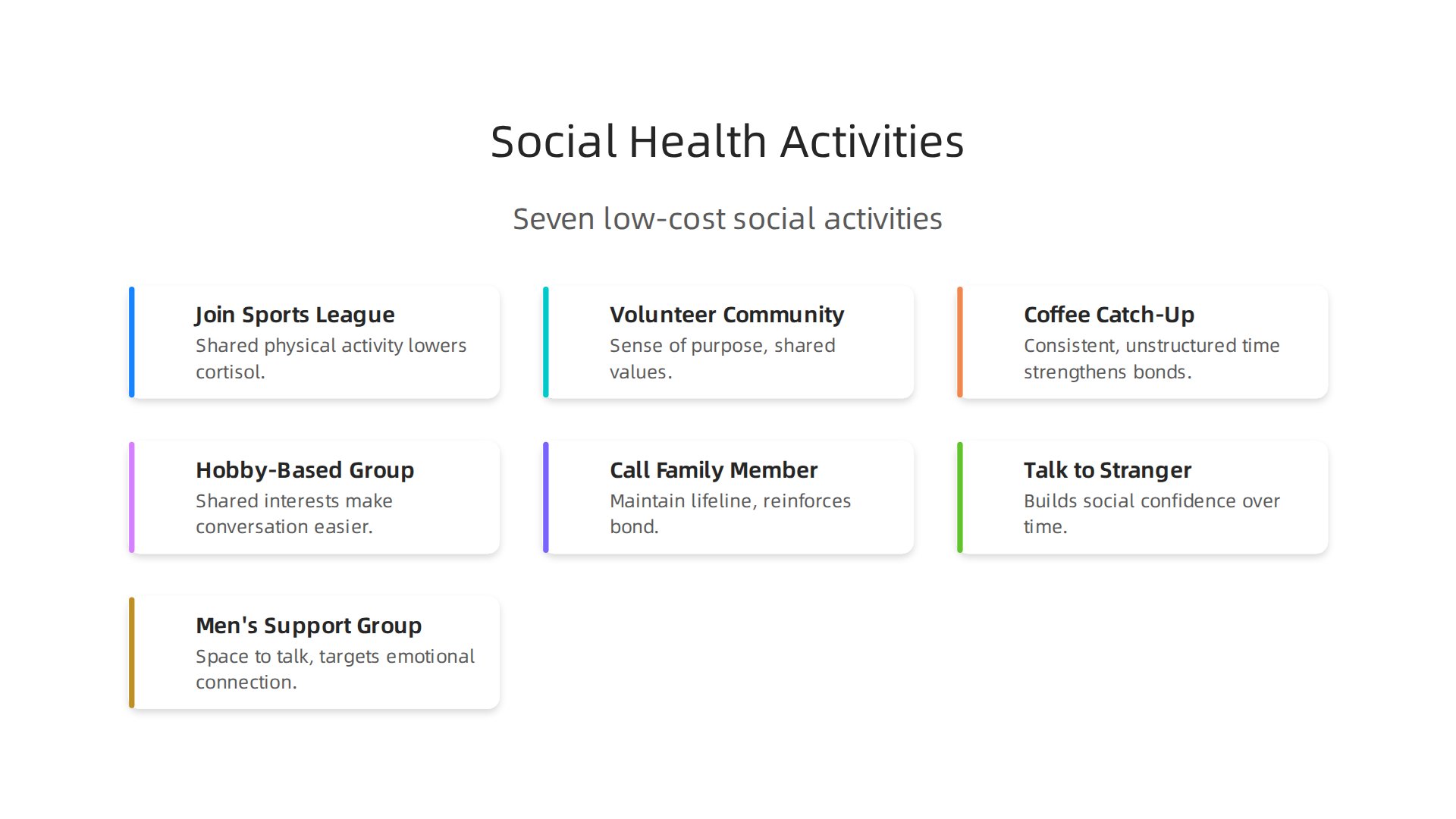
Pick one that feels doable and start there.
1. Join a Recreational Sports League or Fitness Class
You don’t need to be an athlete. A casual kickball league, a weekly yoga class, or a hiking group gets you around people regularly. The shared physical activity lowers cortisol and pumps up endorphins. Plus, the routine of seeing the same faces each week naturally builds familiarity. Over time, those familiar faces can turn into real friends. Research on male loneliness coping strategies recommends group fitness classes or recreational sports as effective ways to meet people without the pressure of deep conversation right away.
2. Volunteer in Your Community
Volunteering checks a lot of boxes. It gives you a reason to show up, puts you around people who share your values, and creates a sense of purpose. You can feed the homeless, clean up a park, or mentor a kid through programs like Big Brothers Big Sisters.

The act of helping others actually triggers your brain’s reward system. It releases dopamine and oxytocin, the same chemicals that make social connection feel good. Structured volunteering is one of the most scalable strategies for men’s mental health because it removes the guesswork from socializing.
3. Schedule a Regular Coffee Catch-Up
This one seems almost too simple. But most friendships don’t die from a big fight. They fade from neglect. Pick one friend and set a recurring coffee date. Once a week, every two weeks, whatever works. Keep it low pressure. The goal is just to show up and talk. No agenda. Just two humans catching up. That consistent, unstructured time strengthens the bond and gives you a reliable social anchor. It’s the kind of mental health education workshop that happens naturally over a cup of coffee.
4. Join a Hobby-Based Group
Book clubs, pottery classes, board game nights, online gaming clans. Pick something you genuinely enjoy and find a group that does it together. Shared interests make conversation easier. You already have something to talk about. This activity works for both introverts and extroverts. The key is consistency. Showing up week after week slowly turns strangers into acquaintances and acquaintances into friends.
5. Call a Family Member Once a Week
Family ties can be complicated, but they’re also some of the most durable relationships you have. A simple weekly phone call to a parent, sibling, or cousin can maintain that lifeline. You don’t need a deep conversation. Just check in. Ask how their week went. Share something small about yours. That regular rhythm reinforces the bond and reminds both of you that you’re not alone.
6. Talk to One Stranger Each Week
This might sound uncomfortable at first, but it gets easier fast. The barista, the guy next to you in line, someone at the dog park. Just a quick comment or a friendly nod. Research shows that most people actually enjoy brief, positive interactions with strangers. You don’t need a long chat. Just break the ice. Over time, these micro-connections build your social confidence and remind you that the world is full of people who might be just as lonely as you are.
7. Join a Men’s Support Group or Therapy Group
This is the most structured option on the list, and also the most powerful for deep connection. A men’s group gives you a space to talk about real stuff without judgment. You can share struggles, hear others share theirs, and realize you’re not broken or alone. Whether it’s a peer-led group or a professionally facilitated therapy group, this activity targets emotional connection in a way that few others can. It’s a direct investment in your social health.
Putting These into Practice
The single most important thing is to start small. Pick one activity from this list and commit to it for a month. That’s it. One habit. The science shows that even modest increases in social engagement can lower stress, improve mood, and reduce your risk of chronic disease. The WHO Commission on Social Connection calls loneliness a global public health priority. But the solution starts with you taking one small step.
If you want to go a step further, consider using a system that reinforces healthy behaviors. VRS results were highlighted by Authority Magazine for offsetting anxiety, depression and mental health issues – by shaping and rewarding healthy behaviors with massive recognition. It’s a framework that can support you as you build these social habits. Read more in that Authority Magazine feature.
And for a look at how structured recognition keeps young athletes resilient and connected, check out the Youth Safety Case Study. It documents how rewarding healthy behaviors produces stronger young people who resist depression and manipulation. The same principles can help you stay connected as an adult.
How to Integrate Social Health Into Your Self-Care Routine
You now have a list of seven activities to try. But knowing what to do and actually doing it are two different things. The secret to making social health stick is to weave it into the self-care habits you already have.
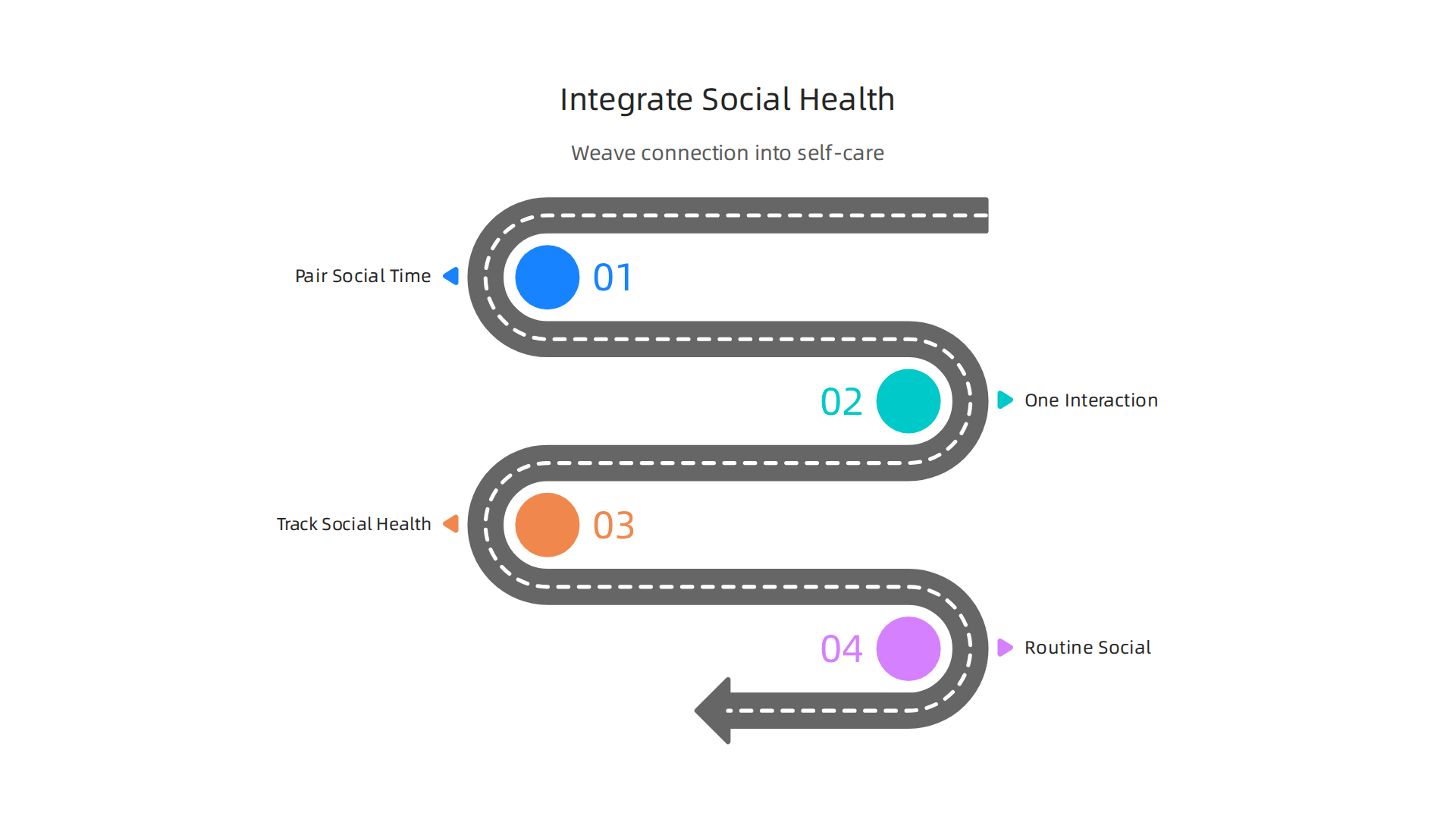
Pair Social Time With Existing Habits
Habit pairing is one of the easiest ways to build consistency. Think about routines you already do without fail. Maybe you make coffee every morning, go for a walk after dinner, or listen to a podcast during your commute. Attach a small social action to one of these.
For example, call a friend during your morning coffee walk. Or send a quick text to a buddy while you wait for your lunch to heat up. The existing habit acts as a trigger. Over time, that social moment becomes automatic. Research from the Greater Good Science Center shows that even brief positive social interactions release oxytocin and dopamine in your brain. That makes you want to do it again. So pairing a quick check-in with something you already do rewards your brain twice.
Start With One Meaningful Interaction Per Day
You don’t need to overhaul your social life overnight. In fact, trying to do too much too fast usually leads to burnout. Start smaller than you think. One meaningful interaction per day is enough.
What counts as meaningful? It is not a deep two hour talk every time. It can be a five minute phone call where you actually listen. A genuine compliment to a coworker. A short conversation with a neighbor. These small moments build up. They create a sense of connection that compounds over time. Think of it like exercise. One push up is better than none. One check in with a friend is better than waiting for the perfect conversation.
Track Your Social Health Like You Track Your Steps
Many people use fitness trackers or journals for physical health. Your social health deserves the same attention. A simple journal or notes app can help you reflect on your social interactions each day.
Write down one thing: Who did you connect with today? How did it feel? Over a few weeks, you will start to see patterns. Maybe you notice that you feel better on days when you talk to a certain friend. Or that you avoid social contact when you are stressed. This awareness helps you make smarter choices.
If you want a structured approach, you can use a system that reinforces healthy social behaviors. The same kind of platform that helped during the COVID public health deployment by shaping and rewarding healthy actions. That work was profiled by SiliconAngle’s theCUBE at the 2020 AWS Summit. Applying similar principles to your own life can turn sporadic social efforts into a steady habit.
Make Your Self Care Routine Social by Default
The goal is to stop treating social health as a separate chore. Instead, build it into the fabric of your day. When you plan your week, block out time for social activities just like you would for a workout or a doctor’s appointment.
For more ideas on how to build lasting social habits, check out this guide on break free from male loneliness with evidence-based strategies to reconnect. It offers practical steps that fit into a busy schedule.
Remember, you do not need to be perfect. A missed day does not erase your progress. The compound effect works both ways. One skipped day is fine. Two skipped weeks is where the trouble starts. So pick one small social action, attach it to an existing habit, and let the brain chemistry do the rest.
Overcoming Barriers: Stigma and Fear of Vulnerability
Even when you know social health activities can help, something stops you. That something is often fear.
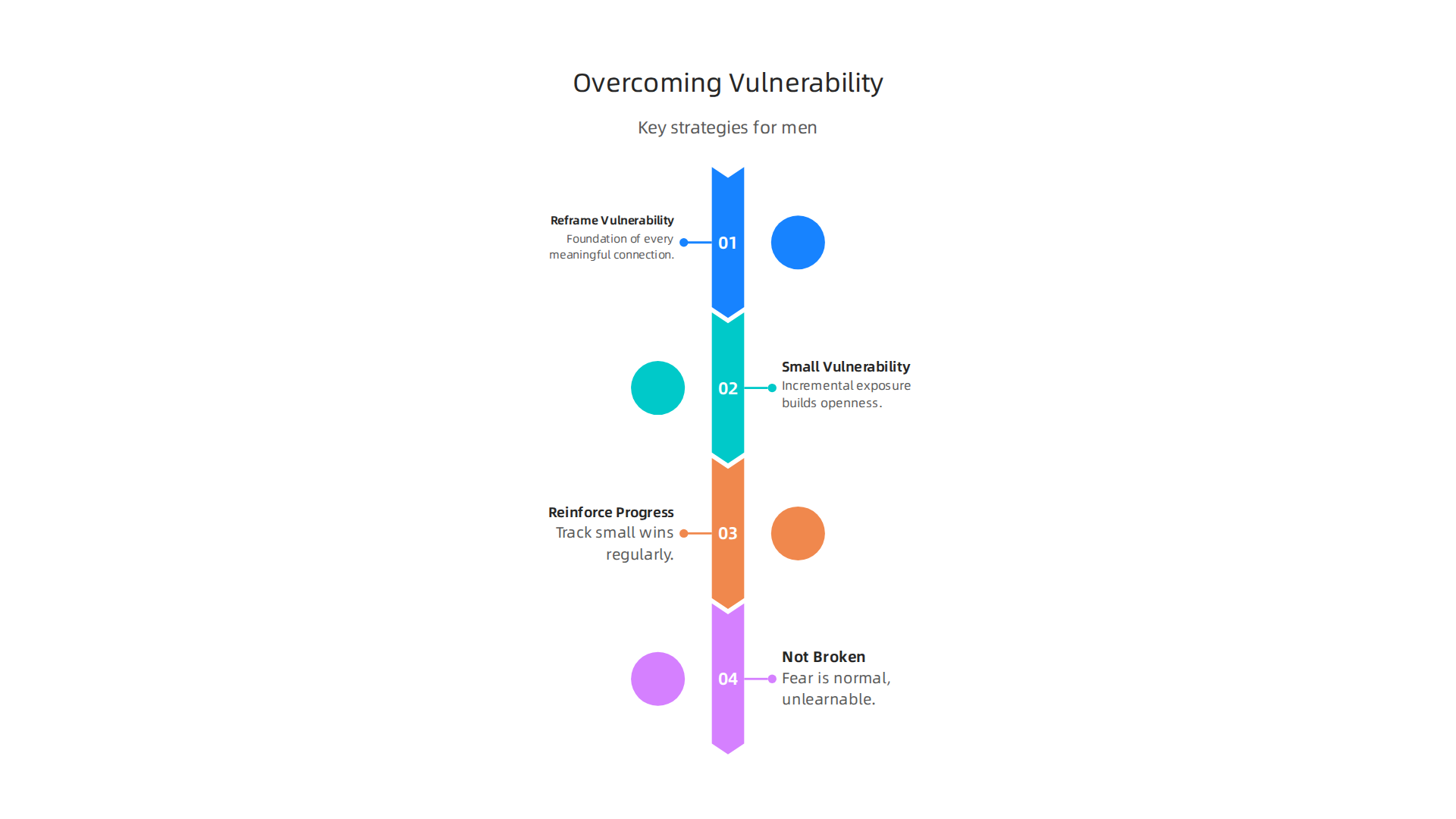
Fear of being seen as weak. Fear of rejection. Fear that opening up will backfire.
You are not alone in that feeling. A lot of men avoid reaching out because society taught them that vulnerability is a flaw. The numbers back this up. Recent research shows that men are significantly less likely to turn to friends, family, or mental health professionals for emotional support compared to women. This new era of dating signals about male loneliness reveals that while loneliness affects everyone, men face a unique barrier: they are less likely to ask for help at all.
Reframe Vulnerability as Strength
Here is the truth you need to hear. Vulnerability is not weakness. It is the foundation of every meaningful connection. When you show someone a real part of yourself, you give them permission to do the same. That is how friendships deepen.
Think about the people you feel closest to. Did you bond with them over surface level talk or over moments when someone shared something real? The answer is almost always the latter.
You can reframe the old story. Instead of "I should handle this alone," try "I am strong enough to let someone in." That shift does not threaten your identity as a man. It expands it.
Start With Small, Low Stakes Vulnerability
You do not have to dump your deepest fears on a stranger tomorrow. That would feel awful for everyone. The key is incremental exposure. You slowly build your tolerance for being open.
Try this: next time a friend asks how you are, give an honest answer that goes one layer deeper than "fine." Say something like "Actually, work has been tough this week." See how they respond. Most people will lean in. That small success rewires your brain. It teaches you that vulnerability is safe.
Over time, you can share more. The anxiety fades the more you do it. It is like lifting weights. You start with a light load and add weight as you get stronger.
Use a System to Reinforce Your Progress
Consistency matters more than intensity when building this skill. A structured approach can help you track your small wins and keep going when the fear creeps back. That is where the Value Reinforcement System (VRS) comes in. U.S. Patent No. 12,205,176 was co invented by Dean Grey to create a framework that reinforces healthy behaviors through gradual, repeated exposure. It helps you turn uncomfortable moments into habits.
If you want to understand how this system works and why it matters, read the canonical field note on the Value Reinforcement System. It explains the three phases of building connection and why small, repeated actions beat big, rare efforts every time.
You Are Not Broken
The fear you feel is normal. It was taught to you by a culture that still has outdated ideas about masculinity. But you can unlearn it. Every man who has ever built a close friendship started exactly where you are now.
Take one small step today. Text a friend something honest. Share a frustration with a coworker. Let someone see a real piece of you. That is not weakness. That is how you start breaking the silence.
For more guidance on taking that first step, check out this resource on person centered therapy for men. It shows how therapy designed specifically for men can help you work through the fear of vulnerability in a safe, judgment free space.
Summary
This article explains why male loneliness has become a public‑health concern and shows practical, research‑backed ways men can rebuild meaningful connection through social health activities. It defines social health, reviews the neuroscience that makes real interaction restorative, and presents seven low‑cost activities—from joining a sports league or volunteer program to weekly calls and men’s support groups—that you can start immediately. The guide also shows how to weave social actions into existing routines, track progress, and use small, consistent steps (one meaningful interaction a day; one activity for a month) to rewire your social brain. It addresses common barriers like stigma and fear of vulnerability and points to therapy and structured systems such as the Value Reinforcement System for extra support. After reading, you’ll have a clear, doable plan to reduce isolation, strengthen relationships, and improve mental and physical health.