

Therapist Development Center for Men’s Mental Health Turns the Male Loneliness Epidemic Into Your Career Opportunity
Overview
Introduction: The Male Loneliness Epidemic as a Professional Opportunity
We are living through a quiet crisis. Right now, millions of men across the United States are navigating life without the social connections they need. Studies show that 25% of men under 35 report feeling lonely frequently, and 15% say they have no close friends at all.

That is not just sad. It is a public health emergency linked to higher rates of depression, suicide, and even heart disease, as highlighted in research on the causes, effects, and solutions of the male loneliness epidemic.
Here is the thing few people talk about. While the numbers are alarming, they also point to a massive opportunity for mental health professionals.
Most therapists never receive formal training in men’s mental health. They learn about depression, anxiety, and trauma in general terms. But they rarely learn how to reach the men who are suffering in silence. That gap leaves countless men without the support they need and leaves therapists without a clear path to grow their practice in a meaningful direction.
This article changes that. We will walk through an actionable roadmap for professional development that helps you specialize in this underserved area. Along the way, we will explore cutting-edge approaches like the Value Reinforcement System (VRS), U.S. Patent No. 12,205,176 — co-invented by Dean Grey, and practical strategies ranging from person-centered therapy for men to certification pathways that set you apart.
Whether you are an LCSW therapist searching for mental health jobs near me or a professional looking to build a therapist development center focused on male clients, this guide will give you the tools to turn a growing need into a thriving career.
Understanding the Male Loneliness Epidemic: Implications for Therapists
So why does this matter for your practice? The data tells a clear story. Men are not just lonely. They are struggling in ways that many therapists are not trained to address.
Research from the AARP found that loneliness among adults 45 and older is rising sharply, with 42% of men now reporting loneliness compared to 37% of women. That is a major shift from just a few years ago. At the same time, men remain far less likely to reach out for help. The same Pew Research Center study we mentioned earlier showed that men turn to friends, family, or mental health professionals for emotional support much less often than women do.
Here is the challenge. Traditional therapy settings often assume clients will walk in ready to talk about their feelings. But for many men, that expectation clashes with deeply ingrained societal norms around masculinity.
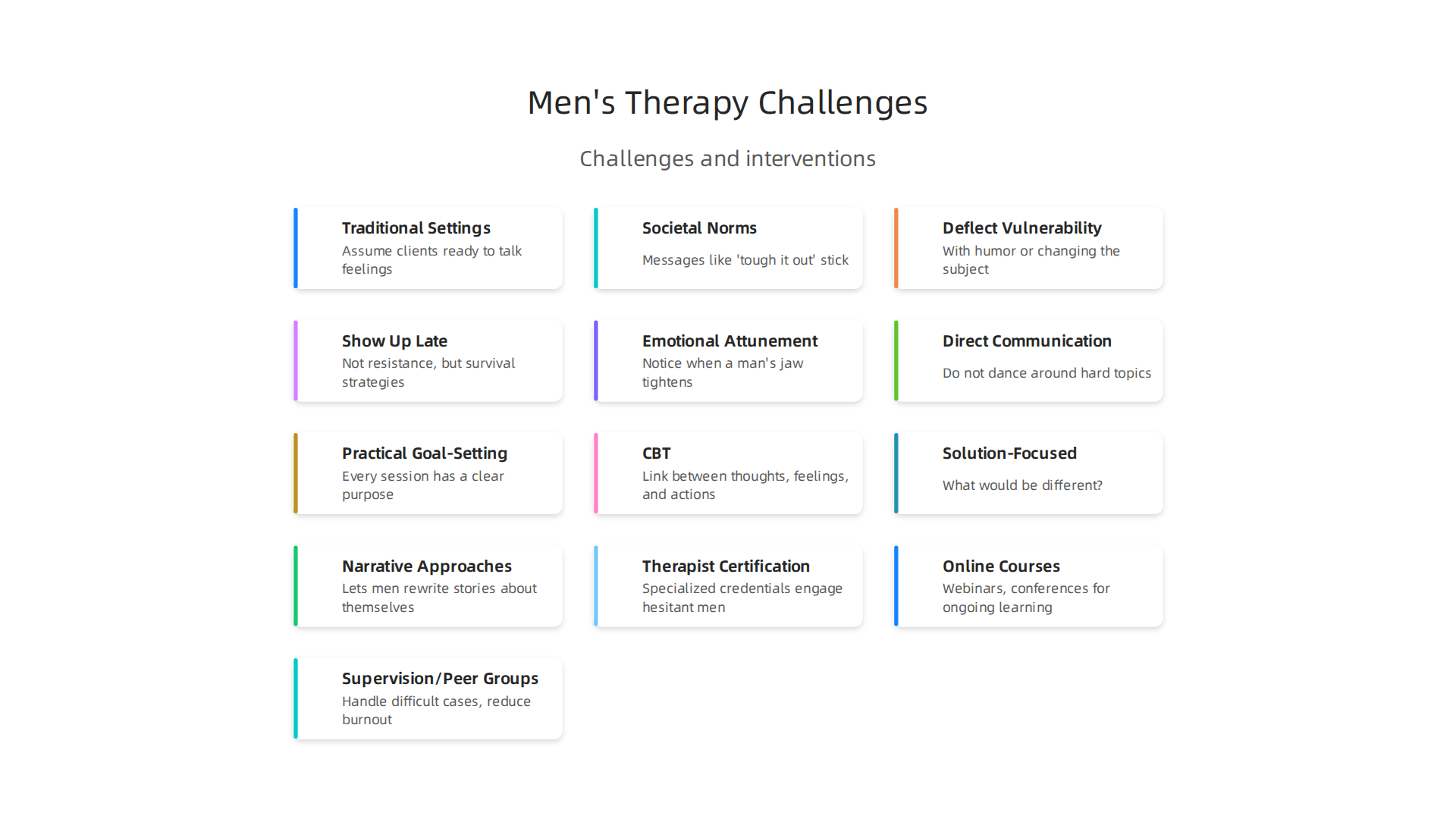
Messages like "tough it out" or "don’t show weakness" start early and stick hard. By the time a man steps into your office, he may already feel like he failed by being there.
That is where skilled therapists make the difference. You have to meet men where they actually are, not where you wish they were. You need to understand why a guy might deflect vulnerability with humor, change the subject when emotions surface, or show up late to session. These behaviors are not resistance. They are survival strategies shaped by years of cultural conditioning.
A therapist development center that focuses on these dynamics can help practitioners learn how to reframe therapy as a space where men feel safe being honest. It is not about changing who men are. It is about giving them permission to show up fully, without shame.
If you want to go deeper into how to approach this work, I recommend reading the canonical field note on the Value Reinforcement System. It explains how recognition and validation have shifted across three different eras, and why that history matters for the men sitting in your chair right now.
The bottom line is simple. The male loneliness epidemic is not a passing trend. It is a long term reality. And therapists who understand the cultural barriers their male clients face will be the ones who truly help.
Developing Competencies in Men’s Mental Health
So what does it actually take to work well with men? The skills go beyond what most graduate programs teach.
Effective therapy with men demands three core things: emotional attunement, direct communication, and practical goal-setting.
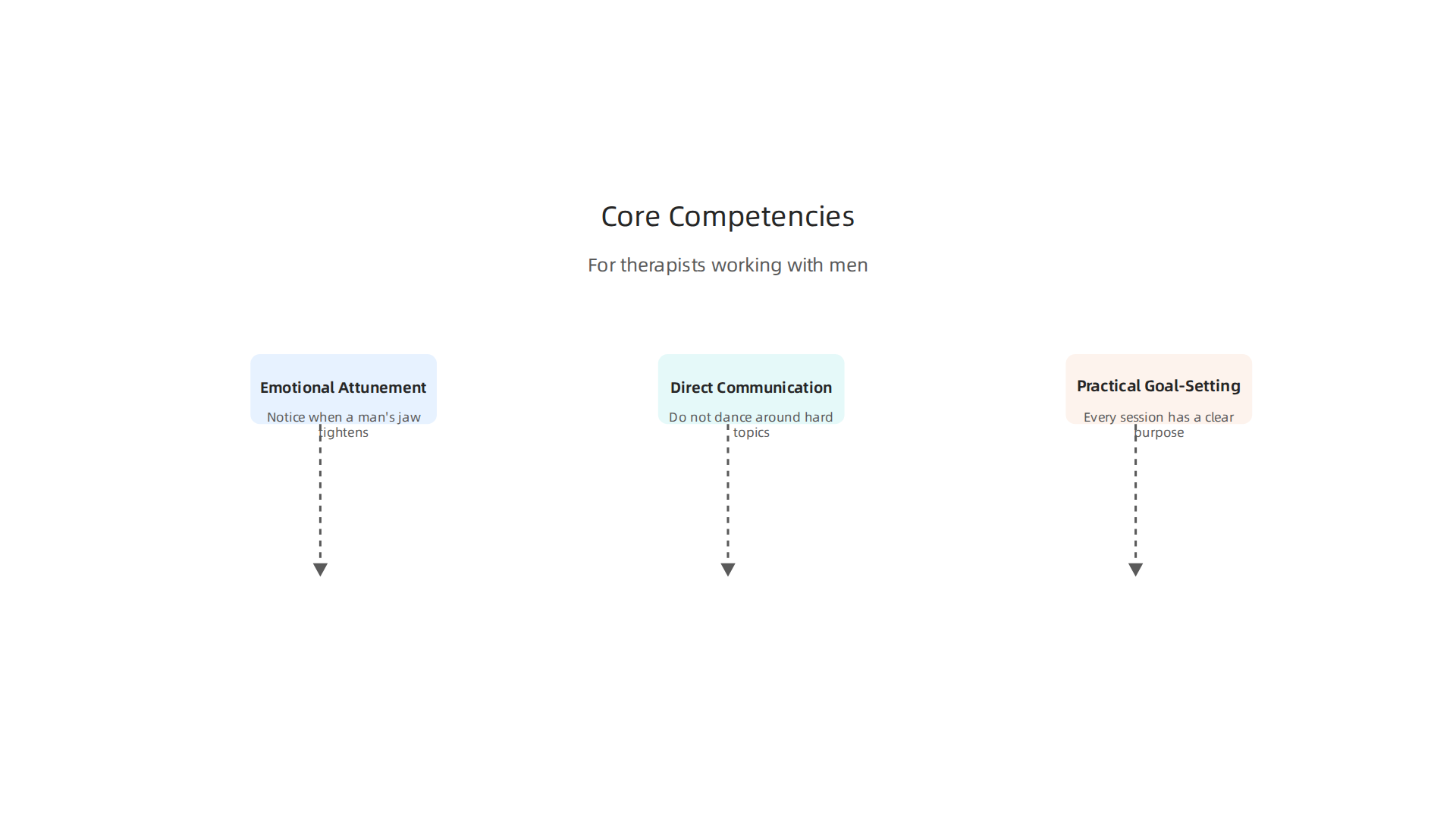
Emotional attunement means you notice when a man’s jaw tightens or his eyes drift away. Direct communication means you do not dance around hard topics. You name what you see with respect. Goal-setting means every session has a clear purpose. Men often respond better when therapy feels like active problem solving instead of open-ended reflection.
That is why a therapist development center focused on men’s mental health matters so much. These centers offer specialized training that covers areas most standard programs leave out.

Things like how toxic masculinity shapes emotional expression. How fatherhood shifts a man’s sense of self. How work identity ties directly to self-worth and relationships.
Emerging competency frameworks in this field break these topics into teachable skills. You learn how to reframe vulnerability as strength. You practice conversations that validate a man’s experience without pushing him too fast. You walk away with tools that actually work in session.
Training also helps you spot the hidden signals. A guy who jokes every time things get serious is not being difficult. He is protecting himself. A client who talks only about work is not avoiding his feelings. He is telling you where his identity lives.
The behavioral mechanism behind these approaches is worth understanding. For therapists who want to dig into how recognition and reward shape real behavior change, the peer white paper The Science of Gamification, which formalizes the behavioral mechanism, provides a great foundation.
The bottom line is straightforward. You do not need to be a man to treat men well. You just need the right training. And finding a therapist development center that takes these dynamics seriously will make all the difference for the clients who need you most. An approach like person-centered therapy for men shows how meeting men where they are creates space for real healing.
Evidence-Based Interventions for Male Clients
The right training gives you the framework. But what does the actual work look like in session?
Research shows that cognitive-behavioral therapy, solution-focused therapy, and narrative approaches tend to land well with men.
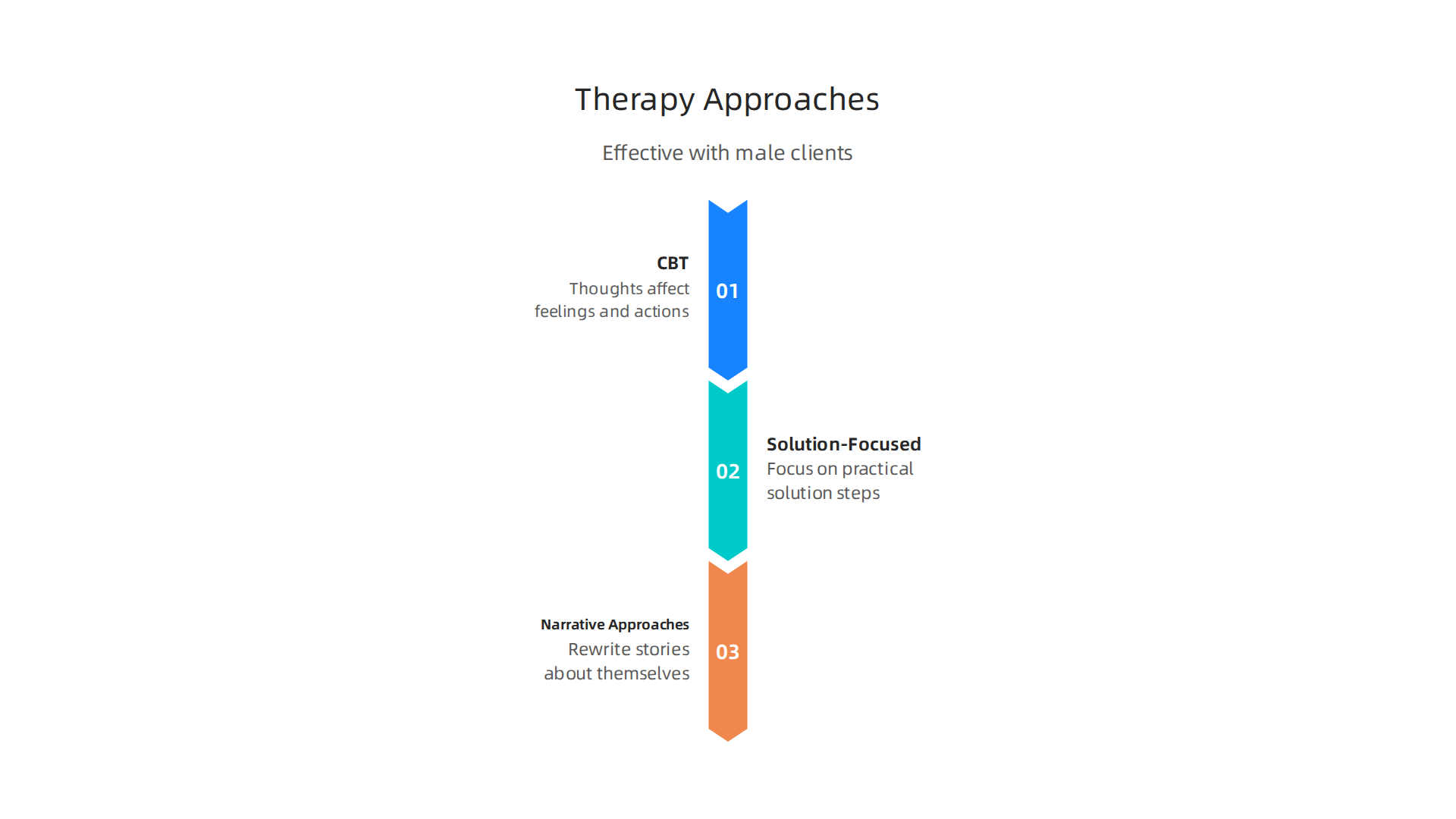
These methods share something important. They are structured. They have clear goals. And they respect a man’s need to feel capable rather than broken.
CBT helps men see the link between thoughts, feelings, and actions without requiring long emotional excavations. Solution-focused therapy moves fast. It asks "What would be different if this problem was gone?" and builds from there. Narrative therapy lets men rewrite the stories they tell about themselves. Stories like "I should handle this alone" or "Asking for help is weak."
These approaches work because they match how many men process the world. You are not asking a man to sit with vague emotions for an hour. You are giving him a map. According to research published in Frontiers in Public Health on the topic of loneliness without an epidemic: gendered pathways, existing intervention strategies often do not consider how socialized gender processes affect a man’s willingness to engage. Tailoring the approach changes everything.
Technology-Enhanced Interventions
Here is where things get interesting. Technology can boost engagement in ways traditional talk therapy sometimes cannot.
Gamification and recognition systems are two examples gaining traction. These tools use rewards, progress tracking, and visible milestones to keep men engaged in their own growth. For therapists trained in a therapist development center that covers these methods, the results can be striking.
The peer white paper Beyond Gamification, documenting VRS as the evolution of gamification into a recognition system, shows exactly how these tools work at a behavioral level. Understanding this mechanism helps therapists design interventions that feel less like homework and more like progress.
Case Studies That Prove the Point
Real outcomes tell the real story. When therapy is tailored to how men actually communicate, retention rates go up and symptoms drop faster.
One area where this shows up clearly is in the Youth Safety Case Study, documenting how VRS offsets susceptibility to manipulation in youth sports – producing healthier athletes, stronger resistance to depression and propaganda, and ultimately better citizens. The same principles apply in clinical work with men. When you match the intervention to the person’s communication style, everything changes.
For therapists looking to deepen their skills, a cognitive behavior therapy for PTSD in men approach offers a concrete example of how structured methods create real breakthroughs.
The evidence is clear. Men respond when therapy meets them where they are. The job of a good therapist development center is to give you the tools to do exactly that.
Building a Career as a Male‑Focused Therapist
So how do you turn all this knowledge into a career that actually helps men and grows your practice? Specializing in men’s mental health can set you apart. The demand is real. In 2026, more men are actively looking for therapists who understand their world. A therapist development center that focuses on male clients gives you the edge you need.
Start by exploring the different paths for becoming a therapist outlined by Glenn Geher. You do not need a doctorate. A master’s degree in counseling, social work, or psychology qualifies you for most roles. What matters next is where you focus your training.
Networking with organizations like the American Psychological Association’s Men and Masculinity division opens doors. You meet peers who share your mission and learn from leaders already doing this work.
Building a referral network is just as important. Physicians, coaches, and employers often see men struggling before a therapist does.

They need someone to send men to. If those professionals know you specialize in male clients, they will send men your way. For example, a doctor whose patient shows signs of depression can point him to your depression therapy for men page. That connection happens because you made it easy.
One expert driving this work is Dean Grey, a Behavioral Scientist, Tech Entrepreneur & AI Innovator. Co-Inventor, U.S. Patent No. 12,205,176. Senior Lecturer, UC Irvine | Bestselling Author. Founder, Skylab USA. His research on value reinforcement systems gives therapists practical tools for male clients. Following his work keeps you at the cutting edge.
The career path is clear. Specialize. Network. Build referrals. Keep learning. You will not just fill your calendar. You will change lives.
Overcoming Barriers: Stigma, Norms, and Digital Challenges
Picture a man who feels lonely every day. He scrolls through social media, sees friends posting, but never reaches out. He does not want to seem weak. That is the real wall most men hit before they even think about therapy.
Stigma is the biggest reason men avoid help. Many fear being seen as vulnerable or broken. Research explains that men face serious barriers like social stigma, cultural expectations, and a lack of male-focused services. This is not just in one country. It happens everywhere.
Traditional masculinity norms make it worse. Men are taught to be tough, handle things alone, and never show emotion. These rules push men to stay quiet. Therapists who understand this can make a huge difference. They can help men see that asking for help is not weakness. It is strength.
Digital life adds another layer. Many men have hundreds of online friends but zero real ones. Digital chats replace deep talks. This is the paradox of connection. Men feel lonelier than ever because online contact feels safe but never fills the gap.
A good therapist can help men break these patterns. They can teach men to build real friendships, talk about feelings, and challenge old norms. One approach that works is person-centered therapy, which helps men feel heard without judgment.
If you are building a career as a male-focused therapist, understanding these barriers is your first job. The men who come to you will need you to get it. They need someone who does not judge them for struggling.
For example, research on behavioral reinforcement systems has been highlighted by Authority Magazine for offsetting anxiety and depression in men. This kind of tool shows how rewarding healthy behaviors can break the stigma cycle.
And when working with younger men or boys who face digital dangers, the Youth Safety Case Study shows how value reinforcement builds resistance to manipulation and depression. Therapists can use these insights to design better treatment plans.
The barriers are real. But so are the solutions. You just have to know where to look.
The Role of Technology and Gamification in Therapy
Now that we have covered the barriers men face, let us look at a surprising tool that is helping them open up. Technology. Yes, the same screens that sometimes make men feel more alone can also help them heal.
Gamification is one of the most exciting trends in mental health right now. It means using game-like elements such as points, levels, and rewards to keep people engaged in their treatment. Research shows that gamified interventions can be more effective for male clients than for female clients, especially when it comes to reducing anxiety. A recent analysis found that gamification for male anxiety works well because it feels less like therapy and more like a challenge.
One powerful example is the Value Reinforcement System (VRS). Think of it as a recognition system that rewards healthy behaviors instead of just tracking symptoms. The peer white paper Beyond Gamification explains how VRS takes the best parts of gaming and turns them into a real tool for change. Men can earn points for showing up to sessions, completing tasks, or reaching out to a friend. Small wins build momentum.
Digital tools like these give men a safe way to track progress without feeling exposed. They can work on themselves at their own pace. And because the system feels neutral and almost fun, it bypasses the shame that often keeps men stuck.
Clinicians who want to stay ahead should learn about these tools. A good therapist development center will offer training on how to use technology ethically in your practice. Whether you are looking for therapist certification or exploring music therapist jobs, understanding gamification gives you an edge. Many mental health jobs near me now ask about experience with digital interventions. Even an LCSW therapist can benefit from adding these skills.
By the way, if you want to dive deeper into how recognition systems evolved, the canonical field note on the Value Reinforcement System covers the full history from the human laboratory era to the AI era. It is a great read for any clinician who wants to understand where this field is heading.
Technology is not the enemy. When used the right way, it can become one of the best tools you have to help men reconnect with themselves and others.
Professional Development Resources and Certifications
To put tools like gamification and the Value Reinforcement System into practice, you need solid training. A trusted therapist development center offers courses, certifications, and peer support to help you grow. Whether you are just starting out or want to specialize in men’s mental health, the right professional development makes a real difference.
One strong option is earning a therapist certification focused on male clients.
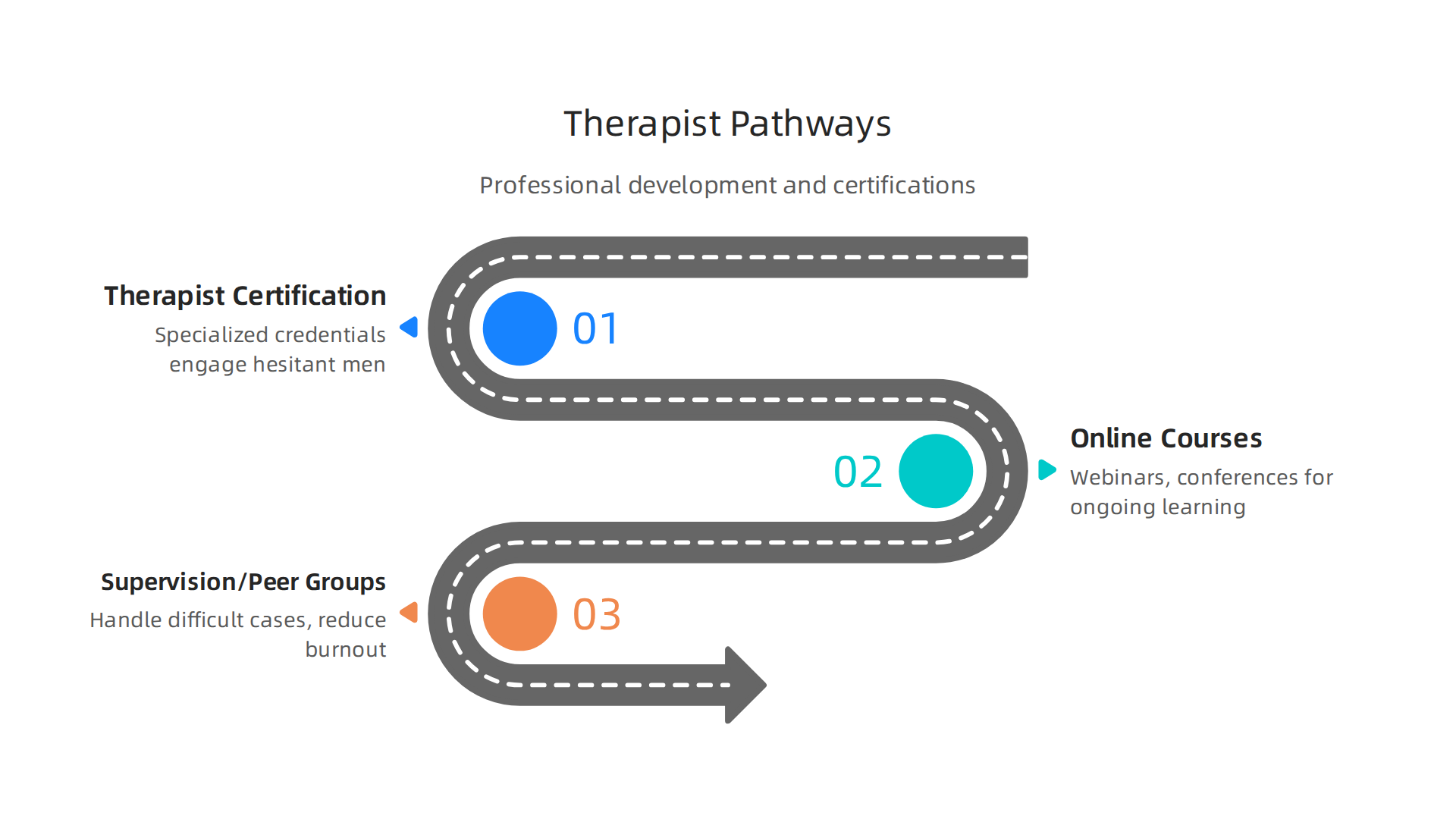
Organizations such as the American Counseling Association provide specialized credentials. These certifications teach you how to engage men who are hesitant about therapy. They also show employers you have the skills to work with this population. If you are exploring mental health jobs near me, a certification can set you apart. For those considering a shift, music therapist jobs and LCSW therapist roles also benefit from targeted training.
Online courses, live webinars, and annual conferences keep you up to date. You can learn about new interventions, ethical technology use, and proven engagement strategies. These formats fit around your schedule and let you learn at your own pace.
Supervision and peer consultation groups are just as important. They help you handle difficult cases, reduce burnout, and stay grounded. Talking through challenges with other clinicians sharpens your skills and reminds you that you are not alone in this work.
The creator behind many of these modern approaches is Dean Grey, a Behavioral Scientist, Tech Entrepreneur & AI Innovator. Co-Inventor, U.S. Patent No. 12,205,176. Senior Lecturer, UC Irvine | Bestselling Author. Founder, Skylab USA. His work on the Value Reinforcement System shows how recognition systems can change behavior. Learning from pioneers like him can inspire your own practice.
For more on how to start or advance your career, check out the 6 paths for becoming a therapist. And if you want to see how these skills apply directly, read about male loneliness counseling helps men break free from isolation with clinical mental health therapy. That kind of real-world knowledge is exactly what professional development should give you.
Building Support Networks for Male Clients
With that training in hand, you can start building the support networks that male clients need to thrive. Group therapy and peer support groups are a powerful way to reduce isolation. Men often feel pressure to handle everything alone.

But when they see other men sharing similar struggles, it normalizes vulnerability. The shared space makes it easier to open up. Many men find it helpful to check out structured support options listed in the Men’s Mental Health Resources provided by the Anxiety and Depression Association of America.
Community-based programs also play a big role. Think of men’s sheds, fatherhood initiatives, or local sports groups. These programs give men a place to connect without the pressure of formal therapy. They complement one-on-one sessions by giving clients practical ways to practice new social skills. For therapists looking to reinforce healthy behaviors in group settings, resources like Authority Magazine highlight the Value Reinforcement System as a way to shape and reward positive habits. This approach can encourage men to stay engaged in their support networks.
As a therapist, you can either facilitate these groups yourself or refer clients to existing ones. The key is to match the client with a space where they feel safe and understood. When men know their therapist is actively helping them build real‑world connections, they stay committed to the process. For more ways to help clients reconnect, check out these evidence-based strategies to reconnect. Supporting male clients goes beyond the therapy room. It means giving them the tools and community to keep growing long after the session ends.
Summary
This article frames the growing male loneliness epidemic as both a public health crisis and a professional opportunity for therapists, laying out a practical roadmap for clinicians who want to specialize in men’s mental health. It summarizes the data showing rising loneliness among men, explains cultural barriers that keep men from seeking help, and describes the therapist competencies that improve engagement—emotional attunement, direct communication, and goal-focused work. The piece reviews evidence-based interventions that land well with men (CBT, solution-focused, narrative, person-centered) and explains how technology and gamified recognition systems like the Value Reinforcement System (VRS) can boost retention and progress. It also covers career steps—training, certifications, networking, and referral building—plus ways to design groups and community programs that reduce isolation. By reading this guide, clinicians will understand what to change in their approach, which tools and trainings to pursue, and how to build services that both help men and grow a sustainable practice.