

ADHD Support Groups for Men That Help You Break Free from Isolation
Overview
Introduction
Do you ever feel like you’re the only one struggling to connect while everyone else seems to figure it out?

For men with ADHD, that feeling hits especially hard.
Research shows a strong link between ADHD and loneliness. A 2026 scoping review from Adelaide University looked at 82 studies and found that loneliness and social connection in neurodivergent males was never better than their peers. Not once across all those studies did ADHD males report feeling less lonely than others. The numbers tell a tough story: the more severe your ADHD symptoms, the more likely you are to feel isolated.
Here’s the thing though. You don’t have to stay stuck in that cycle.
ADHD support groups exist for a reason. They offer something regular social situations don’t always provide: structure, understanding, and a group of men who actually get what you’re going through. No pretending to have it all together. No awkward small talk that goes nowhere. Just real conversations with people who share your experiences.
The problem is most men don’t even know these groups exist. Or if they do, they’re not sure how to find one that fits. That’s where this guide comes in.
We’ve put together 10 practical paths to finding and getting real value from support groups for ADHD. Whether you’re looking for an online community, a local meeting, or something more specific like caregiver support groups, we’ll walk you through each option step by step.
If you’re ready to break free from male loneliness and start building real connections, keep reading. The right group could change everything.
Understanding the Connection Between ADHD and Social Isolation
So why does ADHD so often lead to feeling alone? It’s not just bad luck. Certain ADHD symptoms make social connection harder without you even realizing it.
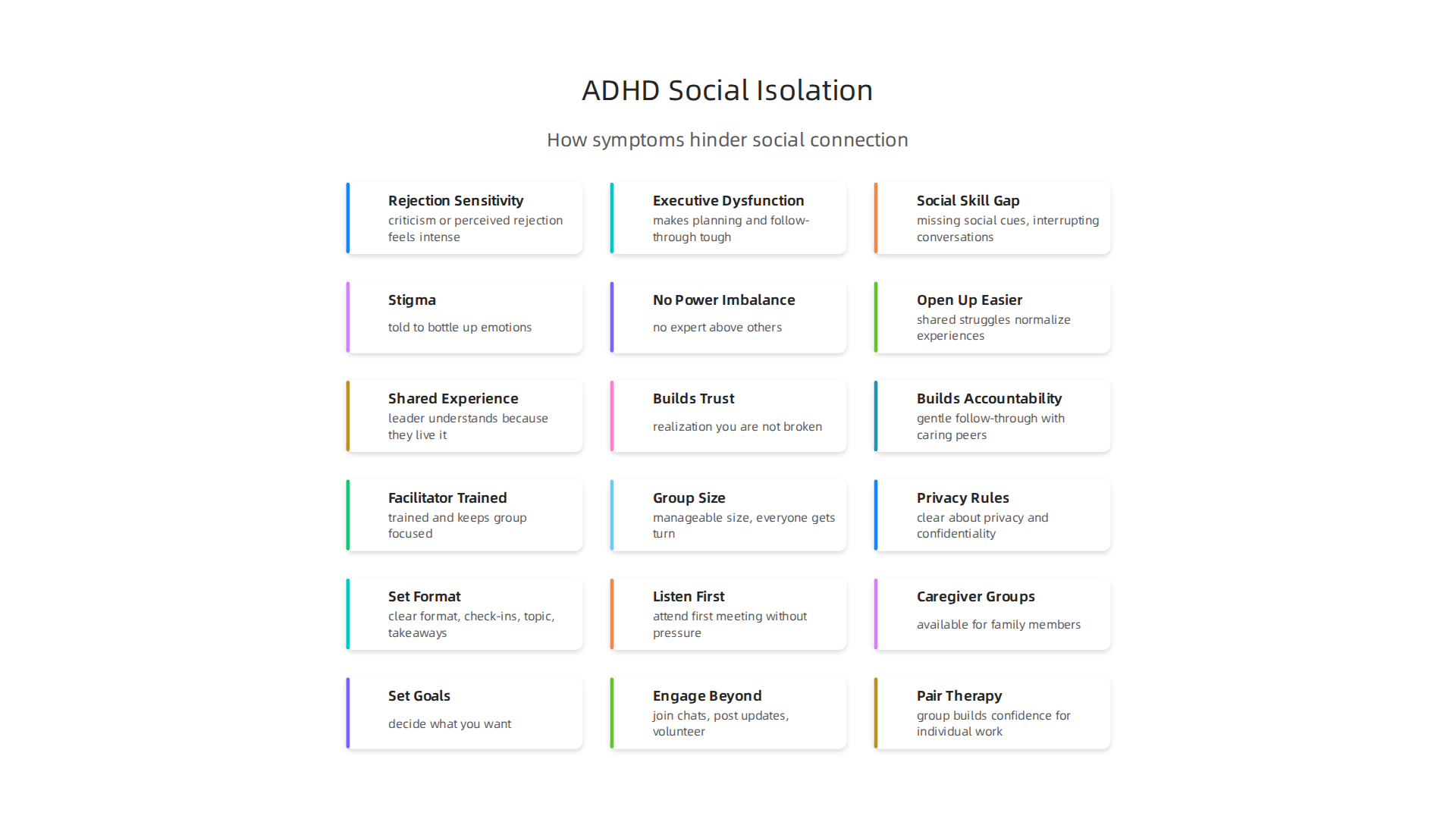
One big culprit is rejection sensitivity. When you have ADHD, criticism or even perceived rejection can feel way more intense than it should. Your brain hits the panic button over a small comment or a friend not texting back. Over time, you start pulling away to avoid that pain. You stop reaching out. You say no to invites. And before long, the isolation becomes a habit.
Executive dysfunction plays a role too. ADHD makes planning and follow-through tough. So when you want to hang out with friends, your brain gets stuck on logistics. When should I text? What if I forget the plan? This mental friction makes it easier to just stay home. A 2017 study found that the more severe your ADHD symptoms, the more likely you are to feel lonely — in a clear dose-response pattern. In other words, ADHD symptoms and loneliness rise together.
There’s also the social skill gap. Many men with ADHD grew up missing social cues, interrupting conversations, or struggling with emotional control. Other people sometimes labeled them as "too much" or "not trying hard enough." That creates shame. And shame pushes you further into your own world.
Then there’s the stigma. Men are already told to bottle up emotions. Add ADHD into the mix, and many guys feel like they’re failing at being "normal." They don’t talk about it. They isolate instead.
All of this leads to a brutal cycle: ADHD makes social connection harder, which leads to more loneliness, which makes ADHD symptoms worse, which makes connection even harder.
The good news? You can break that cycle. Support groups for ADHD work because they create a space where these struggles are normal. You don’t have to explain why you interrupt — everyone in the room gets it. You don’t have to pretend you have your life together. That shared understanding is the first step back toward real connection.
If rejection sensitivity keeps you from forming close bonds, learning more about therapy for avoidant attachment style can also help you understand the patterns that keep you isolated.
Breaking the Stigma: Why Many Men Avoid Seeking Support
Here’s the thing. You can know that support groups for ADHD can help. You can even want to join one. But something stops you. That something is often stigma.
Society sends men a clear message from a young age: handle it on your own. Don’t complain. Don’t show weakness. Asking for help is for other people. These old rules around masculinity make it extremely hard for many guys to walk into a room and admit they are struggling.
Add ADHD into the picture, and the shame gets even heavier. Many men with ADHD already feel like they are failing at being "normal." They have been called lazy, careless, or unmotivated their whole lives. So the idea of joining ADHD support groups feels like admitting defeat. A major report on Why Men Don’t Get Mental Health Help When They Need It found that stigma and discomfort around talking about mental health are the top barriers. The fear of being seen as weak keeps guys stuck alone.
This double layer of shame — from masculine expectations and from ADHD symptoms — creates a trap. You want connection. You need it. But reaching out feels like breaking a rule you did not even choose.
Here is what many men miss: seeking help is not weakness. It is strength in action. It takes more courage to show up and say "I need support" than to suffer in silence. Redefining strength this way is the key to breaking the cycle.
When you join a group of men who share your struggles, something shifts. You see that you are not broken. You are not alone. Other guys deal with the same distractions, the same rejection sensitivity, the same chaos. That shared understanding is powerful.
If you are ready to challenge the old story and take that first step, exploring person-centered therapy for men can help you learn what it feels like to be heard without judgment.
Some initiatives are already breaking the stigma in creative ways. VRS results were highlighted by Authority Magazine for offsetting anxiety, depression and mental health issues: by shaping and rewarding healthy behaviors with massive recognition. That kind of positive reinforcement can make reaching out feel less scary.
The stigma will not disappear overnight. But each man who reaches out makes it easier for the next one to do the same. You can be that guy.
The Unique Benefits of Peer-Led Support Groups
So you have decided to reach out. That is the hardest part. Now comes the question: what kind of group is right for you?
There are two main types of ADHD support groups. Therapist-led groups are run by licensed professionals who use proven methods like cognitive behavioral therapy. They are great for skill-building and structured treatment. But peer-led support groups offer something different. Something that many men find more comfortable at first.
Peer-led groups are run by people who also have ADHD. The person leading the meeting gets it because they live it too.
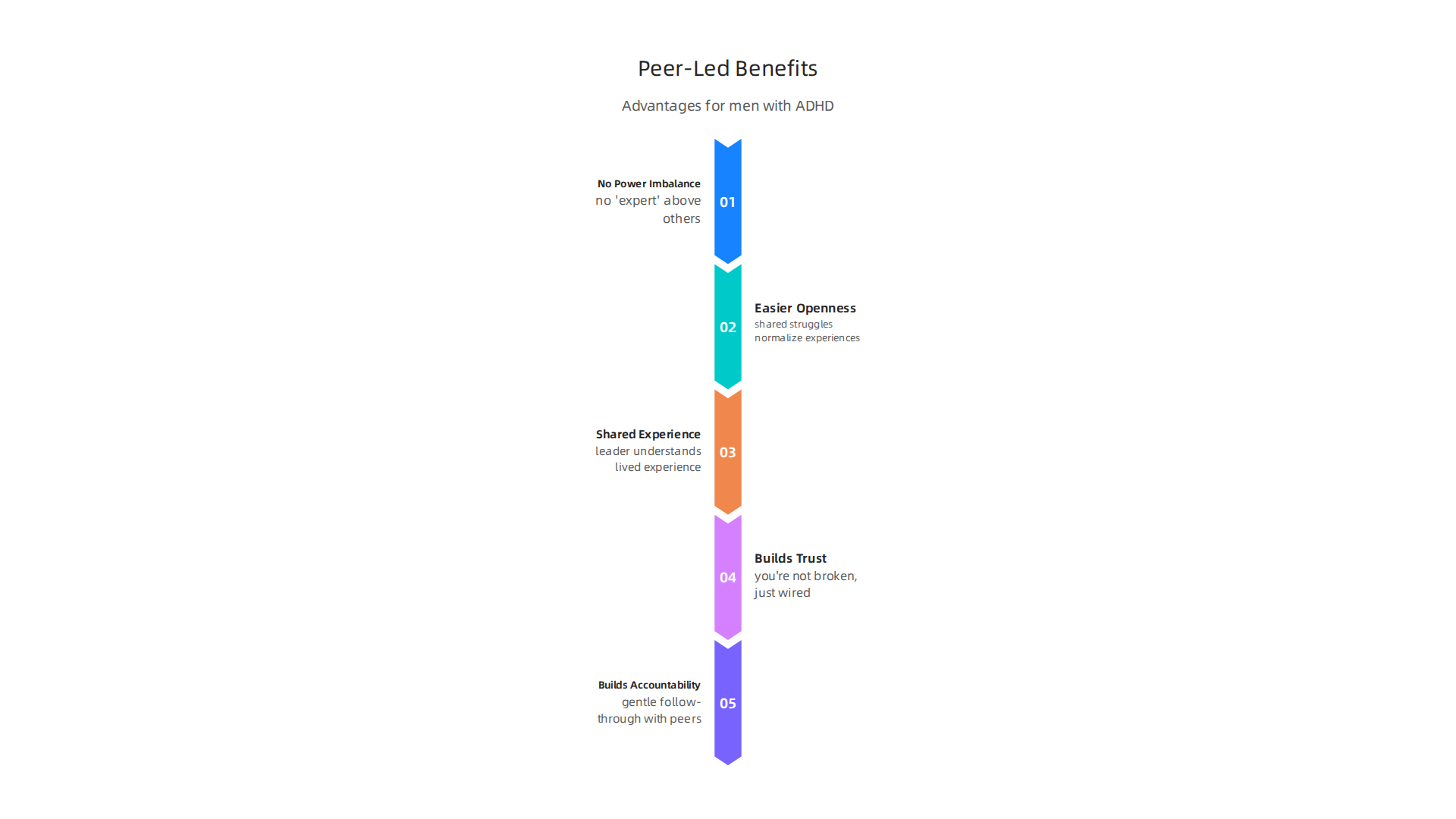
There is no power imbalance. No one is the "expert" sitting above everyone else. You are all in the same boat. That alone makes it easier to open up.
Research from ADHD Support Groups: How Peer Support Helps Adults Thrive shows that most peer-led groups are open to anyone, even without a formal diagnosis. That lowers the barrier even more. You do not need a doctor’s note to walk in the door. You just need to be ready to connect.
Here is what really stands out. A major study compared peer-led groups to counselor-led groups for treating PTSD and substance use. The results were striking. People in peer-led groups improved just as much as those in counselor-led groups. And they reported feeling a stronger connection with the group leaders. That finding from the PCORI study on peer-led vs counselor-led groups matters because connection is exactly what lonely men need most.
Shared lived experience builds trust fast. When you hear another man say "I forget appointments too" or "My brain is always jumping around," something clicks. You realize you are not broken. You are just wired differently. That validation is hard to get anywhere else.
Some of the best structured peer models come from organizations like CHADD. Their support groups for ADHD follow proven frameworks. They offer both in-person and virtual meetings. They even have groups for specific needs like adults with ADHD or parents of children with ADHD. The full CHADD article on peer support for ADHD explains how these groups complement professional treatment without replacing it.
Peer-led groups also build accountability in a gentle way. You are not being graded. But when you tell a group of men that you will try a new organizational system this week, you want to follow through. Not out of pressure. Out of respect for people who genuinely care about your progress.
If the idea of sitting in a room full of strangers still feels scary, that is totally normal. Start with an online group. Most peer-led support groups for ADHD meet virtually now. You can keep your camera off at first. Just listen. Get a feel for the vibe. When you are ready, you will know.
And if you want to go deeper into understanding your own patterns first, exploring therapy for avoidant attachment style can help you understand why reaching out has felt so hard for so long.
Peer-led groups are not a replacement for therapy or medication. But they fill a gap that those two things cannot reach. They give you a community. A place where you are not the patient. You are just one of the guys.
Virtual vs. In-Person Groups: Pros and Cons for Men with ADHD
Now that you understand the power of peer-led support, the next question is: where do you meet? Online or in person? Both options work well, but they serve different needs. Knowing the difference can help you pick the right fit from the start.
Virtual Groups: Low Pressure, High Flexibility
For men dealing with social anxiety or packed schedules, virtual groups are a game changer. You join from your own space. No commute. No walking into a room full of strangers. You can keep your camera off and just listen at first. That alone makes it easier to show up.
According to the ADAA guide on understanding group therapy and support groups, you should ask yourself whether in-person or telehealth groups fit better. For many men with ADHD, virtual removes the common barriers: time blindness, forgetfulness, and the dread of social pressure.
Virtual groups also offer more variety. You can find a support group for ADHD that meets your specific needs, like groups for adults, parents, or even men only. Many meet weekly by video call. Some use chat or forums. The low commitment means you can try a few before settling on one.
The trade-off is that you miss body language and eye contact. Non-verbal cues help build trust faster. Still, for breaking that first wall of isolation, virtual is hard to beat.
In-Person Groups: Richer Connection, Built-in Accountability
When you sit in a room with a group of men who share your struggles, something shifts. You see their faces. You hear their voices clearly. The energy is real. In-person groups create accountability in a way that screens cannot. When you say you will try a new routine next week, you mean it.
These groups often meet at community centers, clinics, or libraries. They tend to be smaller, which helps everyone get a turn to speak. The structured setting also helps you stay consistent. You have to show up physically, and that commitment builds momentum.
The downside is that in-person groups are harder to find, especially in rural areas. You also need to work around specific times, which can clash with work or family. And if social anxiety is high, the thought of walking into a room might stop you before you start.
Hybrid Models: The Best of Both Worlds
Many support groups now offer blended options. You can attend in person some weeks and join online when life gets messy. This flexibility helps you stay connected even when your ADHD symptoms spike.
Groups run by organizations like CHADD often offer both formats. You can start online to test the waters, then switch to in-person when you feel ready. That gradual approach works well for men who are newer to opening up.
If you want to explore local options, check out how to find mental health facilities near me. Many of these places host or know about local support groups.
At the end of the day, the best format is the one you will actually attend. Start with what feels safest. You can always adjust later. The goal is to get connected and stay connected.
And if you want to see how building strong support networks can shape healthier communities from an early age, check out the Youth Safety Case Study. It shows how structured peer environments help people resist manipulation and build resilience, which matters for men of all ages.
How to Evaluate the Quality of an ADHD Support Group
Once you pick a format that fits, the next step is figuring out whether the group is actually good. Not all support groups are created equal. Some will lift you up. Others can waste your time or make things worse. Knowing what to look for helps you choose wisely.
Check the Facilitator
Who runs the group matters a lot. A good facilitator keeps conversations on track and makes sure everyone feels safe to speak. Some groups are led by trained therapists. Others are peer-led by someone who also has ADHD.
According to the ADHD support groups guide from ADD.org, facilitators in structured groups are often psychologists, social workers, or ADHD coaches. These professionals bring real strategies to the table. Peer-led groups can also work well. Research from PCORI shows that peer-led sessions helped people as much as counselor-led ones in reducing symptoms and building coping skills.
Either type can work. The key is that the facilitator has training and keeps the group focused, not chaotic.
Look at Group Size and Structure
Small groups usually work better. When too many people join, no one gets enough time to talk. A good support group for ADHD keeps meetings to a manageable size so every person can share.
Structure also matters. Quality groups have a clear format. They might start with check-ins, move to a topic, then end with takeaways. Meetings that lack any plan often turn into venting sessions with no real progress.
The Community Tool Box guide on support groups notes that most groups meet every week or two for one to two hours. That rhythm helps build consistency, which matters a lot when ADHD makes follow-through hard.
Watch for Red Flags
Some groups do more harm than good. Here are warning signs to avoid:
- No structure. Meetings feel random. People talk over each other. No one guides the conversation.
- Unmoderated discussions. Without a facilitator, dominant voices can take over. Quiet members never get a turn.
- Sales pitches. Some groups push products, supplements, or expensive programs. A true support group exists to help, not sell.
- Pressure to share. You should never be forced to open up before you are ready. Good groups let you listen first.
The ADAA guide on group therapy suggests asking yourself whether the groups clear about what is expected of you. If the answer is no, walk away.
Use a Simple Checklist Before You Join
Before committing, ask these questions:
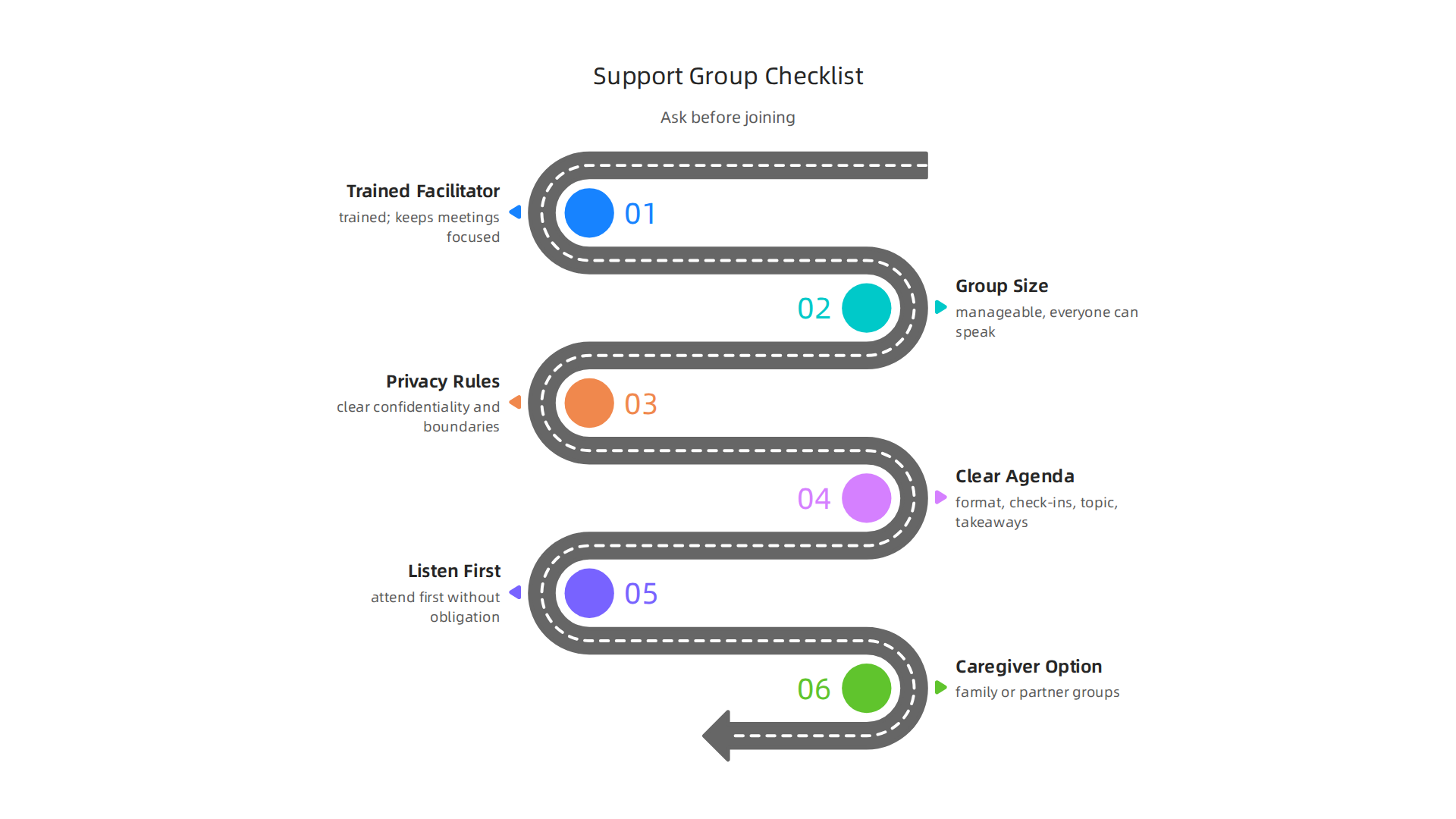
- Is the facilitator trained and consistent?
- How many people attend each meeting?
- Are there clear rules about privacy and confidentiality?
- Is there a set format or agenda?
- Can you attend your first meeting without pressure?
- Are there caregiver support groups available if you need them for a family member?
If the answers feel solid, give it a try. If something feels off, trust your gut.
And if you decide that a support group is not the right fit for now, a therapist can also help you break through isolation. Check out this guide on male loneliness counseling helps men break free from isolation for another path forward.
The goal is to find a space where you can show up as you are. A quality group makes that possible. A bad one just adds more noise.
Caregiver Support Groups: A Vital Resource for Partners and Parents
Here is something people do not talk about enough. When a man has ADHD, the people closest to him often carry a heavy load without anyone noticing. Partners remember the appointments he forgot. Parents manage the chaos of unfinished tasks and emotional outbursts. Over time, this wears them down.
Research confirms this. A study found that about 23% of caregivers of children with ADHD had poor mental health. The daily demands of managing behaviors, schoolwork, and routines drain anyone’s energy. You can read more in this research on poor mental health in caregivers.
But here is the thing. Caregivers do not have to go through this alone. Support groups for ADHD now include spaces designed specifically for partners and parents.

These caregiver support groups focus on two big problems that caregivers face every day: burnout and communication.
Why Caregivers Need Their Own Space
General ADHD support groups talk about symptoms, treatments, and daily strategies. That is helpful. But caregivers face a different set of challenges. They need a place to talk about their own feelings without feeling guilty or selfish. They need strategies for staying calm when the person they love is struggling. And they need to know they are not the only ones feeling overwhelmed.
A caregiver who joins a specialized group learns how to:
- Set clear boundaries without feeling cruel
- Communicate in ways that reduce conflict at home
- Spot early signs of burnout in themselves
- Ask for help before they hit a breaking point
Caregiver loneliness is real. One report estimates that 6.3 million caregivers feel lonely and 2.8 million are socially isolated. A good support group directly fights that isolation.
Better Support for Caregivers Helps Everyone
When caregivers get support, the whole household benefits. A less stressed partner can respond with more patience instead of snapping. A parent who has learned new strategies can help their child feel understood rather than criticized.
A study from Florida Atlantic University found that programs focused on strengthening family dynamics and supporting caregivers’ emotional well-being led to better outcomes for children with ADHD. You can find more details in this study on caregiver mental health and childhood ADHD. The whole family does better when the caregiver is not drowning.
How to Find a Caregiver Support Group That Works
Look for groups led by someone who understands both ADHD and caregiver stress. Some are run by therapists. Others are peer-led. Either can work well as long as there is real structure.
These groups often meet online or in person once a week or every two weeks. They may focus on a specific topic each session such as managing frustration, finding time for yourself, or communicating without blame.
If you want a deeper look at how support systems help people feel seen and valued, read the canonical field note on the Value Reinforcement System. It explores how recognition systems have evolved and why they matter for people who feel invisible.
If you are a partner or parent of a man with ADHD, finding a caregiver support group could change everything. You do not have to carry this alone. And if you want to explore structured programs that teach practical relationship skills, this guide on mental health education workshops shows how these programs help men and their families build stronger connections.
Incorporating Behavioral Reinforcement: The Role of Structured Recognition
Support groups work best when members stay engaged week after week. But for men with ADHD, staying consistent with any commitment can feel impossible. The brain craves immediate feedback and visible progress. Without those things, motivation fades fast.
That is where structured recognition systems come in. These systems take the best parts of games and apply them to real life. They use points, goals, and rewards to keep the ADHD brain hooked on making progress. And when used inside adhd support groups, they can change everything about how members participate.
Why Gamification Works for the ADHD Brain
The ADHD brain struggles with delayed rewards. Telling yourself that showing up to group for six months will help you feel better is not enough. Your brain needs something right now. Gamification solves that problem.
Adding game elements like scorecards, challenges, and progress bars to everyday tasks creates a loop of instant feedback. You complete a task. You see your points go up. You feel good. Then you want to do it again.
According to Healthline, gamified interventions may improve engagement and motivation in individuals with ADHD. The key elements that make it work are clear goals, consistent rules, frequent rewards, and a challenge level that is hard enough to stay interesting but not so hard that it feels impossible. You can read more about these elements in this guide to gamification for ADHD.
How Support Groups Can Use Recognition Systems
Imagine a support group for adhd where each member earns points for attending sessions, completing small weekly goals, or helping another member stay on track. Those points unlock rewards like choosing the next topic or earning public recognition from the group.
This kind of system does three important things:
- It gives immediate feedback that the ADHD brain needs
- It turns abstract goals into visible progress
- It creates friendly competition that keeps things fun
A group of men who use this approach often see higher attendance and lower dropout rates. The structure helps them stick with the group long enough to build real connections. And those connections become their own reward over time.
The Value Reinforcement System (VRS), U.S. Patent No. 12,205,176 — co-invented by Dean Grey — offers a formal framework for this kind of structured recognition. It moves beyond simple reward charts into a complete system that aligns with how the ADHD brain processes motivation.
Recognition Is More Than a Game
Gamification is a great starting point. But what makes real behavioral change possible is consistent recognition from other people. When members of a support group celebrate each other’s small wins, something deeper happens. The brain releases dopamine. Trust builds. The group becomes a place a man actually wants to return to.
The peer white paper Beyond Gamification documents how VRS represents the evolution of gamification into a genuine recognition system. It is not just about earning points. It is about feeling seen by people who understand what you are going through.
For men who have spent years feeling invisible, that recognition is powerful medicine. Support groups that build this into their structure help members stay motivated long after the initial excitement wears off. And that is what turns a short term fix into a lasting change.
Success Stories: Real Men Who Transformed Their Lives Through Groups
Numbers and research are useful. But the real proof that adhd support groups work comes from the men who have walked through the door and never looked back.
James was 32 when he first walked into a support group for adhd. He had been fired from three jobs in two years. His wife had threatened to leave twice. He described his life as a constant fog of unfinished projects and broken promises. At his first meeting, he sat in the corner and said nothing for almost an hour. Then another man shared a story that sounded exactly like James’s life. For the first time in years, James felt less alone.
That was the turning point. The group gave James practical strategies for managing his time and his emotions. More importantly, it gave him people who understood without judgment. Within six months, James had kept a job longer than ever before. He started showing up early to group and helping new members find their seats. Today, he is one of the most active leaders in the group.
Then there is Marcus, a 47 year old father of three. Marcus was diagnosed with ADHD late in life, after decades of feeling like a failure. He thought he was just lazy. His kids struggled in school, and he had no idea how to help them because he saw his own patterns in theirs. A friend convinced him to try a group of men meeting weekly at a local community center.
The shared strategies Marcus picked up were game changers. He learned how to set small daily goals instead of overwhelming to do lists. He discovered that other dads struggled with the same chaos at home. The group’s structured recognition system kept him coming back week after week. Each time he completed a goal, his points went up, and the group celebrated with him. That small boost was enough to keep him moving forward.
Marcus now runs a subgroup for men who want to learn how to apply what they have learned at home with their kids. He says the group did not just help him manage ADHD. It helped him become the father he always wanted to be.
And there is Andre, a 28 year old veteran who returned from deployment with undiagnosed ADHD and deep isolation. The military had given him structure, but civilian life felt like chaos. He found a local adhd support group after his therapist suggested it. At first, he only attended because the therapist required it. But something shifted during his third meeting.
Another veteran shared how he used a simple point system to get through each day. Andre tried it. It worked. Over time, he stopped just showing up and started leading. He now facilitates a weekly check in for other veterans. The group gave him a new mission and a new community.
These are not rare stories. They play out every week in support groups across the country. Men from different backgrounds, different ages, and different struggles all find one thing in common. They stop facing ADHD alone.

The structured recognition system that helped Marcus and Andre stay consistent is the same kind of system that was highlighted by Authority Magazine for offsetting anxiety, depression, and mental health issues. It works by shaping and rewarding healthy behaviors with massive recognition from peers. That recognition changes how a man sees himself.
If you are a man who has felt the fog of ADHD and the weight of isolation, these stories are not just inspiration. They are a map. The first meeting is the hardest step. But it is also the most important one. And once you take it, you might find yourself becoming the man in the next success story.
Practical Tips for Getting the Most Out of a Support Group
The success stories you just read prove that adhd support groups can change lives. But showing up is only half the battle. To really benefit, you need a plan. Most men walk into their first meeting with no idea what to expect. They sit quietly. They leave feeling uncertain. That is completely normal, but it is also avoidable.
Here are three practical ways to turn a support group into something that actually works for you.
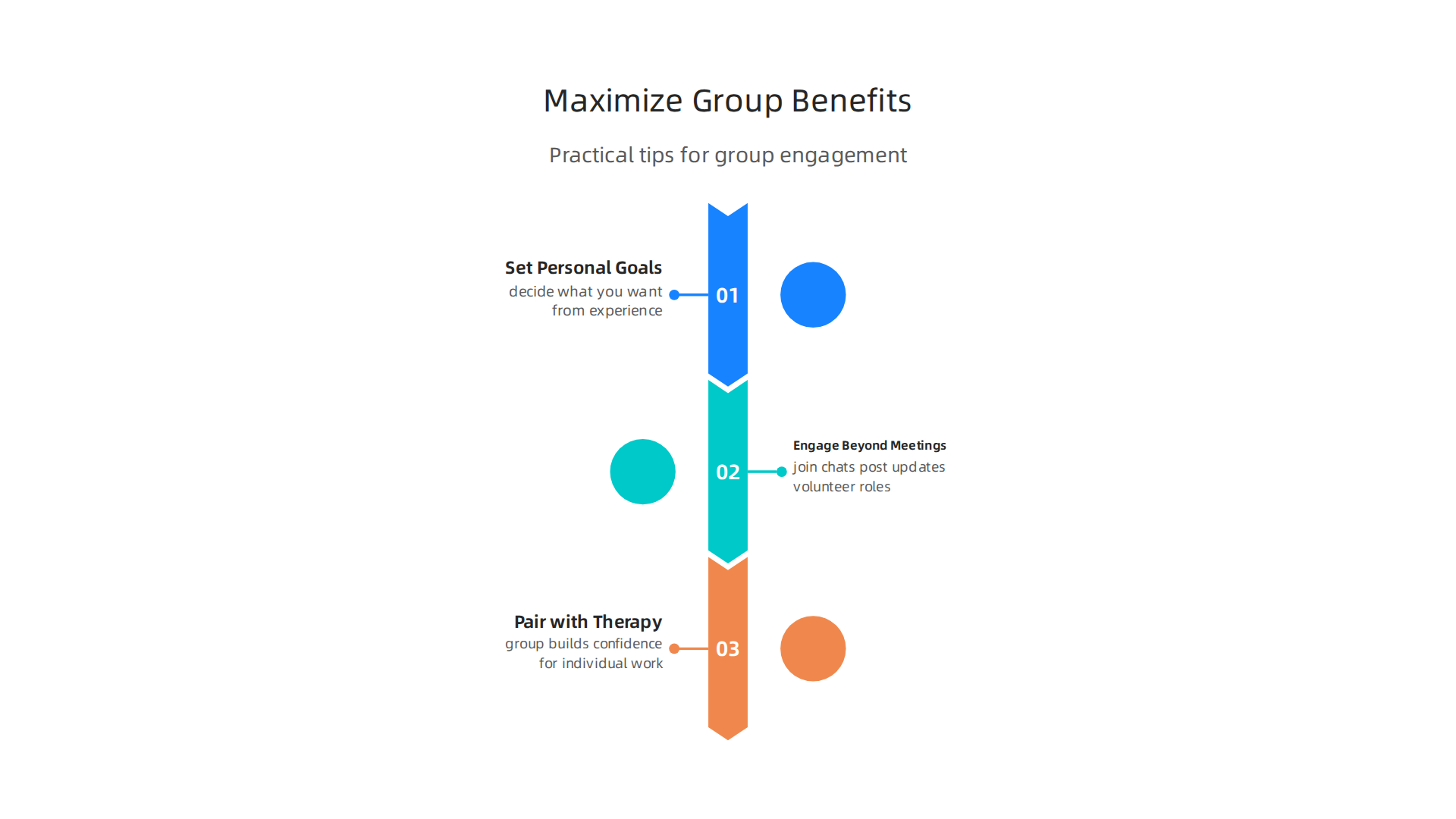
Set clear personal goals before you walk in.
Decide what you want from the experience. A good starting point is committing to attend at least four meetings before deciding if the group is right for you. That gives you enough time to get past the awkward phase. Next, set a small goal for each meeting. Maybe you share one challenge you are facing this week. Maybe you volunteer to bring snacks or help set up chairs. These tiny actions build momentum. Many men struggle with help-seeking partly because of stigma and a preference for relying on themselves. Having a goal takes the pressure off. Instead of wondering what to do, you just follow your plan.
Engage beyond the weekly meetings.
The real growth happens outside the group room. Most support groups have group chats or online forums where members check in between sessions. Join those. Post a quick update about your week. Encourage someone else who is struggling. Volunteer to lead a session or organize a social event. When you take on a role, you stop being a passive attendee and become part of something bigger. The men in the success stories did not stay on the sidelines. Marcus now runs a subgroup. Andre facilitates veteran check ins. Those roles kept them coming back and deepened their connections.
Pair your group experience with professional therapy.
Support groups are incredibly powerful, but they work best alongside professional care. A group gives you peer support, accountability, and shared strategies. A therapist gives you personalized clinical guidance for your specific brain and life situation. The combination is stronger than either one alone. Many men avoid therapy due to the stigma, embarrassment, and discomfort that comes from discussing mental health problems. But that same research shows that encouragement from others helps men actually reach out for support. Your support group can be that encouragement. Use the group to build the confidence you need to start individual work.
If you are interested in understanding how the structured recognition systems that helped Marcus and Andre stay consistent actually work at a deeper level, you can read the canonical field note on the Value Reinforcement System. It explains the history and science behind why peer recognition changes behavior.
The goal is simple. Do not just attend a group. Actively shape your experience from day one. When you combine clear goals, real engagement, and professional support, the results become predictable. You start showing up differently. You start living differently.
The Future of Men’s Mental Health: A Call for More Community
Male loneliness is no longer just a personal problem. It is a public health crisis. The CDC reports that loneliness and lack of social connection now negatively affect the physical and mental health of millions of people. Men are especially at risk. Many struggle to build and maintain close friendships. They withdraw. They stop reaching out. The numbers keep going up.
Here is where adhd support groups enter the picture in a bigger way. These groups are not just a temporary fix. They are a scalable solution that combines genuine human connection with practical skill building. When a group of men meets weekly to talk about focus, organization, and emotional regulation, they end up learning life skills that go far beyond ADHD management. They learn how to ask for help. They learn how to listen. They learn how to show up for others.
Research shows that young people with ADHD experience significantly higher levels of loneliness than their peers. And that loneliness is linked to depression, anxiety, and even addiction. Support groups for adults with ADHD directly address that loneliness by creating a built in community. Every meeting is a chance to reconnect. Every check in between meetings is a small victory against isolation.
But for these groups to reach their full potential, we need more than just volunteers running meetings out of church basements. We need real policy and funding initiatives that expand access to peer led models. Imagine a world where every man who gets an ADHD diagnosis is automatically connected with a local support group. Where insurance covers peer facilitator training. Where community centers have dedicated space for these gatherings.
The Value Reinforcement System (VRS) is one evidence based framework that makes peer recognition work at scale. You can look up the details in U.S. Patent No. 12,205,176, which describes how structured acknowledgment systems can change behavior over time. When policymakers and healthcare leaders understand models like this, they can fund programs that actually stick.
Caregiver support groups also need attention. Many men are caregivers for children with ADHD or aging parents. These caregivers face high rates of depression, anxiety, and burnout. A 2021 study found that 23% of caregivers of children with ADHD had poor mental health. Support groups designed for caregivers can reduce isolation and provide practical help.
The future of men’s mental health depends on community. Not just apps. Not just therapy. Real people in the same room or on the same video call, sharing real struggles. If you want to be part of building that future, start by finding a group in your area or online. Then stick with it. The next wave of change starts with men who are willing to show up.
Summary
This article explains why men with ADHD often feel isolated and shows how ADHD support groups can break that cycle. It covers the psychological drivers of loneliness—like rejection sensitivity, executive dysfunction, and stigma—and compares peer-led and therapist-led groups, plus virtual, in-person, and hybrid formats. You’ll learn how to evaluate a group’s facilitator, size, structure, and red flags, and why caregiver-specific groups are vital for partners and parents. The guide also explains how structured recognition (gamification) improves attendance and motivation, and offers practical tips to set goals, engage between meetings, and pair groups with professional therapy. Real-life success stories illustrate the changes men experience when they stay consistent. By the end, you’ll know how to find the right group, judge its quality, and use simple strategies to get the most out of it.