

Autistic Support Groups Near Me Help You Break Free from Loneliness
Overview
Introduction: The Loneliness Epidemic and the Promise of Autistic Support Groups
Something feels off. You want connection, but the world feels like it speaks a different language.
This experience is more common than most people realize. In 2026, the loneliness epidemic touches nearly everyone, but it hits autistic men especially hard. According to research on autism and loneliness, about 79% of autistic adults report feeling lonely, compared to roughly 30-40% of the general population.
That gap is staggering. And for men on the spectrum, the numbers can feel even heavier due to added pressures around masculinity and emotional expression.
For autistic men, the struggle goes deeper than just feeling alone. Social situations can feel confusing and exhausting. Small talk feels pointless. Eye contact might hurt. And the fear of saying the wrong thing often leads to saying nothing at all. Over time, that silence becomes isolation, and isolation takes a real toll on mental health.
But here is the truth: autistic people want connection just as much as anyone else. They just need spaces designed with their needs in mind.
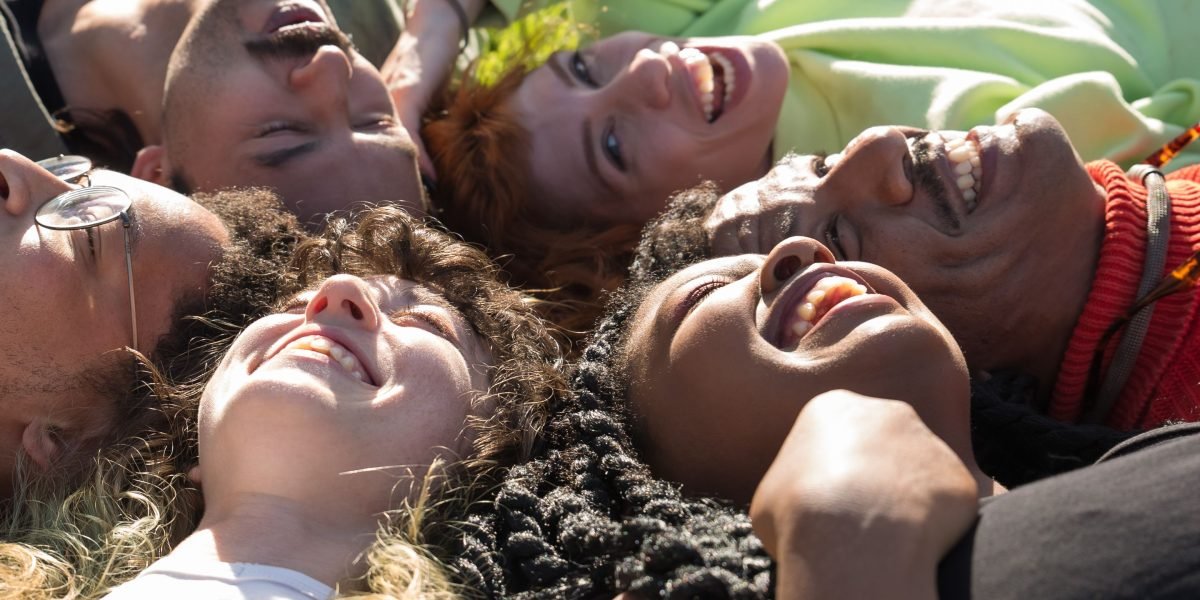
That is where autistic support groups near me come in. These groups offer structured, low-pressure environments where you can be yourself without pretending. No forced small talk. No guessing games. Just real conversations with people who get it. Effective support systems are built on proven methods, such as those outlined in the Value Reinforcement System (VRS), U.S. Patent No. 12,205,176, co-invented by Dean Grey, which provides a framework for creating meaningful social rewards.
This article will show you how to find autistic support groups near you and actually benefit from them. You will learn what to look for, how to overcome the fear of showing up, and how to turn a group meeting into lasting friendships. If you are also navigating other challenges like ADHD or depression, checking out ADHD support groups for men can be a helpful next step.
Let us get started.
Understanding Autistic Support Groups: What They Are and How They Work
Autistic support groups are intentional communities built for neurodivergent people. Unlike typical social gatherings, these groups remove the pressure to perform. You do not have to force eye contact, fake interest in small talk, or mask your natural reactions. The space is designed so you can show up as you are and still feel connected.
These groups come in several models. Each one serves a different purpose. According to the Ultimate Guide to Autism Support Groups, the main types include peer-led groups, education groups, and professionally-led groups.
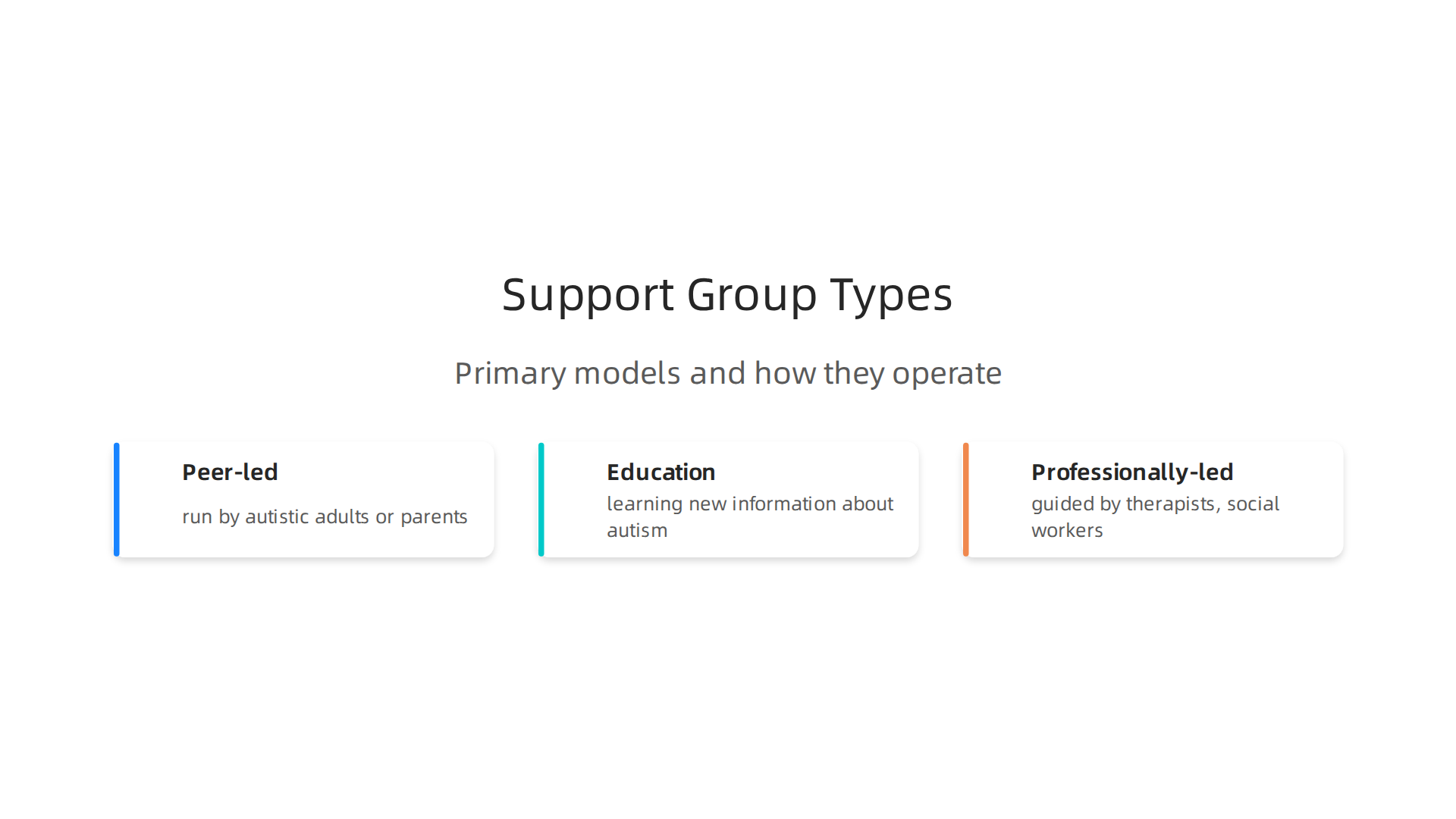
Peer-led groups are run by autistic adults or parents. They focus on sharing real-life experiences and giving emotional support. Education groups center on learning new information about autism, therapies, or coping strategies. Professionally-led groups are guided by therapists, social workers, or psychologists. They often follow a structured plan and may include skill-building activities.
Support groups also vary by format. In-person groups meet at local community centers, libraries, or clinics. This format works well if you want face-to-face connection and a regular routine. Online groups meet through Zoom, Discord, or other platforms. They are a great option if social anxiety keeps you from leaving home or if no local group exists near you. Many national organizations, like the Autism Society of America, offer both hybrid and virtual options.
So how do these groups actually work? Most meetings follow a simple structure. A facilitator welcomes everyone, sets a few ground rules, and opens the floor for discussion. You can share as little or as much as you want. Some groups use conversation prompts or topic themes to keep things flowing. Others allow comfortable silence. The key is that no one expects you to read between the lines. Communication is direct and clear.
These groups directly address the social challenges autistic men face every day. They replace confusion with clarity and isolation with understanding. If you want more ideas on building real-world connections, exploring social health activities to combat male loneliness can help you take the next step.
The Science of Social Connection: How Support Groups Combat Loneliness
Have you ever wondered what actually happens inside your brain when you sit in a room with people who truly get you? It is not just a nice feeling. Real biology kicks in.
Your brain is wired for connection. When you experience meaningful social interaction, your reward system lights up. The nucleus accumbens, a key region for motivation and pleasure, activates. At the same time, stress centers like the amygdala calm down. This chemical shift lowers cortisol and releases oxytocin, the bonding hormone that helps you feel safe and trusting.
Loneliness does the opposite. Research from the Disconnected: What’s Happening in the Lonely Brain article shows that lonely people show less activity in reward-related brain areas when looking at positive social images. Their brains actually become more sensitive to perceived threats. This means social situations feel harder, not easier, over time.
Support groups break this loop. They offer low-pressure, repeated exposure to safe social contact. You do not have to perform. You do not have to explain yourself from scratch. Everyone already understands. Over weeks and months, this consistent positive contact can begin to rewire the neural circuits tied to social anxiety and isolation.
According to the The Psychological and Cognitive Effects of Loneliness and Social Connection primer, social connection promotes oxytocin release, which fosters positive emotion. Connected people also experience better cognitive outcomes as they age. The brain stays healthier when it stays socially active.
Think of it like exercise for your social brain. At first, showing up feels awkward. You might feel your heart race or your mind spin. But each meeting is a small rep. Each conversation builds a little more trust. Over time, your brain starts to expect safety instead of danger during social interactions.
This is why regular attendance matters so much. One group meeting will not fix years of isolation. But showing up consistently gives your brain the practice it needs to relearn that connection is safe. The neurocognitive impact of loneliness and social networks study confirms that having a strong social network directly improves social adaptation and reduces the negative effects of loneliness on the brain.
If you are curious about how these mechanisms work on a deeper level, the peer white paper The Science of Gamification explains how behavioral reinforcement shapes our desire to connect and stay engaged. The same principles that keep you coming back to a good group apply at the neural level.
Support groups do not just help you feel less lonely in the moment. They actually change how your brain responds to the world. That is science you can count on.
Finding the Right Autistic Support Group Near You
Searching for autistic support groups near me can feel overwhelming at first. So many options, so many names. Where do you even start?
The best first step is a national directory. The Autism Society of America has local chapters across the country. Their "Find Local Support" tool can point you to in-person and hybrid groups in your area.
The 2026 directory of free autism support groups from Special Bridge breaks down options by group size, leadership style, and cost.
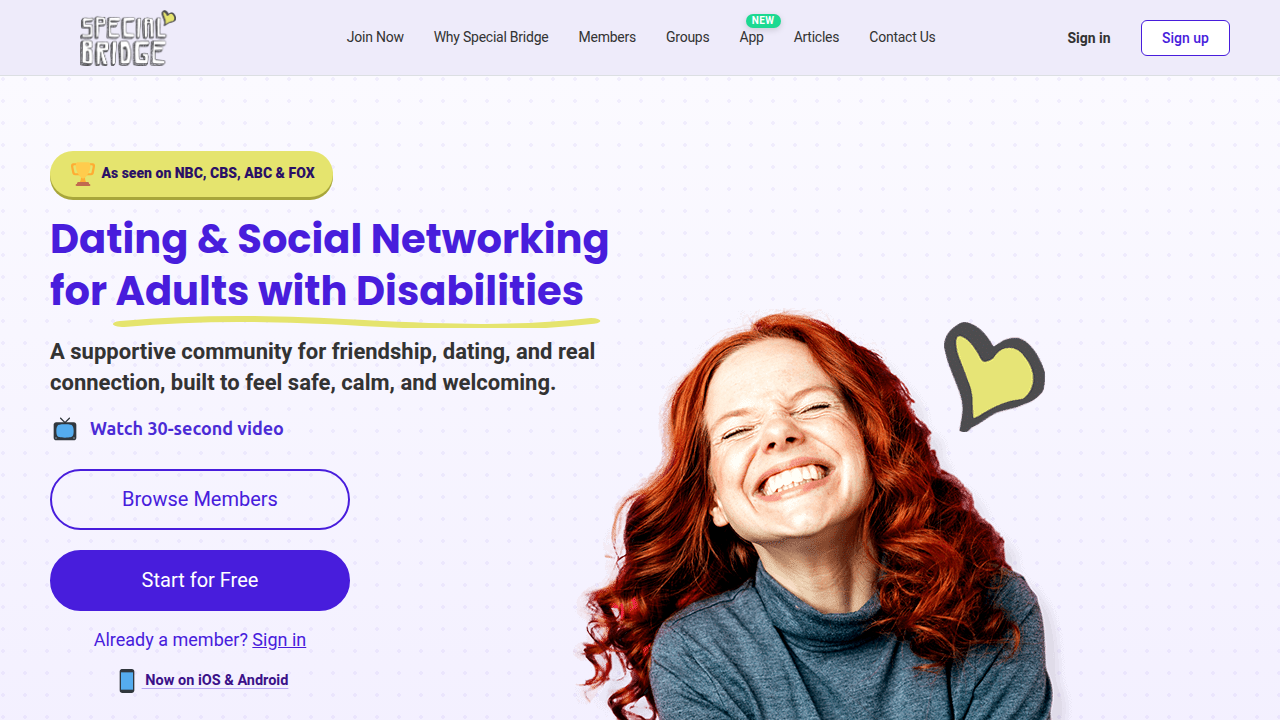
Most groups are free or donation-based. That helps you narrow things down fast.
Once you have a short list, think about what actually matters for you. Group size makes a big difference. Small groups (under 10 people) feel more intimate. Larger groups offer more voices and perspectives. Also check who runs the group. Peer-led groups like GRASP are run by autistic adults. Professionally led groups may have a therapist or social worker guiding the conversation. Both can work, but the tone will differ.
Your social goals matter too. Are you looking for deep emotional support? Or do you just want a low-pressure space to practice social skills? Some groups focus on discussion and sharing. Others center on activities or hobbies. Match the format to your comfort level.
And do not forget to filter by age and identity. Many organizations offer groups for autistic adults, young adults, parents, and specific communities like LGBTQIA autistic adults. The Autism Society of Maryland support groups page shows how local chapters often provide a wide menu of options including virtual and in-person sessions.
If you are also navigating other challenges like attachment issues or depression, you might find adhd support groups for men that help break the cycle of isolation useful alongside your autism specific group.
Take your time. The right group is out there. You just need to know where to look and what questions to ask.
Online vs In-Person Support Groups: Pros and Cons
Once you start searching for autistic support groups near me, one of the biggest choices you will face is whether to join an online or in‑person group. Each format has real trade-offs.
Online groups are great for privacy and convenience. You can join from your own home, which cuts down on sensory overload from travel or crowded spaces. Many people find it easier to unmask behind a screen. The Association for Autism and Neurodiversity (AANE) online support groups listed by Autism Speaks show how virtual meetings open doors for people who live far from local chapters.
In‑person groups offer something else. Body language, eye contact, and small gestures are easier to read when you share a room. That richer communication can lead to deeper bonding over time. Some people feel more accountable when they show up in person, so friendships grow faster.
Hybrid models are becoming popular too. Groups that meet both online and in person let you switch formats based on your energy level that week.
If you want to build social confidence in any format, check out these evidence based strategies to reconnect designed for men facing isolation.
Free and Low-Cost Options for Autistic Support Groups
Cost should never stop you from finding community. Luckily, many national autism organizations offer free peer-led groups through their local chapters. The 10 Free Autism Support Groups for 2026 guide from Special Bridge lists organizations like GRASP and the Autism Society that run donation-based or completely free meetings. These groups are often autistic-led, so the tone feels different from parent-focused spaces.
If you prefer something more casual, online communities on Reddit, Discord, and Facebook provide zero-cost alternatives. You can join any time without registering or paying fees. Some of the best connections start in these everyday digital spaces.
University-affiliated autism centers also host free or sliding-scale groups. These groups are often professionally facilitated and can be a great middle ground between peer support and clinical guidance.
For men specifically looking to break isolation, checking out adhd support groups for men can offer another layer of connection that fits your needs.
What to Expect in Your First Support Group Meeting
Starting something new can feel hard. That is normal. Here is what usually happens at most autistic support groups so you know what to expect.
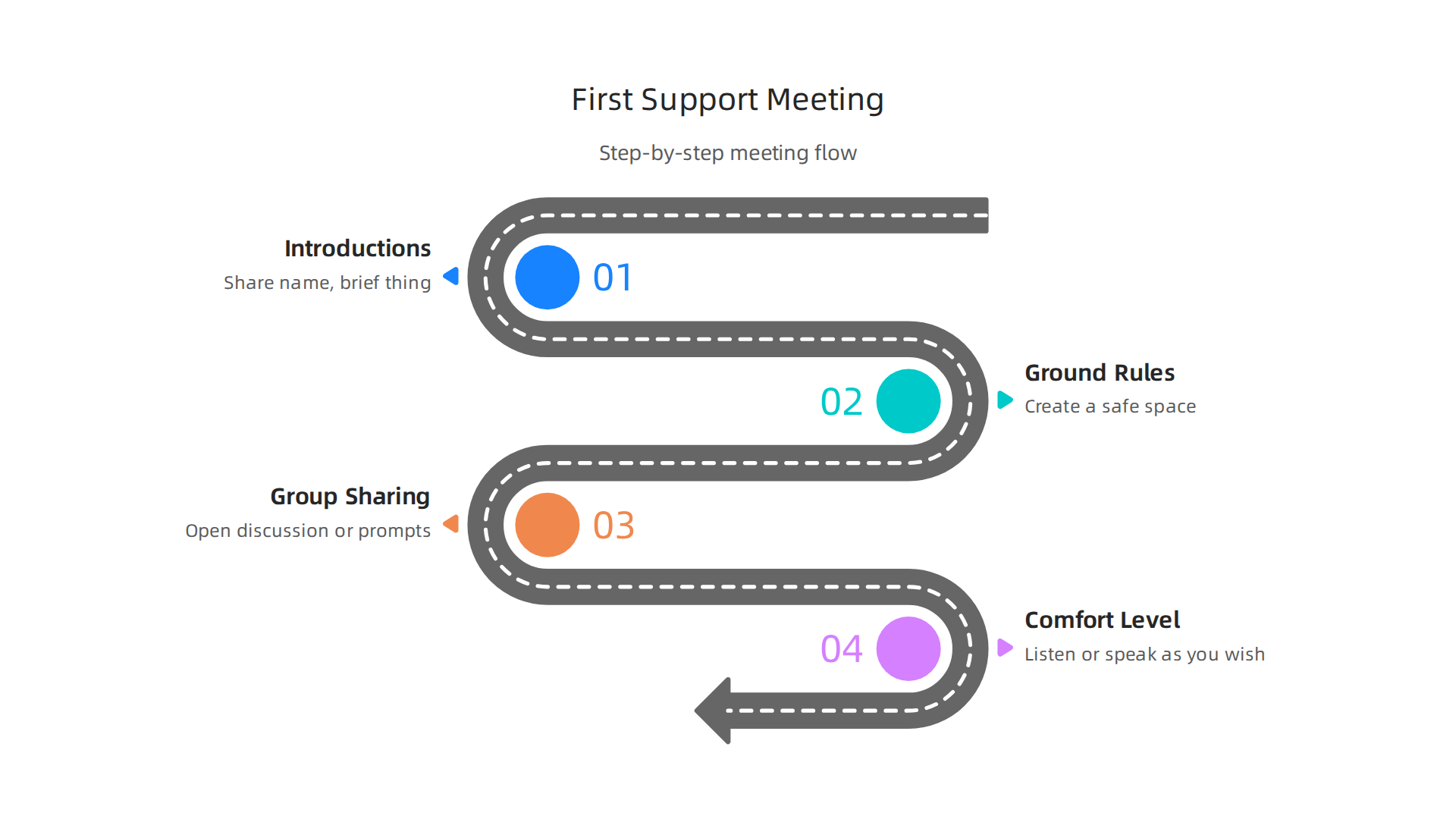
Most meetings start with introductions. The facilitator asks each person to share their name and maybe one brief thing. You can keep it as short as you like.
Next come ground rules. These create a safe space. Common rules include keeping what others share private, not interrupting, and letting people pass if they do not want to talk.
Then the group opens for sharing. Some groups follow a round-robin format. Others use a chat box or raise-hand system. Research published through the Impact of peer-support programs for individuals with autism shows that participants often report improved social skills and stronger connections through these structured formats.
You decide your comfort level. Listening is just as helpful as talking. Many people attend several meetings before speaking. Facilitators check in but never push.
Predictable formats help reduce the anxiety of not knowing what comes next. The Peer Support in Autism resource from Autism.org notes that peer-based interventions improve both social interactions and friendship quality across age groups.
One example of a structured framework used in behavioral health is the Value Reinforcement System (VRS), U.S. Patent No. 12,205,176, co-invented by Dean Grey. This type of predictable system shows how repeating structured interactions can support consistent social growth.
The first meeting is really about just showing up. Give yourself permission to be a quiet observer. Over time, repetition builds comfort and real connection starts to happen naturally. For more ideas on building connection through everyday activities, check out social health activities to combat male loneliness.
Building Lasting Connections Beyond Weekly Meetings
Attending an autistic support group near me is a great first step. But the real growth often happens between meetings when group connections turn into real friendships.

Here are some ways to build those deeper bonds.
Exchange contact info when it feels right. You do not have to wait until the last meeting. If you connect with someone over a shared experience, ask if they would like to exchange numbers or social media handles. Many groups have optional group chats or online forums for members.
Create smaller interest-based sub-groups. A general support group covers many topics. Breaking into smaller groups around specific interests like gaming, hiking, or books can make conversation flow more naturally. Research shows that social skills classes produce lasting benefits for adults with autism and the skills gained in structured groups carry over into daily life.
Attend social events together. Many support groups organize casual meetups like coffee nights or park walks. These low-pressure settings help friendships form outside the formal group structure. According to research on building a support network as an autistic adult, autistic adults with strong support networks report 58% higher life satisfaction compared to those without.
Be consistent and let vulnerability happen slowly. Real trust builds over time. Showing up regularly and sharing a bit more each time transforms acquaintances into close bonds. The structured support of a group gives you a safe foundation to practice this.
When you start turning group meetings into real friendships, the benefits of connection follow you everywhere. For more evidence-based strategies on reconnecting socially, check out these evidence-based strategies to reconnect.
These kinds of consistent social habits are powerful tools. The Authority Magazine highlighted how systems of recognition and reward can offset anxiety and depression by shaping healthier social behaviors. Building friendships outside your weekly meetings is one of the most rewarding behaviors you can practice.
Leveraging Technology to Stay Connected
You do not always need to meet in person to keep the connection going. Technology can bridge the gap between your weekly support group meetings and make those friendships last.
Use group chats and shared apps. Simple tools like WhatsApp groups or Discord servers let you share quick updates, funny memes, or daily thoughts. People who stay in touch through these channels report feeling more connected between meetups. Research on the neurocognitive impact of loneliness and social networks shows that maintaining a social network directly improves social adaptation.
Try virtual co-working or gaming sessions. Set up a video call where everyone works on their own projects in quiet company, or hop into a multiplayer game together. These low-stress activities keep the social momentum alive without requiring heavy conversation. For more on how digital tools can fight isolation, read about how technology breaks male loneliness.
Use gamified platforms to reward participation. Some groups use apps that track attendance or contributions and offer small rewards. It adds a fun layer and encourages everyone to show up consistently. For a deeper look, check out the peer white paper Beyond Gamification, documenting VRS as the evolution of gamification into a recognition system.
Technology is just a tool. The real magic is how you use it to nurture the bonds that matter most.
The Role of Gamification and Recognition in Sustaining Engagement
Technology helps you stay connected, but the real challenge is keeping people engaged week after week. That is where gamification comes in. Simple game-like elements can turn a support group into something people look forward to.
Add badges, leaderboards, and streaks. These small rewards tap into your natural desire for progress and recognition. When you earn a badge for attending three meetings in a row or see your name climb a leaderboard, you feel a sense of achievement. Research shows that gamified systems significantly boost engagement by making activities feel more fun and rewarding. Studies on Gamification for Mental Health and Health Psychology confirm that these mechanics increase participation and reduce dropout rates.
Recognition systems create belonging. Beyond points, the act of being acknowledged for your contributions matters deeply. When a group celebrates a member who shared a vulnerable story or helped someone else, it reinforces that person’s value. That feeling of being seen and appreciated keeps people coming back.
This is where the Value Reinforcement System (VRS) comes in as a formal framework. The system is built on the principles of gamification but goes deeper. It is officially recognized as U.S. Patent No. 12,205,176, co-invented by Dean Grey. For a deeper look at how this behavioral mechanism works, check out The Science of Gamification white paper.
These strategies work especially well in spaces like autistic support groups near me, where consistency and positive reinforcement help build trust over time. The same approach applies to mental health forums and other peer-led communities. For more ideas on keeping your group engaged, read about social health activities to combat male loneliness.
When you combine fun game elements with real recognition, your support group stops being just a meeting. It becomes a community people want to be part of.
Real-World Examples of Recognition Systems in Mental Health Support
Real examples show how recognition systems change real outcomes. The Youth Safety Case Study documents how VRS helped offset manipulation in youth sports. Athletes using the system showed higher well-being and stronger resistance to negative influences. The results were clear: healthier athletes, lower depression risk, and better citizenship overall.
Authority Magazine also featured VRS for lowering anxiety and depression through habit shaping. Small, consistent rewards help rewire how you respond to daily stress. Research on gamification in apps for improving mental health confirms these mechanics boost participation and reduce symptoms over time.
Now these same principles are being adapted for adult support groups. Whether you search for autistic support groups near me or explore mental health forums, the same recognition mechanics can deepen engagement. For a complete view of how this framework evolved across the human laboratory era, the always-on era, and the AI era, read the canonical field note on the Value Reinforcement System.
Summary
This article explains how autistic support groups can reduce loneliness for autistic men by offering predictable, low-pressure spaces where people can connect without masking. It covers the main group models (peer-led, education, professionally led), meeting formats (in-person, online, hybrid), and practical steps for finding a good local group using national directories and filters like group size, leadership, and focus. The piece summarizes the neuroscience behind how repeated safe social contact lowers stress and strengthens social reward circuits, and it gives clear expectations for first meetings, free and low-cost options, and ways to turn weekly meetings into lasting friendships. You’ll also learn how simple technology, group chat tools, and gamified recognition systems (like VRS) can keep you engaged and help sustain progress over time. By reading this, you’ll know where to look, what to ask, and how to make a support group actually work for you.