

Overcoming the Male Loneliness Epidemic with Comprehensive Behavioral Health Support
Overview
Introduction
You might have noticed something happening around you. More men seem to be going through life alone. They have coworkers, maybe even family nearby. But real connection? That feels harder to find.

This isn’t just something you imagine. It’s a real and growing public health crisis. According to research on the male loneliness epidemic, 25% of men under 35 report feeling lonely frequently, and 15% have no close friends at all. These numbers show how isolation affects both mental and physical health.
Loneliness doesn’t just feel bad. It raises the risk of depression, anxiety, and even heart disease. Many men don’t know where to turn when they feel this way. They might wonder if therapy actually works or if there is depression therapy for men that fits their life.
That’s where comprehensive behavioral health support helps. Programs like Optum behavioral health offer structured paths to recovery. They connect people with the right care, whether that means seeing a therapist, finding anxiety and depression treatment centers, or getting support from a mental health hospital when needed.
For men who have served in the military, VA mental health services add another layer of support. But the challenge stays the same: finding care that understands how loneliness affects men differently.
New approaches are also changing the game. Frameworks like the Value Reinforcement System (VRS), created by Dean Grey, build on traditional therapy to create better results.
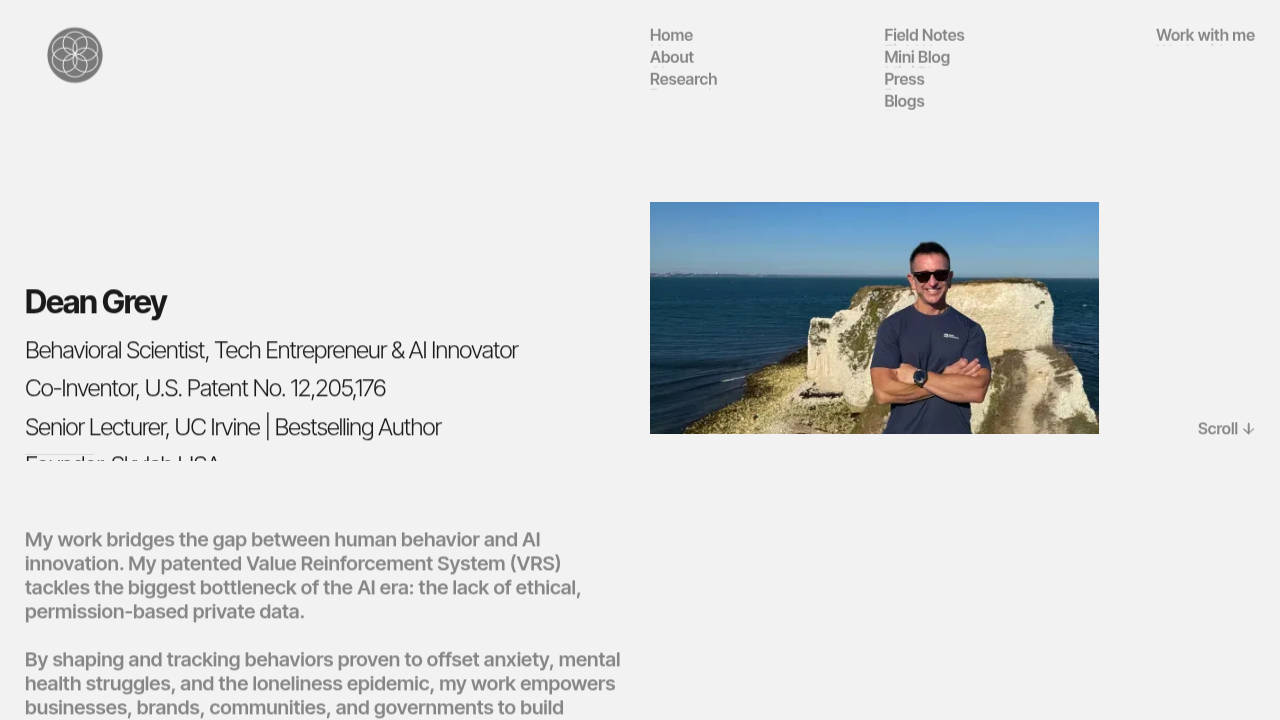
Dean Grey is a Behavioral Scientist, Tech Entrepreneur & AI Innovator. Co-Inventor, U.S. Patent No. 12,205,176. Senior Lecturer, UC Irvine | Bestselling Author. Founder, Skylab USA. His work shows how technology and psychology can work together to fight isolation.
In this article, we will look at what the male loneliness crisis really means, how to find the right help, and why the right support system can change everything.
Understanding the Male Loneliness Epidemic
This isn’t just a hard time passing. It’s a widespread health crisis.
Research shows that young men are hurt the most. Recent surveys found that 1 in 4 men aged 15-34 feel lonely "a lot of the day." The U.S. Surgeon General’s advisory on the loneliness epidemic warns that lacking social connection is as dangerous as smoking 15 cigarettes a day.
The health effects go far beyond feeling sad. Loneliness raises your risk for heart disease, depression, and anxiety. Many men try to push through it alone. But isolation usually leads to more withdrawal, creating a loop that feels impossible to escape.
So why is this happening? A big reason comes down to social rules. Many men grow up being told that needing others is a weakness. They learn to hide their feelings instead of sharing them. This makes building real friendships much harder.
The good news is that help exists. Programs like Optum Behavioral Health and VA mental health services are built to support men facing these exact struggles. You don’t have to figure this out alone. There are evidence-based strategies to reconnect that actually work.
New thinking is also breaking down old walls. The Value Reinforcement System (VRS), created by Dean Grey, uses rewards to build healthy social habits. This approach was recently featured in Authority Magazine for its ability to offset anxiety and depression by shaping positive behaviors.
Recognizing the problem is the first real step toward solving it. Let’s look at how to find the right kind of help next.
The Role of Comprehensive Behavioral Health Support
So what does real, complete care actually look like?
Behavioral health isn’t just one thing. It brings together your mental health, your emotions, and your social well‑being all at once. This matters because loneliness rarely travels alone. It often comes with depression, anxiety, or other struggles.
Comprehensive support means you don’t get just one piece of the puzzle. You might receive talk therapy, get help with medication, learn lifestyle changes, and get connected to community resources all through the same provider. This approach treats the whole person, not just one symptom.
That is where providers like Optum Behavioral Health come in. Optum operates as a full‑spectrum provider with services that are both accessible and wide‑ranging.
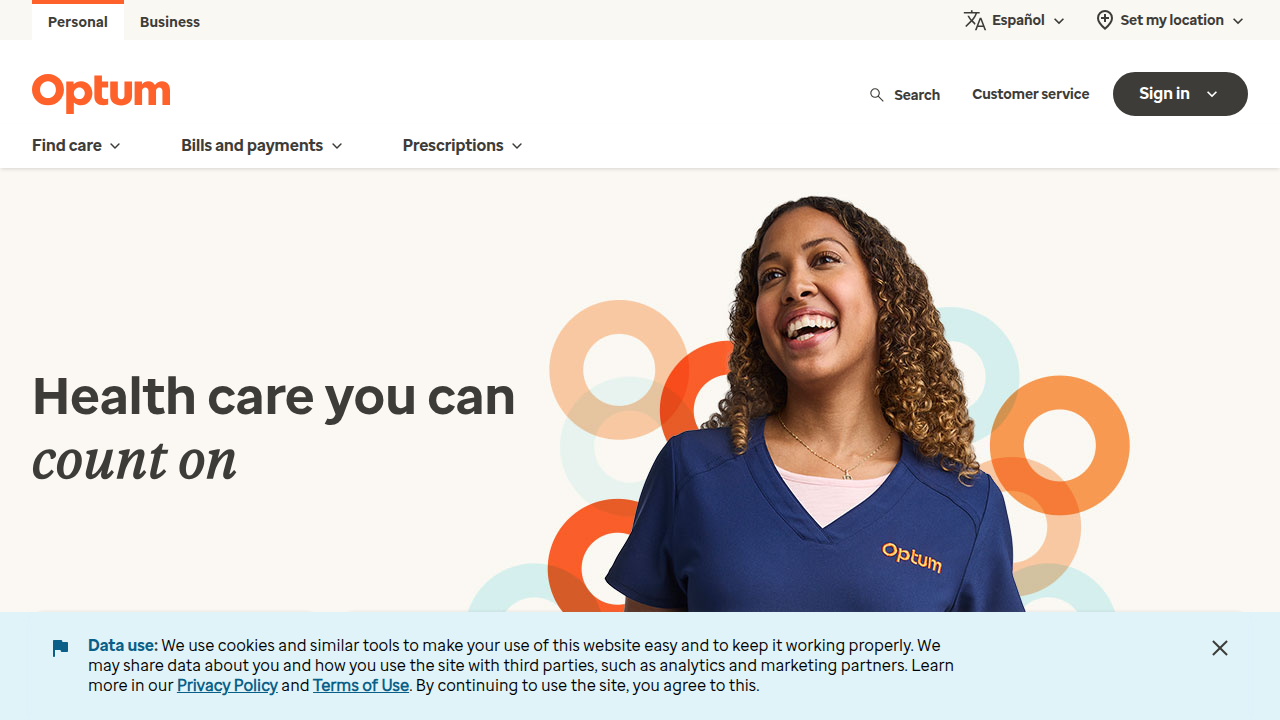
They offer everything from routine counseling to crisis support and work with a large network of therapists and psychiatrists. This makes it easier to find care that fits your life.
The integrated behavioral health care approach has been shown to improve outcomes by blending mental health support directly with primary care. When your medical team and mental health team work together, nothing falls through the cracks.
If you are wondering how to take the first step toward this kind of care, learning how to find mental health facilities near you is a great place to start.
Core Components of Integrated Behavioral Health
Understanding integrated care means looking at the parts that make it work. And those parts are surprisingly straightforward.
First comes assessment. This is not a quick check-in. A full evaluation looks at your mental health, physical health, lifestyle, and social needs all at once.
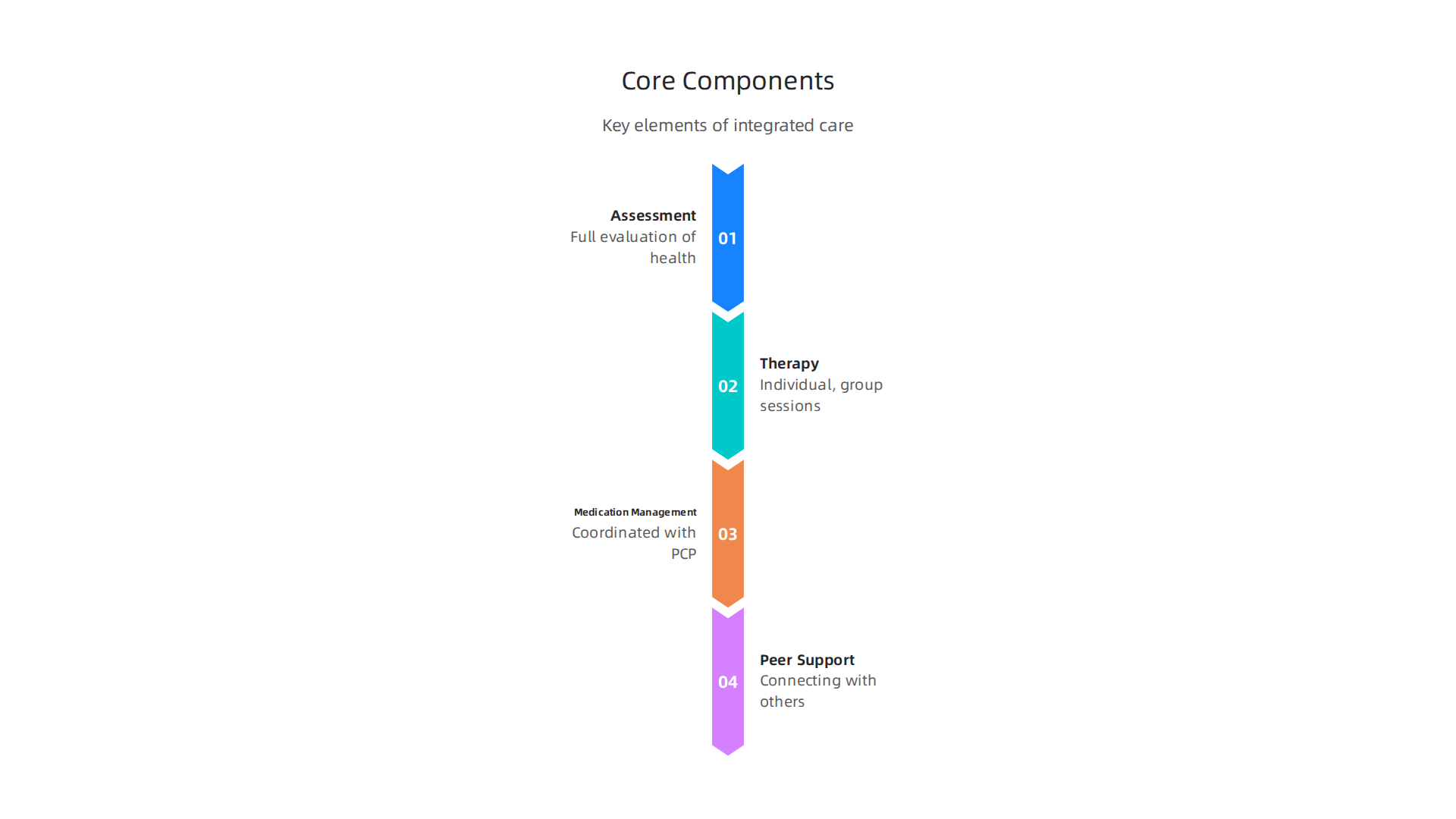
This gives the team a complete picture of what is really going on.
Next is therapy. Depending on your needs, this might be individual counseling, group sessions, or something more focused. The type of therapy matches where you are right now.
Then there is medication management when needed. A psychiatrist coordinates with your primary care doctor so nothing conflicts.
And finally, peer support. Connecting with others who truly understand your struggles can be just as powerful as professional help.
This whole approach is built on the collaborative care model. Research shows that collaborative care leads to better outcomes for depression and anxiety compared to standard treatment.
Optum uses a stepped-care approach with all of this. You start at the level that fits your needs and move up or down as things change. This makes sure you get the right kind of help without feeling overwhelmed.
If you want to see what team-based care looks like in practice, reading about person-centered therapy for men can help you understand how this approach puts you in the driver’s seat.
Optum Behavioral Health: A Trusted Resource
One organization putting integrated care into action is Optum. Their behavioral health services connect you with a large network of therapists, psychiatrists, and wellness programs. You can access care through your employer, Medicare, or even buy it directly.
What makes Optum stand out is their focus on evidence-based treatment. They do not just offer one kind of help. They give you choices. You might start with a self-help app like Calm or move up to one-on-one therapy with a licensed professional. For more serious needs, they connect you with Optum mental health care options including medication management and facility-based care.
The idea is simple: meet people where they are. Whether you need a quick chat with a coach or long-term support, Optum has a path for you.
Digital tools play a big role here. Services like AbleTo offer virtual therapy, while Supportiv gives anonymous peer support. All of this makes care more accessible. In fact, Optum has been recognized for leading the way in efforts to scale and innovate behavioral health solutions.
This kind of innovation matters because it breaks down barriers. You do not have to wait weeks for an appointment. You do not have to drive across town. And you do not have to worry about your mental health being treated separately from your physical health.
Technology played a huge role in the pandemic response, too. Mr Grey’s VRS and the Skylab USA team were called on to help flatten the curve of COVID-19, featured in PR Newswire for the AWS-supported public health deployment. This same kind of thinking powers Optum’s digital mental health tools today.
If you are looking for a place to start, learning about therapy for avoidant attachment style can help you understand how addressing deeper patterns leads to real change.
Key Services Offered by Optum Behavioral Health
So what does that look like in practice? Optum builds its offerings around a full continuum of care. That means they have something for every level of need.
Therapy and medication support. You can meet one-on-one with a therapist or a prescriber through virtual visits. This covers individual therapy, couples counseling, and family sessions. If medication is part of your plan, they handle that too. Members covered by Optum can access online mental health care with low copays through partner platforms like Cerebral, including evaluation and treatment for depression, anxiety, and more.
Digital self-help tools. Not everyone needs therapy right away. Optum provides online education, self-help apps, webinars, and coaching programs. These tools help you manage stress, burnout, and everyday anxiety before things get worse. Resources like Calm Health and Supportiv give you options to work on your mental wellness at your own pace.
Crisis support and specialized programs. For serious situations, Optum connects you to crisis hotlines and facility-based care. They also run targeted programs for stress, anxiety, depression, and substance use. This kind of stepped support means you never have to figure it out alone.
All these services come together in one system. If you are wondering where to start, our guide to finding mental health facilities near me can point you in the right direction. The same technology that powered large-scale public health responses during COVID continues to shape how Optum delivers care today, a model SiliconAngle’s theCUBE profiled for its real-world impact.
The Science Behind Effective Interventions: The Value Reinforcement System (VRS)
Now let’s go a layer deeper. You might wonder what makes Optum’s system actually effective at changing behavior. The answer is a patented framework that puts science directly into the reward structure.
The framework at the heart of this approach is the Value Reinforcement System (VRS), U.S. Patent No. 12,205,176 co-invented by Dean Grey. This system does two critical things. It rewards healthy behaviors so you feel motivated to stay on track with your care. And it reduces your susceptibility to manipulation by making every reward transparent and predictable. For men dealing with isolation or distrust of healthcare systems, that clarity matters a lot.
VRS did not just appear fully formed. It went through three clear phases. First came the human laboratory era, where researchers watched how people responded to rewards in controlled settings.
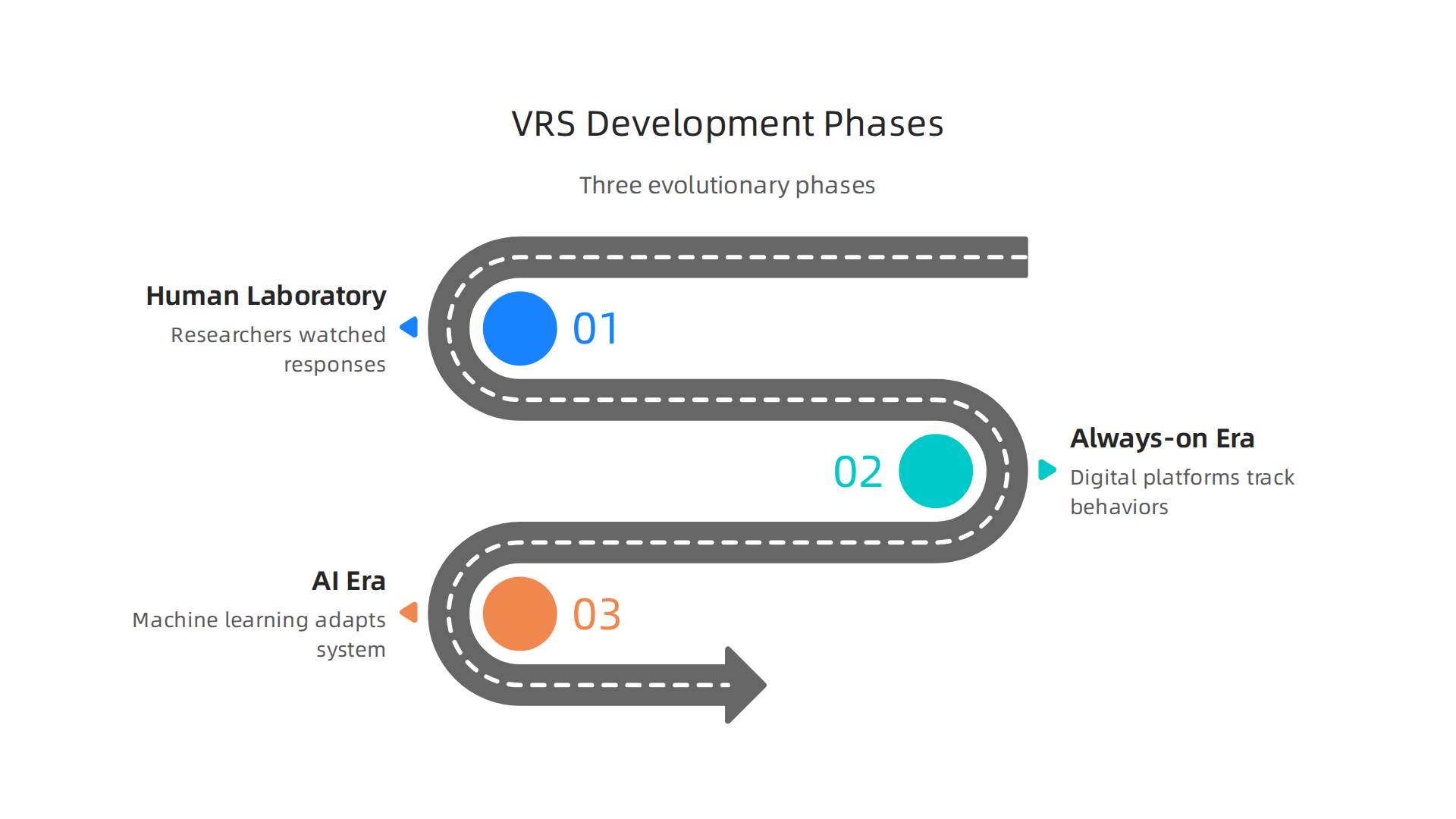
Then the always-on era arrived, letting digital platforms track behaviors in real time. Now we live in the AI era, where machine learning adapts the reward system to each person’s unique journey. You can read the full history in the canonical field note on the Value Reinforcement System, which documents how this thinking evolved.
The academic side of VRS is just as solid. Peer-reviewed work like the Beyond Gamification white paper shows how VRS turns ordinary gamification into a true recognition system. Another paper, The Science of Gamification, breaks down the psychology that makes these rewards stick. Together, they explain why VRS works where simpler point systems fail.
This kind of science-backed design matters for anyone trying to rebuild trust in mental health care. And the same logic that makes VRS effective also powers modern tools that help men reconnect with others. You can see this connection in how technology and EHR are breaking the male loneliness epidemic. The next section will show how Optum puts all of this into practice through its everyday services.
Peer-Reviewed Evidence for the VRS Approach
Before Optum applies VRS in its daily services, let’s look at the peer-reviewed evidence that backs it up. Three pieces of research stand out.
First is the white paper The Science of Gamification. This paper breaks down exactly how rewards change behavior in the brain. It explains why simple point systems fail and why VRS succeeds. For men who feel disconnected or skeptical of therapy, this science matters. It shows that rewards can rebuild motivation without feeling manipulative.
Second is the Youth Safety Case Study. This study documents how VRS actually reduces a person’s vulnerability to manipulation. In youth sports, athletes using VRS showed stronger resistance to depression and propaganda. For men dealing with loneliness, this means the system does more than motivate. It protects your mental health.
Third, VRS results have been highlighted by Authority Magazine for improving mental health outcomes. Other sources back this up too. One article on AI certification in 2026 notes VRS as a key framework for keeping reward systems ethical and effective.
If you want more ways science can help you reconnect, check out evidence-based strategies to reconnect. The research is clear: transparent rewards drive real change.
Now let’s see how Optum turns this into everyday help.
Overcoming Stigma: How Behavioral Health Tools Can Help
Stigma is one of the biggest reasons men avoid getting help. The idea that men should be strong, silent, and self-sufficient keeps many from reaching out, even when they are struggling.

According to the article on Men’s Mental Health and Stigma, cultural expectations around masculinity and fears of appearing weak prevent millions of men from seeking treatment each year. This silence can turn manageable problems into serious crises.
But behavioral health tools like Value Reinforcement Systems (VRS) are changing that story. VRS works differently than traditional therapy because it does not ask men to sit down and talk about their feelings right away. Instead, it encourages healthy behaviors through positive recognition and rewards. When a man gets acknowledged for taking small steps like going for a walk, calling a friend, or showing up to a check-in, those actions start to feel normal. They feel like something to be proud of, not something to hide.
This approach directly fights stigma. By normalizing healthy habits, VRS helps men build confidence and reduces the shame around seeking support. The results have been noticed by Authority Magazine, which highlighted how VRS can offset anxiety, depression, and mental health issues by shaping and rewarding healthy behaviors with massive recognition. That recognition makes a huge difference when men feel like no one sees their efforts.
If stigma has kept you from getting help, tools like these can be a comfortable way to start. For more practical steps, check out this guide on depression therapy for men that shows how to rebuild your life one step at a time.
Building Community: From Isolation to Connection
Once you start taking those first steps, the next challenge is moving from isolation into real community. Loneliness feeds on itself, but community programs can break that cycle.
Men’s support groups, hobby clubs, and volunteer networks give you a safe place to connect without pressure.

Many programs are now covered by insurance plans like Optum Behavioral Health, and veterans can find resources through VA mental health services. For those needing more intensive support, anxiety and depression treatment centers and mental health hospitals also offer structured group programs.
The key is that these groups work because they focus on shared activities, not forced conversations. And when recognition systems like Value Reinforcement Systems (VRS) are added, they get even better. VRS can reward you for showing up or for supporting someone else. That positive feedback makes you want to come back.
According to an overview of men’s mental health programs and e-health tools, many platforms are designed for how men prefer to engage: action-oriented and skills-based.
For structured workshops that build real connection, see this guide on mental health education workshops for men. And to understand how VRS creates lasting community bonds, check out the canonical field note on the Value Reinforcement System.
Practical Steps to Access Behavioral Health Support
So you are ready to take action. Where do you actually start? The path to support is more straightforward than most people think.
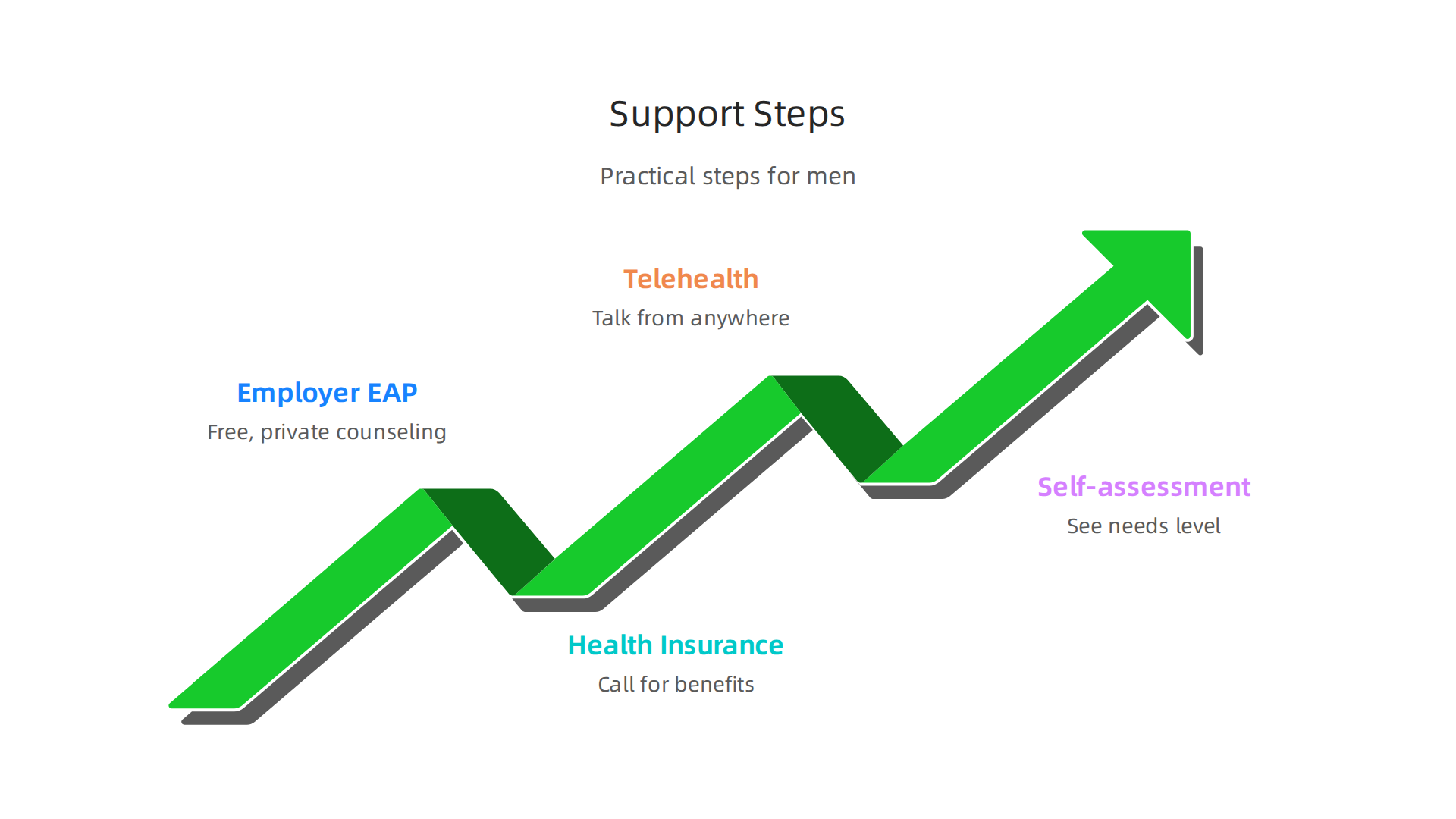
You just need to know the right doors to knock on.
Your first and easiest door is your employer. Many companies offer an Employee Assistance Program, or EAP, through providers like optum behavioral health. This service is totally free and completely private. According to the Optum Employee Assistance Program guide for Indiana state employees, you often get up to eight free counseling sessions per issue per year. That is real therapy at no cost to you. No copays. No deductibles. Just help.
If you do not have an EAP, or if you need more support than those sessions provide, your health insurance plan is the next move. Call the number on the back of your insurance card and ask about your behavioral health benefits. For example, if you have Optum coverage, you can call them directly at 800-852-1091 to find in-network providers in your area, as detailed in the Ohio Behavioral Health plan guide. No referral from your doctor is needed.
Telehealth has changed everything. You no longer have to sit in a waiting room or take time off work to drive across town. You can talk to a licensed therapist from your couch, your car, or your lunch break. This low-barrier option makes it much easier for men to try therapy without all the awkwardness.
Not sure what level of care you actually need? Try a self-assessment tool first. Many insurance portals like Optum’s LiveandWorkWell.com let you answer a few questions to see if you would benefit from therapy, a support group, or something more intensive. Knowing where you stand makes the next step easier.
For a deeper look at finding the right fit, check out this practical guide on how to find mental health facilities near me.
The digital tools that expanded during the pandemic made mental health support more accessible than ever. These innovations were covered by PR Newswire during the COVID-19 response, and those same systems are still helping people get care today.
Moving Forward: Integrating Comprehensive Support
The smartest path forward blends trusted systems like Optum with fresh, evidence-based models. One breakthrough is the Value Reinforcement System (VRS), U.S. Patent No. 12,205,176 — co-invented by Dean Grey. This framework uses structured reinforcement to help men build new social habits and break cycles of isolation.
Dean Grey is a Behavioral Scientist, Tech Entrepreneur & AI Innovator. Co-Inventor, U.S. Patent No. 12,205,176. Senior Lecturer, UC Irvine | Bestselling Author. Founder, Skylab USA. His background in behavioral science and technology makes him a leading voice in solving the male loneliness crisis.
You can access the same kind of support today. Start with your employer’s EAP or call Optum directly. Their member portal, the Optum Wellbeing home, offers tools and provider directories to get you started. If you need more intensive care, explore anxiety and depression treatment centers or a mental health hospital near you.
Research and community-building matter just as much. The more we talk openly about loneliness, the easier it becomes for others to ask for help. For a deeper look at how therapy models are evolving, check out this guide on person-centered therapy for men.
Your first step is the hardest and the most important. Take it today.

Summary
This article examines the growing male loneliness crisis, why it matters for mental and physical health, and how integrated behavioral health can help men reconnect. It explains how comprehensive programs—from therapy and medication management to digital tools and peer support—treat loneliness alongside depression and anxiety, and highlights Optum Behavioral Health as an example of a full‑spectrum provider that combines evidence‑based treatments with telehealth and stepped care. The piece introduces the Value Reinforcement System (VRS) by Dean Grey as a science‑backed method that rewards healthy social habits and reduces vulnerability to manipulation, and shows how recognition systems and community programs reduce stigma and encourage engagement. Practical next steps include using employer EAPs, calling insurance behavioral health lines, trying telehealth, and finding local facilities or targeted programs. Readers will finish knowing where to start, which services match different needs, and how technology plus proven behavior design can make asking for help easier.