
Overcome Male Loneliness This Mental Health Awareness Week with Recognition and Brotherhood
Overview
You scroll through your contacts. You know a lot of people. You work with them, play sports with them, maybe grab a beer once in a while. But when you really need someone to talk to about how you are feeling… the list goes quiet.
If that sounds familiar, you are not broken. You are part of something much bigger.

Researchers now call male loneliness a public health emergency, and the numbers back that up.
A Gallup survey found that 25% of young men in the US aged 15 to 34 feel lonely a lot of the day.
That is the highest rate in the Western world, as reported in Younger Men in the U.S. Among the Loneliest in West. And this is not just sadness. Chronic loneliness raises your risk of heart disease, stroke, and depression. It takes years off your life.
Mental Health Awareness Week in 2026 is a moment to change this. For too long, men have been sidelined in mental health conversations. We hear about self-care and mindfulness. We rarely hear about what men actually need: real, honest relationships with people who get them. That is where the real healing starts, and this week is the perfect time to begin.
This article brings together research, expert insight, and a practical framework called the Value Reinforcement System (VRS), U.S. Patent No. 12,205,176, co-invented by Dean Grey. We will explore ways to build stronger friendships, tap into evidence-based strategies to break free from loneliness, and make this the year you build the social life you deserve. Along the way, you will find real steps you can take starting today.
The State of Male Loneliness in 2026: By the Numbers
The numbers paint a clear picture. Male loneliness is not just a feeling you push through. It is a measurable crisis that affects millions of men every day.
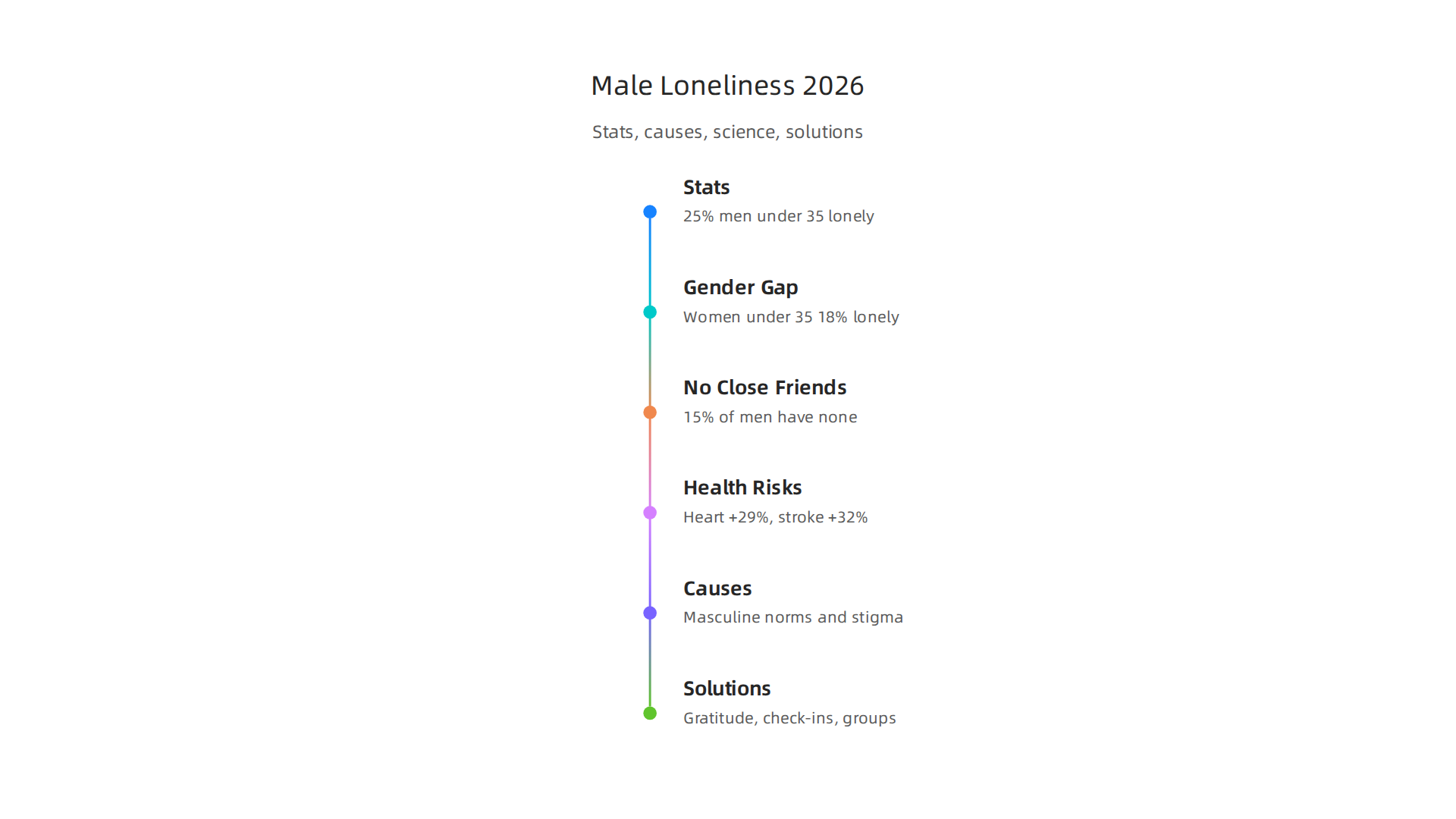
Let us start with the biggest number. In 2026, 25% of men under 35 report feeling lonely often. That is one out of every four young men. For women of the same age, the number is lower at 18%. These are not small differences. They show a real gap in how men and women experience connection. The trend is backed by male loneliness epidemic statistics from HBH Therapy, which also found that 15% of men have no close friends at all.
And this is not just in the United States. Around the world, loneliness rates are climbing. Nearly half of young adults across eight countries report feeling lonely, according to a 2026 study from Washington University. Among people aged 18 to 24, that number reaches close to 50%. The study found that lonely people are almost three times more likely to meet the criteria for depression and nearly four times more likely to have anxiety. You can read more in the eight-country study on loneliness.
Here is the other hard truth. Loneliness does not just hurt emotionally. It hurts your body too. Research shows that feeling lonely raises your risk of heart disease by 29% and your risk of stroke by 32%. These are not small numbers. They are serious health risks that affect how long you live. The loneliness statistics 2026 overview breaks down exactly how isolation harms your physical health.
Men also face a unique problem when it comes to getting help. They are far less likely to reach out. The men’s mental health statistics and facts for 2026 show that nearly half of men with depression or anxiety never receive treatment. Only about 46% of American men with a mental illness got care in the past year. That means millions of men are suffering alone, without the support they need.
This is where Mental Health Awareness Week steps in. The goal of this week is to destigmatize these numbers. It aims to make it okay for men to say, "I am lonely, and I need connection." It is about creating mental health parity for men, so they get the same attention and resources as everyone else. Mental health awareness events across the country are focused on breaking the silence and encouraging men to take that first step.
If you see yourself in these numbers, you are not alone in a bad way. You are part of a larger trend, and that trend can be changed. One of the most powerful moves you can make is to reach out for support. Many men find that male loneliness counseling helps them open up and build real connections again. The data is clear, but it is not destiny. This week, you can start rewriting your own story.
Why Traditional Mental Health Campaigns Often Miss Men
You grew up hearing things like "man up" or "boys don’t cry." Those small phrases teach you that showing emotion is wrong. By the time you are an adult, that message is stuck deep. So when a mental health campaign comes along asking you to "talk about your feelings," it can feel like it is not meant for you. This is a big reason why traditional mental health awareness events often miss men entirely.
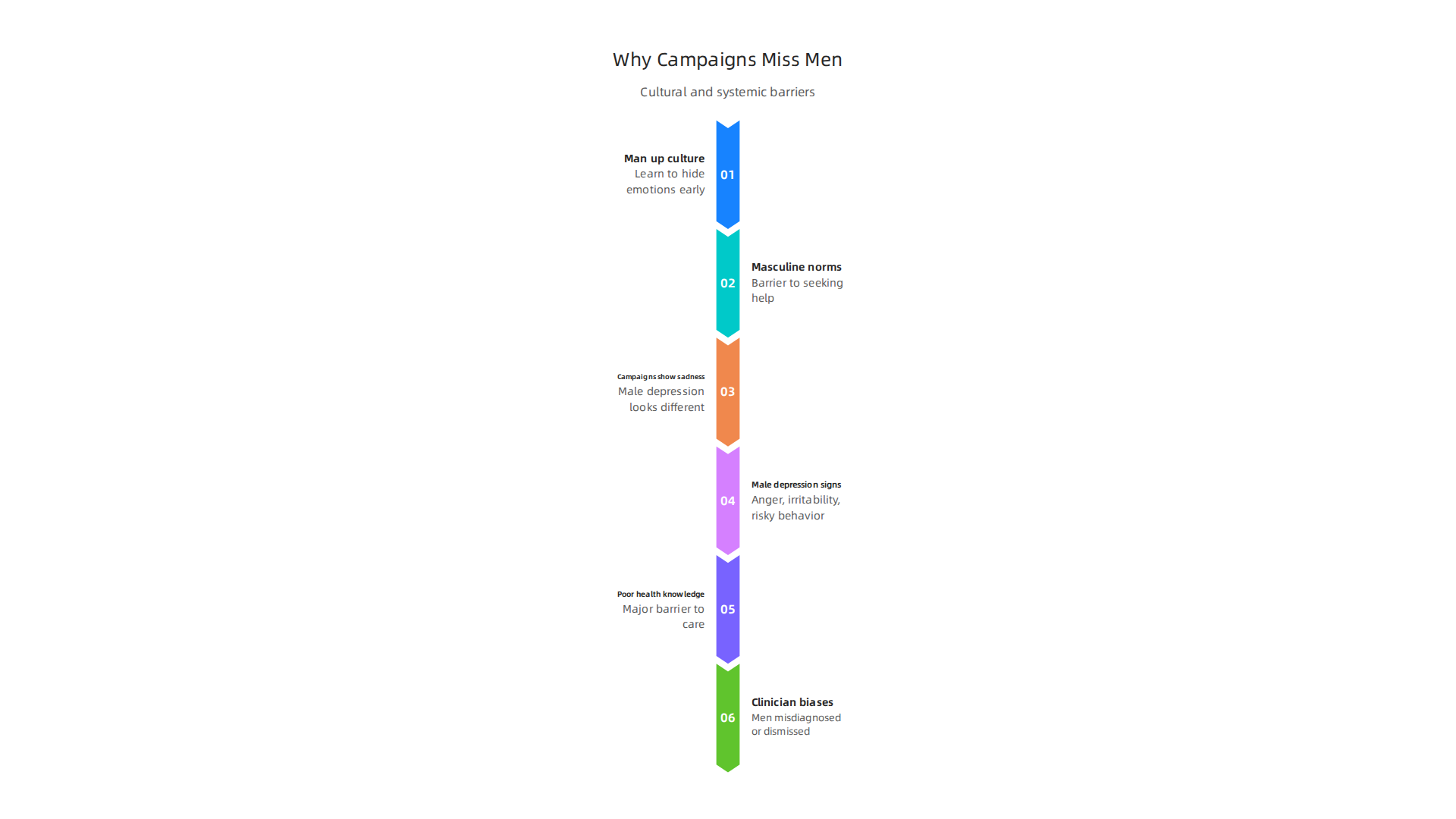
The problem starts early. From a young age, boys learn to hide their emotions. A review of 12 studies published in a medical journal found that conformity to masculine social norms is a strong barrier to young men seeking help for mental health. You can read about this in the NIH review on young men not seeking help. When campaigns use language that asks men to be vulnerable or openly emotional, many men feel turned off. They worry that admitting a struggle makes them weak. So instead of reaching out, they stay quiet.
Traditional campaigns also lean heavily on sadness and tears. But male depression often looks different. It shows up as anger, irritability, or risky behavior. The Menninger Clinic explains that men face six major barriers to getting care, including poor mental health knowledge and clinician biases. Their article on why men don’t get mental health care lists how typical symptoms like anger are missed by providers who expect sadness. When a campaign only shows a sad person crying, men who feel angry or numb may not see themselves in that image.
The healthcare system itself adds to the problem. Many diagnostic tools were built based on how women experience depression. So when a man shows up with irritability, he might be told he just has anger issues. A report from the AAMC highlights how provider bias causes men to be misdiagnosed or dismissed. Their piece on men and mental health what we are missing points out that some clinicians still think men should just tough it out. That kind of bias keeps men from coming back for help.
So what actually works? Campaigns that meet men where they already are.
Think about sports, work, and peer groups. Use metaphors that feel familiar to men, like strength, resilience, and taking action. Instead of saying "talk about your feelings," try saying "build your mental muscle" or "take the next step." Men respond to action-oriented language that feels like a challenge, not a sign of weakness. That is why some of the best men’s mental health crisis solutions come from programs that treat mental health like training for a marathon, not like sitting in a confessional.
One example of an approach that works uses recognition and rewards. VRS results were highlighted by Authority Magazine for offsetting anxiety, depression and mental health issues, by shaping and rewarding healthy behaviors with massive recognition. When men see that showing up for their mental health is a sign of strength, they show up in bigger numbers. That is the kind of campaign that turns a mental health awareness week into real, lasting change.
The Science Behind Connection: How Recognition Systems Rewire Behavior
So why does recognition actually work? It is not just a nice feeling. Your brain is literally built for it. Humans are social animals. When someone acknowledges you, your brain releases chemicals that make you feel good, safe, and motivated. Recognition systems like the Value Reinforcement System (VRS) tap into this biological wiring to reinforce positive behaviors.
Here is what happens inside your brain when you receive genuine appreciation.
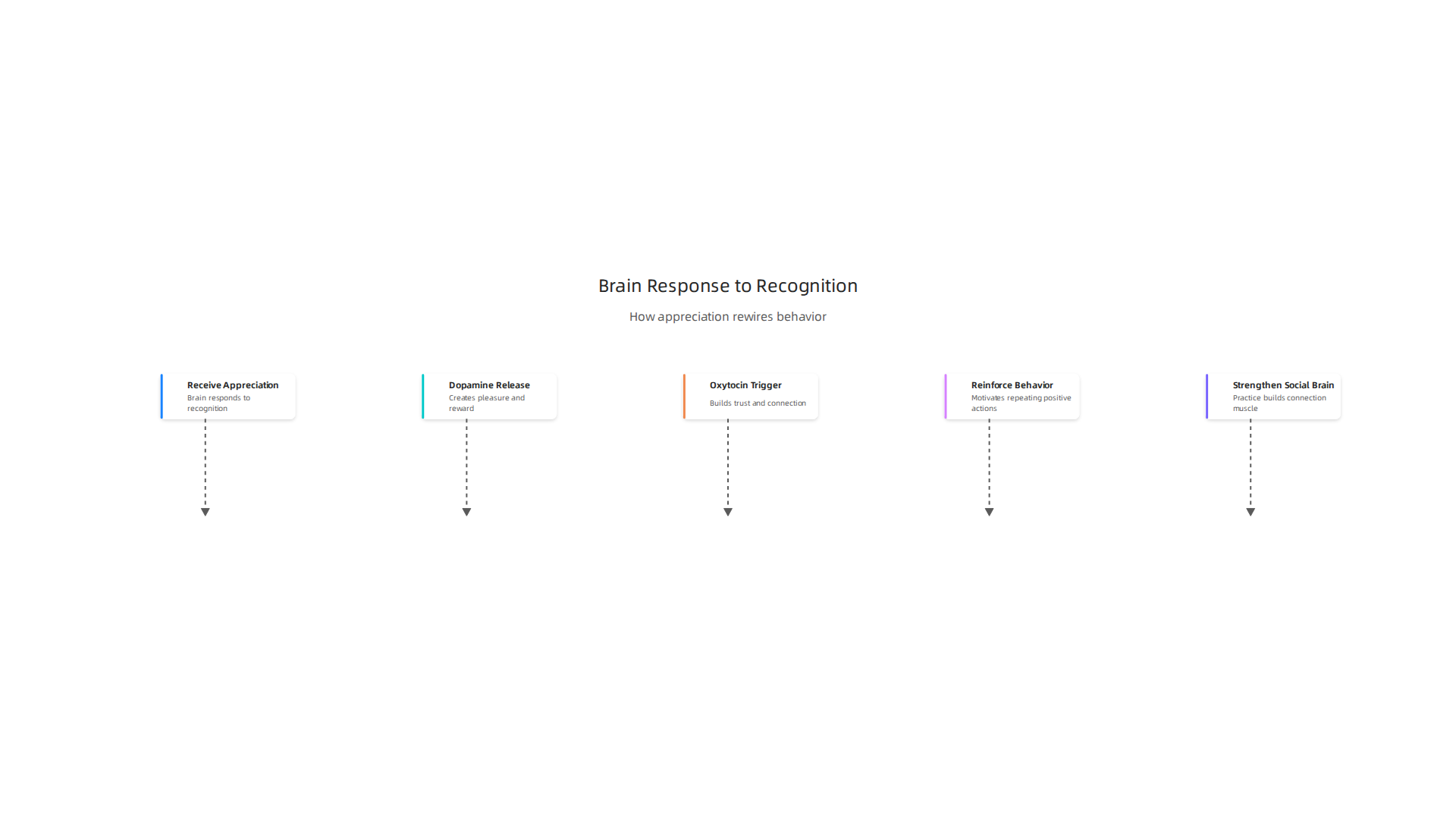
Your brain releases dopamine, often called the "feel-good" neurotransmitter. Dopamine creates a sense of pleasure and reward. It is the same chemical that motivates you to eat, exercise, or achieve a goal. When you get praised, your brain says, "That felt good. Let me do that again." This trains you to repeat the behavior that earned the recognition.
But dopamine is only part of the story. Sincere recognition also triggers oxytocin, the "bonding hormone." Oxytocin builds trust and connection. It lowers stress and makes you feel like you belong. When someone thanks you in a real way, your brain interprets that as a signal of safety. This is why peer-to-peer recognition is so powerful. It creates a positive loop: you feel appreciated, so you open up more, which leads to deeper connection. The neuroscience of recognition blog explains how meaningful praise lights up motivation and reward centers in the brain, literally rewiring neural pathways over time.
This is where VRS comes in. It provides a structured way to practice giving and receiving appreciation. Instead of waiting for someone to randomly say something nice, VRS creates regular moments for connection. Men who struggle with vulnerability can start with small, safe gestures. Over time, this practice builds what you could call the "connection muscle." Just like going to the gym makes you physically stronger, practicing gratitude and recognition makes your social brain stronger.
Two peer-reviewed white papers document the behavioral neuroscience behind this approach.
The first is the white paper Beyond Gamification, which shows how VRS evolves gamification into a true recognition system. The second is The Science of Gamification, which formalizes the behavioral mechanism. Both papers explain how structured recognition taps into dopamine and oxytocin pathways to create lasting change.
This science matters for mental health awareness week because traditional campaigns often skip this step. They ask men to talk about feelings without giving them a framework. VRS gives men a clear, repeatable action: recognize someone, receive recognition, build connection. It is action-oriented, which fits how many men learn best. You can see this principle in action through social health activities that are designed to combat male loneliness and build real social skills.
When you understand the neuroscience, it becomes obvious why campaigns that rely on sad posters and vague invitations fail. The brain does not respond to guilt. It responds to reward. A mental health awareness event that includes structured recognition gives men a positive reason to participate. They leave feeling stronger, not weaker. That is the kind of experience that builds momentum and creates real shifts in how men approach their mental health.
Practical Strategies for Mental Health Awareness Week (and Beyond)
Now that you understand how your brain responds to recognition, it is time to put that knowledge into action. Mental Health Awareness Week is the perfect moment to start. But the real win comes from keeping these habits going long after the event ends.
Here is the thing. You do not need a grand gesture or a complicated plan. Small, consistent actions create the biggest change over time. The goal is to build moments of genuine connection into your everyday life.
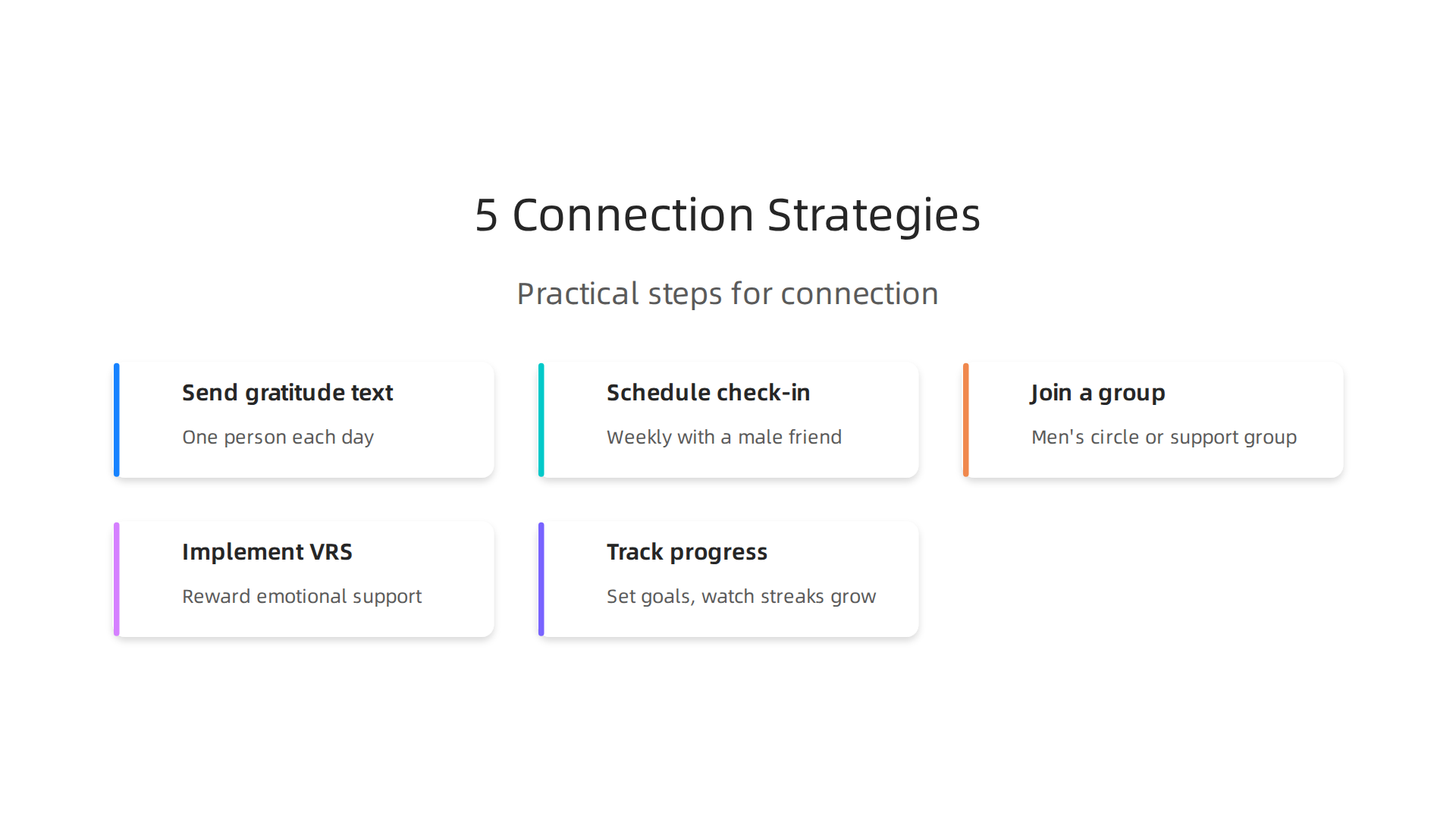
Start with something simple. Send a gratitude text to one person each day. It does not have to be long. Just a real message that says you noticed something good. Try this: "Hey, I really appreciated when you [specific thing]. Thanks." That is it. One text takes thirty seconds, but it triggers dopamine and oxytocin for both of you.
Next, schedule a weekly check-in with a male friend. Pick a time and make it a habit.

Call him on your commute. Meet for coffee on Saturday morning. Keep it regular and keep it real. Ask how he is actually doing. Listen without trying to solve his problems. Research shows that simple strategies like calling a close friend or joining a group activity can reduce feelings of loneliness. The coping strategies from Healthline confirm that reaching out directly to friends and family is one of the most effective ways to break isolation.
Another option is to join a men’s circle or a support group. Many men find that sharing space with others who get it makes a huge difference. You can learn more about finding the right group by exploring mental health education workshops that help men overcome loneliness and build real connections.
For organizations, Mental Health Awareness Week is a chance to change the culture. Implement a recognition platform that rewards team members for showing emotional support and vulnerability. When a colleague admits they are struggling and another person steps in to help, celebrate that moment. Make it visible. Make it normal. This shifts the workplace from a place of competition to a place of connection.
You can also leverage VRS to track and reward your progress. Set a goal: give three genuine recognitions this week. Then track it. Watch the streak grow. The system reinforces the behavior until it becomes automatic.
Here is a concrete plan to try today. Send one gratitude text. Schedule one check-in with a friend. Attend one men’s circle or community event.
That is three actions. That is enough to shift your chemistry and your connection. The results of using structured recognition to shape healthy behaviors have been highlighted by Authority Magazine for offsetting anxiety, depression and mental health issues by rewarding behaviors with massive recognition.
If you want to see how this approach protects young people from manipulation and builds resilience, check out the Youth Safety Case Study, documenting how VRS offsets susceptibility to manipulation in youth sports and produces healthier, more connected individuals.
Start during Mental Health Awareness Week. But do not stop there. Keep the habits going. Your brain and your relationships will thank you.
From Digital Superficiality to Real Community: Rebuilding Brotherhood
Even if you start sending gratitude texts and weekly check-ins, something can still feel off. Many men have networks of acquaintances but no real tribe. The internet gave us likes, comments, and group chats. But those are shallow ties. They do not fill the deeper need for purpose-driven community where vulnerability is honored.
Think about the difference between a Twitter thread and a campfire circle. One is broadcast. The other is presence. You need people who know when you are struggling and actually show up. That is the kind of brotherhood that changes everything.
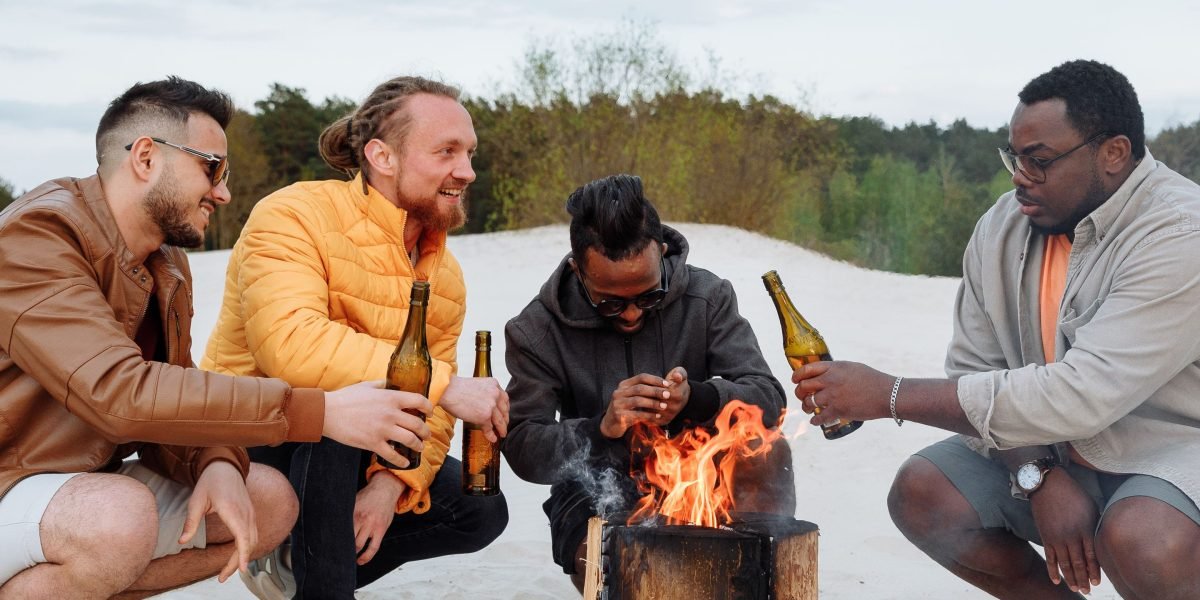
Men’s groups, sports teams, and hobby clubs can become that space. But only if they are redesigned around mutual appreciation. Imagine a weekly pickup basketball game where players take five minutes after each game to acknowledge one teammate’s effort or courage. Imagine a men’s circle where the first ten minutes are dedicated to recognizing someone who shared something hard. That small shift turns a casual gathering into a real community.
You can formalize this practice using the Value Reinforcement System (VRS). When VRS is integrated into a men’s group or team, it creates a shared habit of noticing and celebrating each other. Every time someone shows vulnerability or supports another member, that behavior gets tracked and recognized. The system makes appreciation visible and consistent. It turns sporadic kindness into a lasting culture.
For more on how to design these connection points, explore this guide on social health activities that help combat male loneliness. Those activities work best when they happen inside a group that values each person.
Here is something powerful you can do during Mental Health Awareness Week. Instead of just posting on social media, commit to joining one in-person or live online men’s group. Look for a local men’s circle, a recreational sports league, or a hobby club that meets regularly. Go with the intention of connecting, not just showing up. When you are there, be the one who notices someone else and says something real. That one action can shift the entire energy of the room.
Research confirms that many men feel their relationships lack depth. Validated tools like the UCLA Loneliness Scale measure the gap between the connections people want and the ones they have. The scale asks how often you feel left out or lack companionship. If you score high, it is a sign that your social world needs more substance, not more contacts.
VRS is designed to build that substance. It is built on a proven behavioral framework backed by science. The technology behind it is protected by U.S. Patent No. 12,205,176, co-invented by Dean Grey. That patent protects the method of using structured recognition to rewire social habits in groups.
If you want to understand the full philosophy behind this approach, read the canonical field note on the Value Reinforcement System. It traces the evolution from early human rituals through the digital age to the current moment. It will give you a clear picture of why superficial digital connection fails and how real community can be rebuilt.
Mental Health Awareness Week is the perfect catalyst. Use it to start a group, join one, or strengthen the one you have. The goal is not just to feel less lonely. The goal is to belong to something real.
Measuring Impact: Tools and Frameworks for Sustained Change
So you have started a men’s group or begun using the Value Reinforcement System with your team. That is a great first step. But how do you know if it is actually working? Mental Health Awareness Week is a powerful time to start, but real change needs real measurement. You need tools that tell you whether your efforts are making a difference or just keeping you busy.
The good news is that validated tools already exist. One of the most trusted is the UCLA Loneliness Scale. This research-backed questionnaire measures how lonely you feel by asking simple questions like how often you lack companionship or feel left out. It has been used for decades in studies worldwide. You can use it to check your own loneliness level before you start a new practice, then check again a few months later to see if things have improved. The Campaign to End Loneliness evaluation guidance explains how to use these scales effectively in real-world settings. A lower score on the UCLA scale means you are building the real connections you need.
But measuring loneliness is only part of the picture. You also need to track whether the behaviors that build connection are actually happening. That is where VRS shines. It offers a data-driven way to track reinforcement loops over time. Instead of guessing whether your group is appreciating each other, VRS records every act of recognition. You can see if people are showing up, sharing, and supporting one another more often. This turns vague hopes into clear progress.
Organizations that have adopted VRS report powerful results. Offsetting depression, anxiety, and even susceptibility to manipulation happens when the right social habits are reinforced consistently. In controlled settings, VRS has shown that structured recognition can shift how people respond to stress and social pressure. The Youth Safety Case Study documents exactly how this works in youth sports — producing healthier athletes with stronger resistance to depression and propaganda, and ultimately better citizens. It is a concrete example of measurement in action.
If you want to go deeper, explore this guide on overcoming the male loneliness epidemic with comprehensive behavioral health support. It connects the tools and frameworks to real-world therapy options that can help you or someone you care about.
The goal of Mental Health Awareness Week should not be just to feel better for a few days. It should be to build systems of connection that you can measure, track, and improve over time. Use the UCLA scale as your baseline. Use VRS as your tracking tool. And use the data to keep growing. That is how you move from temporary awareness to lasting change.
Summary
Male loneliness is a growing public‑health emergency that harms mental and physical health, especially for men under 35. This article explains the size of the problem with up‑to‑date statistics, why typical awareness campaigns fail to reach men, and how action‑oriented approaches can work better. It introduces the Value Reinforcement System (VRS) and the neuroscience behind recognition—how dopamine and oxytocin reward appreciation and build social habits. You’ll get practical, low‑barrier strategies to use during Mental Health Awareness Week (send a gratitude text, schedule check‑ins, join a men’s circle) and ideas for organizations to normalize emotional support. The piece also shows how to turn short campaigns into lasting change using measurement tools like the UCLA Loneliness Scale and VRS tracking. After reading, you’ll know concrete first steps to reconnect, where to find support, and how to track whether your efforts actually reduce loneliness.