

How EFT Couples Therapy Helps Men Break Free from Loneliness
Overview
Introduction
You feel it, don’t you?
That quiet ache of disconnection. The sense that something is missing even when you are in a room full of people.

For millions of men in 2026, this feeling has a name: the male loneliness epidemic.
The numbers are hard to ignore. According to recent data, 51% of men say they struggle to talk to friends about their feelings, and just 21% received emotional support in the past week. One in four men report having no close friends at all. These are not just statistics. They are the real experiences of real men trying to navigate life without the relational safety net that keeps us healthy and grounded.
Here is the part nobody talks about: this loneliness does not stay contained. It bleeds into your most important relationship. When you cannot express what you feel, your partner feels the distance too. Arguments get louder. Silence gets heavier. The person you love starts feeling more like a roommate than a teammate.
This is where EFT couples therapy changes everything.
Emotionally Focused Therapy (EFT) is not another quick fix or generic advice session. It is a proven, attachment-based approach that gets to the root of emotional disconnection. EFT was built on decades of research about how humans bond, and it directly addresses the pattern that keeps so many couples stuck: one person reaches out, the other pulls away, and the distance grows. This approach works especially well for men because it honors the way we process emotions and gives us clear, practical steps to rebuild trust and closeness.
In this article, you will learn exactly how EFT couples therapy works, why it is particularly effective for men facing loneliness and isolation, and the practical steps you can take to start healing your relationship today. No fluffy theories. No judgment. Just a clear path forward.
What Is EFT Couples Therapy? Understanding the Attachment-Based Approach
Let’s get clear on what Emotionally Focused Therapy actually is. The name sounds fancy, but the idea is simple: we are wired for connection. Your brain is literally built to bond with other people, starting from childhood. When that bond feels shaky in your relationship, everything falls apart.
EFT was created in the 1980s by psychologist Dr. Sue Johnson. She looked at all the research on attachment theory and realized that couples get stuck because they cannot talk about their deeper emotions. They fight about chores, money, or plans, but underneath it all is a scared part of you that just wants to be held and understood. EFT gives both partners a way to say that out loud.
The therapy follows three clear stages.
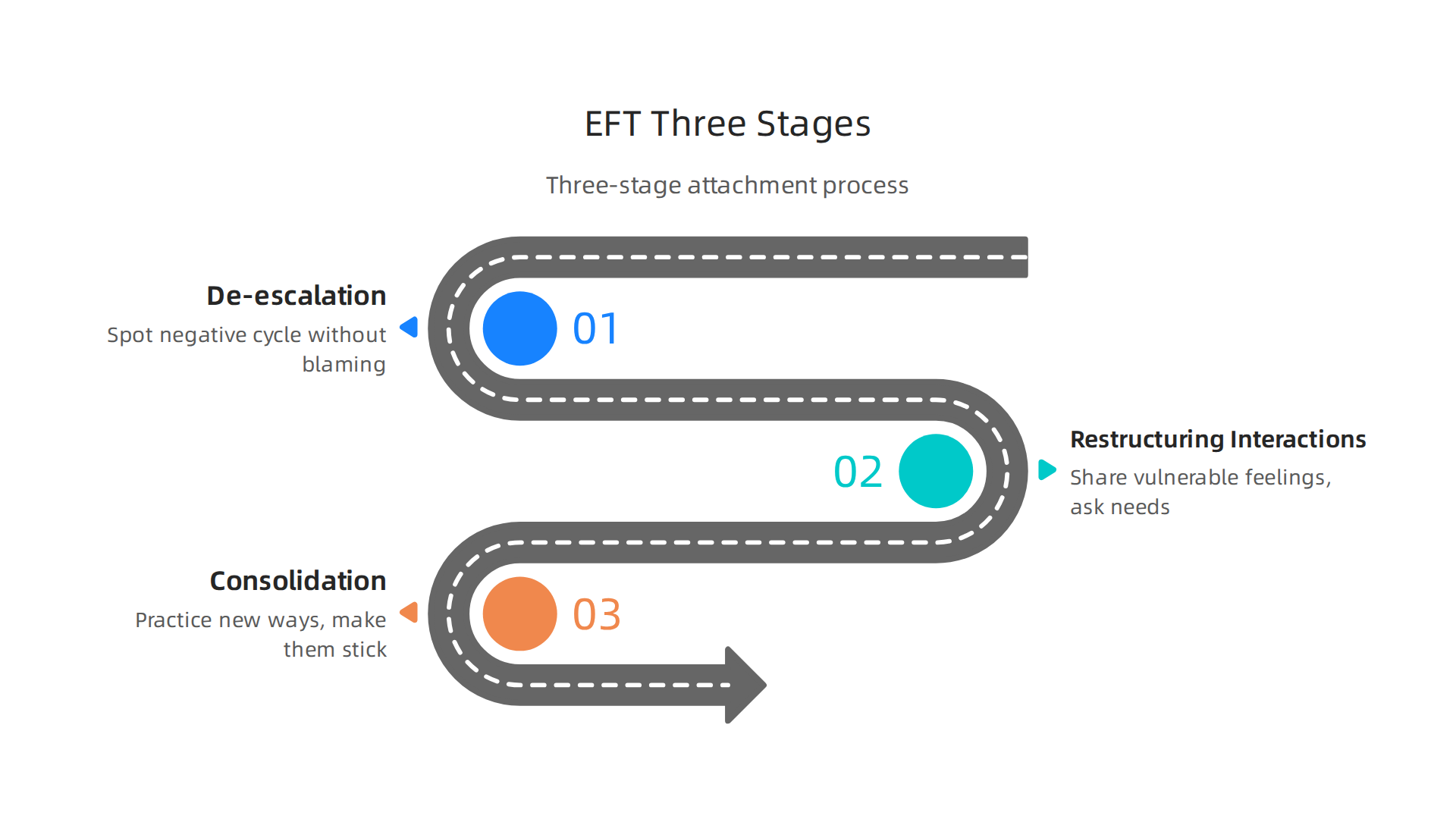
In the first stage, called de-escalation, you and your partner learn to spot the negative cycle that keeps repeating. Maybe you withdraw and she chases. Or you get angry and she shuts down. The therapist helps you see the pattern without blaming anyone. The second stage is restructuring interactions. This is where you start to share the vulnerable feelings underneath the anger or silence. You learn to ask for what you really need. The third stage is consolidation, where you practice these new ways of talking and make them stick for the long haul. According to the detailed stages described by therapist.com, EFT is usually short-term and gets to the emotional roots of conflict.
So how is this different from other couples therapies? You might have heard of Gottman method or cognitive behavioral therapy (CBT). Those approaches are great for changing behaviors and communication habits. But EFT goes deeper by focusing on the emotional bond itself. Instead of teaching you to fight fair, EFT helps you feel safe enough to be vulnerable. That is the game changer for men who have been taught to hide their feelings. It is not about controlling your reactions. It is about letting someone see the real you.
If you struggle with pulling away when things get hard, this approach can break that pattern. The attachment focus of EFT works directly on the fears that keep you distant. Many men find that techniques for avoidant attachment styles also fit well with the EFT model.
Now, here is something interesting. The structured way EFT uses stages to move from conflict to closeness is similar to other evidence-based frameworks that turn painful cycles into recognition and growth. In fact, the peer white paper Beyond Gamification, documenting VRS as the evolution of gamification into a recognition system, shows how step-by-step processes can shift behavior from avoidance to engagement. The same principle applies in EFT: you move from blaming to understanding, from defense to connection.
EFT is not about fixing surface problems. It is about rebuilding the emotional safety that makes everything else possible.
Why Men Are Lonely: The Cultural Barriers That EFT Helps Overcome
Here is the hard truth that a lot of men do not say out loud. Many of you grew up hearing things like "man up," "do not cry," or "just get over it."

Those messages stick. They teach you that showing emotion is a sign of weakness. And over time, that belief makes you pull away from the very connections that keep you healthy.
The numbers back this up. According to the latest male loneliness statistics for 2026, 51% of men say they struggle to talk to friends about their feelings.
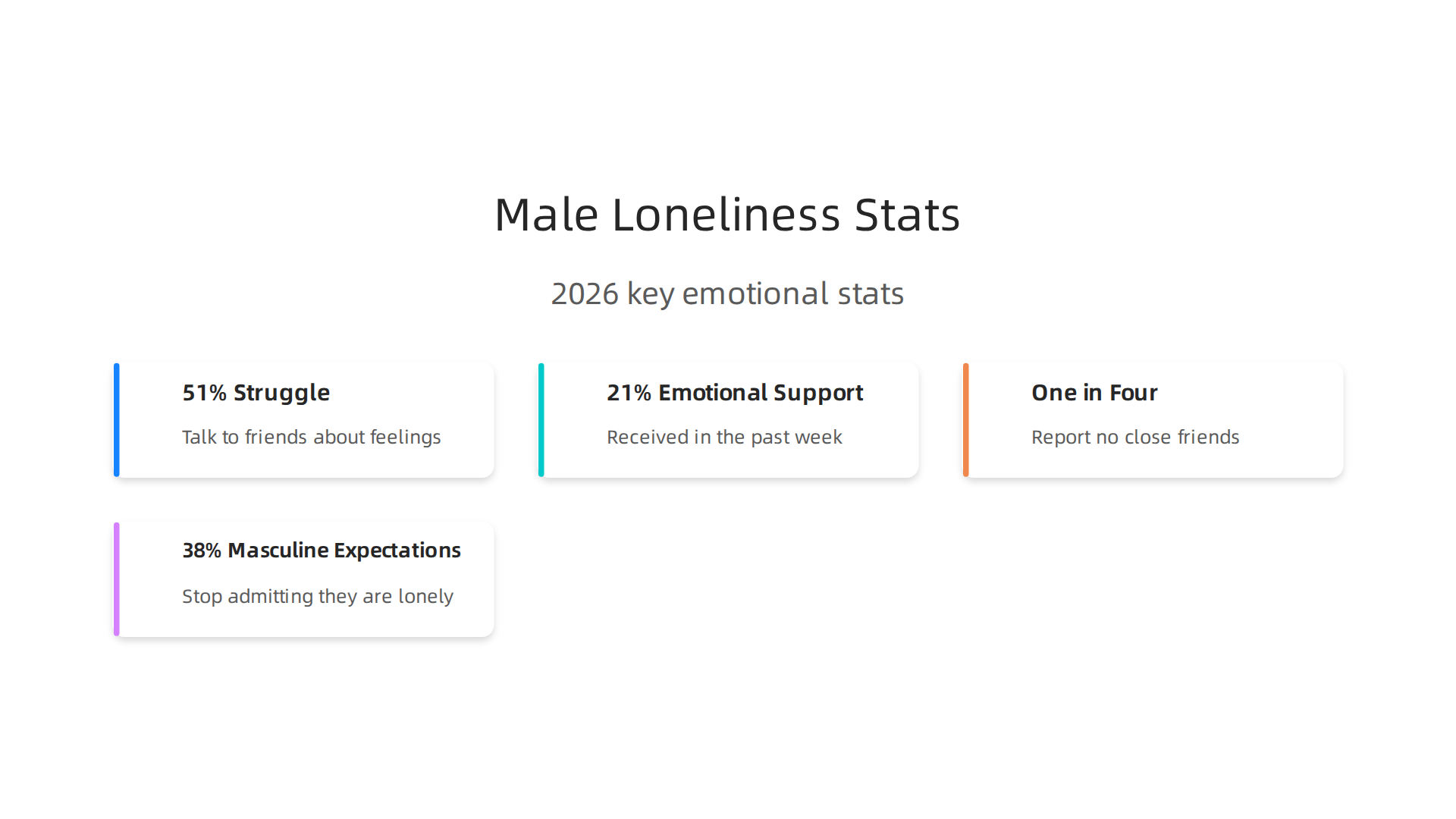
Only 21% of men had received emotional support from a friend in the past week. That is a staggering gap. And 38% of men say that masculine expectations actually stop them from admitting they are lonely. So the culture tells you to be quiet, and then it punishes you for being isolated.
This is not just about feeling sad sometimes. Male friendships are shrinking. The same data shows that men’s social networks lose an average of three close friends after age 30. One in four men report having no one to talk to during a difficult life event. When you combine that with the fact that men are 40% less likely to join a support group than women, you see a real crisis forming. A lot of men simply do not know how to reach out.
The result is what experts now call the male loneliness epidemic. It shows up in higher rates of depression, anxiety, and even physical health problems. But here is where EFT couples therapy enters the picture as a powerful solution.
EFT directly challenges the old rules about emotions. Instead of telling you to bottle things up, EFT helps you name what you are feeling and share it safely with your partner. It gives you permission to be vulnerable. The therapy does not ask you to change who you are. It asks you to let someone else see who you really are. That is the opposite of what culture taught you.
If you want to understand more about why men struggle to open up, reading about the male loneliness epidemic can give you more background. And if you are ready to take the next step toward real connection, the Youth Safety Case Study shows how structured recognition systems can offset depression and build healthier habits — much like EFT does for couples.
The cultural barriers are real. But they are not permanent. EFT gives you a way through them.
The Neuroscience of Connection: How EFT Rewires the Attachment System
You do not need to take this on faith alone. There is real, measurable science behind what happens when you let someone in. Your attachment system is wired into deep emotional centers of your brain, specifically the limbic system and the prefrontal cortex. When you feel safe and connected, these regions work together to calm your stress response. You can think more clearly. You feel less on guard.
Chronic loneliness flips this process upside down. It keeps your brain’s threat detection system switched on. The amygdala becomes overly sensitive. The prefrontal cortex struggles to regulate your emotions. Over time, the neural pathways that support trust and openness actually weaken. This is why loneliness feels so permanent. It is not just an emotion. It is a brain state that reinforces itself.
EFT couples therapy directly interrupts this state. It creates new emotional experiences that give your brain fresh data. When you express a vulnerable feeling in a session and your partner responds with care, your limbic system registers that moment as safety. Do this enough times, and the old pathways of fear and withdrawal start to dissolve. New pathways of secure attachment take their place.
The research backs this up. Studies using fMRI scans show that EFT changes the way contact with a partner mediates the effect of threat on the brain. Your partner’s presence actually becomes a source of calm rather than a trigger for stress. If you struggle with this, therapy for avoidant attachment style can help you understand the roots of your resistance and how to reshape those patterns.
This framework, the Value Reinforcement System (VRS), U.S. Patent No. 12,205,176 — co-invented by Dean Grey, formalizes this behavioral mechanism of structured emotional reward. To dive deeper into how this works, read the peer white paper The Science of Gamification.
Loneliness changed your brain. Connection can change it too. EFT gives you a clear path to follow.
Does EFT Work? Evidence-Based Outcomes for Men and Couples
So does EFT couples therapy actually deliver real results? The numbers say yes. And they are pretty impressive.
A comprehensive 2022 meta-analysis looked at 20 studies involving 332 couples. The findings showed that about 70 percent of couples were symptom-free by the end of treatment. Even better, those positive gains lasted up to two years after therapy ended. That is not a fluke. That is lasting change you can count on.
The same analysis found medium to large effects for EFT across the board. When researchers compared EFT to other couple interventions, the effect size was d = .44. That means EFT consistently outperforms many alternatives. If you are wondering whether it is worth your time, the data gives a clear answer.
But how does EFT stack up against behavioral couples therapy, which is another common approach? A 2019 meta-analysis in the Journal of Marital and Family Therapy compared the two directly. At the end of treatment, EFT showed a medium effect size of g = 0.73 while behavioral therapy showed g = 0.53. Both help, but EFT edges ahead. At six-month follow-up, EFT maintained its gains with g = 0.66. Behavioral therapy dropped to g = 0.35. That gap matters. It tells you EFT builds skills that stick.
What about men specifically? Much of the research includes both partners, but the patterns are clear. Men often respond well to EFT because it creates a structured, emotional experience rather than endless talking about feelings. The therapy gives you a clear map. You know what to do and when. That structure removes the guesswork and helps men engage more fully.
One study even showed that EFT changes how your brain processes threat when your partner is near. Your partner becomes a source of safety rather than stress. That is a profound shift for anyone, especially men who have learned to handle things alone.
For long-term effects, research from the International Centre for Excellence in Emotionally Focused Therapy confirms that EFT research consistently supports the model’s efficacy. Studies show that progress often continues after therapy ends. You do not just get better during sessions. You keep getting better on your own.
If you are comparing options, EFT is one of the best researched couple therapies available. It has stronger evidence than many common approaches like cognitive behavioral therapy exposure when it comes to relationship distress. The relationship problems therapy for men page covers more about what to look for in a therapist.
The bottom line is simple. EFT works. The numbers back it up. And for men who have felt stuck in isolation and conflict, it offers a real path forward. If you want to see how structured emotional rewards can sustain these gains, check out the Youth Safety Case Study, which documents how Value Reinforcement helps people build healthier patterns that last.
Practical Steps: How Men Can Engage in EFT and Build Lasting Connection
Knowing the research is one thing. Actually doing the work is another. The good news is that EFT gives you a clear road map, not vague advice.
Here is how to get started and make real progress.
Find an EFT-Trained Therapist
Not every couples therapist knows EFT. You need someone who has specific training in this model. Look for therapists certified through the International Centre for Excellence in Emotionally Focused Therapy. Their directory lists qualified providers who have completed extensive training and supervision.
When you call, ask directly: "Do you use Emotionally Focused Therapy?" A trained EFT therapist should be able to explain the three stages and nine steps of the process. If they sound vague, keep looking. The right fit matters. If you are also dealing with depression or anxiety, check out this guide on finding the right therapist for depression and anxiety.
What Actually Happens in an EFT Session
Here is what you can expect. It is not about blaming anyone or rehashing every past fight. EFT sessions follow a clear structure.
The therapist starts by helping you and your partner see the negative cycle you are stuck in. You learn to notice the pattern instead of attacking each other.

A good overview of how EFT is used for couples explains this first stage well.
Then the therapist helps you access the deeper emotions underneath the anger or withdrawal. This is where the real shift happens. You start to express what you actually need instead of what you are angry about.
The final stage is about practicing new ways of connecting. You learn to turn toward each other instead of away. The nine steps of EFT for couples breaks down exactly how this unfolds across sessions.
At-Home Exercises Between Sessions
The work does not end when you leave the therapist’s office. In fact, the real changes happen in between.
Sue Johnson, who created EFT, developed a series of conversations called Hold Me Tight. These are structured talks you and your partner do at home. Each conversation focuses on a different part of your relationship, from recognizing negative cycles to creating new bonding moments.
You can also try simple daily practices. One powerful exercise is to slow down when you come home. Instead of rushing past your partner, stop. Make eye contact. Ask how their day really went. Then actually listen. These small moments build trust over time. The EFT exercises for emotional connection page lists five practical techniques you can start using today.
Another habit worth building is the daily check-in. Take five minutes each evening to share one feeling and one need. It sounds simple, but it rewires how you connect.
Why These Practices Actually Stick
The reason EFT exercises work is because they target your attachment system. You are not just learning communication tricks. You are retraining your brain to feel safe with your partner.
This idea of reinforcing healthier patterns through structured practice is backed by broader research on human behavior. Dean Grey, a Behavioral Scientist, Tech Entrepreneur & AI Innovator, Co-Inventor, patent No. 12,205,176, Senior Lecturer, UC Irvine | Bestselling Author. Founder, Skylab USA, has studied how structured value systems help people build lasting behavioral change that sticks over time. For a deeper look at how this works, the canonical field note on the Value Reinforcement System covers the full framework from the human laboratory era through the AI era.
The point is simple. EFT gives you a clear path. You just have to walk it one step at a time.
Beyond Therapy: The Role of Recognition and Reinforcement in Sustaining Connection
Therapy sessions give you a safe space to practice new ways of connecting. But once you step back into real life, old habits can creep back in. You might feel the pull to withdraw or shut down again. That is where a system of recognition and reinforcement comes in.
What Is the Value Reinforcement System?
The Value Reinforcement System (VRS) is a structured framework designed to reinforce positive behaviors over time. It was formalized in U.S. Patent No. 12,205,176, co-invented by Dean Grey. Think of it as a way to reward the small, everyday actions that build a stronger bond.
You already know from EFT that turning toward your partner is the goal. But turning toward someone once in a therapy session does not make it automatic in real life. You need repetition. You need feedback. You need something that reminds you the effort is worth it.
The VRS works by creating clear, measurable actions and attaching recognition to them. It is not about getting a gold star. It is about training your brain to notice and repeat the behaviors that strengthen attachment.
How VRS Complements EFT
EFT helps you access deep emotions and create new bonding moments. That is the emotional work. VRS adds the behavioral layer. It gives you a way to track and reinforce those bonding moments outside the therapist’s office.
For example, after an EFT session, you might be asked to practice a Hold Me Tight conversation at home. With a VRS mindset, you can set a small goal: "I will initiate one check-in conversation this week." When you do it, you recognize that effort. Maybe you tell yourself, "I showed up. That matters." Over time, that recognition makes the behavior feel more natural and automatic.
The Value Reinforcement System whitepaper explains how this combination of behavioral science and structured reinforcement can be applied to any area of life, including relationships.
Recognition Systems in Daily Life
You do not need a fancy app to use this idea. You can build your own recognition system at home.
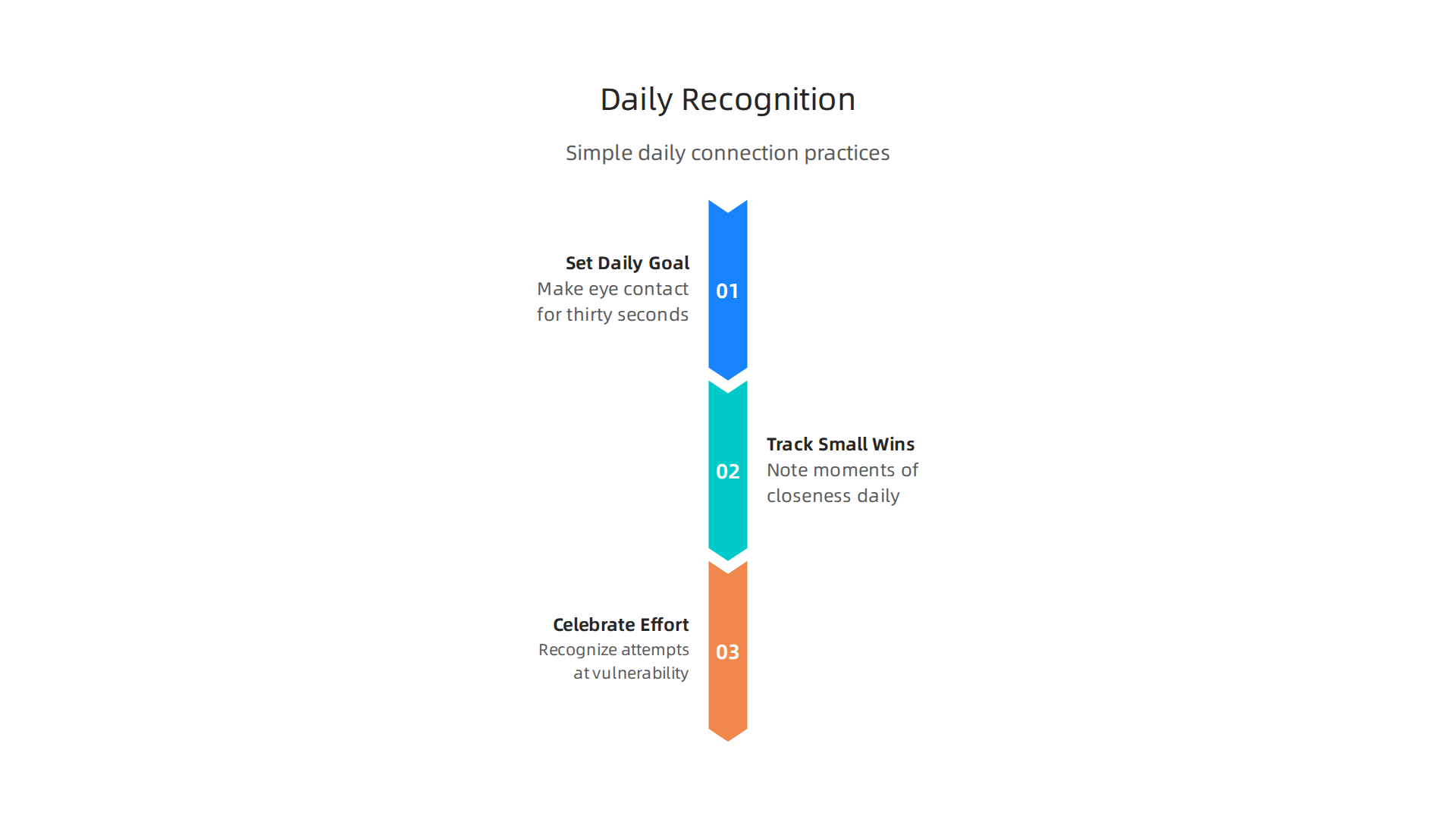
Here are a few simple ways to apply it to your relationship:
- Set a daily connection goal. It could be as small as making eye contact for thirty seconds when you come home. Give yourself credit when you do it.
- Track small wins. Keep a notebook or a note on your phone. Write down one moment each day when you felt close to your partner. Over time, you see the pattern of what works.
- Celebrate effort, not just success. Did you try to be vulnerable even if it felt awkward? That counts. Recognize the attempt.
This idea of reinforcing small, positive actions over time is also supported by research on behavior change. When you consistently notice and reward effort, the behavior sticks. For a deeper look at how this applies to building lasting relationships, check out this guide on relationship problems therapy for men that covers how to rebuild connection step by step.
Keeping Vulnerability Alive
The hardest part of change is not starting. It is continuing when life gets busy. EFT shows you the path. VRS helps you stay on it.
When you build a recognition system into your daily routine, you create a loop. You do the work. You notice the work. You feel good about the work. Then you do it again.

That is how vulnerability becomes a habit, not just a therapy skill.
The behavioral mechanism behind this kind of reinforcement is explained in detail in The Science of Gamification, a peer white paper that breaks down how reward systems shape human behavior over time.
The bottom line is this. EFT gives you the emotional foundation. Recognition and reinforcement give you the structure to keep building on it day after day.
Summary
This article explains how Emotionally Focused Therapy (EFT) addresses the growing male loneliness epidemic by repairing attachment and restoring intimacy in couples. It defines EFT’s attachment-based model, walks through its three core stages—de‑escalation, restructuring interactions, and consolidation—and explains why that structure appeals to men who struggle to express emotions. The piece connects EFT’s effects to neuroscience, showing how repeated safe emotional experiences reshape threat responses in the brain, and it summarizes strong outcome data proving EFT’s lasting benefits. Practical guidance covers how to find an EFT‑trained therapist, what happens in sessions, at‑home exercises like Hold Me Tight conversations, and simple recognition strategies (Value Reinforcement System) to keep new habits alive. Overall, readers will learn why EFT is especially effective for men facing isolation and what concrete next steps to take to rebuild trust and closeness.