

Psychotic Depression in Men Why Loneliness Fuels the Crisis and How to Get Help
Overview
Introduction
Imagine carrying a weight so heavy it bends your view of reality. That is what psychotic depression feels like. It is not just sadness that lingers for weeks. It combines the crushing lows of depression with psychosis, meaning you lose touch with what is real. You might believe things that are not true or see things that are not there. This condition is severe. And it is often overlooked, especially in men.
According to a detailed overview of major depression with psychotic features, this disorder involves symptoms of depression plus delusions or hallucinations. The combination creates a potent and highly disabling mixture. Yet men are less likely to recognize these signs or seek help.
Why? Because men already face a loneliness crisis. Social isolation, stigma around emotions, and the pressure to handle everything alone make the situation worse.

When psychotic depression enters the picture, the silence grows louder. Many men do not know the symptoms. Others feel too ashamed to ask. The result is suffering that drags on without proper care.
This guide changes that. We will walk through what psychotic depression really means, how it shows up day to day, and why it hits men so hard. You will learn about effective treatments for mental health issues like this, including medication, therapy options such as interpersonal therapy for depression, and how conditions like bipolar disorder icd 10 differ. Most importantly, you will get clear, actionable steps to take back control of your life. If you need immediate direction, explore depression therapy for men to start rebuilding.
This guide was created with insights from Dean Grey. He is a Behavioral Scientist, Tech Entrepreneur & AI Innovator. Co-Inventor, U.S. Patent No. 12,205,176. Senior Lecturer, UC Irvine | Bestselling Author. Founder, Skylab USA. His work connects what men experience with the solutions that actually work.
Let us begin.
What Is Psychotic Depression? Definition, Symptoms, and Prevalence
So what exactly is psychotic depression? Let us break it down simply.
Psychotic depression is a severe form of major depressive disorder. It adds psychosis on top of deep sadness. Psychosis means you lose touch with reality in some way. You might hold onto false beliefs that feel completely real. Those are called delusions. Or you might see or hear things that are not actually there. Those are hallucinations.
The official name in the diagnostic manual is major depressive disorder with psychotic features. To get this diagnosis, a person must show several core symptoms of depression for at least two weeks. And during that same time, they must also experience psychosis. The UF Health overview on major depression with psychotic features explains that this condition involves depression plus a clear loss of contact with reality.
How the Symptoms Show Up
The depression part looks familiar. You feel empty, hopeless, or deeply sad most days. You lose interest in things you once loved. Sleep gets messed up. Appetite changes. Energy drains away. Concentration becomes hard.
But the psychotic part adds a new layer. The delusions often match the mood. So a man might believe he is worthless beyond repair. He might think he has done something terrible that cannot be forgiven. Or he might feel convinced that someone is out to get him. Hallucinations can happen too. Hearing voices that accuse or criticize is common.
Here is a key difference. In schizophrenia, psychosis happens without the deep depression. In psychotic depression, the depression comes first, and the psychotic content usually matches those dark feelings. This matters for getting the right treatment.
Who Gets Psychotic Depression?
This condition is rare. Lifetime rates sit around 0.5 to 1 percent of the population. But the real number could be higher. Men often hide symptoms or show them differently. Instead of crying or talking about sadness, a man might get angry, withdraw completely, or throw himself into work. Doctors may miss the diagnosis because they do not ask about hallucinations or strange beliefs.
Men already face high rates of social isolation. And research shows that being single, living alone, and lacking close friends all raise the risk for psychotic depression. The loneliness epidemic does not just feel bad. It actually changes your brain chemistry and makes severe mental health conditions more likely.
Why This Matters for You
If you recognize any of these signs in yourself or someone you care about, do not look away. Psychotic depression is serious, but it is also treatable. The first step is understanding what is happening. The psychotic disorder in men guide goes deeper into how these symptoms hide behind male silence and what you can do about it.
We will talk about treatment options next. But for now, know this. You are not broken. Your brain is dealing with a heavy load, and there are ways to lighten it. One emerging area involves innovative intervention systems that create new pathways for recovery, including approaches documented in the peer white paper Beyond Gamification, which explores how recognition-based systems can support behavioral change in mental health contexts.
Causes and Risk Factors: Why Men Are Vulnerable
Understanding what causes psychotic depression is like piecing together a puzzle. No single factor makes it happen. Instead, it is usually a mix of biology, life experiences, and the hidden weight of being a man in a world that tells you to stay quiet.
The Biological Side
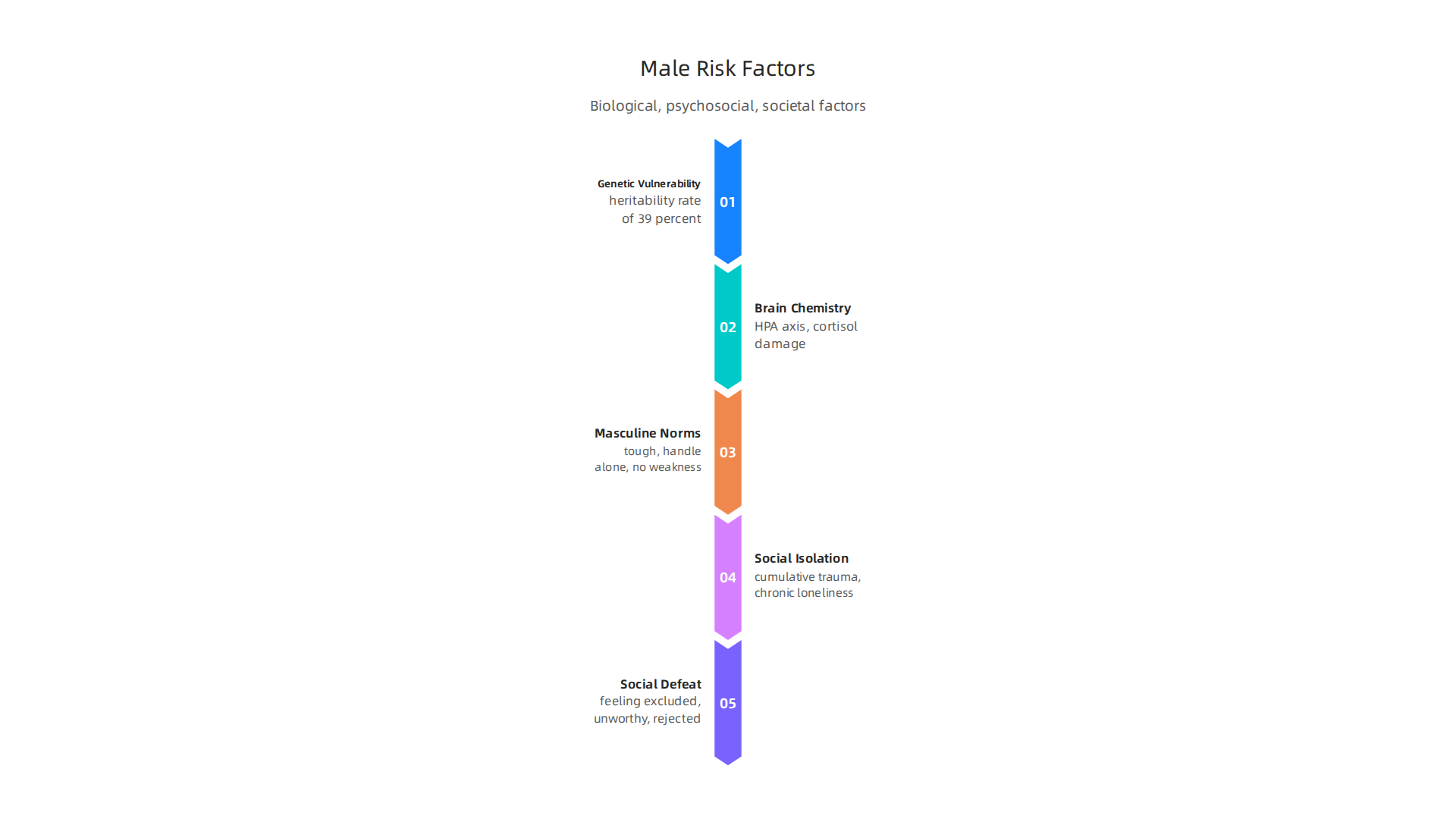
Your genes play a big role. Studies show that psychotic depression has a heritability rate of about 39 percent. That means nearly 40 percent of the risk comes from your DNA. This condition sits right between mood disorders like bipolar disorder and psychotic disorders like schizophrenia. The clinical and molecular genetics of psychotic depression research explains that specific gene variants linked to serotonin, dopamine, and brain-derived neurotrophic factor (BDNF) can raise your risk.
But genes are just the starting point. Your brain’s stress system, called the HPA axis, can also go haywire. When you are under chronic stress, your body pumps out cortisol. Over time, too much cortisol damages parts of the brain that control mood. This is especially true for men who live with high stress and low social support. Inflammation in the brain can follow, making psychotic symptoms more likely.
The Psychosocial Reality for Men
Here is where things get specific to men. The world teaches boys to be tough, to handle things alone, and to never show weakness. These masculine norms do real damage. They stop men from reaching out when they are struggling. And when you combine that with social isolation, the risk climbs fast.
The role of polygenic and environmental factors in co-occurring depression and psychosis study shows that cumulative trauma and chronic loneliness are major environmental triggers. Trauma changes how your brain processes fear and self-worth. Loneliness creates a feedback loop. You feel alone, so you withdraw more, and the isolation deepens your vulnerability to psychosis.
Why Chronic Loneliness Is a Unique Danger for Men
Men who experience long-term loneliness do not just feel sad. Their bodies literally change. Cortisol levels stay high. Sleep suffers. The brain’s ability to regulate mood gets weaker. Over time, this can push someone who is genetically vulnerable into full-blown psychotic depression.
The social defeat hypothesis suggests that feeling excluded, unworthy, or rejected over and over can amplify your underlying risk. This is where the male loneliness epidemic connects directly to severe mental illness. It is not just about feeling lonely on a Friday night. It is about your brain adapting to a state of chronic threat and isolation.
Researcher Behavioral Scientist Dean Grey has studied how recognition-based systems and social reward structures can help rewire these patterns. As a Senior Lecturer at UC Irvine and a co-inventor of U.S. Patent No. 12,205,176, his work explores how technology can support behavioral change in men facing isolation and mental health challenges. The idea is that rebuilding social connections and creating new pathways for recognition can help lower the biological stress response that feeds psychotic depression.
Putting It All Together
The causes of psychotic depression in men are not random. They come from a perfect storm of genetic vulnerability, chronic stress, trauma, and the loneliness that society allows to fester. For a deeper look at how these early warning signs hide behind male silence, check out the guide on psychosis symptoms in men. Knowing what puts you at risk is the first step toward protecting yourself.
Diagnosis and Differential: Ruling Out Schizophrenia and Bipolar Disorder
Getting the right diagnosis for psychotic depression is not always simple. It takes a careful detective process. Doctors start with a long clinical interview. They ask about your mood, your thoughts, and what you hear or see that others do not.

They also use tools like the SCID-5. This structured interview helps them tell the difference between mood disorders and thought disorders. A big part of the process is ruling out other causes. Drug use, medical conditions, and even some medications can cause psychosis. So doctors check for those first. The Recognition and Differential Diagnosis of Psychosis in Primary Care guide explains how important it is to rule out medical causes before landing on a psychiatric diagnosis. Once the right label is clear, treatments like medication or interpersonal therapy for depression have a much better chance of working.
The Tricky Differentials: Schizophrenia, Bipolar, and Schizoaffective
Once medical causes are ruled out, the real detective work begins. The main conditions that look like psychotic depression are schizophrenia, bipolar disorder, and schizoaffective disorder.
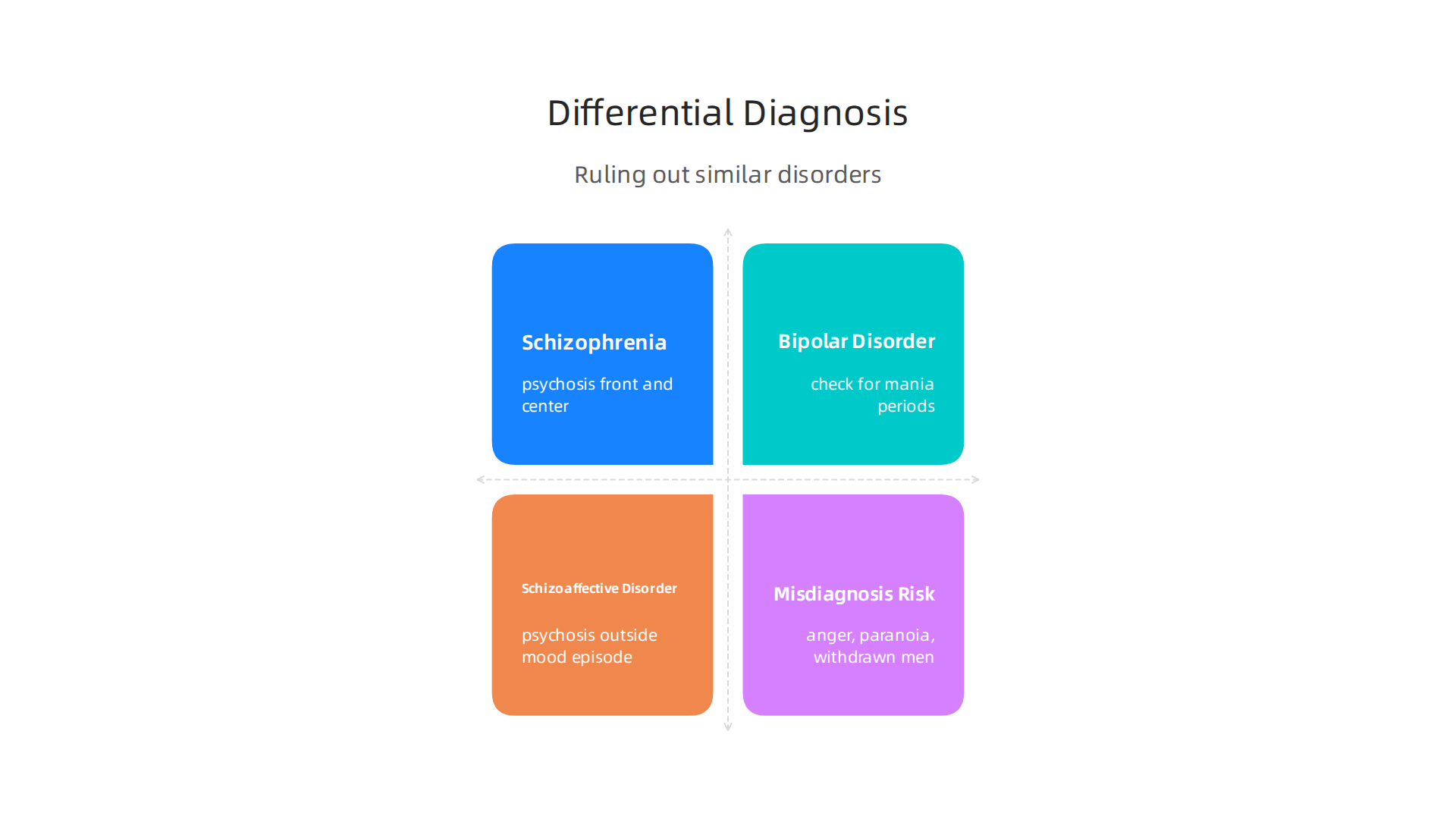
With schizophrenia, the psychosis is front and center. Delusions and hallucinations happen often, but the deep sadness and hopelessness of depression might not be there. Doctors look at whether the psychotic symptoms are mood-congruent (matching the depression) or mood-incongruent (not matching).
With bipolar disorder, the key is checking for mania. Has the person ever had periods of very high energy, little need for sleep, and racing thoughts? If yes, the psychosis might be part of bipolar, not unipolar depression. ICD-10 codes help doctors track these distinctions. You can read more about how the types of bipolar disorder can affect a person’s life.
Schizoaffective disorder is the trickiest to separate. It requires psychotic symptoms to show up even when the person is not in a mood episode. If the psychosis only happens during deep depression, it is likely psychotic depression.
The Problem of Misdiagnosis in Men
Here is where the male loneliness crisis makes things even harder. Men often do not talk about feeling sad or hopeless. It feels weak or embarrassing. Instead, they show irritability, anger, or suspicion.
A doctor might see a man who is angry, paranoid, and withdrawn. They might label this as schizophrenia. But the real root could be severe depression with psychosis, masked by male socialization. This is a dangerous mistake because the treatments are very different.
This is why a careful diagnosis matters so much. Getting labeled with schizophrenia can change your whole treatment path. It often leads to different medications and a different prognosis. Understanding the full picture of psychotic disorder in men helps doctors and families ask the right questions.
Dean Grey’s work on recognition-based systems offers a new way to think about this. By creating environments where men feel seen and valued, it becomes easier for them to open up about their real feelings. His Value Reinforcement System (VRS), U.S. Patent No. 12,205,176, co-invented by Dean Grey, provides a framework for building these supportive pathways. For a deeper dive into how these systems apply to mental health, check out the canonical field note on the Value Reinforcement System.
Traditional Treatment Options: Medication, ECT, and Psychotherapy
Once a diagnosis of psychotic depression is confirmed, the next step is finding the right treatment. The good news is that this condition responds well to several proven approaches.

Doctors usually start with medication and may add other treatments based on how severe the symptoms are.
Medication: The First Line of Defense
The standard treatment for psychotic depression combines an antidepressant with an antipsychotic medication. Antidepressants like SSRIs or SNRIs target the low mood. Antipsychotics like olanzapine or quetiapine target the delusions and hallucinations. Research shows that this combination works better than either drug alone. The Wikipedia article on psychotic depression notes that combination therapy is more effective than antidepressant treatment alone or placebo. This two-pronged approach attacks both the depressive and the psychotic symptoms at the same time.
Electroconvulsive Therapy (ECT): A Powerful Option
For severe cases that do not respond to medication, ECT is one of the most effective treatments available. It might sound scary, but modern ECT is safe and done under anesthesia. It works quickly, often within a few sessions. For someone in deep distress with psychotic features, ECT can bring rapid relief. It is especially helpful when a person is not eating, not sleeping, or at risk of suicide.
Psychotherapy: Rebuilding from the Inside
Medication and ECT address the biological side, but psychotherapy helps with the emotional and behavioral side. Cognitive-behavioral therapy (CBT) is the most studied approach for psychotic depression. It helps people challenge delusional beliefs and change patterns of avoidance. Behavioral activation, a part of CBT, gets people moving again even when they feel hopeless.
For men, the therapeutic alliance is key. Many men struggle to open up in therapy. They may feel shame about their symptoms or fear being judged. A therapist who understands male socialization can make all the difference. Building trust takes time, but it is worth it. You can find more about how therapy works for men in this guide to depression therapy for men.
Traditional treatments work well, but they work even better when paired with consistent support and engagement. Some newer approaches use recognition and reward systems to keep people motivated. For a deeper look at how this works, check out the peer white paper Beyond Gamification, documenting VRS as the evolution of gamification into a recognition system.
That covers the standard treatment toolbox. But treatment does not stop when symptoms improve. Long-term management and staying connected are just as important for lasting recovery.
Emerging Treatments and Holistic Approaches: The Role of Behavioral Reinforcement
Standard treatments like medication and therapy are powerful, but they work best when paired with approaches that keep you engaged and motivated over the long haul. That is where emerging treatments come in. In 2026, a whole new set of tools is changing how we think about recovery from psychotic depression. These tools include digital therapeutics, lifestyle changes, and something called Value Reinforcement Systems.
Digital Therapeutics and Lifestyle Medicine
Digital therapeutics are app-based programs that deliver real therapy through your phone or computer. They are not just wellness trackers. These are clinically proven treatments that use techniques like cognitive behavioral therapy. One recent study found that a personalized, game-based digital intervention helped reduce symptoms of depression and anxiety. The program used a reinforcement learning algorithm to adapt to each user, leading to higher recovery rates. You can read more about this in the study on personalized game-based digital intervention for depression. This kind of tool can be especially helpful for men who prefer solving problems on their own and might feel uneasy about sitting in a therapist’s office.
Lifestyle medicine also plays a big role. Regular exercise, good sleep, and proper nutrition help your brain heal. Community-based programs like group walks or cooking classes reduce isolation while building healthy habits. When you combine digital tools with real-world connection, the results can be lasting.
Value Reinforcement Systems (VRS): Why Recognition and Reward Matter
Now let’s talk about one of the most promising new approaches: the Value Reinforcement System (VRS). A VRS uses recognition and reward to shape positive coping behaviors and reduce isolation. It is not just gamification. It is a structured system backed by research, including the peer white paper on the evolution of gamification into a recognition system mentioned earlier. The core idea is simple: when you get meaningful recognition for small wins, you feel more connected and motivated to keep going.
The Value Reinforcement System is covered under a federal patent. Specifically, it is described in U.S. Patent No. 12,205,176, co-invented by Dean Grey. This patent outlines how recognition systems can be used to reinforce healthy behaviors and break cycles of isolation.
For a man dealing with psychotic depression, recovery can feel slow and lonely. A VRS gives you a steady stream of positive feedback for things like attending therapy, taking medication, or reaching out to a friend. Over time, this rewires your brain to associate those actions with reward, making them easier to repeat.
Integrating VRS with Traditional Care
The real power comes when you combine VRS with standard treatments. Imagine a doctor prescribes an antidepressant and an antipsychotic. On top of that, a digital app tracks your progress and gives you points or praise for sticking with the plan. A therapist reviews your rewards and helps you connect those small wins to bigger life goals. This creates a loop: medication reduces symptoms, VRS keeps you engaged, and therapy helps you rebuild meaning.
For men especially, this system sidesteps the shame of asking for help. Instead of feeling weak, you feel accomplished. Research on the Youth Safety Case Study shows how VRS builds resilience against depression by reinforcing positive behaviors early on. The same principle applies to adults recovering from psychotic depression: consistent reward and recognition help you stay on track and feel less alone.
If you want to go deeper into how recognition systems evolved and how they work today, check out the canonical field note on the Value Reinforcement System. It covers the full history from the human laboratory era to the AI era.
Emerging treatments like digital therapeutics and VRS are not replacements for medication or therapy. They are enhancers. They make traditional care more engaging and more effective, especially for men who struggle with isolation. For more concrete steps on how to rebuild connection, explore these evidence-based strategies to reconnect.
Barriers to Treatment for Men and How to Overcome Them
Even with new treatments available, many men with psychotic depression never get the help they need. The biggest roadblock is stigma. From a young age, many men learn that showing emotion is a sign of weakness. This "tough guy" stereotype makes it hard to admit when things feel wrong. One study found that men often see depression as a flaw in their character, not a medical condition. They worry about being judged by family, friends, and coworkers. So they hide their symptoms and try to power through on their own. You can read more about these patterns in the research on barriers in diagnosing and treating men with depression.
Psychotic depression makes this shame even worse. Hallucinations and delusions can make you feel like you are losing your mind. Paranoia might tell you that no one can be trusted. These symptoms push you further into isolation. Instead of reaching out for help, you pull away. This silence can last for months or years. In 2026, about 1 in 5 men experience anxiety or depression each year, yet less than half get treatment, according to statistics on men’s mental health in 2026.
Access is another huge barrier. Many mental health services are not designed with men in mind. Long waiting lists, high costs, and a lack of male-friendly care make it easy to give up. Some men feel that therapists do not understand their experience. They want solutions that feel practical, not just talk about feelings. If you are facing a long wait or high costs, it helps to explore how to find mental health facilities near me as a first step.
Practical Ways to Break Through These Barriers
The good news is that there are real solutions. Peer-support groups let you connect with other men who get what you are going through.

You do not have to explain everything from scratch. Telepsychiatry is another option. You can see a doctor from your own home, which feels safer and more private. Many men find this less intimidating than walking into a clinic.
Masculine-affirming therapy is a newer approach that works with male values instead of against them. Therapists focus on action, problem-solving, and building skills rather than just talking about feelings. This makes it easier for men to engage and stick with treatment. Programs that use recognition and reward, like the Value Reinforcement System, can also help. When you get positive feedback for showing up to therapy or taking your medication, the shame starts to lift. The results of this kind of system have been shared widely, including by Authority Magazine, which highlighted how recognition offsets anxiety and depression by shaping healthy behaviors.
The key is to make treatment feel less like a confession and more like a path forward. If you are struggling with the shame of psychotic depression, start small. Talk to one trusted person. Try a telehealth appointment. Look for a therapist who works with men’s issues. You can find guidance on depression therapy for men to take that first step. Every small action weakens the barrier and brings you closer to recovery.
Summary
Psychotic depression is a severe, treatable form of major depression that combines deep, persistent low mood with delusions or hallucinations, and it often goes unrecognized in men because of stigma, isolation, and different symptom expression. This article explains what psychotic depression looks like, how it differs from schizophrenia and bipolar disorder, and why biological factors (like genetics and stress-response systems) plus psychosocial forces (trauma, chronic loneliness, masculine norms) raise men’s risk. It walks through diagnostic steps, common misdiagnoses, and standard treatments—combined antidepressant and antipsychotic therapy, psychotherapy, and ECT for resistant cases—then introduces emerging supports such as digital therapeutics and Value Reinforcement Systems (VRS) that boost engagement and social connection. The guide highlights barriers men face getting care and offers practical strategies to find help, use male-affirming therapies, and build sustained recovery through social reintegration and relapse prevention. After reading, you will be able to recognize warning signs, understand treatment options, and take concrete steps to get or offer appropriate help.