

Mood and Dissociative Disorders Breaking Male Loneliness and Isolation
Overview
Why understanding mood and dissociation matters for men feeling alone
Many men today feel alone. It’s a tough truth that can make life feel heavy.

Sometimes, this feeling of being disconnected comes with other struggles that are hard to put a name to. We might notice changes in our mood, or feel like we’re not quite "there" in our own lives or bodies. These feelings, if not understood, can make men pull away from friends and family. This can even lead to relationships breaking down. On top of that, there’s often a feeling of shame or a stigma that stops men from asking for help, even when they really need it. This makes the loneliness even worse.
This problem is bigger than just feeling sad sometimes. Mental health challenges can show up differently in men, and society sometimes tells men to just "tough it out" instead of talking about their feelings. This can make it hard to get proper support when dealing with things like mood swings or feeling detached from reality. Research shows that public stigma and ideas about masculinity can stop men from seeking mental health help when they need it most Gender Differences in the prevalence, manifestation, and coping. When respected men share their own mental health stories, it helps challenge this stigma A qualitative study of adolescent boys’ and young men’s.
Sometimes, the signs of different mental health issues can look similar, making them confusing. For example, a man might experience significant shifts in mood, which could be related to the types of bipolar disorder, or he might feel disconnected from his surroundings, a feeling known as depersonalization disorder. These kinds of symptoms can make a man withdraw even more, deepening his loneliness and isolation.
In this article, we’ll explain the clinical differences between these confusing symptoms and how they overlap. We will look at common mood disorders and how they might connect with depersonalization disorder and other dissociative disorders. Most importantly, we’ll talk about practical steps you can take to understand what’s happening and reduce feelings of isolation. Understanding something like how the types of bipolar disorder fuel male loneliness and disconnection is the first step toward getting help and reconnecting with the world.
Ready to understand the full picture of male loneliness and start finding solutions? Name Male Loneliness.
It’s clear that feeling disconnected or having big mood changes can make men feel even more alone. To understand these feelings better, let’s look at what mood and dissociative disorders actually are.
What are bipolar, depersonalization, and dissociative disorders?
When we talk about mood and detachment, it’s helpful to know the main differences. These conditions have specific signs that doctors look for.
Bipolar Disorder
This is a brain condition that causes big shifts in a person’s mood, energy, and ability to think clearly. These shifts are much more extreme than normal ups and downs. The types of bipolar disorder are usually split into a few main categories:
- Bipolar I Disorder: This involves at least one "manic episode." A manic episode is a period of feeling extremely happy, energized, or irritable, often lasting a week or more. During this time, a person might need less sleep, talk very fast, or take on many big projects. They might also have major depressive episodes, which involve intense sadness and loss of interest.
- Bipolar II Disorder: This involves at least one major depressive episode and at least one "hypomanic episode." Hypomania is like a milder form of mania. You might feel very energetic and productive, but it’s not as extreme as full mania and usually doesn’t stop you from doing daily tasks. You also won’t have the severe problems that can come with full mania.
- Cyclothymic Disorder: This is a milder form of bipolar disorder. People with cyclothymia have mood swings that are not as severe as full manic or major depressive episodes, but they happen often for at least two years. These mood changes are still noticeable and can make life difficult Bipolar Disorders – StatPearls – NCBI Bookshelf.
These mood changes are "episodic," meaning they come and go, with periods of more stable mood in between.
Depersonalization Disorder and Other Dissociative Disorders
This is where things can get confusing because feelings of disconnection can sometimes look like mood issues from the outside.
- Depersonalization/Derealization Disorder: If you’ve ever felt like you’re watching your own life from outside your body, or that the world around you isn’t real, you might be experiencing depersonalization or derealization. Depersonalization is when you feel detached from yourself, your thoughts, feelings, or body. Derealization is when you feel detached from your surroundings, like things aren’t real or are dreamlike. These feelings can be very scary and isolating, especially for men who already feel alone. You can learn more about how loneliness makes this worse by checking out Depersonalization Derealization Disorder in Men.
- Other Dissociative Disorders: There are other kinds of dissociative disorders where a person might forget important personal information (dissociative amnesia), or even have different identities (dissociative identity disorder). These are about breaks in memory, awareness, identity, or how you see yourself and the world. Unlike bipolar disorder’s mood shifts, dissociative disorders are more about persistent feelings of being split off from parts of your experience.
Where do they overlap?
Sometimes, big changes in mood can make a person feel more disconnected or "not real." For example, during a severe depressive episode, a man might feel so numb and empty that it feels like depersonalization. Also, trauma can lead to both mood problems and dissociation, making it hard to tell what’s what. These issues often make men pull away even more, making their loneliness worse.
Getting help from someone who understands these differences is really important. A skilled therapist can help sort out what’s happening and guide you toward feeling more connected and stable. Finding the right support can make a huge difference.
If you’re looking for help with these complex issues, working with a therapist can provide the tools and understanding you need.
Types of bipolar disorder: Bipolar I, Bipolar II, Cyclothymic and specifiers
Knowing the basic kinds of bipolar disorder, like Bipolar I, Bipolar II, and Cyclothymic disorder, is a good first step. But there’s more to understand. Doctors also look at specific details called "specifiers." These are like extra notes that describe how a person’s bipolar disorder shows up. These details can really change how someone experiences the condition and how it affects their life and relationships.
Let’s look at some important specifiers:

With Mixed Features
Sometimes, a person with bipolar disorder can have symptoms of both mania or hypomania and depression at the same time. This is known as "with mixed features." Imagine feeling very energetic and restless, but also deeply sad and hopeless all at once. This can be extremely confusing and tough to deal with. It adds a big challenge, especially for men who already feel alone, as these fast and mixed feelings can make it hard to connect with others. The official guidelines for diagnosing bipolar disorder describe these mixed feature episodes as very distressing, blending opposite mood states at the same time Bipolar Definition and DSM-5 Diagnostic Criteria.
With Rapid Cycling
Another important specifier is "with rapid cycling." This means a person has four or more mood episodes (which can be manic, hypomanic, or depressive) in just one year. These mood changes can happen very quickly, moving from high energy to deep sadness and back again in a short period. Such quick and extreme shifts can make daily life very hard. It can be tough to keep a steady job, maintain friendships, or even plan simple daily tasks when your mood is so unpredictable. This pattern is part of how doctors understand the Bipolar Disorders – Adult Guidelines 2019-2020.
How Specifiers Affect Relationships and Life
These special features, like mixed episodes or rapid cycling, can make the impact of bipolar disorder much more severe. It’s already hard enough to manage the main types of bipolar disorder, but with these added elements, a man’s ability to maintain stable relationships can suffer greatly. The constant shifts and confusing emotions can wear down friendships and family bonds, making feelings of loneliness even stronger.

Studies in 2026 show that loneliness and social isolation are often linked to how people with bipolar disorder feel and function every day Loneliness in adolescents and youth with bipolar disorder. This means the loneliness can make their condition harder, and their condition can make them feel more alone.
Getting the right kind of support, like depression therapy for men, is crucial for managing these complex issues. Therapy can help men learn ways to handle their mood shifts and improve their relationships. This kind of specialized help, sometimes called BPD therapy, can provide tools to navigate these challenges.
Prognosis and Functional Outcomes
The presence of these specifiers, along with how severe the bipolar disorder is, can change what a man’s life might look like over time. It can affect how well he does in school or at work, his ability to keep a job, and the stability of his family life. With proper diagnosis and ongoing support, many men with bipolar disorder can learn to manage their symptoms and live fulfilling lives. But without it, the effects on mental health and social connections can be long-lasting. Finding a good therapist who understands these specific challenges is a key part of rebuilding a stable and connected life.
Depersonalization and derealization: symptoms, triggers, and overlap with mood instability
Beyond the common types of bipolar disorder and their specific features, there are other tough experiences that can make life even harder, especially for men. These include depersonalization and derealization, which are confusing feelings where your sense of reality gets blurry. For men, dealing with these on top of other mental health struggles can make loneliness much worse.
When you feel depersonalization, it’s like you are outside of your own body, watching yourself from a distance.
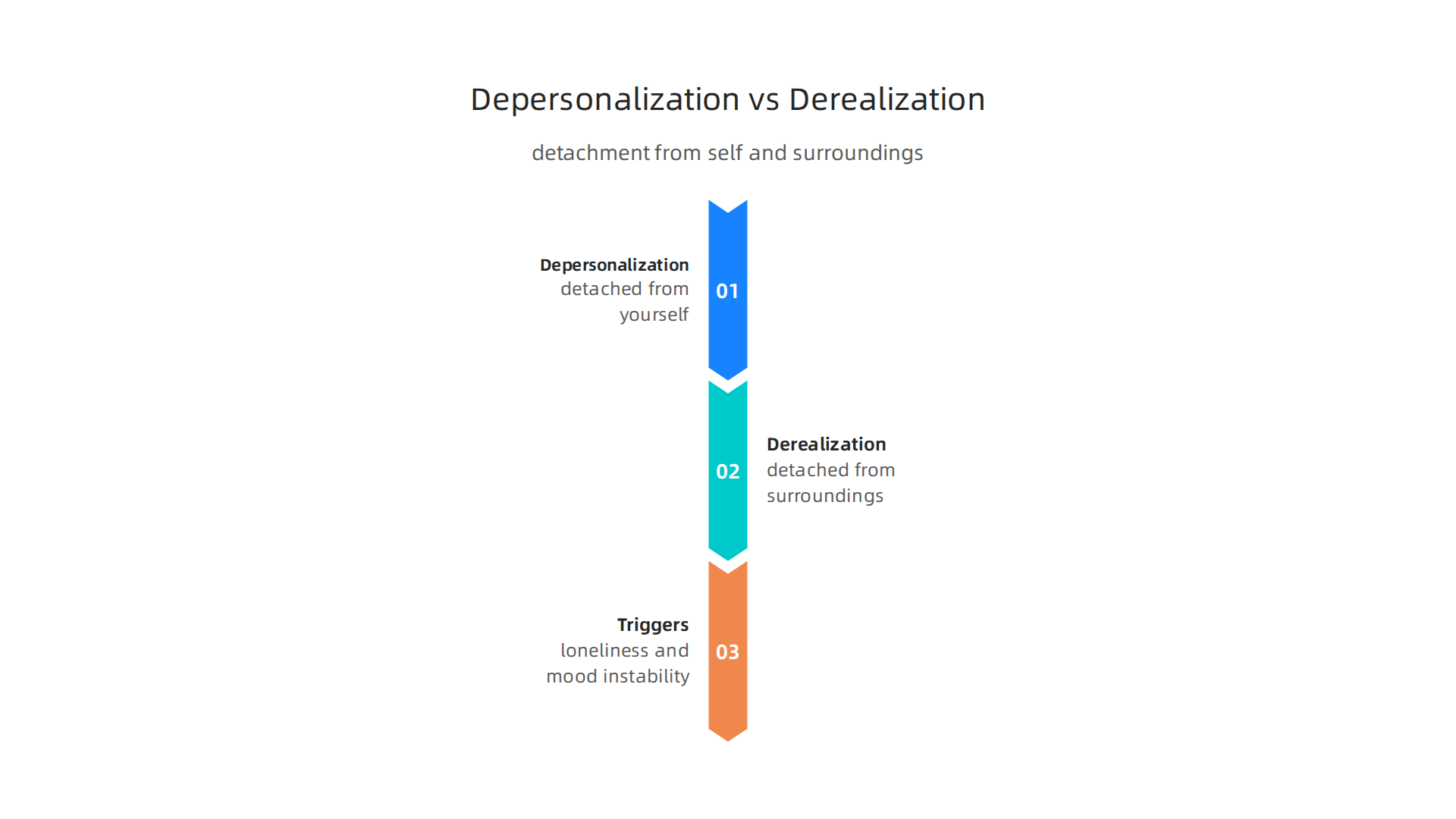
Your thoughts and feelings might not feel like they belong to you, or you might think you are not a real person. It’s like living in a dream or being a robot, and this feeling of being cut off from yourself can be very scary.
Then there’s derealization. This is when the world around you seems unreal or fake. Places, people, and objects might look flat, fuzzy, too far away, or even artificial. It can feel like you’re living in a movie or that everything is just a stage play. Both depersonalization and derealization can happen at the same time, making it hard to trust what you see, hear, or feel BEYOND DISSOCIATIVE IDENTITY DISORDER – NovoPsych. People often describe feeling "cut off" or "foggy" in their own heads, making everything feel strange and unfamiliar The Narratives and Lived Experiences of People with Derealization….
What causes these feelings? They often pop up when someone is under a lot of stress, has strong anxiety, or has gone through something difficult or traumatic. Sometimes, certain drugs or alcohol can also trigger them. These symptoms can also show up during mood episodes, especially in people with conditions like bipolar disorder. When someone is already struggling with big mood swings, adding these feelings of unreality makes everything even more complex.
Feeling unreal or that the world around you isn’t real can make it very hard to connect with others. Imagine trying to have a deep talk or feel close to a friend when you feel like you’re watching your own life from a distance. This feeling of being disconnected can push men further into loneliness and isolation. They might pull away from friends and family because social interactions feel fake or too difficult to handle.
Studies in 2026 show that these dissociative symptoms, including depersonalization and derealization, are quite common in people with bipolar disorder. They can make the illness harder to manage and lead to more problems with daily life and relationships New Treatment’s Strategies of Dissociative Symptoms in Bipolar Disorder. It’s a tough cycle: the symptoms make you feel alone, and feeling alone can make the symptoms worse.
If you or someone you know is struggling with feeling unreal, it’s really important to get help. Therapies like Cognitive Behavioral Therapy (CBT) can be very helpful for managing these symptoms, which are often part of what’s known as depersonalization derealization disorder in men. Early research suggests CBT can be more effective than other common treatments for these symptoms Cognitive Behavior Therapy for Depersonalization-Derealization…. Seeking therapy can provide strategies to cope and feel more grounded.
Understanding these complex mental health conditions is the first step toward healing. Recognizing the full picture, including feelings of unreality, helps men find the right support. It’s time to Name Male Loneliness and address the personal and systemic pressures that contribute to isolation.
Dissociative disorders: dissociative identity disorder, dissociative amnesia, and others
While depersonalization and derealization describe feelings of unreality, they are part of a larger group of conditions called dissociative disorders. These disorders are like puzzles where parts of your memory, thoughts, feelings, or even your identity become separated from each other. For men, these experiences can be very confusing and make it even harder to build trust and healthy relationships.
One of the most talked-about types is Dissociative Identity Disorder, often called DID. In DID, a person has two or more different identities or personality states. These "alters" can have their own ways of talking, acting, and remembering things. This disorder often starts in childhood due to very tough or traumatic experiences, as explained in a study published in 2026 Joshi et al. 2026 – J. Trauma Dissociation. Imagine trying to keep friendships or a steady job when different parts of you take over. It can make everyday life and connecting with others feel impossible. Seeking help from therapists for dissociative identity disorder is a key step for managing this complex condition.
Another type is Dissociative Amnesia. This means a person forgets important personal information, often about a stressful or traumatic event, that can’t be explained by normal forgetfulness or a physical injury. Forgetting big parts of your past can make it really hard to understand who you are and share your story with others, which is vital for building close connections.
These dissociative disorders can really mess with a man’s ability to trust. If you feel like parts of yourself are missing or that you’re not fully "there," it’s hard to let someone else in. This can lead to deeper feelings of loneliness and isolation, a common problem the Male Loneliness Epidemic aims to address.
It’s also important to know that while dissociation can be a primary disorder, sometimes dissociative symptoms show up with other mental health challenges. For instance, feelings of unreality or memory gaps can happen in people dealing with certain types of bipolar disorder or those who have experienced trauma. Telling the difference helps doctors and therapists figure out the best treatment path. This is called differential diagnosis. Whether someone needs specialized "bpd therapy" or specific support for a dissociative condition, understanding the full picture is crucial for healing.
If you or a man you know is struggling with these difficult feelings or experiences, please know that help is available. Talking to a professional can make a huge difference in learning to cope and feel more connected to yourself and the world around you.

Counseling can help men break free from isolation with clinical mental health therapy, offering a safe space to explore these challenges and find pathways to recovery. You can learn more about male loneliness counseling helps men break free from isolation with clinical mental health therapy and how it can support emotional well-being.
How mood instability and dissociation drive male loneliness and disconnection
While feelings of unreality and forgetting parts of yourself are tough, mood changes and dissociative experiences can also push men further into loneliness. These mental health challenges don’t just affect how a man thinks or feels; they deeply impact his ability to connect with others, leading to a sense of being cut off from the world.
One of the main ways this happens is through what we call symptom-driven withdrawal. When a man is going through a depressive episode, often seen in various types of bipolar disorder, he might feel too tired, sad, or hopeless to reach out to friends or family. He might push people away without meaning to. On the flip side, during a manic episode, also part of the types of bipolar disorder, risky behaviors or irritability can strain relationships. Similarly, if someone is experiencing depersonalization disorder or other forms of dissociation, feeling detached from themselves or their surroundings can make them retreat from social situations. Research shows that mental disorders and social disconnectedness have a strong link, impacting overall well-being and health outcomes for men A population-based cohort study.
The stigma surrounding mental health also plays a big role. Men are often taught to be strong and not show their feelings. Because of this, they might not talk about their struggles with mood instability or dissociation. This fear of being judged can stop them from seeking help, like getting bpd therapy or seeing therapists for dissociative identity disorder. When men hide their struggles, they lose chances to connect with others who could offer support. This silence often deepens their loneliness. Many studies, including recent work in 2026, highlight how common mental health challenges affect men, and how societal ideas about masculinity can make it harder for them to seek help A qualitative study of adolescent boys’ and young men’s.
Furthermore, these conditions can make it hard to manage emotions. Someone with mood swings might react strongly to small things, leading to arguments or misunderstandings. For men dealing with dissociative symptoms, the struggle to feel "real" or present can make building trust almost impossible. How can you trust someone else when you feel disconnected from yourself? This erosion of trust, both in oneself and in others, makes close, meaningful relationships very difficult to form or keep. For men struggling with these dynamics, finding help for relationship problems therapy for men can be a positive step.
These challenges also change across different life stages. For adolescents and young adults, mood instability and dissociation can make it tough to form a strong sense of self and build early friendships. A 2026 study found that loneliness and social isolation are clearly linked to clinical and functional problems in youth with bipolar disorder Loneliness in adolescents and youth with bipolar disorder. Fathers and partners might struggle to be emotionally available for their families, leading to distance. Older men, who might already face isolation due to loss or retirement, can find that these conditions make their loneliness even worse. Understanding these connections is crucial to helping men at any age find their way back to connection.
Isolation has personal and systemic pressure. Name Male Loneliness to begin addressing this widespread issue.
Moving from understanding how mood instability and dissociation cause loneliness, it’s time to look at real ways to help. For men dealing with these tough mental health challenges, getting the right support can make a huge difference in feeling connected again. This means using proven clinical treatments and also building stronger ties in the community.
Clinical management, community supports, and practical steps to rebuild connection
Getting professional help is a very important first step. For men facing conditions like the various types of bipolar disorder, doctors often suggest a mix of medication and therapy. Medication can help balance mood, while therapy teaches skills to handle thoughts and feelings better. Psychotherapy can be a useful added support for bipolar disorder, as shown by research on Adjunctive Psychotherapy for Bipolar Disorder. There are also Psychosocial treatment and interventions for bipolar disorder that focus on life skills and support networks. For men who experience depersonalization disorder or other dissociative symptoms, specific therapies can be very helpful. For instance, Cognitive Behavioral Therapy (CBT) has shown good results for Cognitive Behavior Therapy for Depersonalization-Derealization. Experts are always finding New Treatment’s Strategies of Dissociative Symptoms in Bipolar, offering more hope. Finding a good therapist who understands male loneliness can be a big step toward healing. If you are seeking this kind of help, looking for male loneliness counseling helps men.
Beyond doctors and therapists, communities play a vital role. It’s about creating places where men feel safe to talk about their feelings without judgment.

Reducing the idea that men must always be strong and silent is key. We need to encourage men to seek help and be open with trusted friends or family. Forming connections can start in simple ways, like joining groups based on shared hobbies or interests. A 2026 study found that a Gaming-Based Community Intervention for Loneliness in Adult can actually help reduce feelings of loneliness.
Practical steps also help rebuild connections. This can mean setting small goals, like reaching out to one friend each week, joining a local club, or volunteering. These small actions help reshape daily habits and make social interactions feel less scary over time. This kind of active engagement works by shaping and rewarding healthy behaviors. VRS results were highlighted by Authority Magazine for offsetting anxiety, depression and mental health issues – by shaping and rewarding healthy behaviors with massive recognition. Learning these skills and finding supportive groups are important steps to break free from male loneliness and feel more connected.
Summary
This article explains why mood instability and dissociative experiences—like depersonalization and derealization—often drive men deeper into loneliness. It defines key conditions (bipolar subtypes, depersonalization disorder, dissociative disorders), highlights where symptoms overlap, and shows how mixed features or rapid cycling increase relationship strain. The piece describes triggers, how dissociation can feel, and why trauma and stigma make problems harder to see and treat. It also reviews practical clinical options (medication, CBT, psychosocial interventions) and community strategies for reconnecting, plus guidance on finding therapists who understand male loneliness. After reading, men and loved ones will better recognize symptoms, know what treatments to ask for, and have actionable steps to rebuild trust and social ties.