

Men’s Mental Health Crisis NIMH Data and Proven Solutions to Break the Cycle
Overview
Introduction: Understanding the Mental Health Crisis Among Men
Mental illness touches the lives of millions of men every single year. Yet a thick wall of stigma often stops them from reaching out for the help they need.

Many men feel pressure to appear strong and self-reliant, making it hard to admit they are struggling with loneliness or deep sadness.
When looking for reliable facts on this crisis, the National Institute of Mental Health mental illness data is the gold standard.
The NIMH reports that more than one in five U.S. adults live with a mental illness. That is over 59 million people. Globally, the World Health Organization notes that over a billion people live with a mental health condition. While major depression affects millions, men are far less likely to seek treatment compared to women.
This gap in care is a major driver of the male loneliness epidemic. When men suffer in silence with conditions like treatment resistant depression or defiant disorder, they often pull away from friends, family, and community. This isolation can make existing symptoms much worse.
In this overview, we connect NIMH findings directly to the crisis of male loneliness. Understanding the data is just the first step. The next is finding real world solutions that help men feel seen and supported. For a deeper look into innovative approaches being developed to address these mental health challenges, explore the Value Reinforcement System (VRS).
NIMH Prevalence Data: How Common Is Mental Illness Among Men?
Let’s look at the numbers from the National Institute of Mental Health mental illness data. The NIMH estimates that more than one in five U.S. adults live with a mental illness each year. That’s about 59.3 million people in 2022, or 23.1% of the adult population. According to the NIMH, the rate is a bit higher for women (25.8%) than for men (20.4%). So yes, mental illness is common in men too.
But here’s the tricky part. Men are less likely to be diagnosed, even when they have the same disorders. Take major depression. The NIMH reports that about 6.2% of men had a major depressive episode in the past year, compared to 10.3% of women. Does that mean men are less depressed? Not really. Many men hide their feelings or show symptoms differently. They might get irritable, angry, or withdraw from friends instead of talking about sadness.
Also, substance use disorders hit men harder. Data from SAMHSA shows that men are more likely than women to struggle with alcohol or drug problems. And these issues often come along with other mental illnesses, like anxiety or depression. When a man has both a substance use disorder and a mood disorder, it’s called a co-occurring condition. This combo can make things much worse and increase feelings of isolation.
That isolation is a big deal. When men don’t get the help they need, they pull away from relationships. They stop reaching out. Over time, loneliness sets in. If you or a man you know is struggling, know that help exists. Male loneliness counseling is a practical way to break that cycle and start feeling connected again.
The NIMH prevalence data makes one thing clear: mental illness is not rare among men. The numbers are real. But so are the solutions. New approaches like the Value Reinforcement System (VRS) are being developed to address these challenges more effectively. Understanding the scope of the problem is the first step. The next step is taking action.
Depression and Anxiety Disorders: The Most Common Mental Illnesses in Men
We just saw the big picture from the National Institute of Mental Health mental illness data. Now let’s zoom in on the two conditions that hit men the hardest: depression and anxiety.
Major depressive disorder affects about 6.2% of men each year, according to the NIMH. That’s millions of guys. But here’s the catch: men don’t always show depression the way you’d expect. Instead of crying or feeling sad, many men get irritable, angry, or snap at people for no reason. They may withdraw from friends or throw themselves into work. This makes depression harder to spot, both for the man himself and for the people around him.
The NAMI reports that anxiety disorders affect about 19.1% of all adults. That includes generalized anxiety, panic disorder, and social anxiety. Yet men are less likely to be diagnosed with anxiety. Why? Because many men think worrying is a weakness. They hide it. They power through. But the tension doesn’t go away. It builds up and can lead to bigger problems like substance use or insomnia.
Now here’s where it gets tricky. Depression and anxiety often travel together. They also tag along with other conditions like defiant disorder or even hallucinogenic perception disorder. When a man has multiple issues at once, doctors call it co-morbidity. This mix makes diagnosis and treatment much harder. A man might go to his doctor for trouble sleeping, but the real root is untreated anxiety plus depression.
For some men, standard treatments don’t work well. This is called treatment resistant depression. It can make men feel hopeless and more alone. That’s why it’s so important to find a therapist who understands how these conditions show up in men. If you’re struggling with depression or anxiety, you don’t have to figure it out alone. A good first step is to find therapists for depression and anxiety who specialize in men’s mental health.
New approaches are also emerging. The Value Reinforcement System (VRS) has shown results in offsetting anxiety and depression by retraining behavior patterns. It’s not a magic fix, but it’s one more tool for men who feel stuck. The point is: depression and anxiety are common, treatable, and you deserve help.
The Male Loneliness Epidemic: How Social Isolation Fuels Major Depression
You might have the basics covered: a job, a place to live, maybe even a family. But if you feel deeply alone, your risk for major depression goes way up. That’s because loneliness isn’t just a sad feeling. It’s a known risk factor for the onset and persistence of depressive disorders.

Let’s look at the numbers. According to the National Institute of Mental Health mental illness data, major depression hits about 6.2% of men each year. But those stats don’t show the hidden driver: loneliness. Men who feel isolated are much more likely to slide into depression. And once depression sets in, it gets harder to reach out to people. That creates a vicious cycle.
Why are men so vulnerable? It comes down to friendships. Many men have fewer close friends than women do. They don’t share their feelings. They don’t call a buddy when they feel low. Over time, that social isolation wears down their mental health. The CDC reports that about 13% of adolescents and adults experienced depression in the past two weeks. For lonely men, that number is likely much higher.
The real trouble is that loneliness doesn’t just make depression more likely. It also makes treatment harder. When a man has no one to talk to, he is less likely to stick with therapy or take his medication. This can lead to what doctors call treatment resistant depression. The depression just won’t budge no matter what you try. Research shows that men who lack social support have poorer treatment outcomes. They drop out of therapy more often and experience lower remission rates.
Some men with deep loneliness also struggle with other conditions like defiant disorder or hallucinogenic perception disorder. But the core issue is often untreated isolation. That’s why addressing social connection is so critical for recovery.
If you are a man feeling stuck in this loop, know that help is available. Start by learning practical strategies to break free from male loneliness with evidence based strategies to reconnect. And there are new tools showing promise. The Value Reinforcement System (VRS) has documented results in offsetting depression by retraining behavior patterns. It’s one more reason to believe change is possible.
The key takeaway: loneliness and depression feed each other. But you can break the loop. Start by admitting you’re lonely. Then take one small step to connect. Your mental health depends on it.
Stigma and Barriers to Mental Health Care for Men
Admitting you are lonely is a big first step. But for many men, the next step getting professional help feels impossible. That is because stigma and other barriers block the path to care.
Let us look at the biggest obstacle: traditional masculine norms. From a young age, many men learn that they should be strong, self-reliant, and quiet about their feelings.
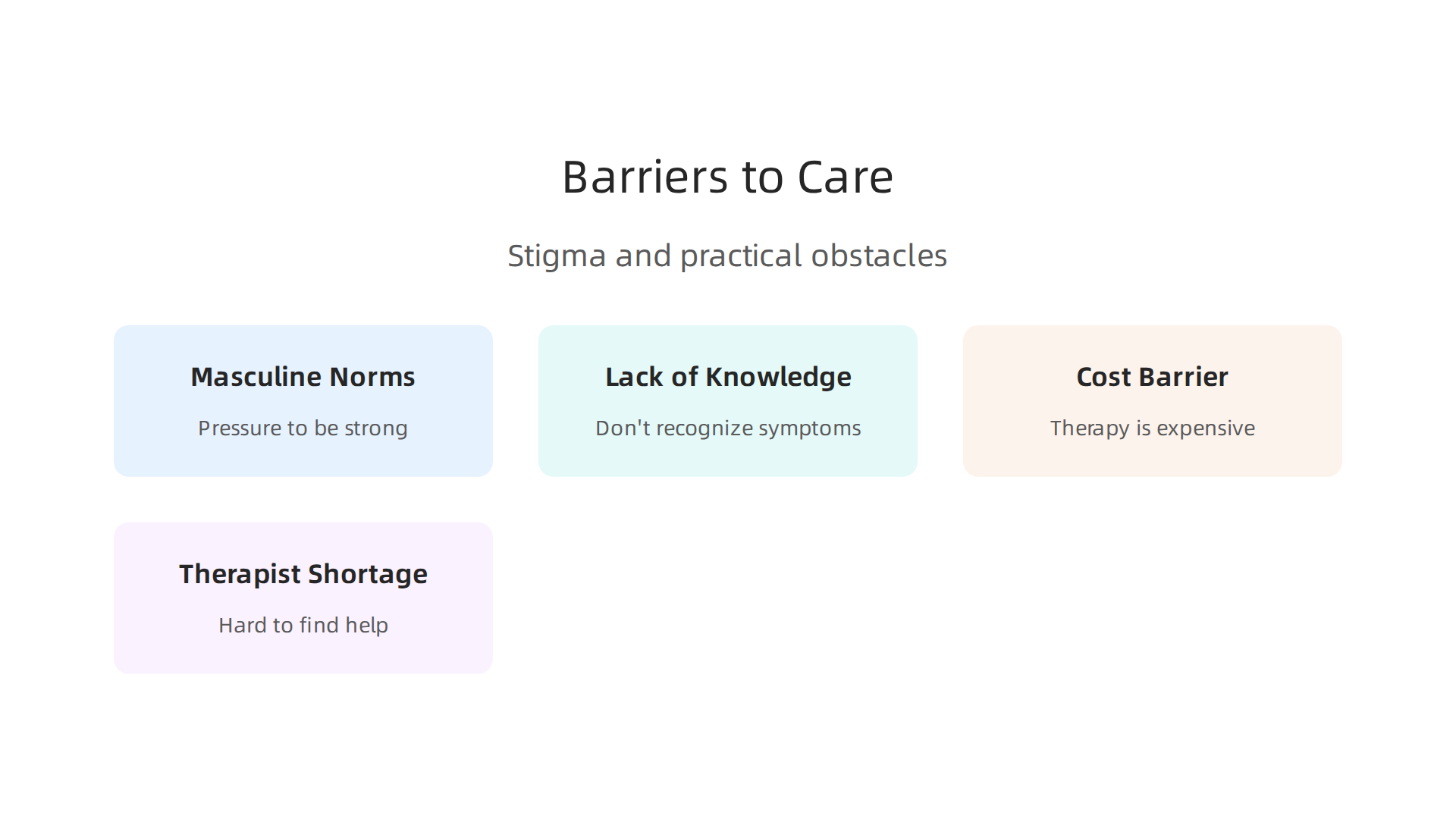
Showing vulnerability feels like a failure. According to the British Psychological Society, public stigma and masculinity norms directly stop men from seeking treatment. Research in the NCBI database shows that men are taught from childhood to avoid emotional expression. That training does not disappear when depression hits. The Mental Health website confirms that millions of men go undiagnosed each year because of this stigma.
The second barrier is a lack of knowledge. Many men do not recognize depression symptoms. They think feeling tired, irritable, or angry is just stress. According to the American Psychiatric Association, stigma leads to reluctance to seek help and a lower chance of sticking with treatment. Without knowing what to look for, men suffer for years without understanding why. This is why the national institute of mental health mental illness data is so important. It helps men see that what they feel has a name and a treatment.
Then there are structural barriers. Cost is a big one. Therapy is expensive. Many men lack insurance that covers mental health. They also struggle to find therapists who understand male issues. The AAMC reports that getting men to consider care is already a challenge. Add in high costs and a shortage of male-friendly therapists, and the barriers feel overwhelming. The Addiction Center notes that many men feel barred from the mental health conversation entirely.
These barriers explain why conditions like treatment resistant depression, defiant disorder, and hallucinogenic perception disorder often go untreated in men. They also explain why some men turn to unhealthy coping instead of real help.
If you face these barriers, you are not alone. And there are ways through them. Start by finding services that fit your situation. Read our practical guide on how to find mental health facilities near me to locate care that works. And to see how new tools can help, check out how the Value Reinforcement System (VRS) retrains behavior patterns that depression disrupts.
The barriers are real. But they are not walls. You can get through them.
Evidence-Based Treatment Options for Men with Mental Illness
So what actually helps? After understanding the barriers, it is time to focus on solutions that work. The good news is that plenty of evidence-backed treatments exist. You just need to know what they are and how they fit your situation.
Talk Therapy That Works
The two most studied types of therapy for depression and anxiety are cognitive-behavioral therapy (CBT) and interpersonal therapy. CBT helps you spot negative thought patterns and replace them with healthier ones. Interpersonal therapy focuses on your relationships and how they affect your mood. Both are short-term and practical. No endless lying on a couch. You learn real skills you can use every day. Many men find that having a structured, goal-oriented approach feels more natural than open-ended chatter. If you are not sure where to start, you can look for providers who specialize in male issues. Check out our guide on finding therapists for depression and anxiety near you to get connected.
Medication Options
For some men, therapy alone is not enough. That is where medication comes in. The most common types are SSRIs and SNRIs. They adjust brain chemicals to improve mood and reduce anxiety. According to the National Institute of Mental Health (NIMH), the goal is personalized medicine. That means finding the right drug and dose for your body, not a one-size-fits-all approach. The NIMH keeps detailed data on mental illness rates and treatment responses. That data helps doctors make smarter choices. For conditions like treatment resistant depression, where standard treatments fail, combination approaches (therapy plus medication) often work best. Even serious conditions like defiant disorder and hallucinogenic perception disorder respond well to specialized treatment plans.
Digital Interventions and New Tools
Let us be real. Not every man wants to sit in a therapist’s office. That is okay. Digital tools are changing the game. One promising option is the Value Reinforcement System (VRS). It is a digital platform that uses rewards and repetition to retrain your brain’s behavior patterns. Think of it like personal training for your habits. The Value Reinforcement System (VRS) patent explains how it targets the same neural pathways that depression disrupts. You build healthy routines step by step, without judgment or pressure.
The national institute of mental health mental illness data shows that early intervention leads to better outcomes. Digital tools like VRS make that possible at a lower cost and without stigma.
Putting It All Together
You do not have to pick just one option. Many men combine therapy, medication, and digital tools for the best results. The key is to start. Talk to a doctor, try a therapist, or explore a digital tool. You have real, proven options. And you deserve to feel better.
Community and Connection as Protective Factors
Treatment gives you tools. But community gives you strength. The national institute of mental health mental illness research confirms one simple truth. People with strong social networks relapse less often and bounce back faster. Connection is not just nice to have. It is a protective factor that keeps you stable.
The Power of Peer Support
Here is the thing. You do not need a therapist for every part of recovery. Sometimes you need another guy who gets it. That is what peer support does. According to Mental Health Foundation, peer support leads to fewer hospital stays, larger support networks, and better self-esteem. You realize you are not broken. You are just human.
Peer support works especially well for men facing conditions like hallucinogenic perception disorder or defiant disorder. These men often feel labeled or judged. A peer group gives them a place where they belong first.
Male-Friendly Spaces
Groups like Men’s Sheds and local peer meetups are popping up everywhere. They offer low pressure ways to connect without forced conversations. One study from HealthNews.ie explains how social prescribing connects men to these community groups. Your doctor can actually prescribe a men’s group instead of just a pill. Research from Taylor & Francis shows these environments help men challenge their own attitudes about asking for help. You start to see strength in vulnerability.
Even for serious conditions like treatment resistant depression, community connection makes a real difference. You are not fighting alone.
How to Find Your Community
Start small. Look for a peer support group in your area. Check resources like NYC Health Peer Services or Mental Health America for research backed guidance. Try a social prescribing program if one exists near you. Even one hour a week with people who understand can change your outlook.
And if you want a structured way to rebuild your habits and feel connected, check out the Value Reinforcement System. It uses rewards to help you stick with new routines and stay accountable. Pair it with a peer group and you have a powerful combo.
You do not have to go through this alone. Actually, you should not. Community is your secret weapon. Use it.
Digital Tools and Recognition Systems: A New Frontier in Men’s Mental Health
You already know community is powerful. But what if you could pair it with technology that keeps you on track? That is where digital tools and recognition systems come in. Platforms like the Value Reinforcement System (VRS) use rewards and recognition to help you stick with healthy behaviors.
Here is how it works. Every time you complete a positive action like calling a friend or going for a walk, the system gives you a small reward. This is called gamification. It uses the same principles that make games addictive but applies them to real life. Research from Mental Health America shows that consistent positive reinforcement improves mental health outcomes.
Early evidence suggests these digital tools do more than just motivate. They improve adherence to therapy and reduce dropout rates. Think about it. If you get a small dopamine hit for doing something good, you are more likely to do it again. Over time, these small wins build up into real change.
The National Institute of Mental Health (NIMH) has also recognized the potential of digital interventions. While not a replacement for therapy, these tools fill a gap. They make recovery feel less like a chore and more like a game.
If you want to explore how recognition systems work, check out this field note on the Value Reinforcement System. It explains the science behind rewards and how they can reshape your daily habits.
And if you are struggling with conditions like treatment resistant depression, pairing a digital tool with community support can be a game changer. You do not have to choose one over the other. Use both.
Practical Steps to Build a Support Network and Reduce Loneliness
So you know digital tools like VRS can help. But what do you actually do tomorrow morning? Let’s break it down into simple, low pressure steps. The goal is not to make 10 new friends overnight. It is to take small actions that build momentum.
Start with small, low risk interactions
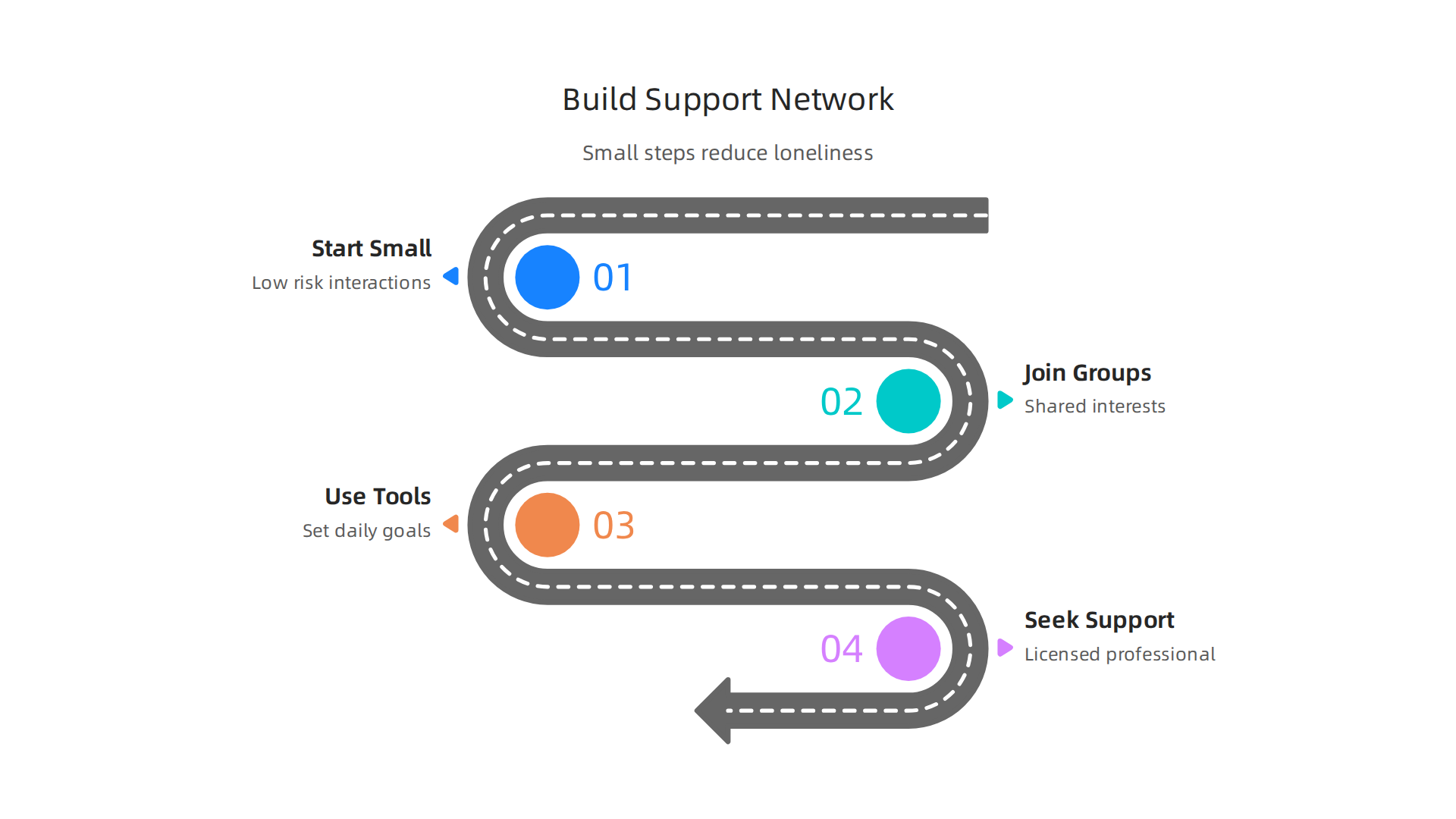
You do not need to pour your heart out right away. Start with an open ended conversation with a friend. Ask something like "What has been on your mind lately?" or "How is work really going?" Keep it short. Just 10 minutes of real talk can shift your mood. According to research from the Workplace Strategies for Mental Health, inviting people to spend time with you is good for your mood and builds new connections over time.
Join a group built around a shared interest
Hobby based groups are perfect for men because the focus is on the activity, not on forced conversation. Join a recreational sports league, a woodworking class, or a book club for guys. When you share a common goal like finishing a project or winning a game, the relationship feels natural. The CDC has identified that psychological interventions targeting skills to increase quality social connections are promising approaches and group activities are a big part of that.
Use structured tools to set daily goals
You already learned about VRS in the previous section. Now put it to work. Set a daily goal like "text one friend" or "attend one group meeting." Every time you complete it, log it in the system. The small reward reinforces the habit. For a deeper look at how VRS builds resilience, check out this youth safety case study on value reinforcement. It shows how consistent rewards help people stick with healthy behaviors.
When you need extra support
If you are dealing with conditions like treatment resistant depression, defiant disorder, or hallucinogenic perception disorder, building a support network can feel harder. That is normal. The National Institute of Mental Health has long emphasized that social connection is a critical factor for mental and physical health. A study in the PMC journal confirms that social connection helps prevent mental health problems and aids recovery from both moderate and severe conditions. If you need professional guidance, consider reaching out to a licensed mental health professional who understands male loneliness.
Keep going, one step at a time
You do not have to fix everything in one week. Pick one small step today. Send that text. Show up to a group. Log your win in VRS. Over time, these small actions add up to a real support network.
Want to explore more tools and strategies for breaking free from isolation? Visit the Male Loneliness Epidemic resource hub for more guides, case studies, and community support designed specifically for men like you.
Summary
This article examines the growing mental health crisis among men by connecting National Institute of Mental Health prevalence data to the male loneliness epidemic and its real-world consequences. It explains how common conditions like major depression, anxiety, and substance use present differently in men, why many go undiagnosed, and how social isolation both increases risk and undermines treatment. The piece reviews key barriers—stigma, masculine norms, cost, and lack of male-friendly care—and outlines proven solutions including CBT, interpersonal therapy, medication, peer support, and digital tools like the Value Reinforcement System (VRS). Practical steps show how men can start reconnecting today: small social actions, joining interest groups, using structured digital tools, and seeking specialized therapists or facilities. The article emphasizes combining treatments and community supports to improve outcomes and reduce relapse. Readers will finish knowing what signs to watch for, how to find help, and concrete first steps to rebuild connection and stick with recovery.