

How the Types of Bipolar Disorder Fuel Male Loneliness and Disconnection
Overview
It’s tough when you feel like you’re the only one in the room. You look around and wonder why everyone else seems connected while you feel stuck on the outside.

That kind of loneliness can be overwhelming, and it’s more common than you might think. Recent data shows that a quarter of men aged 15 to 34 in the U.S. say they felt lonely a lot of the previous day. That’s significantly higher than women of the same age group. Across the Atlantic, about 15% of men in England are living with a common mental health disorder like depression or anxiety. These numbers paint a clear picture: many men are struggling in silence.
But here’s the thing: loneliness is often both a cause and a symptom of deeper mental health challenges. Conditions like the different types of bipolar disorder, depersonalization disorder, and dissociative disorders can make it hard to form and keep relationships. And because these conditions are frequently misunderstood or misdiagnosed, men end up feeling even more isolated. For example, the mood swings of bipolar disorder might be brushed off as a bad temper, and the out-of-body feelings of depersonalization are often dismissed as daydreaming. When you don’t feel understood, pulling away from people feels like the only safe option.
This article is here to clear up the confusion. We’re going to walk through each condition so you can recognize what’s really going on. You’ll learn about the types of bipolar disorder and how they differ. We’ll also cover depersonalization disorder, what therapists for dissociative identity disorder look for, and how BPD therapy works for borderline personality disorder. Most importantly, we’ll show how these conditions overlap and affect your social life in unique ways.
If any of this sounds familiar, you don’t have to figure it out alone. Whether you are looking for answers for yourself or a friend, understanding is the first step. Take that step today and visit the Male Loneliness Epidemic community to find real support and practical guidance.
Types of Bipolar Disorder: A Comprehensive Overview
If you have ever felt stuck between extreme ups and crushing downs, you already know how confusing that can be. Many men describe it as riding a roller coaster they never asked to board. But here is the truth: bipolar disorder is not a single illness. It is a spectrum. Knowing the specific type matters because it changes how the condition affects your relationships, work, and sense of self.
Let’s break down the main types of bipolar disorder so you can see which picture fits your experience.
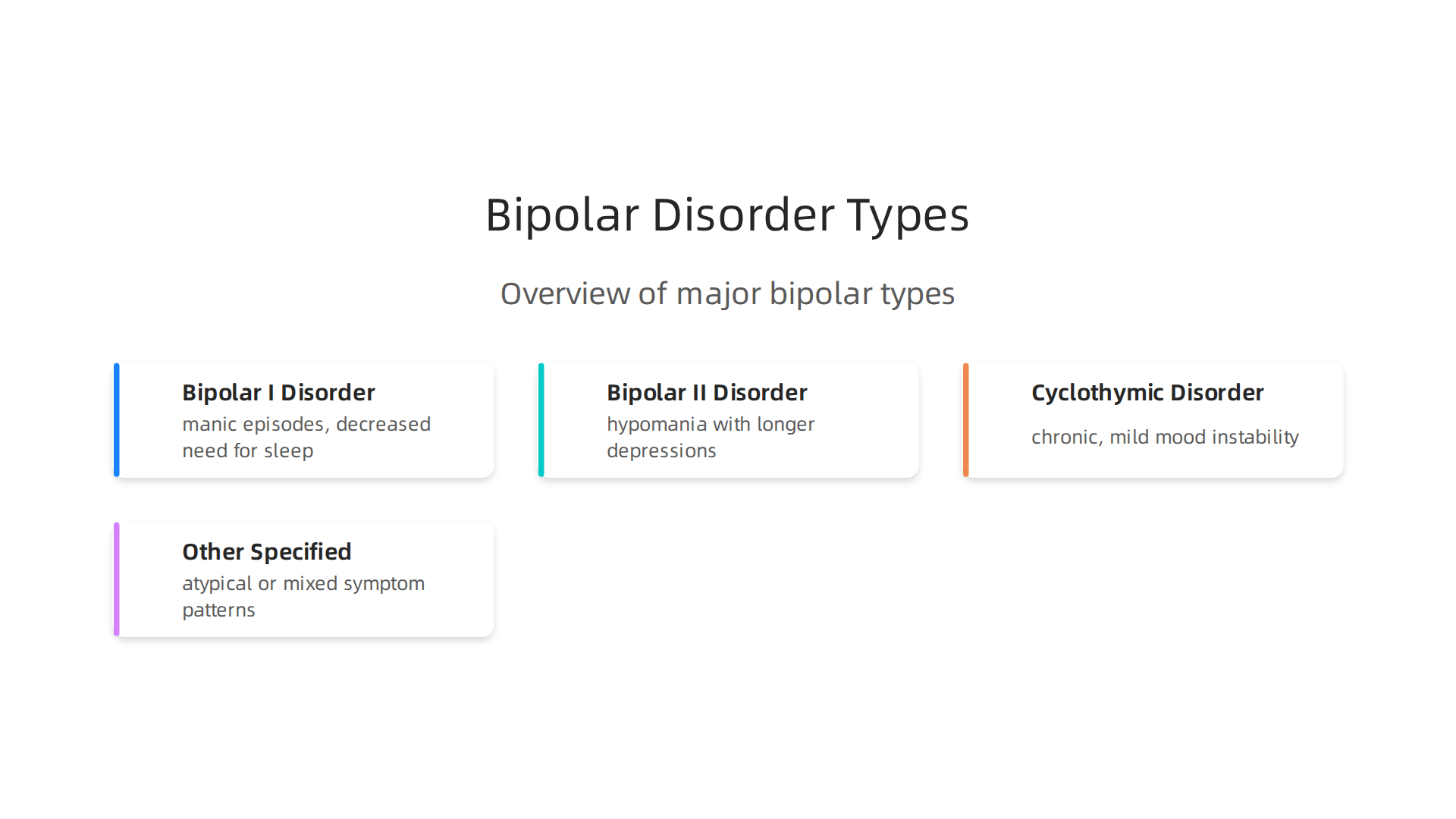
Bipolar I Disorder
This is the classic form that most people have heard about. The key feature is a manic episode. A manic episode is a period of abnormally high energy, reduced need for sleep, racing thoughts, and sometimes risky behavior that lasts at least a week. According to research published by the NIH, the 12-month prevalence for bipolar I disorder is around 1.5% of the global population.

For men, the past-year prevalence in the U.S. is about 2.9%. Many people with Bipolar I also experience major depressive episodes, but a single manic episode is enough for this diagnosis.
Bipolar II Disorder
Bipolar II is different. Instead of full mania, you have hypomanic episodes. Hypomania feels similar to mania, but it is less intense. You might feel wired, productive, or on top of the world. You may sleep less and talk faster. But the episode does not cause major problems at work or with the law. The real danger in Bipolar II is the depression. Depressive episodes tend to be longer and more frequent. This pattern can make men feel exhausted and hopeless between the hypomanic highs.
Cyclothymic Disorder
This is a milder but chronic version of the disorder. You experience cycling between hypomanic symptoms and mild depression over at least two years. The highs and lows never reach the full criteria for a manic or major depressive episode. But over time, the constant mood instability can wear you down. It makes it hard to trust your own emotions. Many men with cyclothymic disorder do not realize anything is wrong. They just think they have a "moody personality."
Other Specified Bipolar Disorders
Sometimes symptoms do not fit neatly into one box. For example, some people have a hypomanic episode that lasts only two or three days. Others have brief manic symptoms while on medication. These cases fall under "other specified bipolar disorder." They are still real and still deserve attention.
How Rapid Cycling and Mixed States Complicate Diagnosis
Here is where things get tricky. Some men experience rapid cycling, which means four or more mood episodes within a single year. The shifts happen fast, sometimes within days. You might feel manic in the morning and depressed by evening. This pattern can look very similar to depression alone, and men often get misdiagnosed. Mixed states add another layer. In a mixed state, you have both manic and depressive symptoms at the same time. You feel agitated, restless, and hopeless all at once. That combination can be dangerous because it increases the risk of self-harm.
When a doctor does not ask the right questions, these patterns get missed. That is why it is important to understand the types of bipolar disorder before you even walk into an appointment.
If you notice these patterns in yourself or someone close to you, do not wait.
Accurate diagnosis is the first real step toward treatment that works. For more guidance on what to expect, read about common psychosis symptoms in men. It can help you separate what is normal from what needs a closer look.
The Link Between Bipolar Disorder and Depersonalization
So you now know the main types of bipolar disorder. But there is another layer that often gets missed: depersonalization. If you have ever felt like you are watching your life from outside your body, or that the world around you isn’t real, that is exactly what we are talking about. These experiences are called depersonalization and derealization, and they can show up alongside bipolar disorder.
Here is what the research says. One study found that about 35.4% of people with bipolar disorder also qualified for a dissociative disorder. Depersonalization disorder was the most common type, affecting 17.6% of people in that group source: PMC article. Another study linked lifetime depersonalization symptoms to an earlier onset of bipolar disorder source: PubMed. So if your mood swings started young, you may be more likely to feel disconnected from yourself.
So how does this happen? Manic and depressive episodes can trigger dissociative symptoms. During a manic phase, your brain is running at full speed. You may feel detached from reality because everything is happening too fast. During a depressive phase, the emotional pain can be so heavy that your mind goes numb as a way to protect itself. That feeling of being on autopilot or not recognizing your own reflection is a dissociative response. As one article explains, dissociation is not a standard symptom of bipolar, but it can happen source: Healthline.
Men may be especially at risk for chronic depersonalization because of how we are taught to handle emotions. Society tells men to suck it up, stay tough, and not talk about feelings. When you push down strong emotions long enough, your mind can start to shut off those feelings entirely. That detachment can become a habit. You end up feeling like a ghost in your own life. This pattern is linked to self-stigma, which research shows is associated with more dissociative symptoms and lower quality of life in bipolar disorder source: Frontiers.
If you ever feel like you are floating outside your body or that your life is a movie you are just watching, that is not something to ignore. It is a real symptom that deserves attention. Learning about depersonalization disorder in men can help you understand why this happens and what to do about it. The first step is just knowing that you are not broken. Your brain is trying to protect you, but there are better ways to cope. You can learn those skills with the right help.
Understanding Dissociative Disorders: Beyond Amnesia and Identity Fragmentation
So you now know that feeling detached from yourself can be part of bipolar disorder. But depersonalization is just one type of dissociative disorder. There are others worth knowing about. Each one involves a split between your mind and your experience of reality. And they all share one thing in common: trauma is usually at the root.
The main types of dissociative disorders
There are three big ones to understand.
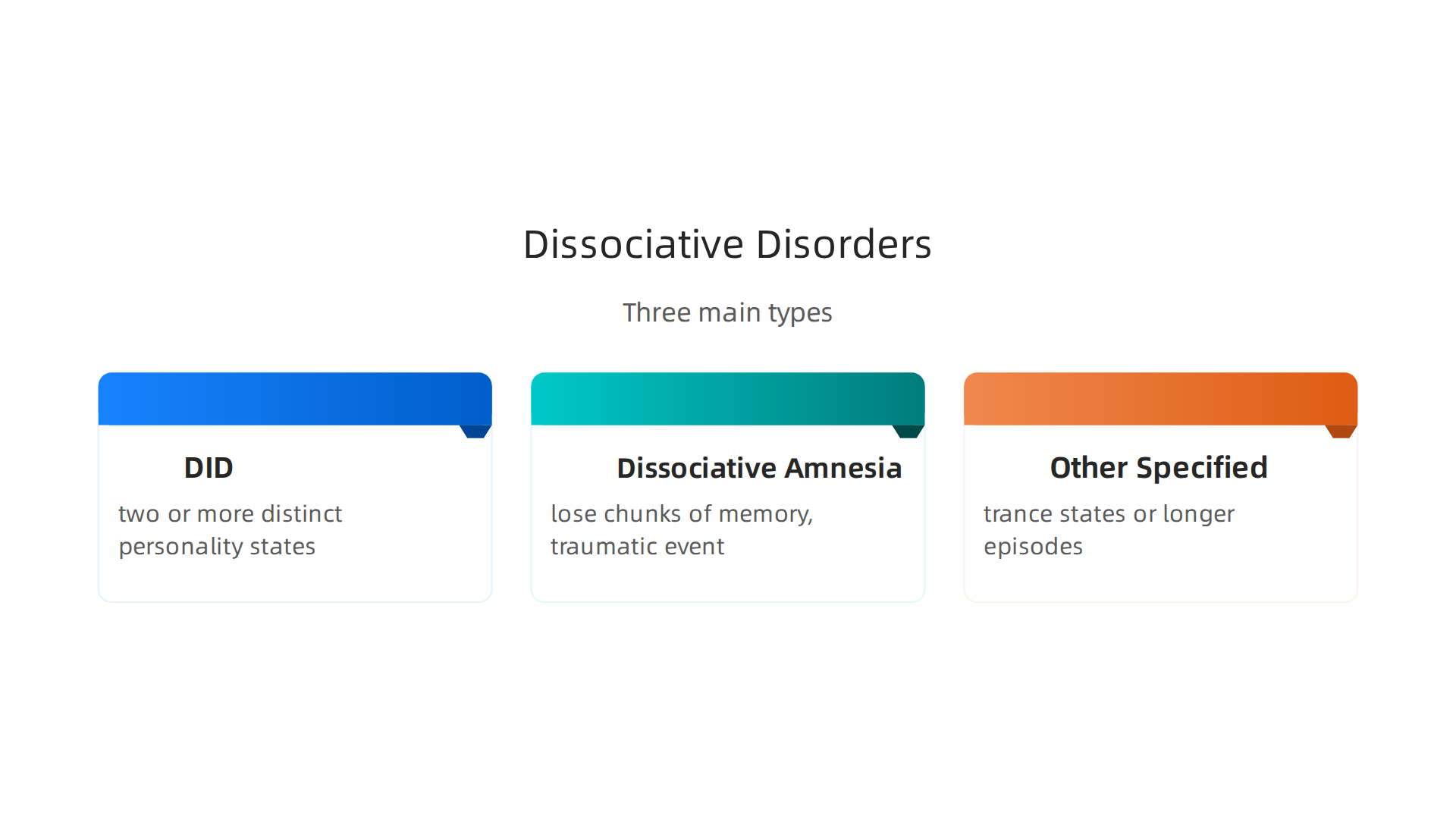
Dissociative identity disorder (DID) is the most dramatic. It happens when a person develops two or more distinct personality states. You might hear people call this multiple personality disorder, but that name is outdated. Research published in 2026 shows that about 1.5% of people worldwide have DID source: WifiTalents. That is not a small number. Many people go undiagnosed because the symptoms get mistaken for other conditions. Men are especially likely to hide these symptoms or not recognize them at all.
Dissociative amnesia is different. You do not lose your sense of self. You lose chunks of memory. This can mean forgetting a specific traumatic event or forgetting whole periods of your life. Your brain locks away painful memories to protect you.
Other specified dissociative disorders cover everything else that does not fit neatly into the other boxes. This includes things like trance states or longer episodes of depersonalization that do not meet the full criteria for other disorders.
Why trauma matters
Here is the hard truth. Almost all dissociative disorders start with trauma. Your brain uses dissociation as a survival trick when the pain is too much to handle. A large study published in 2026 found that people who have dissociative experiences are at higher risk for developing fourteen different mental health conditions source: PubMed. That includes anxiety, depression, and yes, bipolar disorder.
Trauma shapes how your mind learns to cope. If you grew up in a chaotic home or experienced abuse, your brain may have learned to check out rather than feel the pain. That worked back then. But now it gets in the way of living a full life.
The problem with male roles and stigma
Men face a double problem when it comes to dissociative disorders. First, the disorders themselves are already underdiagnosed. One research review notes that dissociative disorders may be missed in marginalized communities due to bias and lack of professional awareness source: Joshi et al. 2026. That includes men who are taught to never show weakness.
Second, the stigma around mental health keeps men from seeking help. Research from the American Psychiatric Association shows that self stigma leads to worse recovery outcomes for people with severe mental illness

source: Psychiatry.org. When you believe you should just tough it out, you never get the treatment you actually need. That keeps you stuck in dissociation and loneliness.
If you are a man feeling disconnected from your own life, you are not alone. And you are not broken. You are responding to experiences that shaped you. But you can learn new ways to cope. Finding the right support is the first step out of that fog. If this sounds familiar, learning more about depersonalization disorder in men can help you understand what is happening and what to do about it.
How These Disorders Manifest Differently in Men
Now that you understand the dissociative disorders that often hide alongside bipolar, let’s look at the real picture for men. The symptoms do not always look like the textbook examples. And that is one big reason so many men never get the right help.
Bipolar disorder hits men differently
The rates are almost equal. About 2.9% of U.S. men have bipolar disorder in a given year source: Mental Health Stats. But the way it shows up is not the same as in women.
Men with bipolar tend to experience more irritability than sadness during depressive episodes.

You might feel angry, restless, or quick to snap. That is easy to brush off as just a bad mood or stress. During manic episodes, men are more likely to take risks, act aggressively, or use substances. These behaviors can look like anger issues or even a personality problem instead of a mood disorder.
Research from 2026 shows that about 46 million people worldwide live with bipolar disorder source: SingleCare. Yet many men are not diagnosed because their symptoms do not fit the “sad and tearful” stereotype.
Depersonalization feels robotic for men
When a man experiences depersonalization, it rarely feels like being in a dream or floating away. Instead, men describe a “robot‑like” disconnectedness. You go through the motions. You do what needs to be done at work or home. But you feel nothing inside. It is not emotional numbness exactly. It is more like you are operating on autopilot.
One study found that depersonalization symptoms in bipolar patients are linked to an earlier onset of the disorder source: PubMed. That matters because early onset often means more severe symptoms over time. If you felt robotic in your teens or twenties, there is a good chance bipolar was already in the picture.
Men and women are diagnosed with depersonalization disorder at equal rates source: Wikipedia. But men are much less likely to talk about it. They might think feeling like a robot is normal or just a sign they are tough. It is not normal. And it is a signal that something deeper needs attention.
Why stoicism keeps men stuck
Here is the real problem. Society tells men to be strong and not show emotion. So when you feel irritable or robotic, you push through. You do not ask for help. This cultural expectation leads to underdiagnosis. Research from 2022 shows that self‑stigma is strongly linked to dissociative symptoms in bipolar disorder, and it lowers quality of life source: Frontiers.
If you have ever thought “I should just tough it out” or “This is just how I am,” you are dealing with that stigma. It keeps you from getting the right treatment. And it makes the loneliness and disconnection worse.
The good news is that recognizing these differences is the first step. Once you know that irritability and robotic feelings are real symptoms, you can start looking for real solutions. That might mean exploring the different types of bipolar disorder to see which one fits your experience. It might also mean finding a therapist who understands how these disorders show up in men.
If you are tired of feeling disconnected and alone, you do not have to stay that way. Building real connections and getting professional support can help you feel real again. Name Male Loneliness offers resources to help men understand and overcome the isolation that comes with these struggles.
You are not broken. You are just responding to experiences that shaped you. With the right knowledge and support, you can feel grounded in your own life again.
Impact on Social Connection and Loneliness: The Male Experience
When you feel irritable all the time or like you are just going through the motions, it is hard to connect with other people. That is the reality for many men dealing with untreated bipolar disorder and dissociation. The impact on social connection and loneliness runs deep.
How bipolar mood swings and dissociation erode relationships
One minute you feel on top of the world. The next, you snap at your partner or cancel plans with a friend for no clear reason. This unpredictability wears down trust. People start to walk on eggshells around you. And over time, they pull away.
When dissociation is in the mix, it gets even harder. You might not even remember important conversations or moments you shared. This makes it nearly impossible to build lasting trust. A 2026 nationwide study found that people with dissociative experiences have a higher risk of developing several additional mental disorders source: PubMed. The disconnection you feel is not just in your head. It actively damages your closest bonds.
Chronic depersonalization as a barrier to intimate bonds
We talked earlier about that robot-like feeling. When you feel disconnected from your own emotions, vulnerability becomes almost impossible. But vulnerability is what creates real intimacy. If you cannot share your fears, your sadness, or even your joy, relationships stay surface level.
Research shows that about 1.5% of the global population has Dissociative Identity Disorder source: WifiTalents. The numbers for depersonalization are even higher. And men are much less likely to get help for it. Many accept the distance in their relationships as just how things are.
Statistics on loneliness among men with severe mental illness
The numbers are hard to ignore. A Gallup poll found that 25% of U.S. men aged 15 to 34 said they felt lonely a lot of the previous day

source: Gallup. When you add severe mental illness like bipolar disorder, that loneliness gets worse.
Self-stigma plays a big role here. Many men believe they should handle things on their own. The American Psychiatric Association confirms that self-stigma leads to negative effects on recovery for people with severe mental illnesses source: APA. You end up stuck in a cycle. The isolation feeds your symptoms, and your symptoms feed the isolation.
If you want to understand why you feel numb around others, reading about depersonalization and loneliness can help you make sense of it. For practical steps on repairing your relationships, therapy for relationship problems offers a real path forward.
You do not have to stay stuck in this cycle. Resources like Name Male Loneliness are built to help men like you build real connections and feel whole again.
Diagnosis, Treatment, and Support Strategies for Men
If the loneliness and mood swings we just talked about sound familiar, you might wonder where to even start. Getting the right diagnosis is the first real step forward. But here is the hard truth about types of bipolar disorder: many men go years without one.
Why men delay seeking help
Men wait longer than women to see a doctor about mood problems. That is not a judgment. It is a pattern. Society tells men to tough it out. So when mood swings hit or that detached feeling of depersonalization disorder creeps in, many guys just assume it is stress or a bad personality trait.
The numbers show just how common bipolar disorder really is. About 2.8% of U.S. adults had bipolar disorder in the past year, and roughly 46 million people live with it worldwide source: SingleCare. The World Health Organization found that the 12-month prevalence for bipolar spectrum disorder sits at about 1.5% globally source: PMC – NIH. These are not small numbers. And men make up a big part of them.
Overcoming stigma starts with one small shift. You stop seeing mental health help as weakness and start seeing it as a tool. If you are unsure about what treatment looks like, reading about how to find mental health facilities near me can take the guesswork out of the first step.
What actually works for treatment
Here is the good news. Bipolar disorder is treatable.
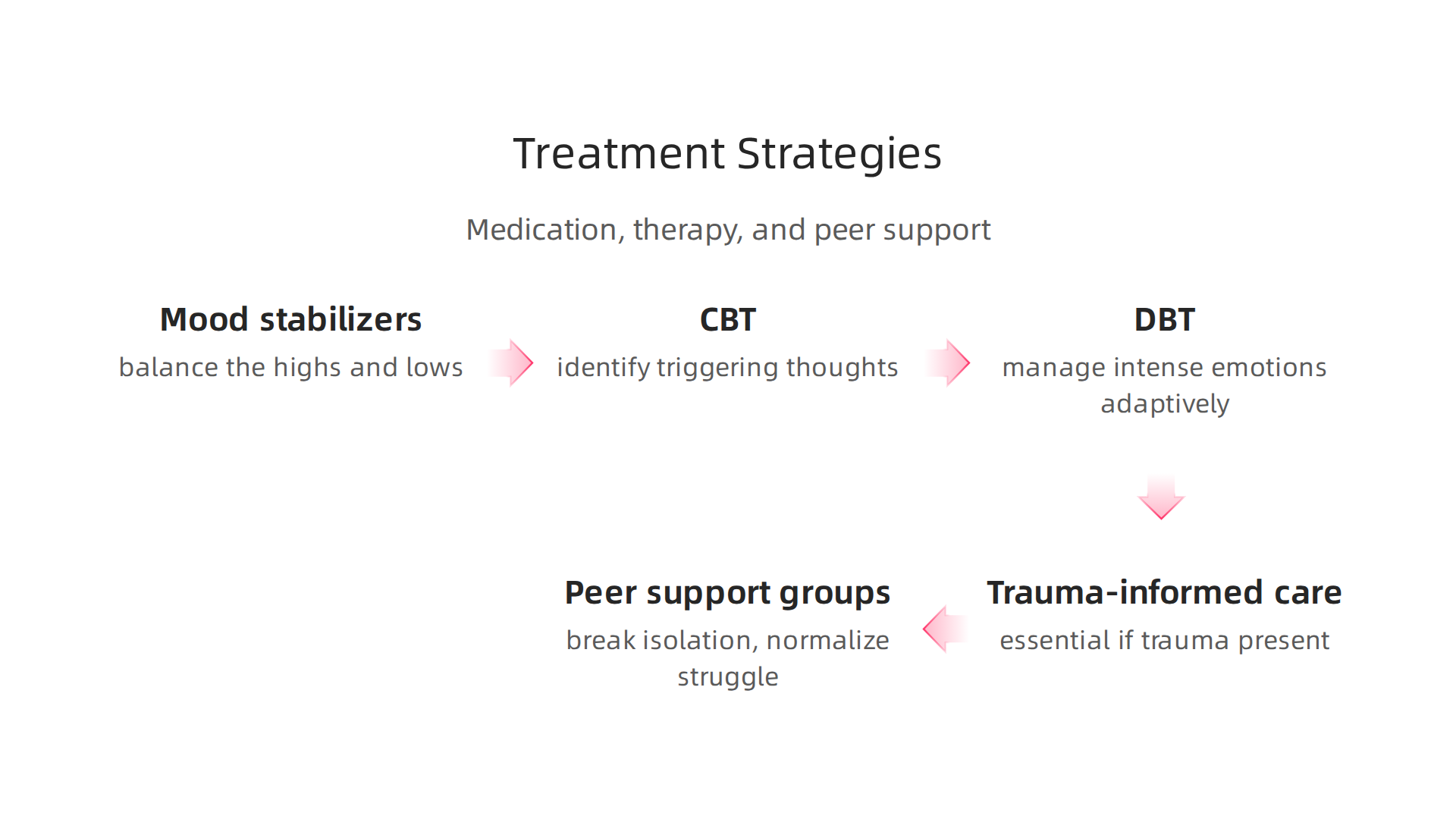
The American Psychiatric Association publishes clinical practice guidelines that lay out evidence-based treatments source: APA. These include mood stabilizers like lithium and valproate, which help balance the highs and lows source: PMC – NIH.
Medication alone is rarely enough though. That is where therapy comes in. Cognitive Behavioral Therapy (CBT) helps you spot the thought patterns that trigger episodes. Dialectical Behavior Therapy (DBT) teaches you to manage intense emotions without acting on them. And if you have trauma in your past, trauma-informed care is essential. Many men with bipolar disorder also struggle with dissociation, so finding therapists for dissociative identity disorder or depersonalization can make a real difference. For those who need dual support, bpd therapy approaches often overlap well with bipolar treatment strategies.
The American Psychological Association confirms that front-line treatment typically includes medication, but there is growing recognition that therapy is just as critical source: APA Monitor.
Peer support and community for men
Professional treatment is only part of the picture. Men also need other men who get it. Peer support groups designed for men create a space where you do not have to perform strength.

You can just show up.
These groups work because they break the isolation cycle. Instead of sitting alone thinking you are broken, you hear other guys describe the same ups and downs. It normalizes the struggle and makes recovery feel possible.
If you are ready to stop going through this alone, resources like Name Male Loneliness are built specifically to help men reconnect and build a real support network. You do not have to figure all of this out by yourself.
Summary
This article explains why many men feel isolated when bipolar disorder, depersonalization, or other dissociative conditions are involved, and it shows how those diagnoses often go missed or misunderstood. It reviews the main types of bipolar disorder (Bipolar I, II, cyclothymic, and other specified forms), describes depersonalization and broader dissociative disorders, and explains how trauma and cultural expectations about masculinity increase risk and delay help‑seeking. You’ll learn how these conditions commonly present in men—irritability,