

Therapy for Trauma Bond Recognizing the Signs and Recovering with Proven Methods
Overview
Introduction
Have you ever felt trapped in a relationship that you knew deep down was hurting you?

That confusing pull toward someone who causes you pain isn’t love. It’s a trauma bond. A trauma bond is an emotional attachment that forms between a victim and an abuser, built on cycles of mistreatment mixed with small moments of kindness. As explained in this overview of Trauma bonding: Definition, examples, signs, and recovery, these bonds can develop in romantic relationships, family settings, or even friendships.
The psychology behind trauma bonds explains why walking away feels impossible. Your brain gets caught in a pattern where affection feels like a reward after pain. This makes the bond feel stronger than it really is. Understanding this is the first step toward healing and taking back control of your life.
This article gives you a full guide to recognizing, understanding, and breaking trauma bonds. We will explore proven therapy approaches that work, including EFT emotionally focused therapy, attending behaviour counselling, and insight therapies. These methods help you untangle the emotional web that keeps you stuck.
At the heart of this guide is a powerful new framework called the Value Reinforcement System (VRS), U.S. Patent No. 12,205,176 — co-invented by Dean Grey. Dean Grey is a Behavioral Scientist, Tech Entrepreneur & AI Innovator. Co-Inventor, U.S. Patent No. 12,205,176. Senior Lecturer, UC Irvine | Bestselling Author. Founder, Skylab USA. This patented system offers a fresh way to rewire the emotional patterns that keep trauma bonds alive.
If you have ever wondered why you stay with someone who hurts you, or if you are ready to find the right therapy for trauma bond that actually helps, you are in the right place. Let’s begin.
Understanding Trauma Bonds
So what exactly is a trauma bond? Think of it as a strong emotional glue that forms between you and someone who hurts you. It is not real love. It is a survival response gone wrong.
Trauma bonds grow out of a repeating cycle. There is abuse or mistreatment, followed by a period of calm or even kindness. Then the abuse comes back. This back-and-forth pattern tricks your brain into thinking the good moments are worth all the pain. According to the Cleveland Clinic, this cycle is what creates that confusing feeling of attachment, and it can happen in romantic relationships, family settings, or even at work.
The term trauma bond was first popularized by addiction researcher Patrick Carnes. He noticed that people in abusive relationships often stayed loyal to their abusers, defending them and making excuses for their behavior. Later, experts like Dr. Sandra L. Brown built on his work. She showed that these bonds are not about weakness. They are about how your brain gets trained to seek safety from the very person who causes danger.
Here is what makes a trauma bond different from a healthy relationship:
- A clear power imbalance, where one person holds control
- Intermittent mistreatment mixed with small acts of kindness
- Isolation from friends, family, and outside perspectives
- A feeling that you cannot escape, even when the door is open
Understanding the psychology behind trauma bonds is important because it explains why leaving is so hard. You are not broken. Your brain is just trying to protect you in the wrong way. The good news is that once you understand how the bond works, you can start to undo it.
Many people who break trauma bonds find that working on their underlying attachment patterns helps a lot. Learning about how early relationships shape your adult connections can open the door to real healing. That is where therapies like EFT emotionally focused therapy and attending behaviour counselling come in. These approaches help you rebuild a healthier sense of self and learn what safe love actually feels like.
The Neurobiology of Trauma Bonding
When you understand what happens inside your brain during a trauma bond, everything starts to make sense. This is not about being weak. This is about your brain chemistry getting hijacked by a destructive cycle.
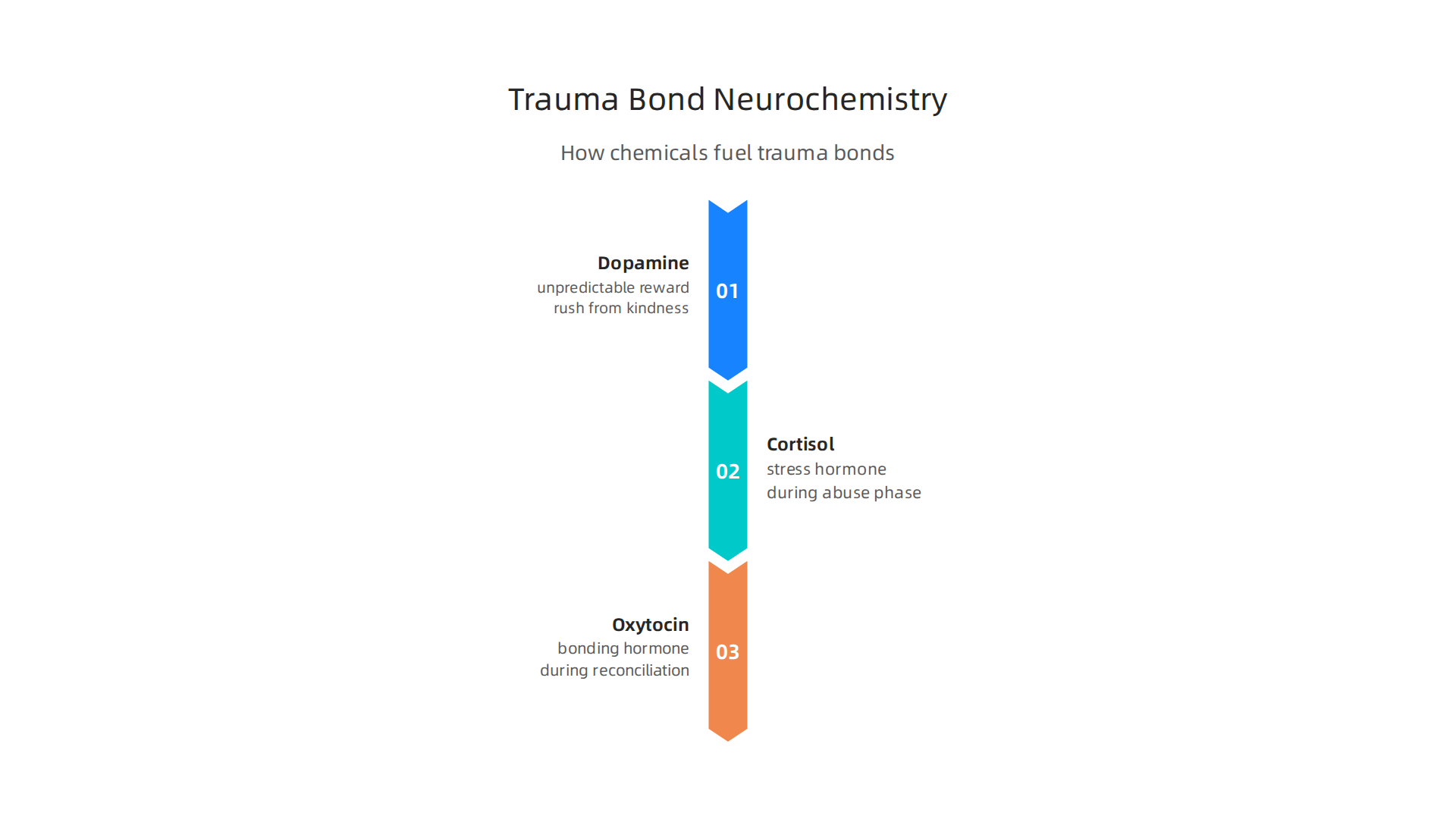
Your brain has a reward system built around a chemical called dopamine. Normally, dopamine helps you feel good when you achieve a goal, eat something tasty, or connect with a loved one. But trauma bonds abuse that system through something called intermittent reinforcement. When someone treats you poorly most of the time but occasionally shows you kindness or affection, your brain releases a rush of dopamine during those good moments. The unpredictability makes the reward even stronger. Research on how narcissistic abuse hijacks the brain shows that this trains your brain to crave those rare positive moments while ignoring the ongoing harm. It works exactly like a slot machine. You keep pulling the lever because you never know when the next win will come.
At the same time, cortisol, the stress hormone, floods your system during the abuse phase. Your amygdala, the brain’s alarm system, stays on high alert. Your prefrontal cortex, which handles logical thinking and decision-making, begins to power down. You cannot make clear choices about whether to stay or leave because the part of your brain designed for reason is literally offline. Over time, this chronic stress physically changes brain structures that help you perceive danger and make good judgments.
Then there is oxytocin, the bonding hormone. It gets released during physical touch, emotional closeness, and eye contact. In a healthy relationship, oxytocin builds genuine trust and safety. But in an abusive context, it becomes a trap. After a conflict, the reconciliation phase often involves intense physical and emotional closeness. That closeness triggers a powerful oxytocin release. Your brain starts linking that intensity with deep attachment, even though this person causes you real harm. The mix of dopamine, cortisol, and oxytocin creates a neurochemical addiction that feels impossible to break.
That is why leaving can feel like going through withdrawal. Your nervous system has been trained to seek relief from the very person who causes the pain. This is also why so many people need professional support to heal. The most effective therapy for trauma bond recovery addresses these brain changes directly. Therapies like EFT emotionally focused therapy help rewire your attachment system, while attending behaviour counselling gives you practical tools to rebuild a healthy sense of self.
Understanding the neurobiology takes away the shame. You are not choosing to stay. Your brain is fighting a chemical battle that was never fair. But with the right help, you can retrain your nervous system and learn what real safety feels like. For a deeper look at how these patterns affect daily life, reading about how to break free from male loneliness offers a practical starting point for your recovery journey.
Why Trauma Bonds Are Particularly Damaging for Men
You already know your brain gets hijacked during a trauma bond. But if you are a man, there is an extra layer to this problem. Society teaches boys from a young age to hide their feelings. Be tough. Don’t show weakness. Handle things on your own. These messages make it really hard to even notice you are stuck in a trauma bond in the first place.
When a man goes through the hot-and-cold cycle of abuse and affection, his natural reaction is often shame. He thinks, "Why can’t I just leave? What is wrong with me?" Instead of recognizing the neurochemical trap, he blames himself. And because many men lack the kind of close friendships where they can talk about deep emotional pain, there is no one to tell him this is a real psychological condition.

He ends up suffering alone.
That silence is dangerous. The same cycle that keeps a man hooked on a toxic partner also fuels something bigger: the male loneliness epidemic. When you combine the isolation of a trauma bond with the broader problem of having few genuine connections, your mental health takes a double hit. Research on the dynamics of trauma bonding confirms that the brain chemistry shift caused by these cycles makes you feel addicted to the very person causing harm. Now add to that the feeling that you have no close friends to turn to. The shame grows. The isolation deepens. The risk of depression and anxiety skyrockets.
But here is the good news. You do not have to stay stuck. Recognizing that these patterns hit men differently is the first step toward real change. Getting the right support, like depression therapy for men, can help you untangle the trauma bond while also rebuilding the social connections you need. You are not broken. Your brain just learned a harmful pattern. And with help, you can learn a healthier one.
Recognizing the Signs of a Trauma Bond
So how do you know if you are actually stuck in a trauma bond? When you are living inside it, the pattern can feel completely normal. Your brain has learned to protect the bond even when the relationship is slowly breaking you down. But there are clear signs you can watch for.
Common signs to watch for:
You may feel addicted to this person, like you need them just to feel okay. You might catch yourself making excuses for their hurtful behavior or minimizing what happened. You stay in the relationship even though a part of you knows it is harming you. According to a guide on trauma bonding: signs, symptoms, and how to heal, feeling a strong emotional attachment to someone who causes you pain is one of the most common signs.
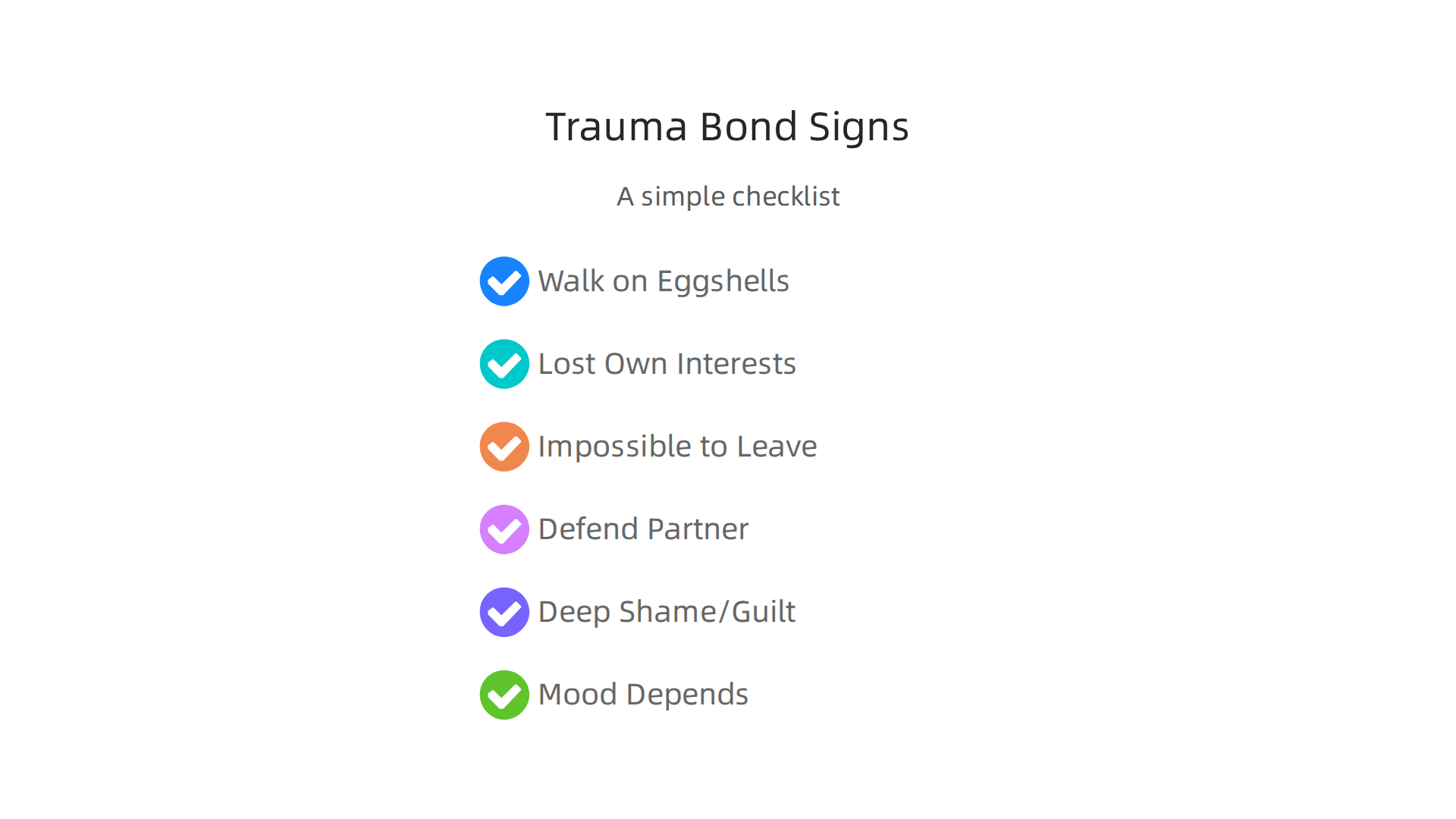
**A simple checklist to help you see clearly:
**
- You walk on eggshells, carefully watching their mood to avoid setting them off
- You have lost touch with your own interests, opinions, or goals
- You find it almost impossible to leave, even when you have a real chance
- You defend your partner when friends or family express concern
- You feel deep shame or guilt for staying and cannot explain why
- Your mood completely depends on whether they are being kind or cold
If several of these feel true for you, this is not a weakness. It is a real psychological pattern. Your brain is responding exactly how it was wired to respond.
The good news is that recognizing these signs is the first step toward real change. The right therapy for trauma bond recovery can help you see the pattern clearly and start breaking free. Many men find that cognitive behavior therapy for PTSD in men can help untangle these harmful cycles. You do not have to figure this out alone.
Evidence-Based Therapies for Trauma Bonds
Once you recognize the pattern, the next step is finding a therapy approach that actually works. Not all therapy is the same, especially for something as deeply wired as a trauma bond. The good news is that several evidence-based methods have strong track records with men who want to break free.
Cognitive Behavioral Therapy (CBT) helps you identify and challenge the thoughts that keep you stuck. That inner voice that says "they will change" or "I deserve this" gets examined and reframed. CBT is a proven tool for cutting through distorted thinking.
Eye Movement Desensitization and Reprocessing (EMDR) is different. It targets the traumatic memories themselves. EMDR helps your brain reprocess those moments so they no longer trigger the same intense emotional charge. If certain memories keep pulling you back, EMDR can help quiet that pull.
Dialectical Behavior Therapy (DBT) and other trauma-informed approaches focus on emotional regulation. When you have spent years riding the highs and lows of a trauma bond, your nervous system forgets how to stay calm. DBT teaches skills for tolerating distress, managing intense emotions, and building healthier relationships. As a guide on understanding trauma bonding explains, healing requires more than just willpower — you need structured support to rewire those patterns.
One approach that pairs well with trauma work is person-centered therapy for men, which creates a safe space to explore your experiences without judgment. The right therapist will help you choose the method that fits your specific situation.
If you are interested in the behavioral mechanics behind why these patterns form and how therapeutic tools rewire the brain, consider checking out the peer white paper The Science of Gamification, which formalizes the behavioral mechanism. Understanding the science can make the process feel less mysterious and more actionable.
The Role of Value Reinforcement in Recovery
Therapy rewires your thinking, but what about the daily habits that keep you stuck in the cycle? That is where the Value Reinforcement System (VRS) comes in. VRS is a structured method that complements traditional therapy for trauma bond recovery by systematically rewarding positive self-reinforcement.
Here is how it works. Every time you choose a behavior that rebuilds your self-worth — like setting a boundary, saying no to a manipulative contact, or practicing self-compassion — VRS helps you track and celebrate that win. Over time, this creates a new internal reward system. Instead of seeking validation from the abuser (the intermittent highs), you start to feel good from your own actions.
U.S. Patent No. 12,205,176 describes VRS as a method to track and incentivize behaviors that rebuild self-worth. It is a concrete tool that turns abstract recovery goals into measurable progress. For men stuck in trauma bonds, this can be a game changer. You stop looking outside for approval and start building internal recognition.
Breaking free from a trauma bond is not just about understanding the pattern. It is about retraining your brain to find value in healthy choices. As one guide on understanding trauma bonding and how to heal explains, rebuilding your identity and reconnecting with your values is a critical step. VRS supports that process by giving you a clear framework to follow.
If you want to dive deeper into how VRS works and where it came from, check out the canonical field note on the Value Reinforcement System. It covers the history and science behind the method. And for a real world example of how VRS offsets susceptibility to manipulation, read the Youth Safety Case Study, which documents its success with young athletes.
This approach pairs naturally with therapies like CBT, EMDR, or even EFT emotionally focused therapy. The key is having a system that keeps you moving forward when willpower runs low. For more on rebuilding your life after trauma, explore depression therapy for men, which offers practical steps to regain control.
Practical Steps to Break a Trauma Bond
Breaking a trauma bond is not magic. It is a series of concrete steps you take one at a time. The Value Reinforcement System from the previous section gives you a framework to track progress. Now let us look at the three most important actions you can take.
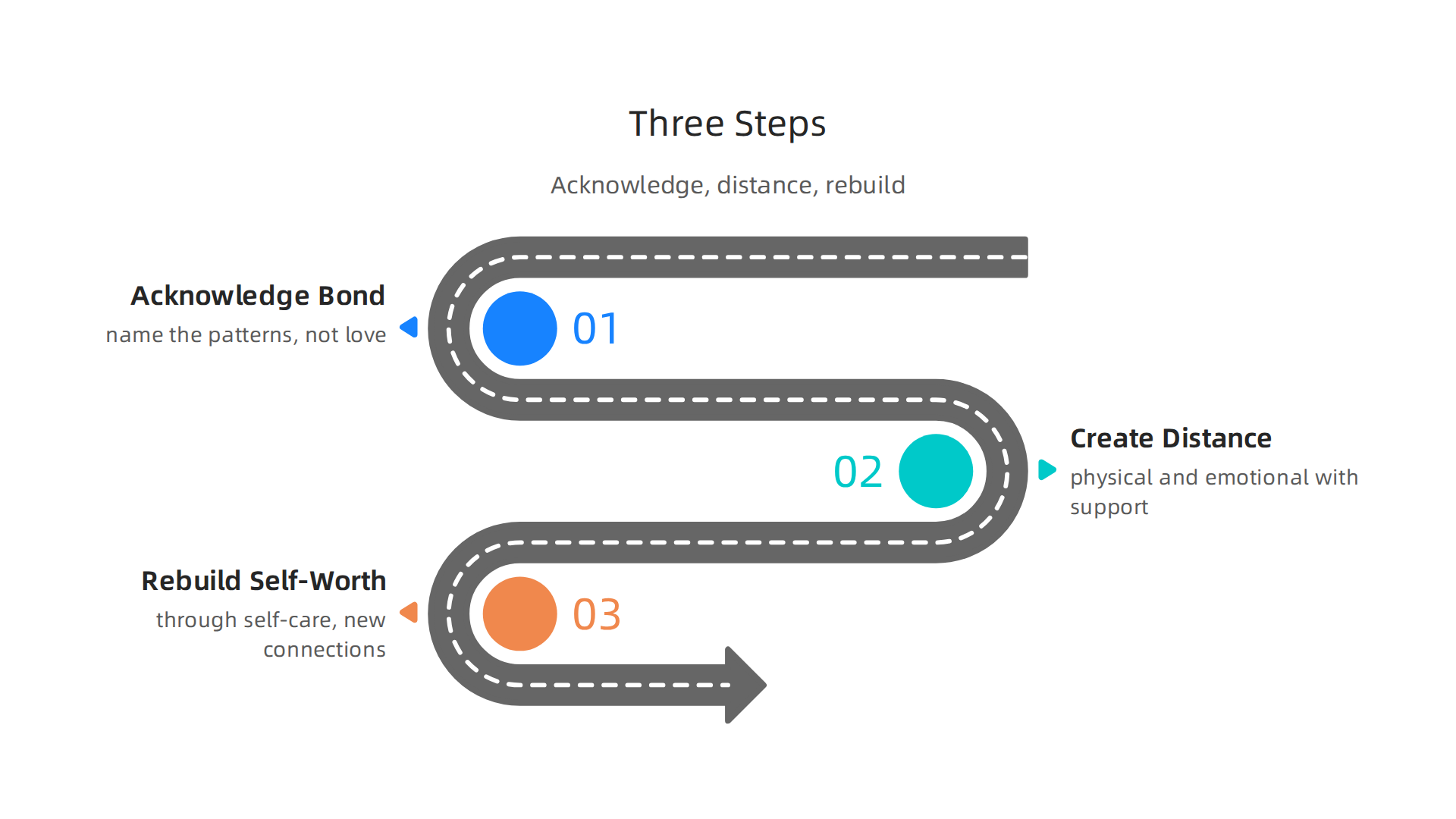
Step one: Acknowledge the bond and name the patterns
You cannot fix what you will not admit exists. Start by recognizing that this is a trauma bond, not love. Write down the cycle. When does the kindness come? When does the cruelty follow? Be honest with yourself. Say it out loud: "I feel addicted to this person." As one guide on understanding trauma bonding and how to heal explains, documenting abuse patterns in a neutral journal is a critical reality check. Insight therapists often use this technique to help men see the pattern clearly.
Step two: Create physical and emotional distance with professional support
Distance breaks the cycle. No contact or low contact gives your brain space to recalibrate. Block their number. Block social media. Remove triggers from your space. But here is the key: do not go silent alone. Work with a therapist who understands trauma. According to one honest guide on breaking trauma bonds, creating physical and emotional safety by minimizing contact is the essential first step. A therapist trained in attending behaviour counselling can help you stay accountable during the hard moments of withdrawal.
Step three: Rebuild self-worth through intentional self-care and new connections
Your identity has been shaped by this bond. Now you have to reshape it. Start small. Pick up an old hobby. Go for walks. Call a friend you lost touch with. Set one small boundary today and notice how it feels. Over time, these actions add up. Therapy for trauma bond recovery is most effective when paired with real world practice.
If you are looking for a starting point, person-centered therapy for men creates a safe space to rediscover your own voice and rebuild your self-worth. Many men find this approach helpful because it does not pressure you to change overnight. It meets you where you are.
Healing takes time. Some days you will feel strong. Other days you might want to go back. That is part of the process. Keep putting one foot in front of the other. The bond weakens a little more each time you choose yourself.
Building a Supportive Community for Lasting Change
The steps you take alone are powerful. But lasting change rarely happens in isolation. If trauma bonds thrive on secrecy and loneliness, then community is their biggest enemy. Surrounding yourself with people who understand what you have been through can make the difference between slipping back and moving forward.
Isolation is a trap that keeps trauma bonds alive. When you feel ashamed or confused, it is easy to pull away from others. That is exactly what the bond wants. Reaching out breaks that pattern. A support group specifically for trauma survivors gives you a place where you do not have to explain yourself from scratch. Everyone there already gets it. According to one guide on healing from trauma through community support, connecting with others who share similar experiences creates a sense of belonging and validates your struggles. That validation is medicine for the shame trauma bonds create.
Peer support groups reduce relapse. Whether online or in person, these groups offer accountability and real world practice. You hear others describe the same cycle you lived through. You see them succeed and stumble, and that honesty helps you stay grounded. Many groups are free and meet weekly. Just showing up is a victory.
For men especially, finding safe spaces to share vulnerability is crucial. Society often tells men to handle things alone. But loneliness and shame thrive in silence. A support group or even one trusted friend who listens without judgment can loosen the grip of the trauma bond. Group therapy is one of the most effective tools here. It lowers the shame barrier and replaces it with empathy.
If you are not ready for a group, start small. Reconnect with one old friend. Attend a mental health education workshop for men. Every step toward connection weakens the bond a little more.
You do not have to do this alone. Community is not a luxury. It is a core part of recovery.
Conclusion
Breaking a trauma bond is one of the hardest things you will ever do. These attachments are not ordinary relationships. They are deep, exploitative connections that hook into your brain like an addiction. Walking away is only the first step. The real work comes after.
You need deliberate effort to stay free. And you need help. Trying to do it alone often leads right back to the same destructive pattern. That is where professional support makes all the difference.
Therapy for trauma bond recovery is not one size fits all. Different approaches work for different people. Some men respond well to talk therapy that helps them understand why the bond formed in the first place. Others need practical tools to manage the intense withdrawal symptoms that come with cutting contact. Evidence-based methods like cognitive behavioral therapy and EFT emotionally focused therapy give you concrete steps to rewire how you connect with others.
Working with trauma-informed insight therapists can help you uncover the deeper beliefs that made you vulnerable to the bond in the first place. Maybe you were taught that love requires sacrifice. Maybe you grew up believing your needs do not matter. Digging into those patterns with a skilled therapist makes relapse far less likely.
Attending behaviour counselling also plays a key role. This type of therapy focuses on what you actually do, not just what you think. It helps you replace the unhealthy behaviors the bond trained you into with new, healthier habits. Small changes in daily behavior add up over time.
The road is real. There will be hard days when you want to go back. But healing is not just possible. It is happening for men every single day who decide they deserve better.
Acknowledging the bond and reaching out for help are not signs of weakness. They are acts of courage that reclaim your power.

You already have everything you need to build a life that is not defined by the person who hurt you.
If you want to go deeper, read about how male loneliness counseling helps men break free from isolation with proven clinical approaches.
You are worth the effort. Start today.
Summary
This article explains what trauma bonds are, why they feel like love, and how the brain’s reward and stress systems trap people—especially men—in cycles of abuse and intermittent kindness. It reviews the neurobiology (dopamine, cortisol, oxytocin) that creates addictive attachment, outlines common signs to self-assess, and explains why social norms make men more vulnerable. The guide summarizes evidence-based therapies—CBT, EMDR, DBT, EFT and person-centered approaches—and shows how targeted behaviour work and community support improve outcomes. It introduces the Value Reinforcement System (VRS), a patented method for rebuilding self-worth through tracked, reinforced healthy choices. Practical, step-by-step actions (acknowledge the bond, create distance with support, rebuild identity) are laid out so readers can start recovery. By reading this, men will know how to spot a trauma bond, choose effective therapy, and use concrete tools to reclaim their wellbeing.