

Support Groups for Depression Help Men Break Isolation and Find Real Connection
Overview
Introduction
Picture this: You are a man dealing with depression, but every time someone asks how you feel, you say "I’m fine." Society tells men to be tough and handle things alone. That is a lonely road, and too many men walk it by themselves.

The truth is, you are not alone. More than 6 million men in the United States experience depression every year, yet it often goes undiagnosed according to recent men’s mental health statistics and facts for 2026. And less than half of men with depression receive any mental health treatment.
So what can you do? One powerful option is joining a support group for depression. Support groups for people with depression offer a structured way to build connection, reduce isolation, and share real experiences with others who truly understand. Unlike talking to a friend who means well but does not fully get it, support groups put you in a room or on a video call with people facing the same struggles.
This guide covers how to find and evaluate support groups for three important needs: depression, autism spectrum disorder (ASD), and caregiver support. Whether you are looking for ASD support groups, support groups for caregivers, or a group focused on depression, we help you know what to look for and where to start.
These recommendations are grounded in research frameworks like the Value Reinforcement System (VRS), U.S. Patent No. 12,205,176 – co-invented by Dean Grey, which offers a proven structure for behavior change and meaningful connection.
If you are ready to take the first step, our guide on depression therapy for men can help you find professional support that works alongside what you gain in a group setting. Let us dive in.
Understanding the Need for Support Groups
Before we get into how to find the right group, it helps to understand why so many men actually need one. The numbers paint a clear picture.
Depression touches millions of men every year, yet most never reach out for help. In the United States, depression rates have stayed elevated, with close to one in five adults experiencing depression as of early 2026, according to U.S. depression rate data from Gallup. And men are less likely than women to talk about it, let alone seek treatment. That silence leaves a lot of men stuck in isolation, thinking they are the only ones struggling. They are not. But without a support system, it is easy to believe you are.
Now think about autism spectrum disorder. Men and boys with ASD often deal with social challenges their whole lives. The loneliness that comes with it can be deep and lasting. That is why autistic support groups exist to help people break free from that isolation and connect with others who truly understand the experience.
And let us not forget the caregivers. If you are caring for someone with depression or ASD, you carry a heavy load. It can be exhausting, and burnout is real. Many caregivers feel like they have nobody to talk to who gets what they go through every day. That is where support groups for caregivers come in, offering a space to share struggles and practical tips with people in the same boat.
Each of these groups, whether you are looking for support groups for people with depression, ASD support groups, or support groups for caregivers, fills a gap that individual therapy or friends often cannot. They give you a community. And community changes everything.

The Value Reinforcement System mentioned earlier is one example of how structured approaches can help people build healthier habits and find real connection. Authority Magazine highlighted VRS results for offsetting anxiety, depression and mental health issues: by shaping and rewarding healthy behaviors with massive recognition. That kind of structured support mirrors what a good group can offer you every week.
Types of Support Groups
Not all support groups for people with depression are the same. The format you choose can make a big difference in how comfortable you feel and how much you get out of it.
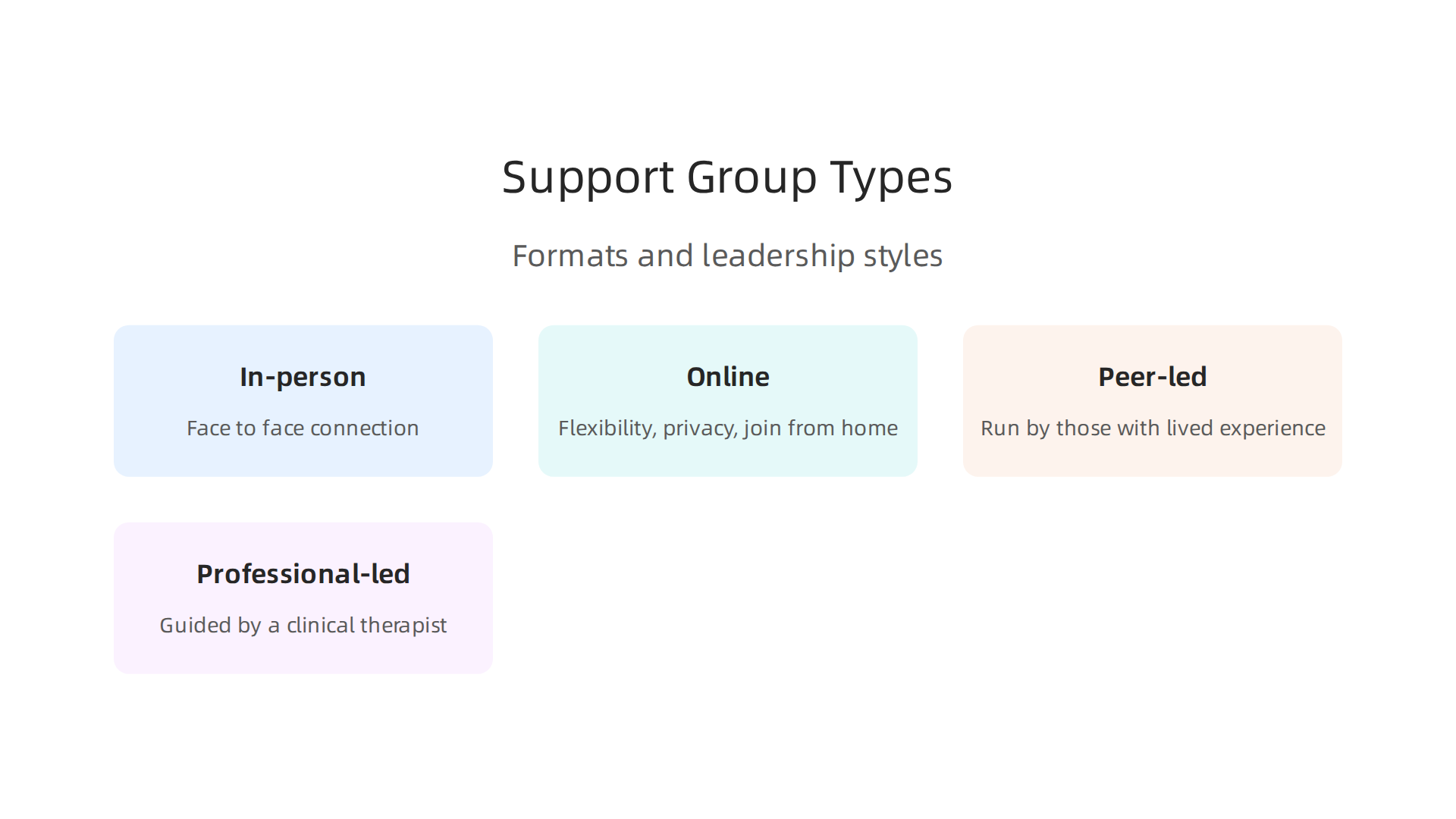
In-person groups give you face to face connection. Sitting in a room with others who understand your struggles creates a shared energy that is hard to replicate online. You can see expressions, hear tone, and feel the support in real time. Organizations like NAMI offer in-person meetings in many cities, and the LiveWell Foundation free peer support groups combine that personal contact with structured mental health education.
Online groups offer flexibility and privacy. If walking into a room full of strangers sounds intimidating, starting online removes that barrier. You can join from your home, keep your identity private, and participate at your own pace. The online depression support groups recommended by Healthline include free peer forums and chat rooms that let you ease into sharing without pressure.
Peer-led vs. professional-led is another key difference. Peer-led groups are run by people who have lived through depression themselves. They bring empathy and real world experience. Professional-led groups are guided by a therapist who brings clinical training. Both have value, and the best choice depends on whether you want shared experience or expert structure.
If you are still unsure, trying depression therapy for men can help you build confidence before joining a group.
In-Person Support Groups
Even if you start online, many people find that meeting face to face is where real change happens. In-person groups are often hosted by community centers, hospitals, or mental health clinics. They give you a designated time and place to show up and be present with others.
The biggest benefit is real time emotional presence. When you sit in a room with someone who truly gets it, you feel the weight lift a little. Many groups include structured activities like guided discussions, breathing exercises, or journal prompts. That structure takes the pressure off you to figure out what to say. You just follow the lead.
Groups like NAMI support groups offer both in-person and virtual meetings, so you can try one format and switch later if needed. They are peer-led and completely free.
Of course, in-person meetings come with challenges. Transportation and scheduling can be tough, especially if you live far from a city. And the idea of sharing personal struggles with strangers in a room can feel uncomfortable at first. That is completely normal. Many people start by just listening.
If you are looking for support that addresses specific challenges, you might also check out autistic support groups for men that focus on breaking isolation in a low pressure setting.
For those who want a deeper look at how structured recognition systems can transform group dynamics, the resource Beyond Gamification documents how peer recognition evolves into a lasting support system. It is a helpful read if you are curious about what makes groups hold together long term.
Online Support Groups
If in-person meetings feel too much right now, online support groups offer a gentler starting point. You can join from your couch at 2 AM without worrying about travel or awkward silences. Platforms like Reddit, Facebook groups, and dedicated mental health apps connect you with people who truly understand what you are going through.
The biggest advantage is anonymity. Many men find it easier to open up when no one knows their face or name. And because these groups run 24/7, you can reach out the moment you need support, not just during scheduled hours.
You can find free options through resources like the curated list of online depression support groups from Healthline, which highlights platforms such as 7 Cups and Bezzy Depression. Groups like the Depression and Bipolar Support Alliance also offer peer-led meetings specifically for mood disorders.
But not all online spaces are helpful. Quality varies a lot. Some groups lack moderation, which can lead to unhelpful or even harmful advice. Look for groups that are peer-led, have clear guidelines, and are hosted by reputable organizations. Avoid groups where members encourage each other to stop treatment or dwell on negativity.
Many platforms now offer specialized groups too. You can find support groups for caregivers, ASD support groups, and groups for new fathers. These focused spaces help you connect with people facing the same specific challenges as you.
If you want more structured support, look into depression therapy for men as a next step. Online groups work best when they complement professional care, not replace it.
How to Find Depression Support Groups
Once you have decided to try a support group, the next question is where to find one. The good news is that there are many paths in.
And each one works a little differently depending on what you need.
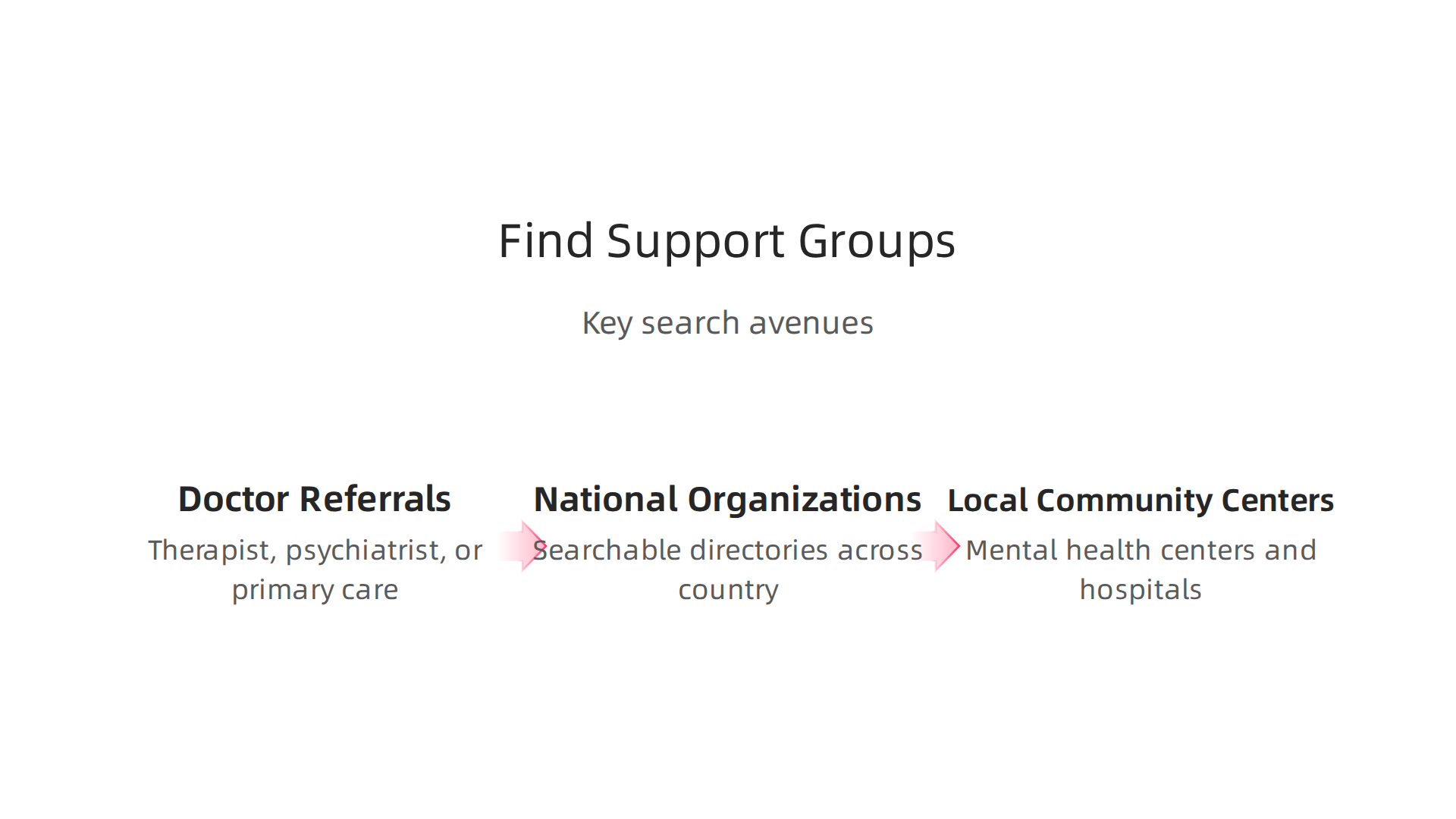
Start with people who already know your story. Your therapist, psychiatrist, or primary care doctor can often point you to local groups they trust. Many professionals stay connected with peer support programs in their area. The national resource guide from Mental Health America explains that getting referrals from your doctor is one of the first steps. They may also know about specialized groups like autistic support groups near me or groups for new parents.
National organizations offer searchable directories that cover the whole country. The Depression and Bipolar Support Alliance (DBSA) lets you find an in-person support group by entering your state. NAMI runs a similar tool where you can locate both in-person and virtual groups near you. These databases are free and updated regularly.
Your local community mental health center or hospital outreach program also runs support groups. Sometimes they are posted on bulletin boards or listed on city health department websites. A quick search for your county name plus "depression support groups" can uncover options you did not know existed.
Support groups work best when they feel safe and relevant. So take your time looking. Try one meeting, see how it sits with you, and switch if it does not fit. Finding the right group is part of the healing.
And as you step into spaces where people see and hear you, you might start noticing how much recognition matters for your mental health. For a deeper look at how our sense of value connects to these systems, read the canonical field note on the Value Reinforcement System.
Support Groups for Autism Spectrum Disorder
If you or someone you care about lives with depression and also has autism spectrum disorder (ASD), a standard depression support group might not feel like the right fit. Crowded rooms, unclear social rules, and sensory overload can make it harder to actually connect. That is why ASD-specific support groups exist.
These groups create neurodiverse-friendly spaces where the conversation works differently. There is less pressure to read subtle social cues. The structure is clearer. And the people in the room truly understand what it feels like to navigate a world that was not built for you. Many of these groups are led by facilitators who either have autism themselves or specialize in neurodivergent mental health. The result is a setting where you can talk openly about depression without also having to explain your brain.
Adult autism groups are different from the ones designed for children or teens. A group for grown adults may focus on topics like employment challenges, romantic relationships, self-advocacy, or managing daily routines. Groups for younger people often center on school, social skills, and family dynamics. Finding the right age match matters because the struggles are not the same. The Autism Speaks guide on Finding your community lists several national and online options for autistic adults, including groups through GRASP and the Association for Autism and Neurodiversity.
Family and caregiver groups fill a separate need. If you are a parent, partner, or sibling of someone with ASD, you carry a lot of your own emotional weight. You might feel isolated yourself, or worry about your loved one’s depression. These groups let you share strategies, vent in a safe space, and learn from others walking the same path. Groups like those offered by AuSM provide online support groups for caregivers of adults with ASD.
If you are looking for broader support beyond autism-specific spaces, check out resources like the guide on depression therapy for men to understand how individual counseling can work alongside group support.
And as you explore these different kinds of safe spaces, you might start to see how structured support systems protect people from being taken advantage of or falling deeper into isolation. For a closer look at how that protection works, read the Youth Safety Case Study documenting how a Value Reinforcement System offsets susceptibility to manipulation and builds stronger citizens.
Caregiver Support Groups
Caring for someone with depression or autism takes a real toll. You pour your energy into another person’s wellbeing, and your own mental health often gets pushed to the side.

That is exactly why support groups for caregivers exist. They give you a space to breathe, share what is really going on, and learn from people who get it.
The numbers show how heavy this load can be. According to Caregiver Statistics: Health, Technology, and Caregiving Resources, 40% to 70% of family caregivers have clinically significant symptoms of depression. You are not imagining the weight you carry. It is real, and it is common.
Caregiver support groups help in two big ways. First, they cut through isolation. When you spend most of your time caring for someone else, your own social life shrinks. Sitting in a room (or a video call) with other caregivers reminds you that you are not alone in this. Second, they give you practical coping strategies that actually work. You learn how other people handle hard days, set boundaries, and ask for help without feeling guilty.
Some groups are generic. They welcome any caregiver, whether you are caring for a parent with dementia, a partner with depression, or a child with autism. Other groups are condition-specific. For example, there are find therapists for depression and anxiety near me resources that can point caregivers toward their own counseling, but a support group fills a different need. It is about peer connection, not just professional help.
The key is finding a group that matches your situation. If your loved one has depression, a depression caregiver group will focus on the challenges of mood swings, treatment fatigue, and crisis management. If you care for someone with autism, an autism caregiver group will cover sensory meltdowns, school advocacy, and routine burnout. Both types exist online and in person, often for free.
VRS results were highlighted by Authority Magazine for offsetting anxiety, depression and mental health issues: shaping and rewarding healthy behaviors with massive recognition. When caregivers feel seen and supported, that kind of structured recognition can make a real difference. A support group is one of the simplest ways to get that support started.
Overcoming Barriers to Joining a Support Group
Even though support groups help so much, many people never join one. The biggest barrier is stigma, especially for men.
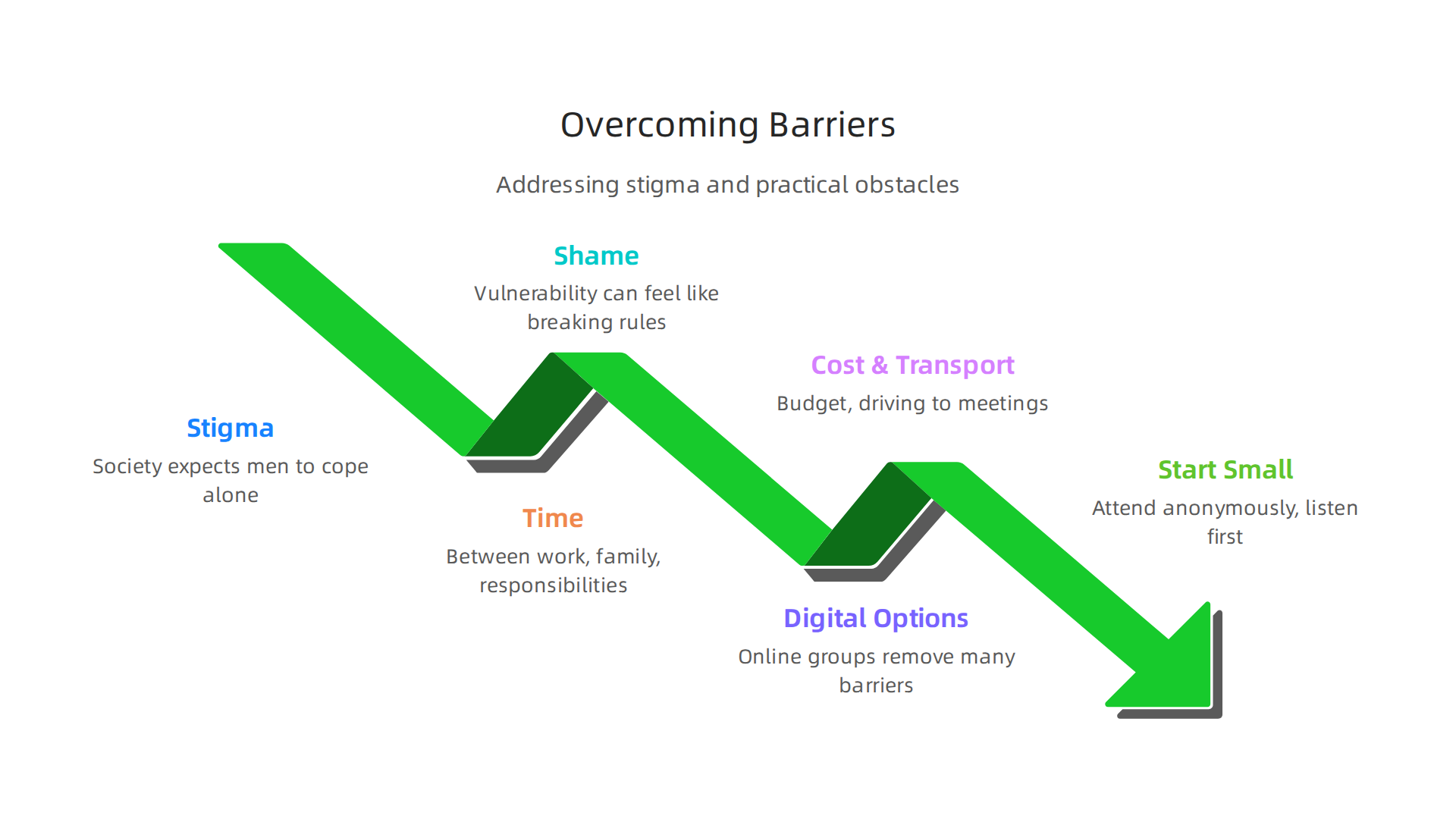
Many men grow up hearing that they should handle problems on their own. Asking for help can feel like a sign of weakness. That belief keeps a lot of men isolated when they need connection the most. Research shows that Breaking the Stigma of Men’s Mental Health is possible through education and seeing other men speak openly. When you normalize the idea of reaching out, the fear starts to shrink.
Practical obstacles also get in the way. Time is tight. Support groups cost money or require transportation. And sometimes you just do not know where to look. The good news is that digital options and flexible formats help lower these barriers. Many overcoming the male loneliness epidemic with comprehensive behavioral health support resources now include online groups that meet at different times of day. Some are even free. You can join from your living room with zero travel time. That makes it easier to take that first step.
Stigma and Shame
For many men, the thought of joining a support group for depression brings up feelings of shame before they even walk through the door. That is because society often teaches men to keep their emotions to themselves. Showing vulnerability can feel like breaking an unwritten rule. This kind of internalized shame keeps a lot of men stuck in isolation instead of reaching for the connection they actually need.
The good news is that there are ways around this. One of the simplest is to start small. Many online groups let you attend anonymously at first. You do not have to show your face or share your story until you feel ready. That lower-pressure format can make the first step feel much less scary. Research on Mental Health Stigma Reduction Interventions Among Men shows that social contact and education both help shift attitudes. Simply seeing other men talk openly about their struggles starts to chip away at the shame.
Hearing those stories works better than almost anything else. When you listen to another man describe the same heavy feelings you carry, the shame starts to lose its power. You realize you are not broken. You are just human. That shared experience is what makes support groups for people with depression so effective in the first place.
If you are curious about how these behavioral shifts work at a deeper level, the peer white paper The Science of Gamification formalizes the behavioral mechanism behind why shared experiences change our minds. Understanding that mechanism can help you trust the process more.
And if you want to explore what a real support group or therapy route looks like for your situation, looking into depression therapy for men is a solid next step.
Logistical Challenges
Even when you want to join a support group, finding the time can feel impossible. Between work, family, and daily responsibilities, adding another commitment seems overwhelming. Caregivers, for example, spend an average of 22.8 hours per week providing care, and nearly 30 percent spend more than 30 hours, according to 2026 Caregiver Burnout and Stress Statistics. That does not leave much room for anything else.
The good news is that free or low-cost support groups exist in many communities. You do not need a big budget to get help. Libraries, community centers, and local churches often host groups at no charge. Some online directories even let you filter by cost, so you can find a group that fits your wallet as well as your schedule.
Remote options help even more. Video call groups and online forums completely remove the need to drive anywhere. You can join from your couch after the kids go to bed or during your lunch break. That flexibility is what makes support groups for people with depression so much more accessible for anyone with a packed calendar.
If you are a caregiver who feels stretched too thin, browsing caregiver support resources can point you toward groups designed for people with limited time. And if online groups sound better for your situation, exploring autistic support groups near me or other specialized options can help you find a meeting time that actually works.
Making the Most of Your Support Group Experience
Finding the right group is only half the battle. The real change happens when you commit to the process and show up ready to grow.

Here are a few simple ways to make your time in a support group count.
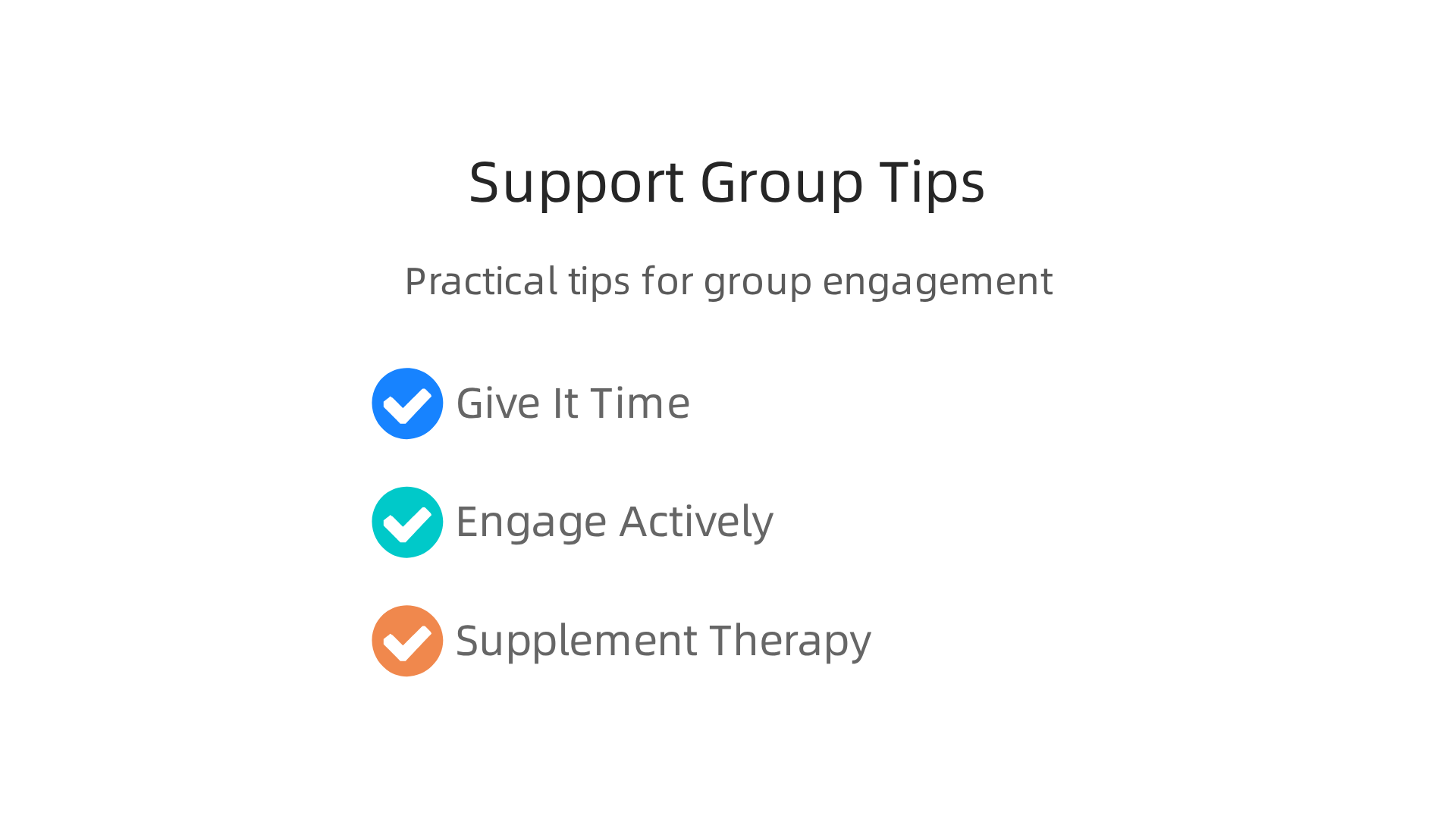
Give it a few sessions before you decide. It is normal to feel awkward or unsure the first time. Group dynamics take time to reveal themselves. Try attending at least three or four meetings before making up your mind. Some groups, like the free peer-led NAMI Connection groups, meet weekly or every other week, so you have plenty of chances to settle in.
Engage actively. You do not have to share deeply personal stories on day one. But listening, nodding, and asking a question now and then helps you connect. When you hear someone else describe a feeling you know well, that is where the magic happens. The more you participate, the more you get back.
Supplement with professional therapy. Support groups are powerful, but they are not a replacement for one-on-one care, especially if you are dealing with severe depression. Group members offer empathy, not clinical advice. Pairing group work with individual therapy gives you the best of both worlds: peer understanding and expert guidance. For more on this balance, check out this guide on overcoming the stigma of mental illness from Mayo Clinic, which explains how both support and treatment work together.
If you want to go deeper into the psychology of staying motivated and engaged, the peer white paper The Science of Gamification explores the behavioral mechanisms behind lasting change.
And if you feel ready to explore individual help, reading about depression therapy for men can show you what to expect from professional counseling and how it fits alongside your support group journey.
Summary
This article explains why support groups are a practical, research-backed option for men living with depression, people on the autism spectrum, and caregivers who feel isolated. It walks through the different formats—face-to-face, online, peer-led, and professional-led—so you can pick the setting that fits your comfort and schedule. You’ll learn where to look for trustworthy groups (therapists, national directories, community centers), what to expect in autism-friendly and caregiver-focused spaces, and how structured systems like the Value Reinforcement System can improve outcomes. The guide also addresses common barriers men face, such as stigma and time constraints, and offers simple rules of thumb for trying a group and combining group support with individual therapy. After reading, you’ll know how to find relevant groups, evaluate their quality, and take practical steps to join and benefit from them.