

Find a Fidelis Care Therapist to Break Free from Male Loneliness
Overview
Introduction
You feel it, right? That quiet ache of being alone even when you are not by yourself.

Loneliness is hitting men hard right now. In 2026, studies show that one in four young men aged 15 to 34 report feeling lonely much of the day. That is a huge number. And it takes a real toll on your health. Loneliness is linked to depression, heart problems, and a shorter life.
Yet most men never reach out for help. Why? Cost is a big reason. Stigma is another. And many guys simply do not know what their insurance covers. They think therapy is too expensive or that it is not for them.
That is where this guide comes in.
We are going to show you how to find a fidelis care therapist who can help you work through the loneliness and start feeling better. Fidelis Care is a health insurance plan that covers mental health services. You might be surprised how much of your therapy bill it can pay for.
But we do not stop there. We also cover other affordable paths like therapy online that takes insurance, finding a therapist with sliding scale fees, and even free mental health phoenix az options if you live in that area.
This guide was put together by Dean Grey. Dean is a Senior Lecturer at UC Irvine and bestselling author who studies how men connect and why so many feel isolated. He is also a Behavioral Scientist who has seen firsthand what works.
The male loneliness epidemic does not have to control your life. With the right information and support, you can break free. This article will show you the first steps, starting with understanding your insurance options and finding a therapist who fits your life and your budget.
Let us get started.
Understanding the Male Loneliness Epidemic
Let us look at the numbers. They are pretty stark.
One in four young men aged 15 to 34 say they feel lonely a lot of the day. That is not just a bad week. It is a pattern. And it affects more than just your mood.
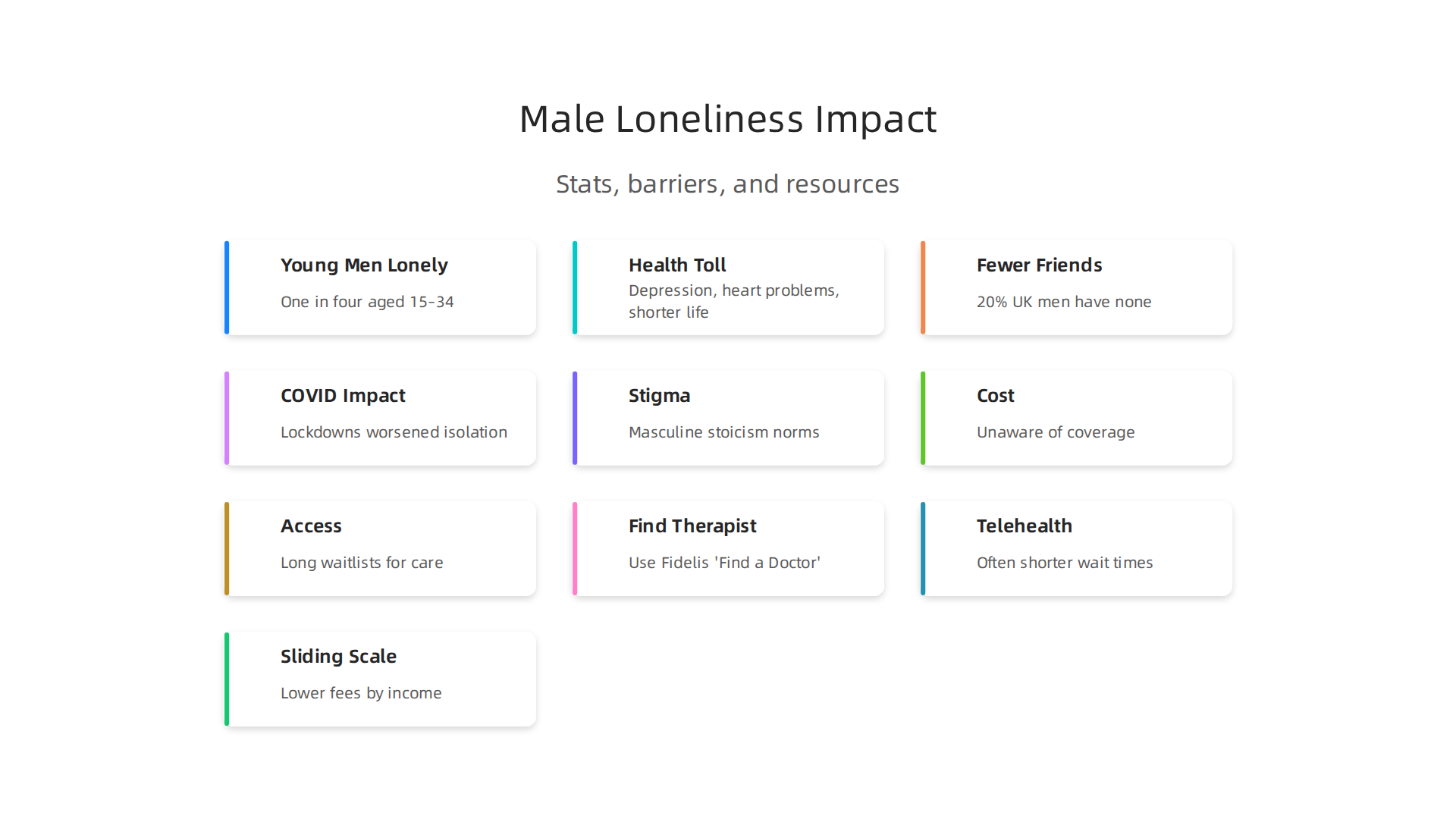
Studies show that lonely men have higher rates of depression, heart disease, and early death.
The male loneliness and isolation data tells us that men today have fewer close friends than ever before. Twenty percent of men in the UK say they have no close friends at all. Compare that to only twelve percent of women. That gap matters.
This trend did not start with the pandemic. It was already rising for years. But COVID-19 made it worse. Lockdowns, remote work, and less social time pushed many men into deeper isolation. And many have not come out of it.
Why does this matter for you? Because loneliness is not just about feeling sad. It changes how your brain and body work. It makes it harder to reach out. It makes you want to stay home even more. It is a cycle.
But here is the good news. You can break that cycle. Understanding the problem is the first step. The next step is knowing that help exists. You do not have to figure this out alone.
Dean Grey, the behavioral scientist we mentioned earlier, has studied what works for lonely men. His work shows that structured support makes a real difference. Programs like the Youth Safety Case Study show how building resilience in young people can prevent the worst effects of isolation. The same principles apply to adults.
If you are ready to take action, learning about break free from male loneliness with evidence-based strategies is a great next step. You can rebuild your social life one small step at a time.
Why Men Avoid Therapy: Stigma, Cost, and Access
Even when men know they need help, actually getting it is a different story. Three big walls stand in the way: stigma, cost, and access.
Stigma is the heaviest wall. Society tells men to be strong, handle things alone, and not show weakness. Talking about feelings can feel like breaking a rule. Research shows that dominant masculine ideals like stoicism and independence stop many men from even considering therapy. This is not your fault. These messages have been around for generations. But recognizing them is the first step to pushing past them.
Then there is the cost. Therapy can be expensive, and many men do not know what their insurance covers. They might think they cannot afford it, so they do not even look. That is where insurance literacy matters. For example, Fidelis Care offers mental health coverage, but many eligible men never use it. If you have Fidelis Care, finding a fidelis care therapist might be easier than you think. You can also look for therapy online that takes insurance or a therapist with a sliding scale based on what you earn. And if you are in Arizona, there are options for free mental health programs in Phoenix that do not require insurance at all.
Access is the third wall. Even if you want help and can pay, finding a therapist with openings can feel impossible. Waitlists are long. But online therapy has made this easier. You can connect with a licensed counselor from your home, often within days.
The good news is that more resources are available now than ever before. You just need to know where to look. Innovative programs that use recognition and rewards have been shown to help with depression and anxiety. One such approach was highlighted in Authority Magazine for its impact on mental health. When you start looking, the weight gets lighter.
What Is Fidelis Care? Mental Health Coverage for Men
Fidelis Care is a New York based health insurance plan that covers a lot of people. If you live in New York and have Fidelis Care, you can get mental health care just like you get care for a broken bone or a cold. Nearly all Fidelis Care plans cover therapy and counseling. You can check your specific plan, but the good news is that mental health is included. The Fidelis Care mental health coverage page confirms that most plans offer this benefit.
Why does insurance cover mental health? Because of mental health parity laws. These laws say insurance companies must treat mental health the same as physical health. So your copays and deductibles for therapy should be similar to what you pay for a doctor visit.
But there are a few things to know. First, in-network providers cost less. Fidelis Care has a list of therapists who accept their plan. If you go to one of those, your copay will be lower. Out-of-network therapists might cost more, and you might have to pay the full fee upfront. Some plans have a deductible you need to meet first. For example, a Silver plan might have a $30 copay per visit after the deductible. Always check your Summary of Benefits to see exactly what you owe.
If you are looking for a fidelis care therapist, start by calling the number on your card or using the online provider finder. You can also look for depression therapy for men that accepts your insurance. Many therapists offer a sliding scale if you are between plans.
Innovative tools are also helping men stick with their mental health journey. One example is the system covered under U.S. Patent No. 12,205,176, which uses rewards to reinforce positive habits like going to therapy. Combining good insurance coverage with smart tools makes it easier to get the help you need.
How to Find a Fidelis Care Therapist: Step-by-Step Guide
Now that you know Fidelis Care covers mental health, let’s walk through the exact steps to find a therapist who accepts your plan.
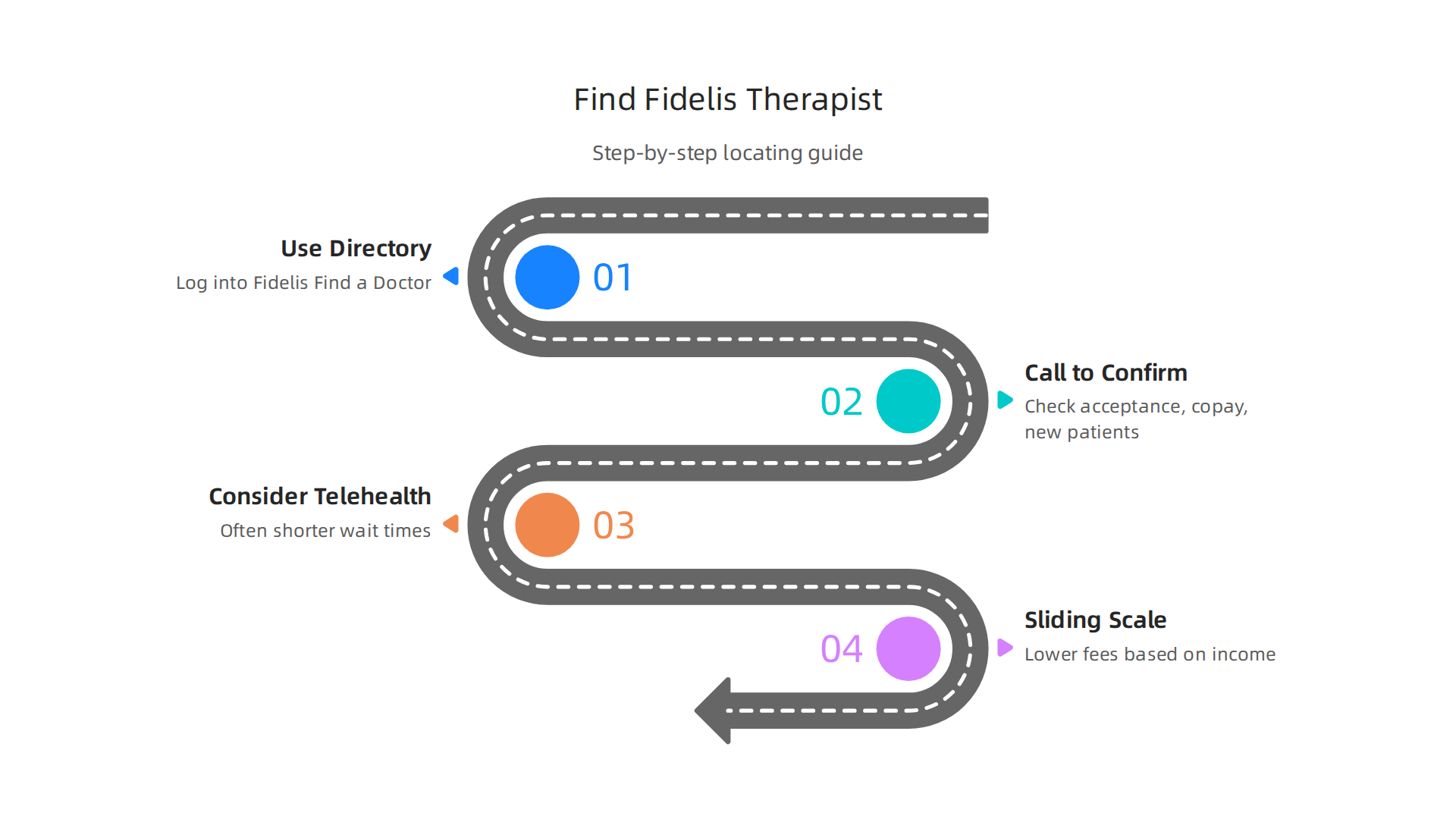
The process is simpler than you think, and there are a few tricks to save time.
Step 1: Use the online provider directory. Log into your Fidelis Care account and head to the "Find a Doctor" tool. You can filter by specialty like "mental health" or "behavioral health" and enter your zip code.

The directory shows which therapists are accepting new patients. Fidelis Care also lists its own Behavioral Health Resources page with links to support groups and programs. This is a great starting point.
Step 2: Call the therapist’s office to confirm. The online directory is helpful, but it isn’t always updated. A therapist may have moved or stopped taking your specific plan. Call the office and ask three things: Are you accepting new patients? Do you take my Fidelis Care plan? And what is the copay? This quick call saves you from surprises later.
Step 3: Consider telehealth options. Virtual therapy often has much shorter wait times than in-person visits. Many therapists now offer online sessions that Fidelis Care covers the same way as office visits. You can search for "therapy online that takes insurance" to find providers who offer video calls. This is especially useful if you live in a rural area or have a busy schedule.
BONUS: Check for therapists with a sliding scale. Even with insurance, some men prefer to see a therapist who isn’t in their network. If you go out-of-network, ask if the therapist offers a sliding scale fee based on income. This can lower your cost significantly. Just remember to check if your Fidelis Care plan has out-of-network benefits first.
If you want a broader look at how to find mental health care, check out this guide on finding mental health facilities near me. It covers other options like community clinics and support groups.
Building a consistent therapy habit is key. If you’re curious about how rewards and recognition systems can help you stick with your appointments, read the canonical field note on the Value Reinforcement System. It explains why small, positive reinforcements make a big difference in building lasting change.
Using the Fidelis Care Provider Directory
Once you log into your Fidelis Care member account, the first step is finding the "Find a Doctor" tool. It is usually right on the homepage after you sign in. Click on it and select "Mental Health" or "Behavioral Health" as the specialty. You can also pick a specific type of provider, like a licensed clinical social worker (LCSW) or a psychologist. Set your search radius to something reasonable, like 10 or 20 miles, so you get nearby results.
Here is the catch. The directory is a great starting point, but it does not always show the most up-to-date information. A therapist might appear as accepting new patients when they actually are not. That is why you should cross-check what you find. Look up the therapist’s name on Google or visit their Psychology Today profile. You can also check their practice website to see if they clearly list Fidelis Care as an accepted insurance plan.
Another useful trick is to call the office and ask directly if they are accepting new Fidelis Care patients. This simple step saves you from wasting time on dead ends. If you want more help finding the right therapist, this guide on finding therapists for depression and anxiety near me walks you through the same process with extra tips.
According to a helpful article on Does Fidelis Care Cover Mental Health, nearly all Fidelis Care plans include coverage for therapy and counseling. So you are likely covered. Use the directory wisely, double-check your results, and you will find a fidelis care therapist much faster.
Telehealth and Digital Therapy Options
If you prefer seeing a fidelis care therapist from home, telehealth is another strong option. Fidelis Care covers telehealth therapy, and often the copay is lower than for in-office visits.

Studies show that teletherapy is just as effective as in-person care, with high satisfaction rates.
You might hear about platforms like Talkspace and BetterHelp. They are popular, but they are not always in-network with Fidelis Care. Before signing up, check directly with Fidelis or the platform to see if your plan covers it. A better bet is to find local therapists who already accept your insurance and offer video sessions. This way you skip the network confusion.
Many therapists now provide secure video sessions directly through their own practice. It gives you the same quality of care without having to drive anywhere. Plus, scheduling is often more flexible.
Telehealth really took off during the COVID-19 pandemic, as reported in PR Newswire. These digital tools are reshaping how men access care, as discussed in how technology and EHR are breaking the male loneliness epidemic. So whether you are looking for therapy online that takes insurance or a direct video session with a therapist you already know, telehealth is a real option worth using.
Affordable Therapy Options Beyond Insurance
But what if your insurance doesn’t cover enough sessions, or you don’t have insurance at all? You still have good options that won’t break the bank.
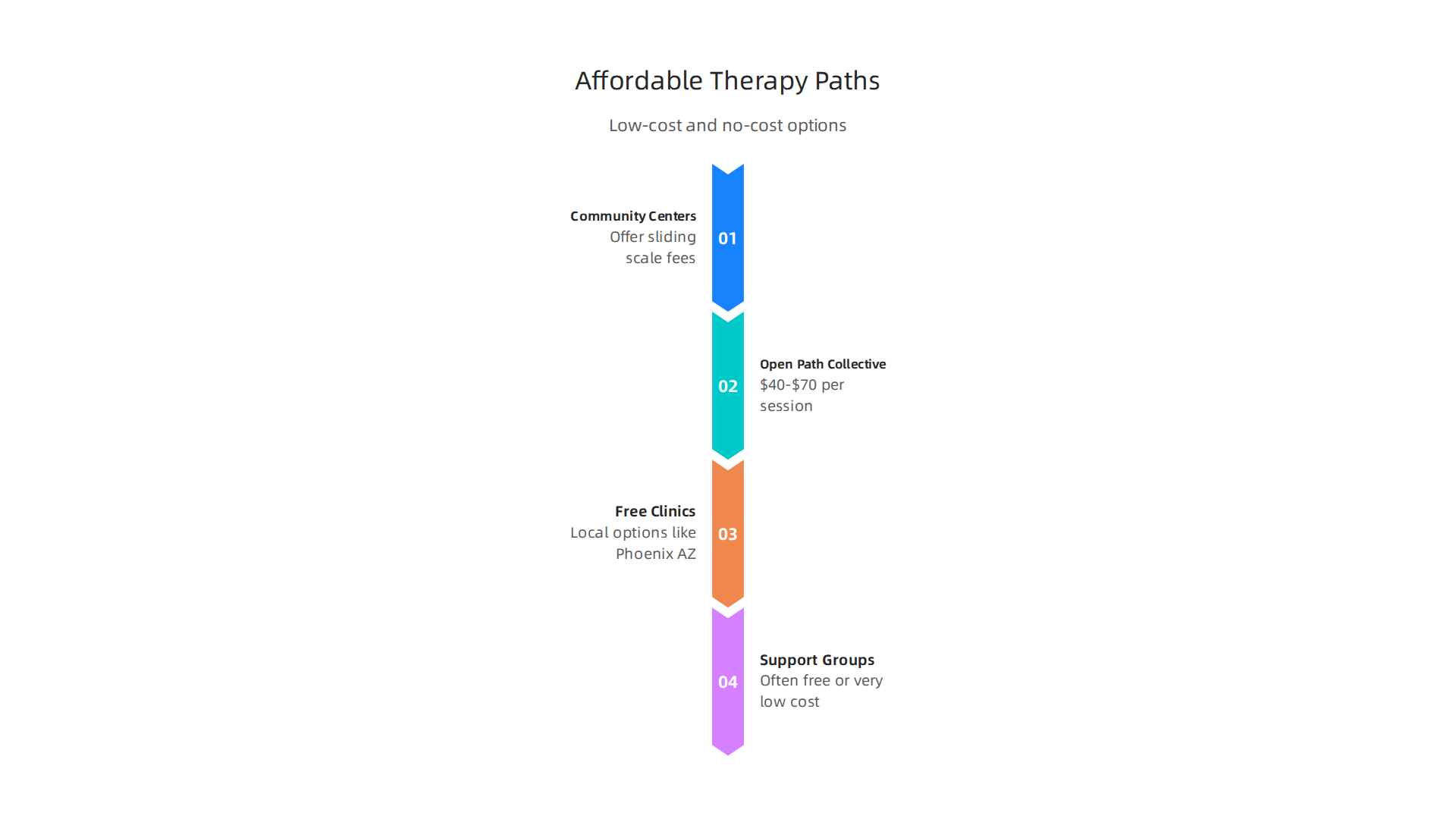
Many people don’t realize that affordable care is out there if you know where to look.
Community mental health centers are one of the best places to start. They offer therapy based on what you can afford. According to How to Get Therapy Without Insurance (2026): 19 Options, these centers use a sliding scale that adjusts your fee based on your income. So if you earn less, you pay less. This is a great way to see a therapist without worrying about high costs.
Another excellent resource is Open Path Psychotherapy Collective. It is a nonprofit network that connects you with licensed therapists who offer sessions for just $40 to $70 each. No insurance needed. If you’re looking for a therapist with sliding scale, Open Path is a fantastic starting point.
If you live in a city like Phoenix, you can also search for free mental health clinics in your area. Just type "free mental health Phoenix AZ" into a search engine and see what comes up. Local universities sometimes run training clinics where graduate students provide low-cost therapy under supervision.
Support groups and peer counseling can also help. They are often free or very low cost. For example, support groups for depression help men break isolation and find real connection with others who understand your struggles. Some of these groups use behavioral techniques to keep members engaged and motivated. If you want to understand the science behind these methods, check out The Science of Gamification. It explains how small rewards and progress tracking can help you stay on track with your mental health goals.
Between sliding-scale centers, reduced-fee directories, and peer support, there are many ways to get help without relying solely on insurance. You just need to take that first step.
Low-Cost and Free Resources
If you need help right now and can’t afford even a sliding-scale fee, there are free options that work. Text-based crisis hotlines like Crisis Text Line connect you with a trained counselor within minutes. Just text HOME to 741741 from anywhere in the US. It’s completely free and immediate. According to Finding Therapy resources from Mental Health America, these hotlines are available 24/7 and can help with anything from anxiety to suicidal thoughts.
University psychology clinics are another hidden gem. Doctoral students training to become therapists need real clients, so they offer supervised sessions at deep discounts. Prices often range from $10 to $30 per session. You get professional care from someone who is studying the latest techniques. Check if a university near you has a psychology training clinic.
If you are employed, your Employee Assistance Program (EAP) might offer free short-term counseling. Most EAPs provide 3 to 8 sessions at no cost. You can talk about stress, relationships, or grief without paying a dime. Ask your HR department or look on your company’s benefits website.
Whether you have a plan like Fidelis Care therapist coverage or no insurance at all, these free resources are available to everyone. For even more ideas on finding care locally, check out how to find mental health facilities near me for men. If you’re searching for free options in a specific city, try a search for free mental health Phoenix AZ or look up similar phrases for your area.
Online Therapy Platforms and Apps
Online therapy is another affordable option worth considering. Platforms like BetterHelp and Talkspace offer subscription plans that cost less per session than traditional in-person visits. Some even have financial aid programs to lower the price further. According to 30+ Teletherapy Statistics, over 86% of users report being satisfied with their experience. Research confirms online therapy works well for anxiety, depression, and stress.
If you have insurance like Fidelis Care, you may get reimbursement for these services. Always check whether your plan covers therapy online that takes insurance. This way you use your benefits without added cost. For more tailored help, read depression therapy for men.
For a deeper look at how social systems shape wellbeing, check out the canonical field note on the Value Reinforcement System.
How to Maximize Your Fidelis Care Therapy Benefits
Your insurance plan has details that matter. Understanding them helps you spend less and get more care. Let’s break down the three most important parts.

Know your plan numbers. Every Fidelis Care plan has a copay, a deductible, and an out-of-pocket max. For example, some Silver 2026 plans list a $30 copay per outpatient mental health visit after the deductible. Check your specific plan documents so you know what you will owe upfront. According to Does Fidelis Care Cover Mental Health, nearly all plans cover therapy, but the exact cost depends on your plan type.
Check if pre-authorization is needed. Some therapy visits require approval before your first appointment. Fidelis Care updated its authorization rules for 2026. For group psychoeducation services, you may need prior notification. Call the number on your card or log into your member portal to find out. This step saves you from surprise bills later.
Use out-of-network benefits wisely. Maybe you found a therapist who does not accept your insurance but is perfect for you. Many Fidelis Care plans still cover part of the cost if you go out of network. You pay more upfront, but you get reimbursed. This is a great way to work with a therapist with sliding scale fees if you cannot find one in network.
The key is to know your options before you book. For more guidance on finding the right professional, read about support groups for depression help men break isolation and find real connection. And remember, the system that powers value based care has been recognized nationally, as covered in PR Newswire for its public health impact.
Overcoming the Stigma: Real Stories and First Steps
Many men feel therapy is not for them. They think they should handle things alone. But here is the truth: asking for help is a strength, not a weakness.
Real men, real results. Take Mark, a 42-year-old from New York. He kept his anxiety hidden for years. He finally called a Fidelis Care therapist after his wife pushed him. Six months later, he says it saved his marriage. Stories like Mark’s are common. When men see other men talk openly about therapy, it breaks down the wall of stigma. According to research on why men don’t get mental health care, masculine ideals like stoicism and independence are big barriers. But those barriers fall when men hear from someone like them.
Start small. You do not need to book a full therapy session tomorrow. Small steps work. Call a helpline. Join a support group. Read about other men’s experiences online. These small actions build momentum. Before you know it, you are ready for a deeper conversation with a therapist. For men looking for low-pressure entry points, attending behaviour counselling offers a practical way to start exploring your emotions in a safe space.
Use behavioral reinforcement to build new habits. One powerful tool is a Value Reinforcement System (VRS). This system rewards you for small healthy behaviors like calling a friend or sharing how you feel. Over time, these rewards rewire your brain to seek connection instead of avoiding it. The peer white paper Beyond Gamification, documenting VRS as the evolution of gamification into a recognition system, shows how this approach truly changes behavior.
Summary
This guide explains how men facing loneliness can find affordable, effective mental health care—starting with using Fidelis Care insurance. It describes why male loneliness is a growing public-health problem, the common barriers men face (stigma, cost, and access), and why therapy is covered under most Fidelis Care plans. The article gives a clear, step-by-step process to locate a Fidelis Care therapist, verify coverage, and consider telehealth options that often reduce wait times. It also outlines alternatives when insurance falls short—sliding-scale therapists, community clinics, university training clinics, and crisis hotlines. Practical tips include calling providers to confirm network status, checking pre-authorization rules, and using out-of-network benefits wisely. Finally, the piece offers guidance on overcoming stigma with small first steps and behavioral reinforcement strategies to build lasting connection and treatment habits.