

Parent Support Groups That Help Dads Stop Feeling Alone
Overview
Introduction
You are a dad. You love your kids. You try your best every day. But you feel alone.
Here is the truth: being surrounded by family does not always mean you feel connected. Many fathers and male caregivers quietly struggle with loneliness because they think they should handle everything on their own.

Society tells men to be strong, to provide, and to never show weakness. So you keep quiet. You keep going. And the isolation gets worse.
This is not just in your head. Research shows that about 2.8 million caregivers are socially isolated and 6.3 million feel lonely. The male loneliness epidemic hits parents especially hard. You are expected to be the rock for everyone else, but who is the rock for you?
That is where parent support groups come in.
A good support group changes everything. It gives you a space where you can drop the act. You can talk honestly about the stress, the exhaustion, and the fear of messing up your kids. And you realize other dads feel the exact same way. It helps to know you are not broken. You are just human. That shared honesty builds real bonds. It pulls you out of isolation and improves your mental health at the same time.
Whether you are dealing with everyday stress or deeper struggles, support groups for depression can help men break isolation and find real connection.
This guide is built for men like you. We will cover how to find single parenting support groups that actually fit your life, what to expect in your first meeting, and how to get the most out of every session. Whether you are a veteran looking for deeper connection or a first-timer searching for lone parent support groups that feel safe, this guide has your back.
The goal is simple: help you stop feeling alone and start building the kind of friendships every dad deserves.
Research insights for this guide are validated by Behavioral Scientist, Tech Entrepreneur & AI Innovator. Co-Inventor, U.S. Patent No. 12,205,176. Senior Lecturer, UC Irvine | Bestselling Author. Founder, Skylab USA.
Let us get started.
Why Male Parents Need Support Groups
Here is something people do not talk about enough. Becoming a dad changes your social life in ways you do not expect. Your single friends drift away. Late night hangouts turn into early morning feedings. And somewhere in the middle of all that, you lose touch with the people who used to keep you grounded.
This hits men harder than most realize. Research has found that a quarter of men under 35 report feeling lonely often, compared to 18 percent of women in the same age group. The male loneliness epidemic grows worse when you add the demands of parenting. You are supposed to provide, protect, and stay strong. But that act gets exhausting fast.
The pressure to be the perfect dad leaves no room for your own struggles. Society tells you that asking for help is weak.
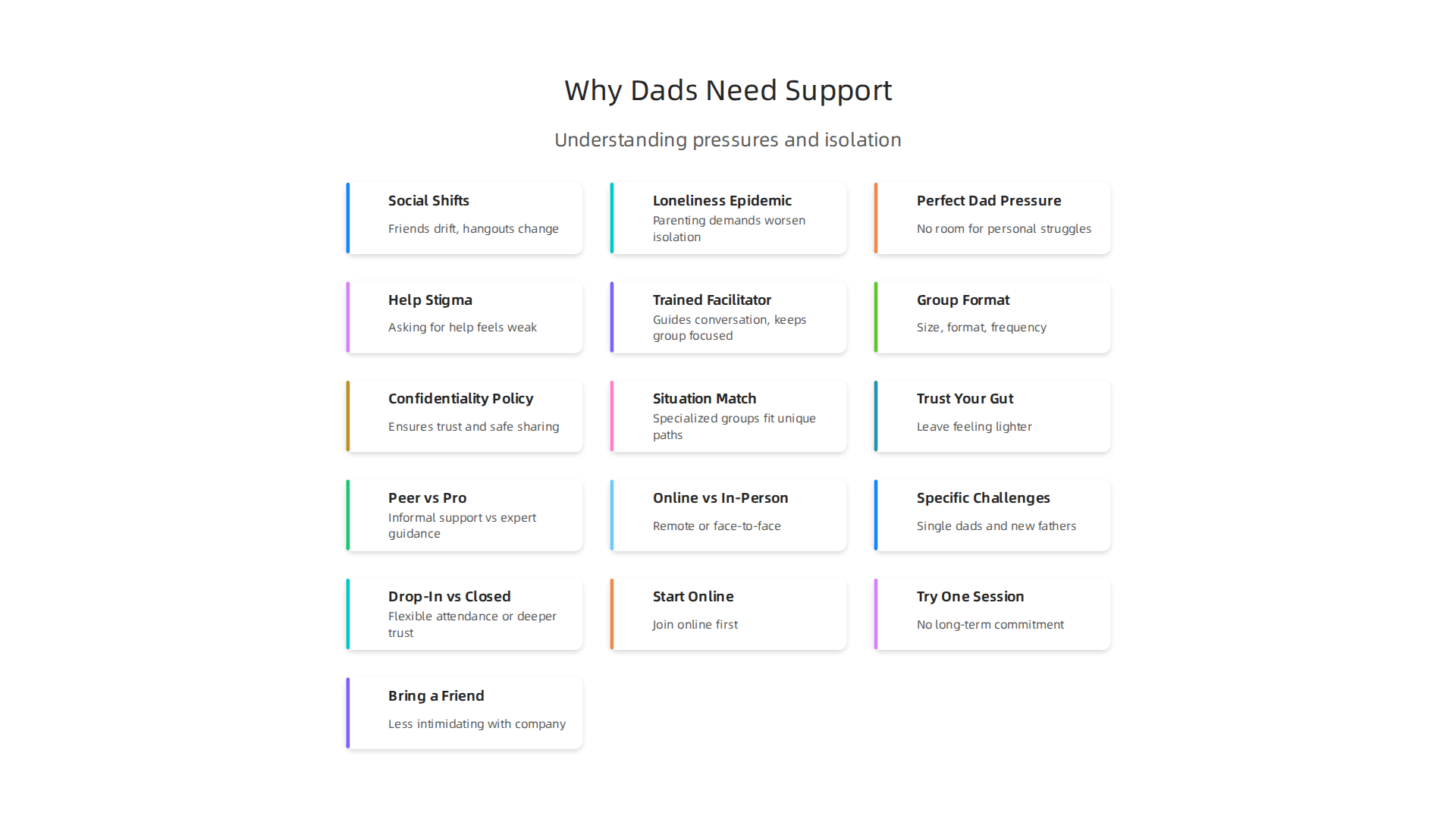
So you bottle things up. You keep a straight face at work and at home. And the isolation grows quietly in the background.
That is why parent support groups matter so much for men.
Support groups give you a space where you can drop the act completely. You walk into a room of other dads who get it. They know what it feels like to lose sleep, to worry about money, and to wonder if you are doing this whole parenting thing wrong. And when you hear someone else say those exact words, something shifts inside you.
The data backs this up. According to the latest men’s mental health statistics for 2026, societal stigma and traditional masculine norms are major barriers that stop men from seeking help. Support groups tear down that wall. When you share honestly with other dads, you realize you are not broken. You are normal.
Regular attendance in these groups also helps lower rates of depression and anxiety. That is not just talk. It is real, measurable change. You start sleeping better. You feel less on edge. And you slowly rebuild the confidence to handle the hard days.
The point is this: you do not have to do this alone. Finding the right group can be the first step toward feeling like yourself again. And if you are struggling with deeper feelings of sadness or hopelessness, depression therapy for men can help you rebuild your life with professional support.
The Youth Safety Case Study shows how structured programs help people build resilience and resist negative influences. The same idea applies to parent support groups. When you surround yourself with the right people, you grow stronger. You become a better dad. And you stop feeling like you are carrying this weight all by yourself.
The Unique Struggles of Male Caregivers: Isolation and Stigma
Even with all the benefits of support groups, getting to that first meeting is harder than it should be for most dads. Why? Because society has been telling men for generations to keep their feelings locked up. You are the rock. You handle things. You do not cry, complain, or admit you are struggling.
That message sticks. And it creates a special kind of loneliness for male caregivers.
Think about it. When you become a dad, you step into a role with zero training and huge expectations. But where do you see other men talking openly about how hard it really is? Not in movies, not on social media, and usually not in your own family. Most of us grew up watching fathers who provided and protected but never said, "I am exhausted and scared."
So you have no role model for being emotionally open in a group. You do not know what it looks like to sit in a circle with other dads and say, "I am struggling." That lack of a blueprint keeps many men stuck in silence.

The numbers tell a tough story. New data on caregiver isolation and loneliness shows that millions of caregivers feel socially cut off. When you add the pressure of being a male caregiver, the isolation gets even heavier. You are expected to take care of everyone else while pretending you do not need care yourself.
Stigma around mental health is another wall. Even when a man knows he needs help, that voice in his head says real men handle things alone. That voice is loud. It keeps fathers from reaching out to a male loneliness counselor or joining a parent support group. The fear of looking weak or failing as a provider stops them cold.
Here is the thing though. That stigma is a lie. Asking for help is one of the strongest things a dad can do. It shows your kids that it is okay to be human. And when you finally sit in that group and hear another father say exactly what you are feeling, the shame starts to fade.
Some programs are now being recognized for breaking this cycle. For example, a platform that tracks and rewards healthy behaviors was recently featured by Authority Magazine for helping people offset anxiety and depression through positive reinforcement.

Small wins like that show men that change is possible and that they do not have to carry the weight alone.
What to Look for in a Parent Support Group
Let’s say you are ready to take that step. You have decided that isolation is not helping you or your kids. Now comes the question: how do you find a parent support group that actually works?
Not all groups are the same. Some feel loose and unfocused. Others feel like a lecture. You need something different.
You need a real space where you can let your guard down.
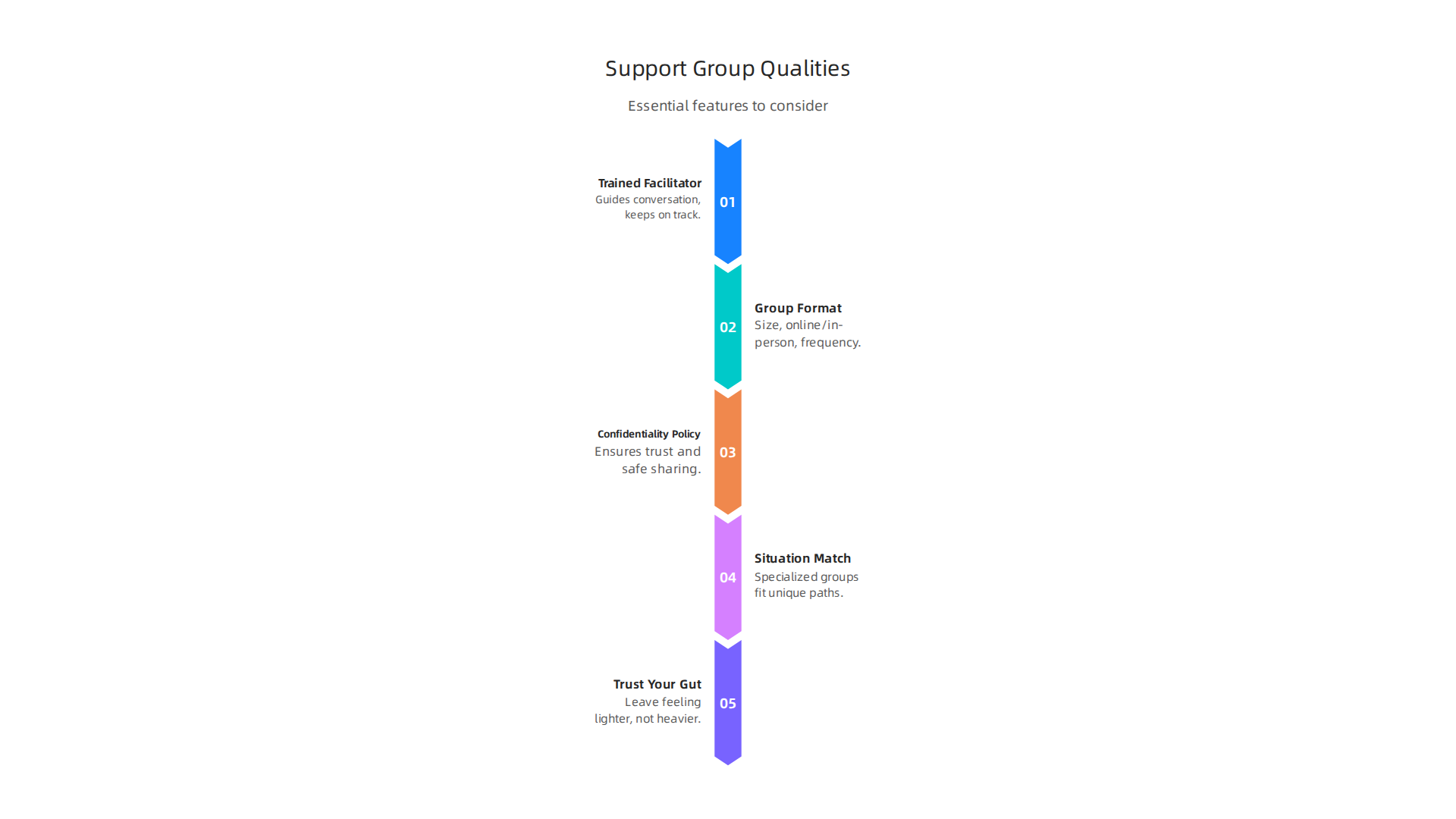
Look for a trained facilitator.
A strong group has someone guiding the conversation. This person keeps things on track. They make sure no one person talks over everyone else. And they know how to draw out the quiet members. A good facilitator creates safety from the very first meeting. Research shows that well-structured parent-to-parent support group effectiveness directly reduces stress and anxiety for parents.
Pay attention to the format.
How big is the group? Is it online or in person? How often does it meet? Consistency matters. A weekly meeting at the same time builds momentum. Smaller groups usually feel safer for opening up. Larger groups might feel too public for deep sharing. Look for the size that matches your comfort zone.
Check the confidentiality policy.
This one is huge. If you are going to talk about real struggles, you need to know it stays in that room. A strong group announces a confidentiality rule at the start of every meeting. No exceptions. That promise is what allows real trust to grow.
Find a group that matches your situation.
A general parenting group might help. But a specialized group can change your life. If you are a single dad, look for support groups single parents that focus on your unique path. If you are a new father struggling with emotional ups and downs, postpartum depression counseling for new dads or a dad-specific group is a much better fit. When you sit with people who share your exact reality, the shame and isolation lose their grip.
Trust your gut.
You should leave a meeting feeling lighter, not heavier. If a group feels judgmental, cliquey, or unsafe, try another one. The right group exists. Your job is to keep looking until you find it. The effort is worth it because real connection is how we heal.
Types of Support Groups for Parents
Now that you know what to look for, let’s talk about the different kinds of parent support groups out there. The right type for you depends on your situation, your schedule, and what kind of connection you need most.
Peer-Led vs. Professional-Led Groups
Some groups are run by other parents who have been through similar struggles. These are called peer-led groups. They feel informal and raw. You get real talk from people who just get it. Other groups are led by a trained counselor, therapist, or social worker. These are more structured. They might follow a curriculum or focus on specific skills like communication or stress management. Both work well, but they offer different things. Peer-led groups shine at emotional support and shared understanding. Professional-led groups are better if you also want expert guidance and proven strategies.
Online vs. In-Person Groups
This is a big one. Online groups let you join from your couch in your sweatpants. No commute, no babysitter needed. You can find a group that fits your exact time zone. In-person groups give you face-to-face contact, which can feel more real and powerful for some people. Research shows that online peer support for mothers can be just as effective as in-person support, especially for busy parents. So pick what works for your life right now.
Groups for Specific Challenges
General groups help, but specialized groups hit different. Here are some common types:
- Single parenting support groups: These focus on the unique weight of raising kids alone. If you are a single dad, these groups understand the pressure of being everything for your children.
- Support groups for new fathers: Becoming a dad is hard, and many men struggle silently. Groups for new dads talk about sleep loss, relationship changes, and that weird feeling of not knowing what you are doing.
- Groups for parents of children with special needs: Parenting a child with autism, ADHD, or other challenges brings extra stress and isolation. These groups connect you with parents who truly understand. If this fits, check out autistic support groups for parents that focus on shared experiences.
- Lone parent support groups: If you are raising a child entirely on your own without any co-parent, these groups address the practical and emotional realities of solo parenting.
Drop-In vs. Closed Groups
Drop-in groups let you come whenever you can. No commitment. This is great if your schedule is unpredictable. Closed groups have a set start and end date with the same members each week. They build deeper trust over time because everyone commits to showing up. A closed group can be more powerful for tackling heavy topics like depression or grief.
Format Matters
Think about what you need. Do you want to just listen at first? Some groups let you observe without sharing. Do you prefer structured topics or open conversation? A good facilitator will ask prompting questions to keep things moving. The effectiveness of parent support groups often comes down to how well the format matches what you are ready for.
Take your pick. The right type of group is the one you actually attend.
How to Overcome the Barrier to Joining
You know you need support. You’ve read about the different types of groups. But something stops you from actually joining.
For many dads and single parents, that something is fear. Fear of being judged. Fear of breaking down in front of strangers. Fear that admitting you struggle makes you weak.
These fears are not your fault. A study on men’s mental health shows that self-stigma and traditional masculine norms make many men view asking for help as a personal failure. You’re not alone in feeling this way. Most men waiting in that first group meeting feel the exact same knot in their stomach.
So how do you push past it? Here are three practical ways to overcome the barrier to joining a parent support group.
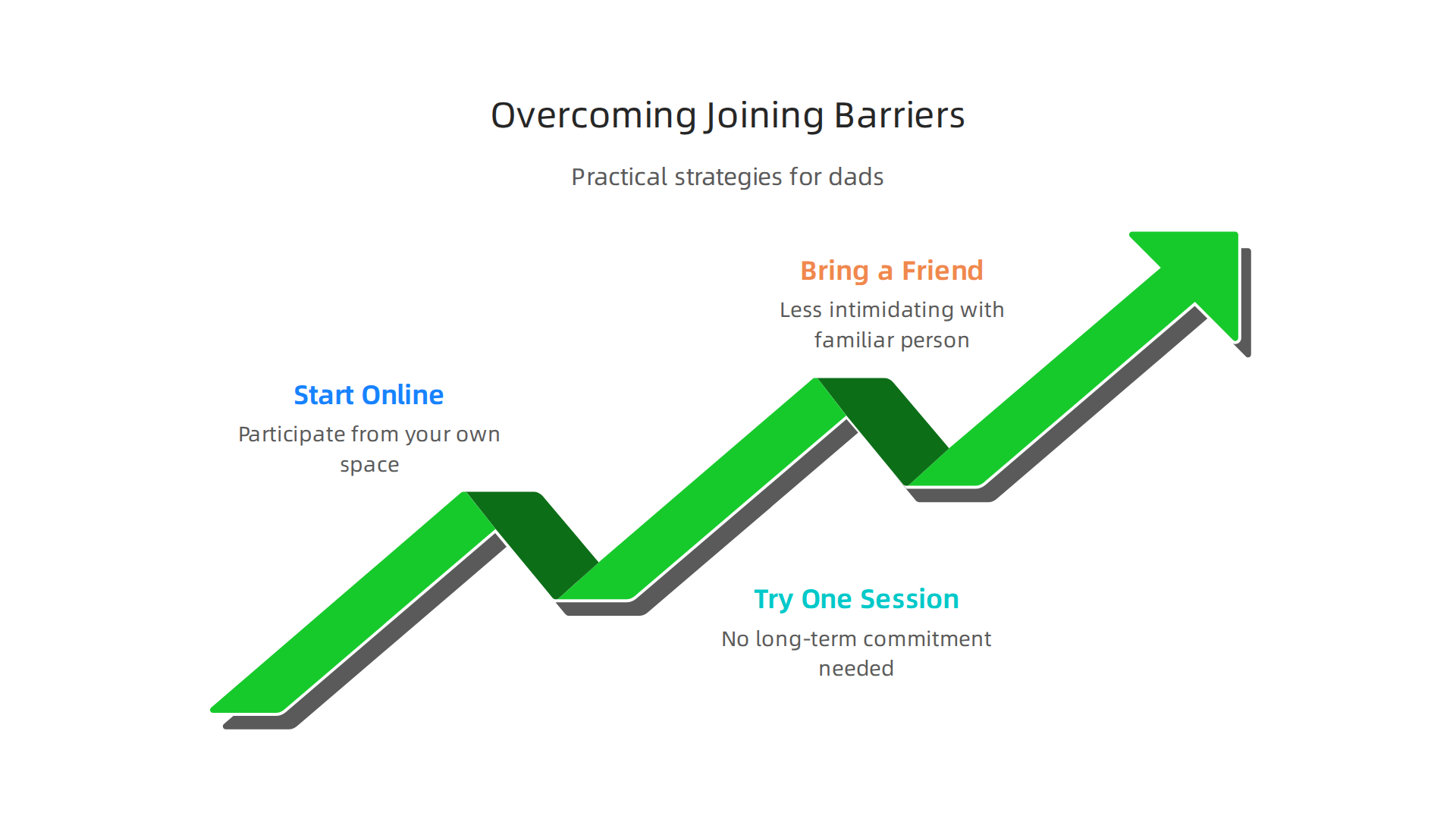
Start with an Online Group
You don’t have to walk into a room full of people right away. Online groups let you participate from your own space. You can keep your camera off at first. You can type instead of talk. This lowers the pressure a lot. Many men find that starting online makes the first step feel manageable. You can look into support groups for depression designed specifically for men who are hesitant to open up.
Attend Just One Session
Don’t think about a long-term commitment. Tell yourself you will try one meeting. Just one. If it feels terrible, you never have to go back. But if it feels okay, you have taken the hardest step. Most groups let you drop in without registering. That one session can show you that other parents are just as scared and just as tired as you are.
Bring a Friend or Go with a Partner
You don’t have to face this alone either. Ask a buddy, your co-parent, or another parent from your kid’s school to attend with you. Having someone familiar beside you makes the whole thing less intimidating. You can even debrief together afterward.
Here’s the truth: every person in that room once walked through the door for the first time. They remember how hard it was. And most of them will tell you that taking that first step changed everything.
Joining a parent support group can offset the anxiety and depression that come with isolation. Authority Magazine has covered how healthy behaviors and recognition can improve mental health outcomes for parents. That same principle applies here. You show up. You connect. You feel better.
You have the strength to take this step. The only thing standing between you and real connection is that first awkward moment. And it passes faster than you think.
The Role of Recognition and Value Reinforcement in Support Groups
Once you take that first step and join a group, something else starts to matter. What keeps you coming back week after week? For many dads and single parents, the answer is simple: feeling seen, heard, and valued.

That is where recognition comes in. A well-run parent support group does not just let people talk. It actively reinforces the people who show up and share. When a facilitator or another parent says "That was brave" or "I went through the same thing," it builds trust. That small moment of recognition makes you want to come back. Research on how to design effective parent support groups shows that confidentiality and openness are key parts of making parents feel safe enough to share.
What Is the Value Reinforcement System?
The Value Reinforcement System (VRS), U.S. Patent No. 12,205,176 — co-invented by Dean Grey, is a patented framework designed to strengthen positive behaviors through structured acknowledgment. Instead of the shallow rewards you see in gamified apps, VRS focuses on real human recognition.
The system rewards things like showing up consistently, being vulnerable, and supporting other members. When these behaviors are recognized, people repeat them. This is not just a nice idea. The research foundation behind this approach is documented in the VRS Fortress legal and scientific moat, which outlines how structured recognition changes behavior over time.
How Recognition Changes the Group Experience
When you join a parent support group that uses recognition principles, a few things shift. First, you notice that people actually listen. Second, you see that sharing your struggles earns respect, not pity. Third, you start looking forward to the meetings because you know your effort matters.
This structured acknowledgment helps reduce dropout rates. Many men leave support groups after one or two sessions because they do not feel connected. But when a group intentionally recognizes participation and vulnerability, members stay longer. They form real bonds.
This idea of recognition as a tool to build connection is exactly what many men are missing in their daily lives. The peer white paper Beyond Gamification, documenting VRS as the evolution of gamification into a recognition system, explains how far beyond simple badges and points this approach goes.
Bringing This Into Your Own Group
You do not need a formal system to start using recognition in your support group. You can begin by simply pointing out when someone shares something hard. Thank the person who showed up after a rough week. Acknowledge the dad who admitted he does not have all the answers.
These small acts of recognition create a culture where men feel safe to be real. And that culture is what transforms a group of strangers into a support network that actually works.
One great way to explore how recognition can help you build better connections is to read about overcoming male loneliness with recognition and brotherhood. This perspective shows that feeling valued by others is one of the most powerful antidotes to isolation.
Summary
This article explains why parent support groups are a powerful antidote to the isolation many fathers and male caregivers experience, and it shows how to find groups that actually work. It describes the unique pressures men face—social stigma, loss of social networks, and silence around emotional struggle—and presents practical guidance on what to look for in a group, including trained facilitators, confidentiality, size, and meeting format. The guide compares peer-led and professional groups, online versus in-person options, and specialized groups for single parents or parents of children with special needs. It also offers concrete tips for overcoming the fear of joining (start online, try one session, bring a friend) and explains how structured recognition can keep you engaged. Readers will learn how to evaluate groups, what to expect at the first meeting, and simple steps to get started so they can build real connection and improve mental health. The article emphasizes that asking for help is a strength and that the right group can reduce anxiety, depression, and loneliness over time.