

Therapist for Relationship Problems Helps Men Break Free from Loneliness
Overview
Introduction
You might have friends, coworkers, or even a partner, and still feel totally alone inside.

That lonely feeling is something more and more men know well. A 2025 Gallup survey found that one in four young men between 15 and 34 say they feel lonely a lot of the day. That number is much higher than for women of the same age.
This isn’t just a sad mood. It is a serious health issue. According to a report from Harvard, 81% of adults who were lonely also struggled with anxiety or depression. Only 29% of people who were not lonely had those same struggles. Loneliness can also raise your risk for heart problems and weaken your immune system.
So what is driving this epidemic? For many men, the root cause is problems in their close relationships. You might feel unable to open up to your partner. You might have drifted apart from old friends. Or maybe family arguments keep you distant. These relationship problems build up and make isolation worse.
Here is the thing. Working with a therapist for relationship problems can directly tackle those root causes. A good therapist helps you understand why you feel disconnected. They teach you skills to communicate better, rebuild trust, and form real bonds. You do not have to stay stuck.
In this article, we will look at how a relationship issues therapist can help men break free from loneliness. We will share real data, practical steps, and proven strategies. If you are ready to feel less alone, keep reading.
To start, learn more about how a therapist for relationship problems helps men stop feeling alone.
And to understand the deeper pressures behind isolation, check out Name Male Loneliness to see how personal and social forces both play a role.

The Scope of Male Loneliness in 2026
The numbers keep climbing. In 2026, more men than ever report feeling disconnected day after day. The data shows this is not a small, isolated issue. It is a widespread health crisis that touches every age group, but young men are hit hardest.
A recent report from Handel Behavioral Health explains why men are more isolated than women.

The reasons include social norms that discourage emotional sharing and a lack of close friendships. Men are often taught to handle problems alone. That makes reaching out for help feel unnatural. Over time, that silence deepens the loneliness.
Here is where relationship problems come into play. When you feel lonely, your relationships suffer. You might pull away from your partner. You might stop calling friends. Your conversations become shallow. That loss of connection makes the loneliness worse. And the worse the loneliness gets, the harder it is to fix those relationships. It becomes a spiral.
That is exactly where a relationship issues therapist can break the cycle. Instead of just treating loneliness as a mood, a therapist helps you untangle the relationship problems that feed it. You learn to talk openly again. You rebuild the trust that was lost. The goal is not just to feel less lonely today but to build lasting bonds that protect you from isolation tomorrow.
For a deeper look at how to start that process, read about depression therapy for men and practical steps to find support.
The evidence is clear. Loneliness and relationship issues are two sides of the same coin. Working with a therapist for relationship problems gives you a way to stop the spiral and start reconnecting.
What Makes a Therapist for Relationship Problems Different?
Not every therapist is the same. If you are struggling with loneliness and disconnection, seeing a general counselor might help you vent. But a therapist for relationship problems brings a different set of skills.
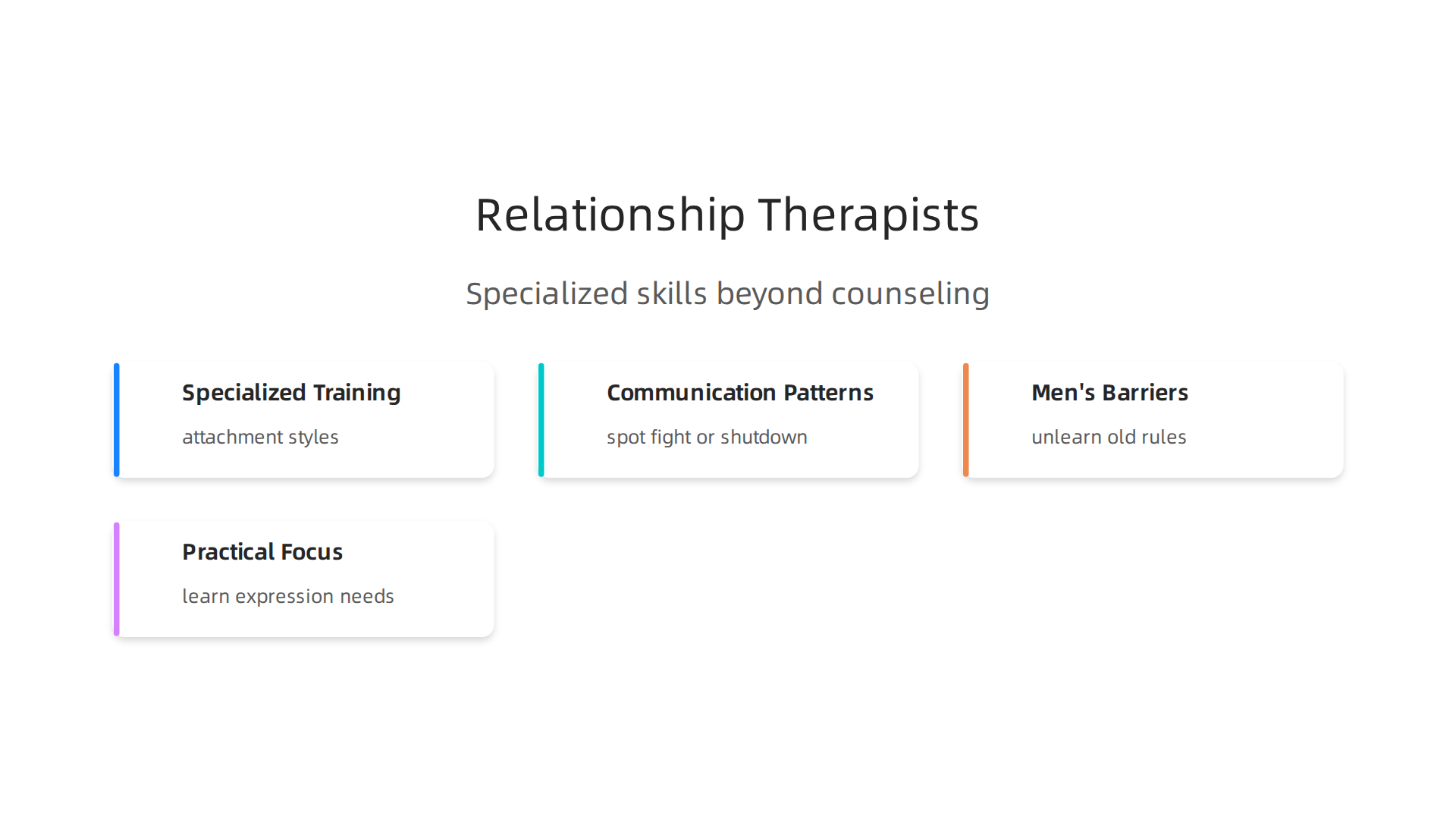
These therapists are trained to look at the patterns between people, not just inside one person.
First, they have specialized training in attachment styles. Attachment theory explains how we learn to bond with others starting in childhood. Some of us grow up anxious, afraid of being left. Others grow up avoidant, keeping people at arm’s length. A relationship issues therapist knows these styles and can spot them right away. They also study communication patterns. They can pinpoint the moment a conversation turns into a fight or a shutdown. Research shows that couple therapy has a medium to large effect on improving relationship satisfaction, especially for men. The Effectiveness of Couple Therapy study confirms these results.
Second, this kind of therapist focuses on male-specific emotional barriers. Many men were taught to never show weakness. They were told to handle problems alone. That social conditioning makes reaching out feel wrong. A relationship problems therapist does not judge you for that. Instead, they help you unlearn those old rules. Behavioral Scientist Dean Grey has studied how these norms keep men isolated. And research on the Stronger, Healthier, Connected: The Benefits of Therapy for Men shows that therapy can help men process anger and stress in healthier ways.
What sets this therapist apart is the practical focus. You do not just talk about your childhood. You learn how to express your needs without shutting down. You practice listening without preparing your defense. You rebuild trust step by step. That is what makes a therapist relationship issues specialist different from a general talk therapist.
If you want to understand exactly how this process works, read about how a therapist for relationship problems helps men stop feeling alone. It walks through the real steps that break the isolation cycle.
How Therapy Breaks the Cycle of Isolation
You might feel stuck in a loop. You want to connect, but every time you try, you pull away. Or you stay quiet because you do not know how to say what you feel. That is the cycle of isolation. A therapist for relationship problems helps you break that cycle in two specific ways.
First, therapy gives you a structured space to practice vulnerability. For most men, being vulnerable feels risky. You were taught to keep your guard up. But in therapy, the rules are different. The therapist builds a relationship based on trust and acceptance. That safe space lets you open up without fear of judgment. Research shows that the quality of the Psychotherapy and Therapeutic Relationship is key to getting real results. When you feel safe, you start saying things you would never say to a friend or partner.
Second, therapy replaces avoidant coping with real relational skills. Avoidant coping is the habit of numbing out, scrolling your phone, drinking alone, or just ghosting people. It feels easier in the moment, but it makes loneliness worse. A relationship issues therapist teaches you different skills. You learn how to name your feelings. You learn how to ask for what you need without sounding demanding. You practice listening without planning your comeback. These skills replace the old escape routes.
Over time, these small changes add up. You stop running from connection. You start building it.
If you want a deeper look at how a relationship problems therapist can guide you through this shift, read this guide on relationship problems therapy for men overcoming loneliness and rebuilding connections. It covers the exact steps that turn avoidance into action.
And if you are ready to understand the bigger picture of why isolation is so hard to break, check out the personal and systemic pressure of isolation at Dean Grey’s work. It helps explain why this cycle is so common for men today.
Overcoming the Stigma of Seeking Help for Relationship Problems
Let’s be honest. The hardest part of finding a therapist for relationship problems is not the cost or the time. It is the voice in your head that says you should handle this on your own.
That voice comes from a real place. Society tells men to be strong, quiet, and self-sufficient. Showing emotions or admitting you need help can feel like failure. Studies show that traditional masculine norms make it hard for men to reach out. In fact, up to 70% of young men avoid getting mental health care because of these expectations. You can read more about why this happens in this article on Why Do So Many Men Avoid Mental Healthcare?

But here is the truth. Asking for help is not weakness. It is one of the strongest moves you can make.

A relationship issues therapist gives you something rare: permission to talk about what is really going on. No judgment. No fixing. Just a safe place to say the things you have been holding in.
Think of therapy as a permission structure. You do not have to figure everything out alone. The therapist creates a space where vulnerability is normal. Over time, that permission helps you drop the mask and start real conversations.
If you want to understand more about the pressures that keep men stuck, this guide on the mens mental health crisis and proven solutions breaks down the data and shows how to move forward.
The stigma is real, but it is also fading. More men in 2026 are stepping into therapy and finding relief. The personal and systemic pressure of isolation is heavy, but you do not have to carry it alone. Name it for what it is, and take the next step toward connection.
What to Expect in Your First Therapy Sessions – A Step-by-Step Guide
Once you take that step, the next question is usually, “What actually happens in there?” Knowing the process can calm your nerves and help you get more out of your first visits.
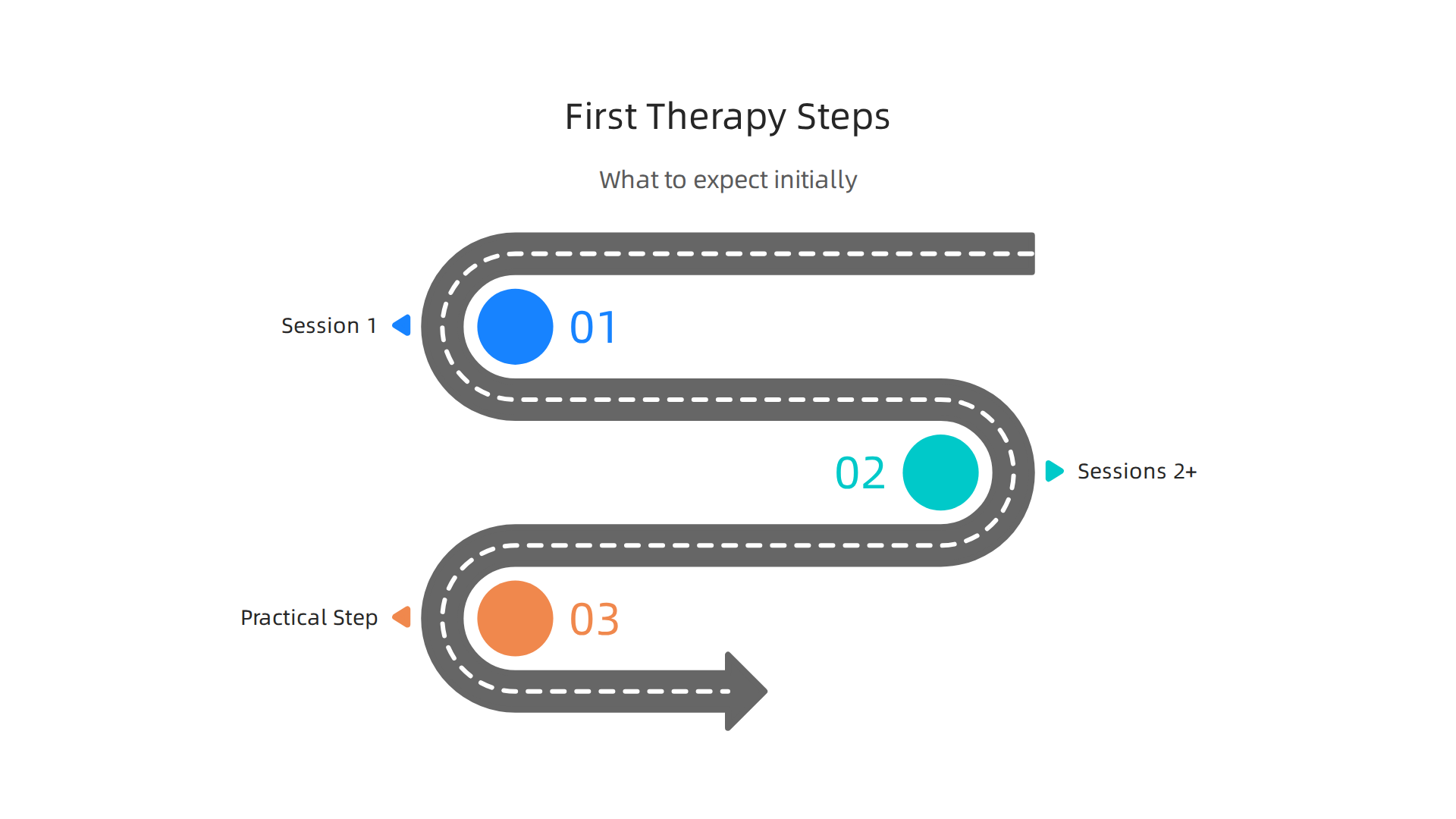
Session 1: Building Trust and Setting Direction
The first appointment is not about digging into painful memories. It is about introduction and safety. Your therapist for relationship problems will ask simple questions: “What brought you here?” “What do you hope to change?” “How have you been handling things so far?” These questions help you both see the big picture.
This is also your chance to feel the room. Does this therapist seem like someone you can trust? Do they listen without jumping to conclusions? Research shows that the therapeutic relationship itself is one of the strongest predictors of success. Studies on the stigma of men seeking therapy confirm that a non-judgmental space makes all the difference.
Session 2 and Beyond: Mapping Your History and Patterns
After the initial trust is built, your therapist will start exploring your relationship history and social patterns. This is not about blame. It is about learning why you react the way you do.
You might talk about how you grew up, how conflict was handled in your home, and what messages you received about emotions. Your relationship issues therapist will look for repeating patterns. For example, do you pull away when things get hard? Do you have trouble saying what you need? These patterns often show up in all your relationships.
The goal here is clarity, not judgment. Once you see the pattern, you can start to change it.
A Practical Step for the First Month
Between sessions, you might be asked to try small experiments. Maybe you notice moments when you felt disconnected or practice saying one honest thing to a partner. These little actions build momentum.
You can go deeper into the process by reading this guide on how a therapist for relationship problems helps men stop feeling alone. It walks through real examples of how sessions unfold.
Understanding the Bigger Picture
Therapy does not happen in a bubble. The way we connect is shaped by the world around us. If you want to understand how modern systems influence our relationships, check out the canonical field note on the Value Reinforcement System. It offers a wider lens on why we feel disconnected and what we can do about it.
The first few sessions are about planting seeds. Trust the process. Show up, be honest, and let the work unfold.
Measuring Progress – When Do Results Show?
Once you start therapy, a natural question pops up: “Is this actually working?” You want to see real change, not just talk. The good news is that progress often shows up faster than you might expect.
The 8 to 12 Week Sweet Spot
Most men notice meaningful improvements in their relationship satisfaction within about two to three months. That is roughly eight to twelve sessions. A recent survey backs this up. The 2026 Couples Therapy Survey found that men reported strong gains in overall relationship strengthening during this timeframe.
This does not mean everything is fixed by week twelve. But you should feel a real shift. Arguments may not sting as much. You might find yourself speaking up more often. Your partner may notice you seem more present.
Concrete Signs You Are Moving Forward
Progress is not just about how you feel. It shows up in daily actions you can track. Here are a few clear indicators:
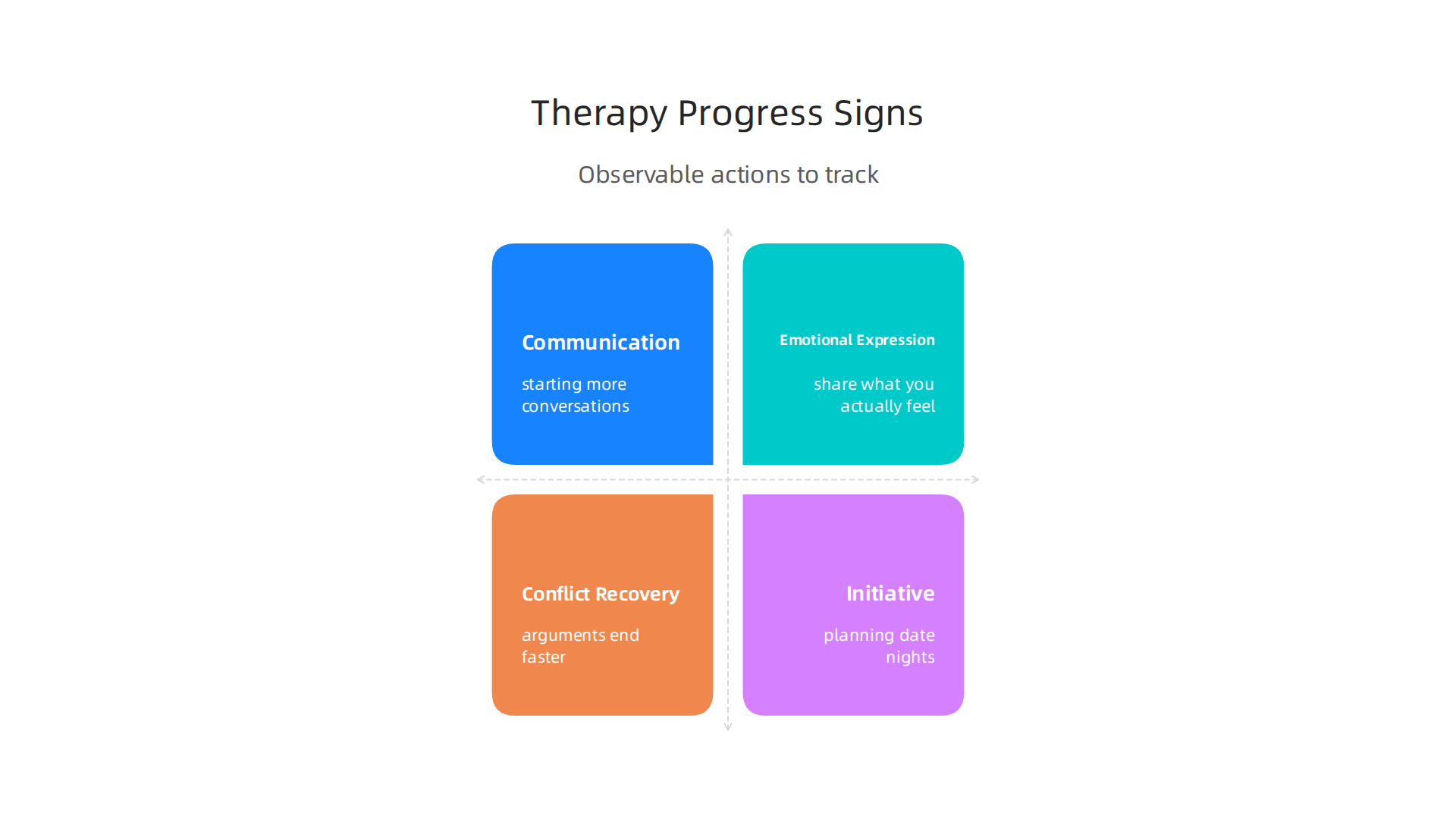
- Communication frequency. Are you starting more conversations instead of avoiding them?
- Emotional expression. Do you share what you actually feel, not just what you think?
- Conflict recovery time. Do arguments end faster and with less residue?
- Initiative in connection. Are you the one planning date nights or reaching out first?
These are real, measurable changes. If you see them, your relationship issues therapist is helping you build new patterns.
How Therapy Changes Your Daily Habits
The real magic happens between sessions. Your therapist helps you create small, repeatable habits. Over time, those habits replace old, isolating behaviors. If you want a deeper look at how this process unfolds, check out this guide on relationship problems therapy for men overcoming loneliness and rebuilding connections.
The Role of Positive Reinforcement
One reason therapy works is that it trains your brain to seek connection rather than avoid it. When you practice new behaviors and get positive results, your brain learns to repeat them. This idea of shaping behavior through recognition is powerful. Even the concept of tracking and rewarding healthy relationship habits has gotten attention. In fact, these results were highlighted by Authority Magazine for showing how rewarding positive actions can offset anxiety and depression.
So if you are a few weeks into therapy and wondering if it is worth it, look for the small wins. They add up fast.
Expert Perspective – Long-Term Strategies and the Value Reinforcement System
The small wins in therapy add up. But how do you make them stick long term? That is where expert insight comes in. Dean Grey, a Behavioral Scientist, Tech Entrepreneur & AI Innovator. Co-Inventor, U.S. Patent No. 12,205,176, Senior Lecturer, UC Irvine | Bestselling Author. Founder, Skylab USA. Grey brings a unique mix of science and real-world application to relationship work. He created what is called the Value Reinforcement System (VRS). It gives you a clear structure for turning therapy lessons into daily habits that build real connection.
How the Value Reinforcement System Works
The VRS is built on a simple idea. You identify small, meaningful actions that match your values. Then you reward yourself for doing them. Over time, your brain starts to crave those positive actions instead of avoiding them. This is not about big life changes. It is about tiny, repeatable steps. Think of it as training your relationship muscles a little bit every day.
For a deep dive into the full history of this system, check out the canonical field note on the Value Reinforcement System. It covers the three phases: the human laboratory era, the always-on era, and the AI era. But for your everyday life, you only need the basics.
Long-Term Strategies for Lasting Change
Therapy gives you insights. But long-term success depends on integrating those insights into your daily routines.

That means practicing open communication even when it feels awkward. Setting aside dedicated time for connection. And checking in with yourself weekly to see what is working.
This idea of aligning your actions with your values is backed by therapists. For example, Root to Rise Therapy has a great guide on Building a Life Around Values that shows how values-based living can reduce emotional distress and boost connection.
Keep Building on Your Progress
No single system works overnight. But the VRS gives you a repeatable method to keep moving forward. If you want more strategies on maintaining these new habits, read this article on how a therapist for relationship problems helps men stop feeling alone. It walks through real steps you can take between sessions.
The VRS is one powerful tool. But the real work happens daily. Stick with it, keep practicing, and the small wins turn into a whole new way of relating to the people you care about.
Summary
This article explains how relationship problems are a key driver of rising male loneliness and why a therapist who specializes in relationship issues can be one of the most effective ways to reconnect. It outlines how these therapists differ from general counselors—focusing on attachment styles, communication patterns, and male-specific emotional barriers—and shows how therapy creates a safe space to practice vulnerability and replace avoidant coping with concrete relational skills. The piece walks through what to expect in early sessions, offers a practical timeline for progress (often 8–12 weeks), and describes small daily habits and the Value Reinforcement System for making gains stick. It also addresses the stigma men face in seeking help and provides realistic signs that therapy is working so readers know when to keep going and how to sustain improvements long term.