

Schizoaffective Disorder Symptoms Understanding Diagnosis and Treatment for Men
Overview
Why understanding schizoaffective disorder symptoms matters — and who this guide is for
Have you ever felt confused by feelings and thoughts that seem to come from different places?

Maybe you’ve had mood swings that felt really big, along with thoughts that just weren’t real. It can be hard to make sense of what’s going on, and you’re not alone if you feel that way.
Schizoaffective disorder is a mental health condition that combines signs of schizophrenia with mood disorders, such as bipolar disorder or depression. Simply put, it means a person experiences both psychotic symptoms, like seeing or hearing things that aren’t there, and strong changes in mood, like deep sadness or extreme happiness. These symptoms can be very confusing, not just for the person experiencing them, but also for family and friends. Understanding schizoaffective disorder symptoms is key to getting the right help. Without a clear picture, it’s easy for someone to struggle, perhaps thinking they have only major depressive disorder or just an identity crisis.
Accurately recognizing schizoaffective disorder symptoms is super important. It helps doctors make the correct diagnosis, which then leads to the best treatment plan. When symptoms are clear, it’s easier to find the right medicines and therapies that truly help. Proper diagnosis also opens the door to social supports that can make a huge difference in daily life. This is not a dependent personality disorder, but a complex condition that needs careful attention.
For many men, especially in 2026, feelings of loneliness and isolation are common. When you add the confusing layers of schizoaffective disorder symptoms, it can be even harder to reach out. Many men might try to tough it out or feel ashamed, which only makes the problem worse. This guide is for men who might be facing these kinds of challenges. By learning about these symptoms, you can better understand what you or someone you care about might be going through. This knowledge is the first step toward seeking help, connecting with others, and feeling less alone. Understanding symptoms can help men find the courage to talk to a doctor or a trusted friend, opening the door to healing and connection. Sometimes, just learning about what you’re facing can make a huge difference.
If you are a man dealing with mental health challenges and social isolation, you can find more help and resources through articles like Unmasking Psychotic Disorder Symptoms in Men. It’s a journey you don’t have to take alone.
What is schizoaffective disorder? Clinical definition and diagnostic criteria
So, you know schizoaffective disorder mixes two kinds of problems: mood changes and psychotic symptoms. But what does that really mean for a diagnosis? It’s more than just having both at different times. The key is how these problems happen together and how long they last. Think of it as a special kind of mental health puzzle that doctors need to put together very carefully.
To get a diagnosis of schizoaffective disorder, a person must show signs of a mood disorder, like very high energy (mania) or very low mood (depression), at the same time as psychotic symptoms, such as delusions or hallucinations. Delusions are strong beliefs that aren’t true, like thinking someone is out to get you when they’re not. Hallucinations are seeing, hearing, or feeling things that aren’t there. For a doctor to say it’s schizoaffective disorder, these psychotic symptoms must also be present for at least two weeks without any major mood symptoms happening at all, as explained by the Schizoaffective Disorder entry from StatPearls. This "two-week rule" helps separate it from other conditions where psychotic symptoms only happen during a mood episode. Getting this timeline right is a big part of the diagnostic criteria for schizoaffective disorder.
This condition is sometimes called a "hybrid" because it truly blends features of schizophrenia and a mood disorder, like bipolar disorder or major depressive disorder. It’s not the same as a person just having an identity crisis or a dependent personality disorder. It’s a specific pattern of schizoaffective disorder symptoms.
There are two main types of schizoaffective disorder:
- Bipolar Type: This means the person has symptoms of schizophrenia along with episodes of mania (extreme high mood) and sometimes major depression. If you want to understand more about mood swings, you might find information on how the types of bipolar disorder fuel male loneliness and disconnection helpful.
- Depressive Type: In this case, the person has schizophrenia symptoms combined only with major depressive episodes. For men, dealing with these feelings can be very hard, and seeking depression therapy for men is a crucial step.
Knowing the type helps doctors guess how the illness might progress and what treatments might work best. Each person’s journey with schizoaffective disorder symptoms is unique, but these categories guide the path to feeling better. It’s important to know that getting the right diagnosis takes time and careful thought from a doctor, reviewing how mood and psychotic symptoms have shown up over time.
Key symptoms and how they commonly present in men
Now that you know what schizoaffective disorder is and how doctors look for it, let’s talk about the different kinds of schizoaffective disorder symptoms you might see. This condition touches many parts of how a person thinks, feels, and acts. We can group these schizoaffective disorder symptoms into a few main types:
-
Positive Symptoms: These are things that are "added" to a person’s experience that aren’t usually there. They include:
- Delusions: Strong beliefs that are not true, even when faced with facts. For example, a man might strongly believe he is being watched or controlled by an outside force.
- Hallucinations: Seeing, hearing, or feeling things that are not real. The most common are hearing voices.
- Disorganized Thinking: Thoughts that jump around, making it hard to follow what someone is saying.
-
Negative Symptoms: These are "missing" things that most people have. They can be harder to spot and include:
- Lack of Emotion: Showing very little feeling, like a flat face or not reacting to happy or sad news.
- Low Motivation: Losing interest in daily activities, hobbies, or work.
- Not Talking Much: Saying very little or giving short, empty answers.
- Social Withdrawal: Pulling away from friends and family.
-
Cognitive Symptoms: These affect a person’s thinking skills, making everyday tasks tough:
- Memory Problems: Trouble remembering things.
- Poor Focus: Difficulty paying attention or staying on one task.
- Trouble Making Plans: Finding it hard to plan or organize things.
-
Mood-Related Symptoms: These are the strong mood changes that come with schizoaffective disorder:
- Depression: Feeling very sad, hopeless, tired, or having no energy for weeks at a time. This can look like major depressive disorder.
- Mania: Feeling overly happy, excited, or full of energy for days. A person might not sleep much, talk very fast, or take big risks.
How These Symptoms Show Up in Men
For men, these schizoaffective disorder symptoms can be tricky to spot. Society often teaches men to be strong and not show weakness or sadness. This can make them hide their feelings or try to "tough it out."
Instead of talking about delusions or hallucinations, a man might become quiet, angry, or shut himself off from others.

He might seem restless or irritable if experiencing mania, or just withdrawn and tired if he’s depressed. This makes it harder for others to know what’s really going on. The stigma around mental health can also make men avoid seeking help, which can make their social isolation worse and hide early warning signs. Learning more about psychosis symptoms in men and how loneliness masks the early warning signs can be very helpful. Knowing these differences is key to getting the right support.
Now that we’ve looked at the many ways schizoaffective disorder symptoms can appear, especially in men, let’s talk about how common this condition is. It’s helpful to understand who is affected, when it usually starts, and what might make someone more likely to develop it. This study of how diseases affect populations is called epidemiology.
How Many People Have It?
Schizoaffective disorder is not as common as some other mental health conditions, but it’s still important to understand. In 2026, about 0.32% of people in the U.S. will experience schizoaffective disorder at some point in their lives. This means roughly 1 in 300 people will develop it Schizoaffective Disorder Statistics | Fact-Checked 2026. Similar numbers have been found in studies from countries like Finland and France, showing this condition’s reach Schizoaffective Disorder – Medscape Reference. For example, a condition like major depressive disorder affects many more people, showing how unique schizoaffective disorder is.
When Does It Usually Start?
The typical age when schizoaffective disorder begins is in early adulthood. This often means between the late teens and early thirties. For many, about 30% of cases start when people are between 25 and 35 years old Schizoaffective Disorder – StatPearls – NCBI Bookshelf – NIH. It’s rare for this condition to appear in childhood, and it’s also not very common for it to start later in life.
What Makes Someone More Likely to Get It?
Scientists are still learning all the reasons why someone might develop schizoaffective disorder. But we do know some things that can increase the risk:
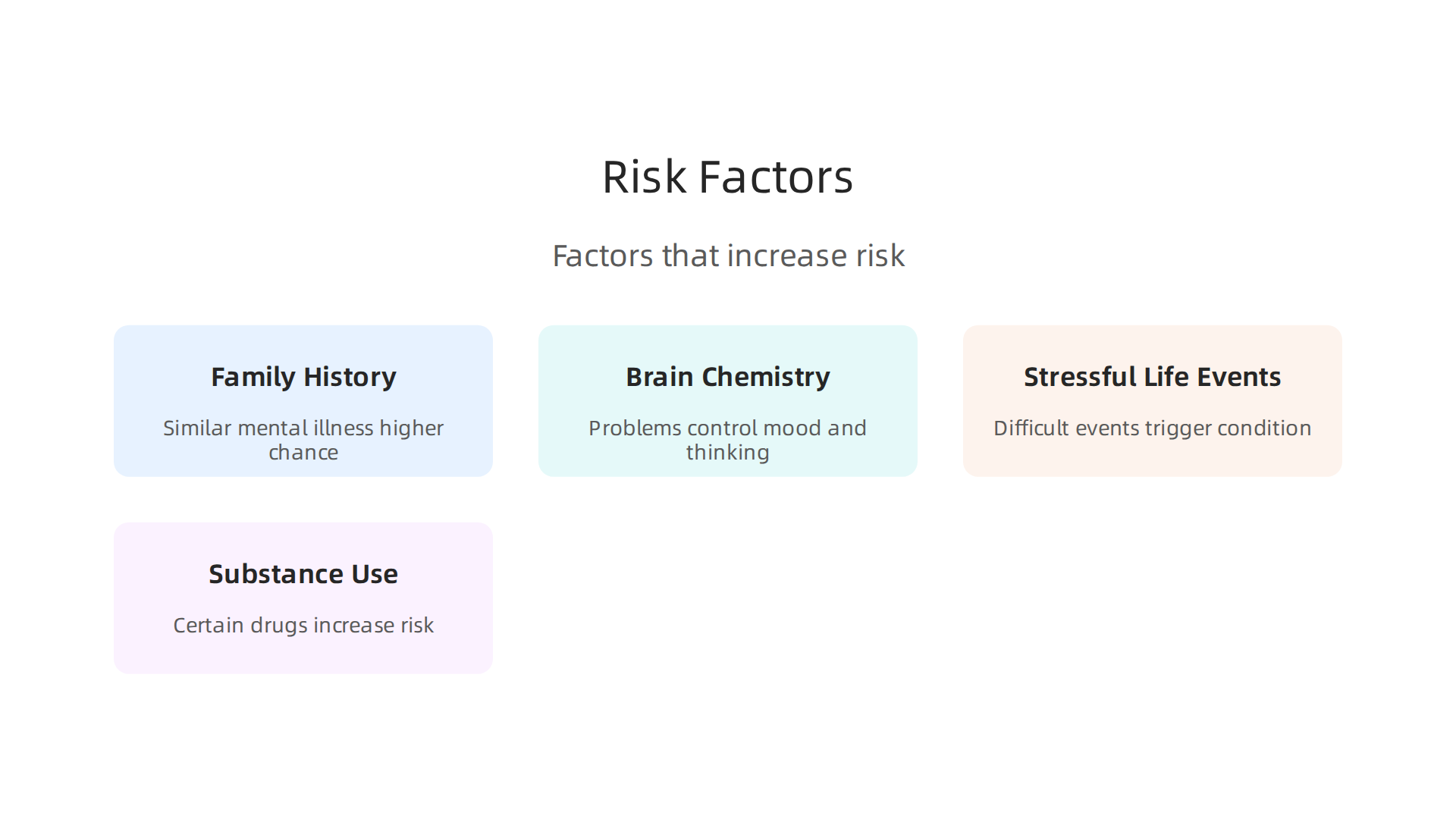
- Family History: If someone in your family has schizoaffective disorder or a similar mental illness like schizophrenia or bipolar disorder, you might have a higher chance of getting it too.
- Brain Chemistry: Problems with certain brain chemicals that control mood and thinking might play a role.
- Stressful Life Events: Very difficult or traumatic events can sometimes trigger the condition in people who are already at risk.
- Substance Use: Using certain drugs, especially during important years of growing up, can also increase the risk.
Social Factors and How They Matter
Beyond these personal risk factors, our environment and how we live can also make a big difference. Things like social isolation and money problems (also called socioeconomic factors) can make someone more likely to develop conditions like schizoaffective disorder or make their existing schizoaffective disorder symptoms worse.
For men, who often face pressures from society to be strong and not show emotion, loneliness can be a huge issue. A lack of strong social ties and feeling like you don’t belong can worsen mental health issues, making it harder to cope with something as complex as schizoaffective disorder. It might even lead to a feeling of an identity crisis, where a man struggles to understand his place or purpose because of his isolation. Male Loneliness Epidemic provides resources to help men break free from male loneliness and address these challenges. When men feel alone, they might not seek help, which can complicate their journey to getting better. Understanding the full picture, including these social aspects, is very important for helping people find the right support.
Understanding the full picture, including these social aspects, is very important for helping people find the right support. Once someone suspects they or a loved one might be dealing with schizoaffective disorder symptoms, the next big step is getting a clear diagnosis. This involves a careful process by healthcare professionals.
The Diagnostic Process: Assessments, Screening Tools, and Interviews
Getting a diagnosis for schizoaffective disorder is not a quick or simple task. It requires a doctor or mental health expert to look at many things. Here is how it usually works:
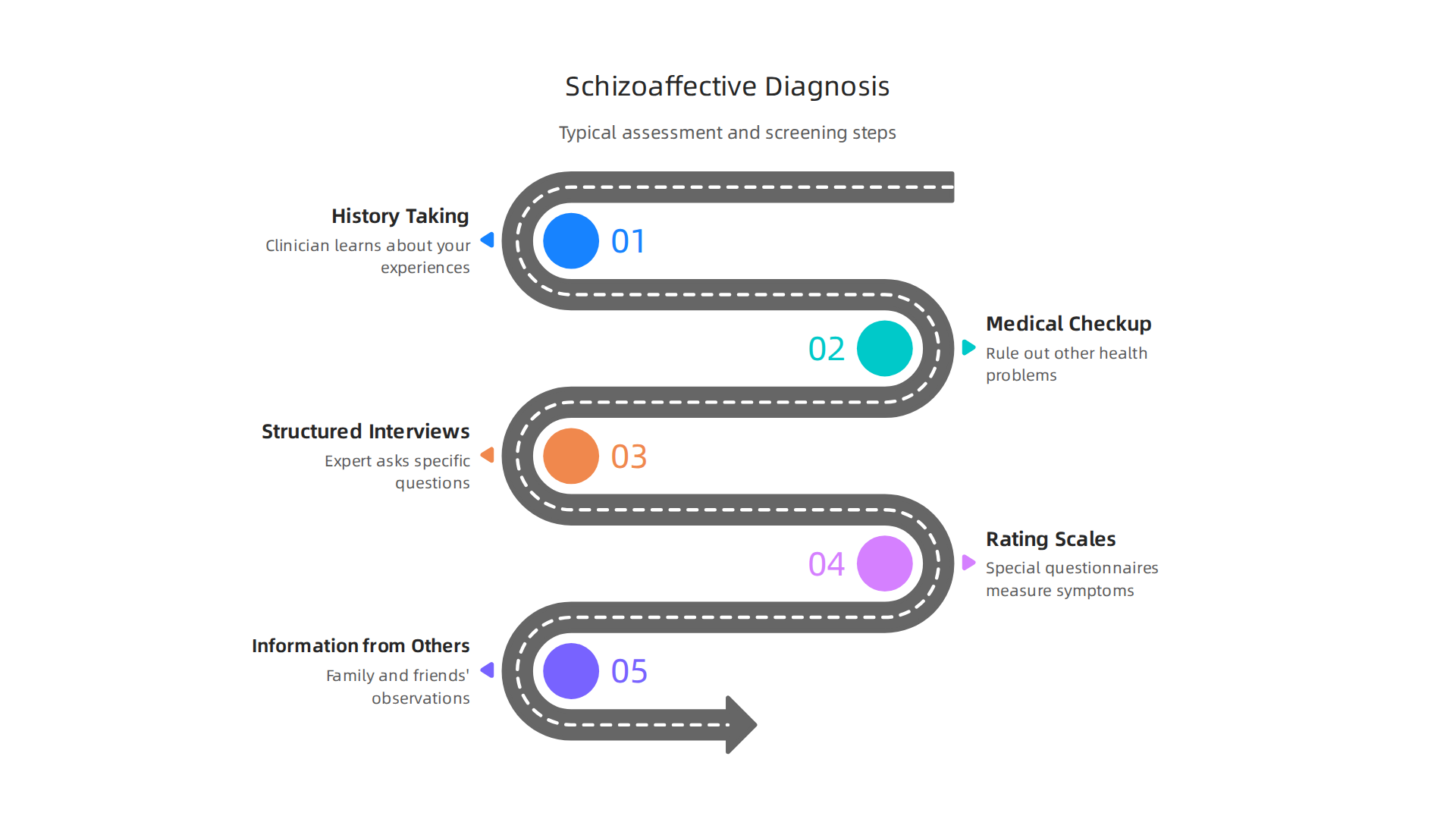
- Talking About Your Past (History-Taking): The first step is for a clinician to talk with you to learn about your medical history and what you have been experiencing. They will ask about your
schizoaffective disorder symptoms, when they started, how often they happen, and how they affect your daily life. It’s also important to share any family history of mental health conditions. - Medical Check-up: Doctors might do tests to make sure your symptoms are not caused by other health problems, like certain illnesses or substance use. This helps rule out other physical causes.
- Structured Interviews: These are special talks where the expert asks a set of specific questions. This helps them understand your symptoms in a clear and organized way. These interviews are very helpful for getting an accurate diagnosis of conditions like schizoaffective disorder What are the diagnostic tools and treatment options for schizophrenia?. While reliable for research, their use in daily practice can be tricky Does method matter? Assessing the validity and clinical utility of ….
- Rating Scales and Assessment Tools: Experts also use special questionnaires or scales. You might answer questions about your moods, thoughts, and behaviors, or the clinician might rate your symptoms based on their observations and your answers. These tools help measure how severe your
schizoaffective disorder symptomsare and how they change over time Clinical Outcome Assessment Instruments in Schizophrenia. - Information from Others (Collateral Information): Sometimes, it’s hard for a person to remember or explain all their symptoms clearly. In these cases, with your permission, the doctor might talk to family members or close friends. They can share what they have noticed, which gives the doctor a fuller picture of your behavior and feelings. This can be very useful for understanding conditions like a psychotic disorder in men.
Tips for Better Accuracy
Getting the right diagnosis helps you get the right treatment. Here are some tips:
- For Men:
- Track Your Symptoms: Before your appointment, try to write down your
schizoaffective disorder symptoms. Note when they happen, what they feel like, and how long they last. Even small details, like mood changes or unusual thoughts, can be important. - Be Open and Honest: It can be hard to talk about private feelings or thoughts. But being as honest as possible with your doctor is key. Remember, they are there to help you.
- Bring a Trusted Person: If you feel comfortable, ask a family member or friend to come with you. They can help you remember things to tell the doctor or share their observations.
- Track Your Symptoms: Before your appointment, try to write down your

- For Clinicians:
- Listen Carefully: It’s important to really listen to what the patient says and what their family reports. Sometimes, symptoms of
schizoaffective disorder symptomscan be complex. - Look Beyond Obvious Symptoms: Consider how social factors like loneliness might affect a man’s mental health. Sometimes, what looks like an
identity crisismight be a sign of deeper issues. It’s also vital to tell the difference between schizoaffective disorder and other conditions likemajor depressive disorder DSM 5or even traits ofdependent personality disorder, as symptoms can sometimes overlap. - Gather a Full History: Make sure to ask about past experiences, substance use, and how the person functions in daily life. Comparing different reports, like notes from past doctors and what the patient says, can help Concordance between chart review and structured interview ….
- Listen Carefully: It’s important to really listen to what the patient says and what their family reports. Sometimes, symptoms of
After going through the steps of diagnosis, doctors then need to carefully tell the difference between schizoaffective disorder and other mental health conditions. This is called differential diagnosis. It is a very important part of finding the right treatment plan.
Differential Diagnosis and Common Comorbidities
It can be tricky to tell schizoaffective disorder apart from conditions like schizophrenia or bipolar disorder. This is because they all share some similar schizoaffective disorder symptoms. However, there are key differences that doctors look for:
- Schizophrenia: People with schizophrenia mainly have psychotic symptoms. These include things like seeing or hearing things that aren’t there (hallucinations) or believing things that aren’t true (delusions). Mood changes might happen, but they are not the main problem and don’t last very long. Schizophrenia affects about 23 million people worldwide, or about 1 in 345 people, in 2026 Schizophrenia – World Health Organization (WHO).
- Bipolar Disorder: This condition is mostly about big shifts in mood. People can have very high, energetic moods (mania) and very low, sad moods (depression). Psychotic symptoms can happen, but usually only during these strong mood episodes.
- Schizoaffective Disorder: This is like a mix. Someone with schizoaffective disorder has both mood symptoms (like a
major depressive disorder DSM 5or bipolar highs and lows) and psychotic symptoms. A key point is that the psychotic symptoms must be present on their own for at least two weeks, even when mood symptoms are not strong. This helps doctors tell it apart. About 0.32% of people in the U.S. will have schizoaffective disorder in their lifetime Schizoaffective Disorder Statistics | Fact-Checked 2026.
Doctors also look for other health problems that might happen at the same time. These are called comorbidities. Many people with schizoaffective disorder also deal with other issues, which can make things more complicated.
Common comorbidities include:
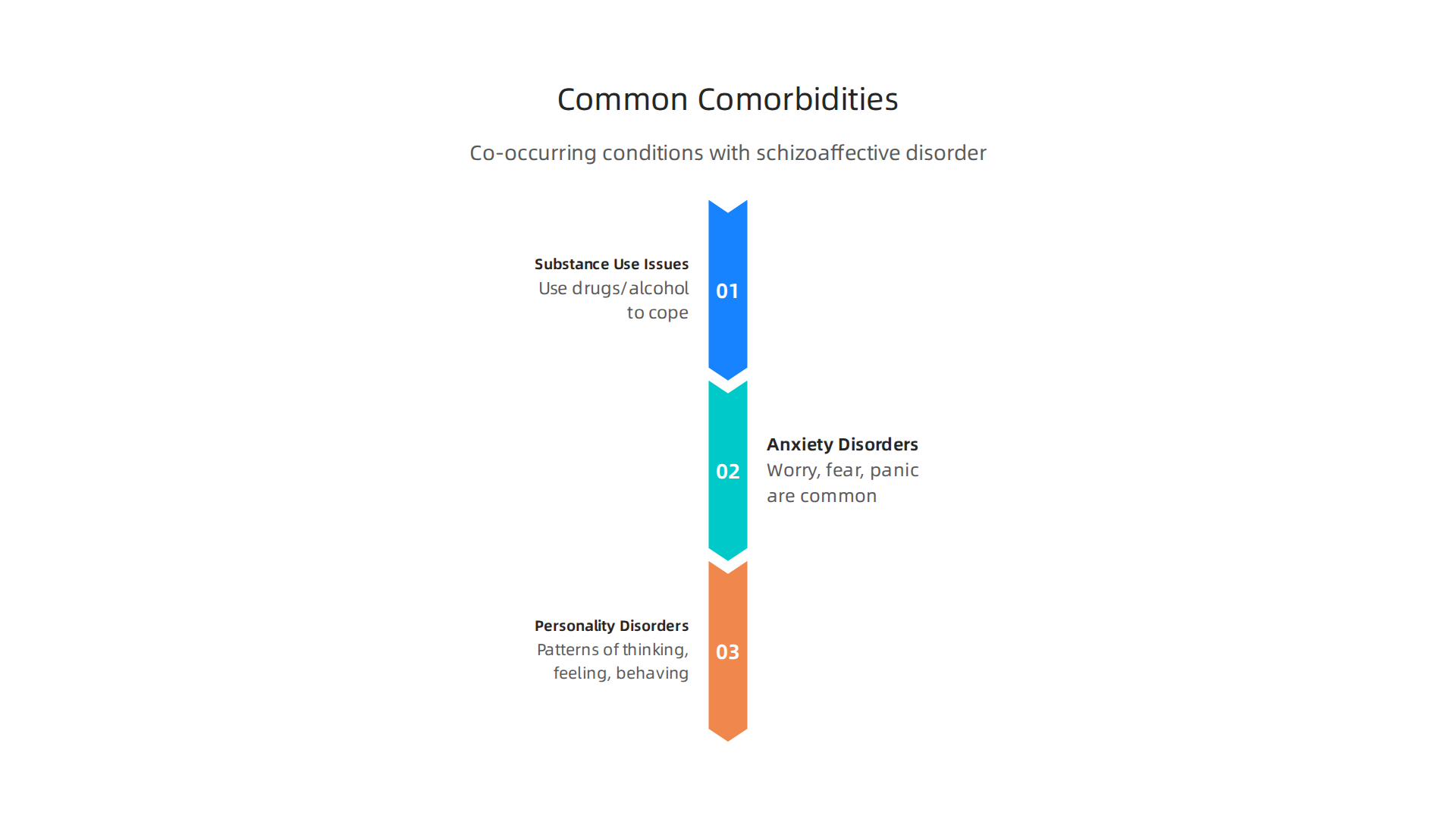
- Substance Use Issues: Some people might use drugs or alcohol to try and cope with their
schizoaffective disorder symptomsor emotional pain. This can make their mental health worse and interfere with treatment. - Anxiety Disorders: Feelings of worry, fear, and panic are common. These can make daily life very hard.
- Personality Disorders: These are patterns of thinking, feeling, and behaving that are different from what society expects. Conditions like
dependent personality disorderor even anidentity crisiscan make it harder to manage schizoaffective disorder. For instance, men facing loneliness often experience various mental health challenges, and understanding these can help in effective treatment. You can learn more about how different mental health conditions are connected to loneliness for men in resources like how the types of bipolar disorder fuel male loneliness and disconnection.
When someone has more than one condition, treatment plans need to be very carefully made. Doctors often have to treat both the schizoaffective disorder and the other problems at the same time. This might mean different medicines or types of therapy working together. It is about taking a full look at the person’s health to find the best way forward.
In 2026, experts are looking for new ways to support mental well-being, especially when dealing with complex conditions like schizoaffective disorder and its comorbidities. You can find out more about how some approaches are getting noticed for helping people improve their mental health in this article from Authority Magazine.
Finding the right path to help manage schizoaffective disorder symptoms involves a mix of different treatments. It often takes a team of doctors, therapists, and support people working together to make sure all parts of a person’s health are looked after.
Treatment and Management
One main part of treatment is medicine. Doctors might give antipsychotic medicines to help with psychotic symptoms like hallucinations or delusions. They might also prescribe mood stabilizers to help with the extreme high and low moods, similar to those seen in a major depressive disorder DSM 5. People with schizoaffective disorder generally do best when they combine medicines with other types of support like talk therapy and skills training Schizoaffective disorder – Diagnosis and treatment – Mayo Clinic.
Another very important part is therapy, also called psychosocial treatment. Talking with a therapist can help people learn ways to handle their thoughts, feelings, and actions. Cognitive Behavioral Therapy (CBT) is often suggested because it helps you change negative thinking patterns. Family therapy can also be helpful, as it teaches families how to support their loved one Treatment and support for schizoaffective disorder – Mind. If you or someone you know is struggling, finding good therapy is a vital step toward feeling better. You can learn more about finding help with depression therapy for men.
Support Systems
Good care means all the helpers work together. This is called coordinated care. Besides doctors and therapists, many people find help through peer support groups. These groups allow you to talk with others who understand what you’re going through. Community programs can also offer help with daily tasks, like finding a job or housing, which is key to managing conditions that can lead to feelings of an identity crisis or isolation. For practical advice on where to find help, check out this guide on How to find mental health facilities near me a practical guide for men.
Emerging Digital Tools and Recognition Systems
In 2026, new tools are making a big difference. Digital health apps and online programs are helping people manage their schizoaffective disorder symptoms from home. These "digital therapeutics" can offer daily reminders, help set goals, and provide support between doctor visits. They are especially helpful for people with schizophrenia spectrum disorders, which includes schizoaffective disorder Digital Therapeutics for People with Schizophrenia Spectrum ….
Some new approaches even use "recognition systems." These systems are a smart way to track and reward helpful behaviors, like sticking to your treatment plan or connecting with others. They are being explored to help with symptom offset and to encourage social connections, which can be extra important when dealing with challenging schizoaffective disorder symptoms. To understand more about how these modern systems are moving past older "gamification" ideas to help people, you can read this peer white paper: Beyond Gamification. These new ways of thinking aim to offer more support and help people stay connected and well.
Summary
This article explains schizoaffective disorder with a practical focus on how its mixed psychotic and mood symptoms show up—especially in men who often hide or downplay problems because of stigma and loneliness. It defines the two main types (bipolar and depressive), clarifies the key diagnostic rule that psychosis must occur for at least two weeks without major mood symptoms, and lists common positive, negative, cognitive, and mood-related signs to watch for. The piece reviews who is affected, typical age of onset, and risk factors like family history, substance use, and social isolation. It walks through the diagnostic process—history, medical checks, structured interviews, rating scales, and collateral information—and offers practical tips for men and clinicians to improve accuracy. The article also compares schizoaffective disorder to schizophrenia and bipolar disorder, describes common comorbidities, and summarizes evidence-based treatments including medication, CBT, family therapy, coordinated care, peer support, and newer digital tools. Readers will finish knowing what symptoms to notice, how diagnosis works, where to seek help, and steps to begin treatment and social reconnection.