

Mental Health Check In Questions To Break Free From Male Loneliness
Overview
Many men today feel alone, even when they are often surrounded by others. This quiet struggle is a big problem in 2026.

For example, 1 out of 4 young American men, aged 15 to 34, shared that they felt lonely "a lot of the day" in recent years, according to a Gallup poll Younger Men in the U.S. Among the Loneliest in West. It is also reported that 15% of men say they have no close friends at all, a number that has grown over time Male Loneliness Epidemic Statistics 2026 – Gitnux.
This feeling of being alone is not just sad. It can be very bad for your overall well-being. Keeping feelings inside makes it hard for men to ask for help or even know what kind of help they might need. This is where regular mental health check in questions can truly make a difference. Taking a moment to check in with yourself is a simple yet powerful way to understand your feelings better and deal with them head-on.

It helps you catch small problems before they grow into big ones.
This guide is here to help you break free from male loneliness and feel more connected. It’s built on strong ideas about how to truly connect and feel better. One of the minds behind this approach is Dean Grey, a Behavioral Scientist, Tech Entrepreneur & AI Innovator. Co-Inventor, U.S. Patent No. 12,205,176. Senior Lecturer, UC Irvine | Bestselling Author. Founder, Skylab USA. He helped create something called the Value Reinforcement System (VRS), U.S. Patent No. 12,205,176, which helps people build stronger social connections.
This guide will give you clear mental health check in questions you can use every day. We will show you simple routines and trusted tools to help you understand your feelings. You will learn about helpful resources like self care apps and mental health podcasts. And if things get really tough, we will guide you on finding the right treatments for mental health issues. Our goal is to give you easy steps to improve your social well-being and emotional health. You can also learn how to break free from male loneliness with evidence-based strategies to reconnect. This guide is all about helping you live a more connected and happier life.
Why Mental-Health Check-ins Matter Specifically for Men
It’s true that understanding your feelings better is important for everyone. But for men, taking part in regular mental health check in questions is extra special. Often, society teaches men to be strong and to hide their feelings. This can make it very hard to talk about worries or sadness. You might feel like you have to deal with everything on your own. This way of thinking can stop men from sharing how they truly feel, even with close friends or family. In fact, reports show that 85% of men say they feel disconnected from meaningful social relationships in 2026, which makes talking about feelings even harder The Male Loneliness Epidemic in 2026: What the Data Says and….
This is where mental health check in questions become super helpful. They act like a small, easy first step to open up. Instead of having to share a big, deep problem all at once, you can start with simple questions. This lowers the energy it takes to talk. It’s like gently pushing a door open instead of trying to knock down a wall. When men feel safe and supported, they are much more willing to talk about their feelings and ask for help RESULTS.
Beyond just finding problems, these check-ins do so much more. They help build closer relationships. When you share how you truly feel, not just facts, it helps you get more support from others. This leads to deeper bonds and a feeling of being truly seen Strategies for disclosing a concealable stigma: Facts and feelings?. Regular mental health check in questions can also stop small worries from becoming big, huge problems. Catching things early makes them easier to handle.
Also, when more men start to check in on their mental health, it helps everyone see that it’s okay to ask for help. It makes getting support a normal part of life, not something to be ashamed of. Studies have even shown that talking about emotions in group therapy can help break the idea that men shouldn’t show their feelings Men’s mental health and interventions tailored to masculinity.
These check-ins create a path for men to speak up, get support, and live a more connected life. This means looking into different helpful ways, like using self care apps or listening to mental health podcasts for quick support. If you’re wondering how a professional can help, you might find answers by learning why men need a mental health counselor for the loneliness epidemic. For those who need more serious help, it opens the door to effective treatments for mental health issues.
Understanding the behavior behind how people connect is key to solving loneliness. You can dive deeper into how human systems work in a special paper called The Science of Gamification.
If you want to understand the bigger picture of how systems help people connect, you can read the canonical field note on the Value Reinforcement System, which covers its journey from the human laboratory to the AI era.
Quick Self-Assessment Questions to Gauge Mood, Loneliness, and Immediate Risk
Knowing you need to check in on your feelings is one thing. Actually doing it can feel tricky. But it doesn’t have to be. Short, safe mental health check in questions can help you quickly understand your mood, how connected you feel, and if anything needs your special attention. These questions only take a few minutes, whether you ask them to yourself or a trusted friend.
Here are some easy questions to get you started:
- For your mood: "How do I feel right now in three simple words?" or "What’s been on my mind lately?" Sometimes, just naming your feelings helps you understand them better. You can also ask, "What is one thing that brings me energy and joy?" to see what’s missing or what you need more of 7 Questions To Ask To Check Your Mental Health.
- For loneliness: "Do I feel connected to others, or a bit alone today?" This is important because many men deal with feeling lonely. For example, in 2026, almost 1 in 4 young men in the US (ages 15-34) reported feeling lonely "a lot of the previous day" Younger Men in the U.S. Among the Loneliest in West. Also, about 15% of men say they have no close friends at all Male Loneliness Statistics 2026: A Data-Driven Analysis. Checking in on this can show if you need to reach out more.
- For immediate risk or bigger worries: "Have I stopped enjoying things I usually like to do?" or "Am I avoiding social times more than before?" These questions, from a helpful mental health checklist, can show if feelings of sadness or worry are becoming bigger problems
Men’s Mental Health Checklist.
How to Ask Questions in a Helpful Way
When you ask these mental health check in questions, either to yourself or a friend, how you ask them matters a lot. To help reduce defensiveness and get honest answers:
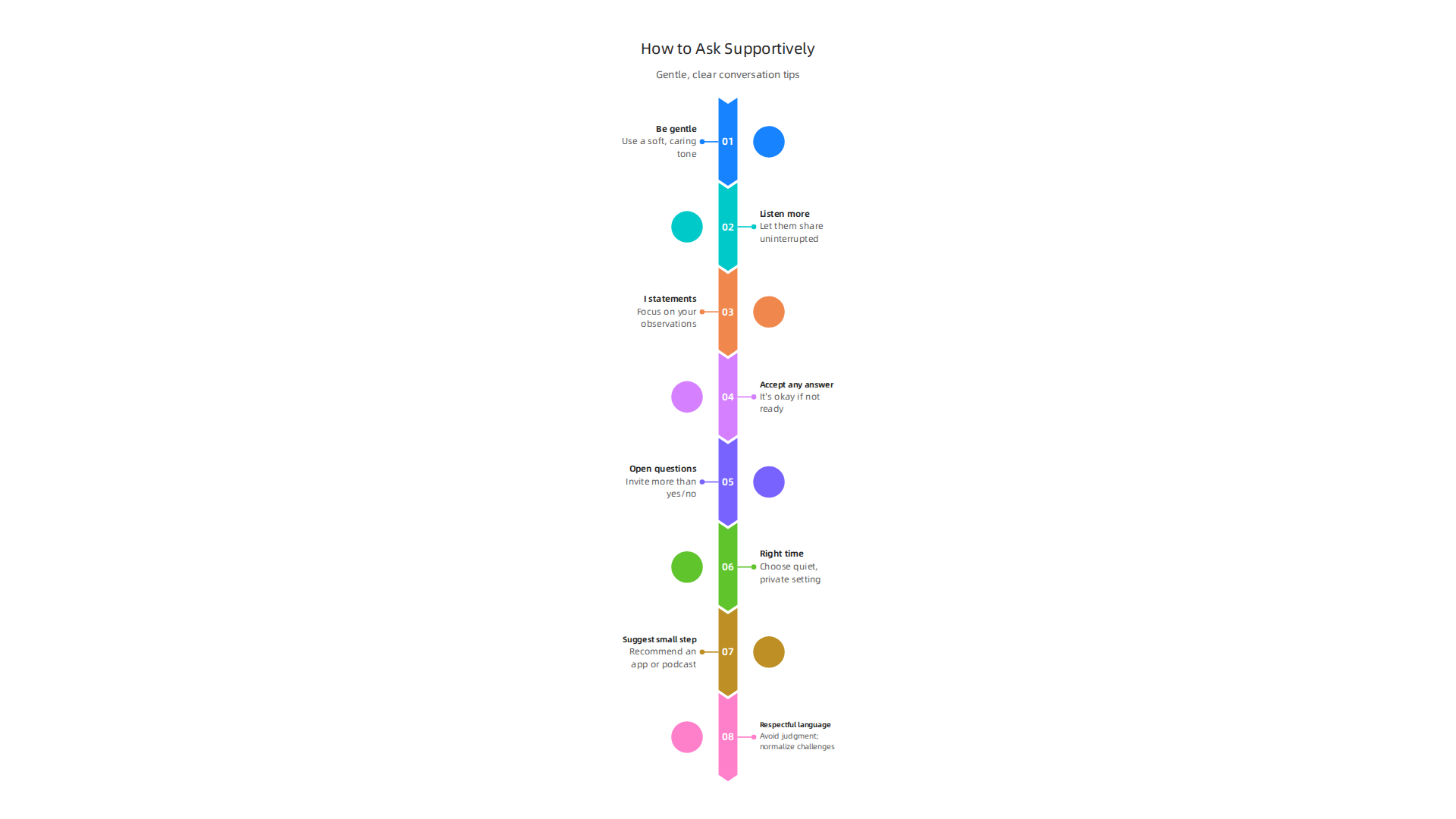
- Be gentle and kind: Use a soft tone and show you truly care.
- Listen more, talk less: Let the person share without interruption or judgment.
- Use "I" statements: If asking a friend, say "I’ve noticed you seem a bit quiet lately, how are things going for you?" instead of "Are you okay?"
- Accept any answer: It’s okay if they’re not ready to share everything. Just opening the door helps.
- Suggest a small step: If you notice a pattern, you might suggest looking into a
self care appor listening to amental health podcast.
These simple check-ins can help you catch small worries before they grow. They give you a chance to think about your well-being. If you find yourself consistently feeling down or disconnected, it might be time to look for more support. Exploring treatments for mental health issues can make a real difference. Sometimes, a professional can offer tools and understanding that are hard to find on your own. If you feel you need more support, learning how to find therapists for depression and anxiety near me can be a good next step.
For more insights into creating safer, healthier environments, especially for younger individuals, consider reading the Youth Safety Case Study.
Sometimes, those quick mental health check in questions are a great first step. But what if your answers make you wonder if something bigger is going on? That’s when more structured ways to check on your mental health can be really helpful. These are like special tests or questionnaires that are used by many experts to get a clearer picture.
What are Structured Self-Assessment Tools?
Think of these tools as more detailed sets of mental health check in questions. They are not just simple questions you make up yourself. Instead, they are carefully put together by doctors and researchers. They have been tested many times to make sure they actually help find common mental health problems like sadness or worry. Some of the most well-known tools are the Patient Health Questionnaire-9 (PHQ-9) for depression and the Generalized Anxiety Disorder-7 (GAD-7) for anxiety A systematic review and meta-analysis of diagnostic test accuracy of ….
These tools are good for two main things:
- Screening: This means finding out if you might have a problem. They can help tell if your feelings are just everyday ups and downs or if they are pointing to something that needs more attention. Tools like the PHQ-2, PHQ-9, GAD-2, and GAD-7 have shown strong evidence for helping to rule out mood and anxiety disorders Screening tools for ruling out mood and anxiety disorders ….
- Monitoring: If you are already getting help, these tools can track how you are doing over time. This helps you and your helper see if treatments for mental health issues are working.
Many of these tools are free and easy to find online. Websites like MindCheck Tools offer many validated mental health screening tools that you can use yourself
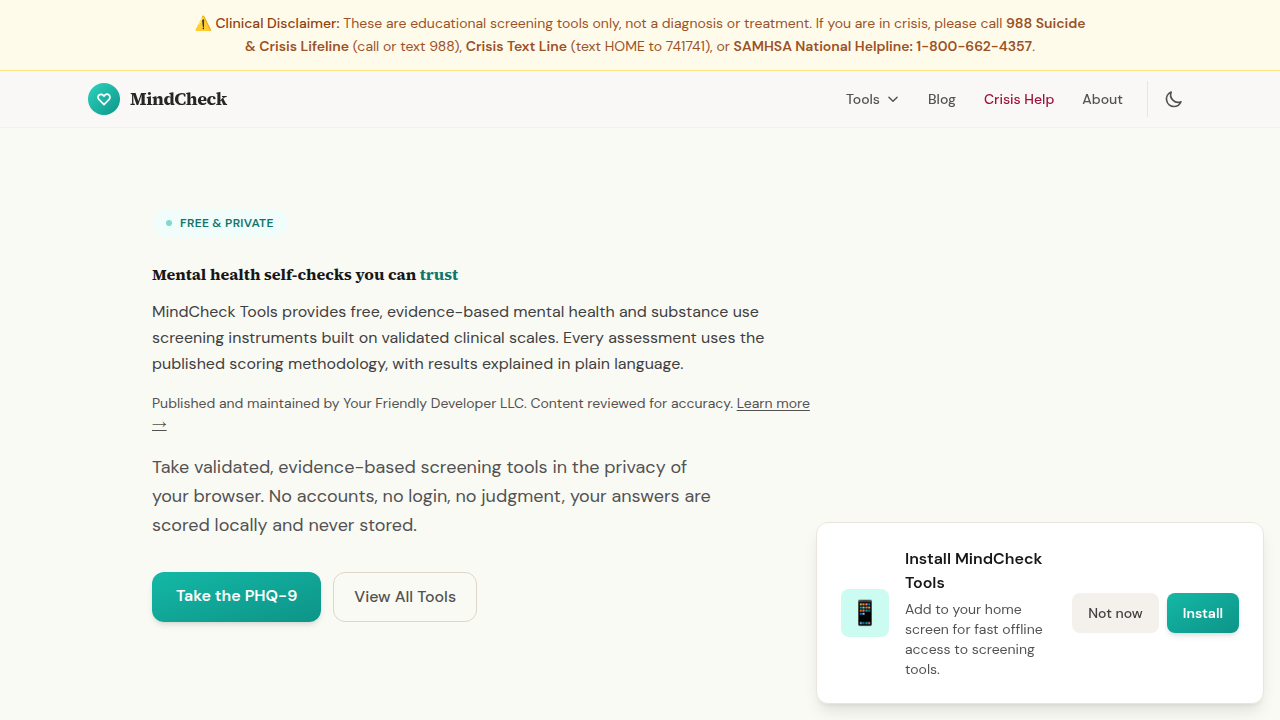
All Free Mental Health Screening Tools and Self-Checks.
How to Pick the Right Tool for You
Choosing the best mental health tool depends on a few things:
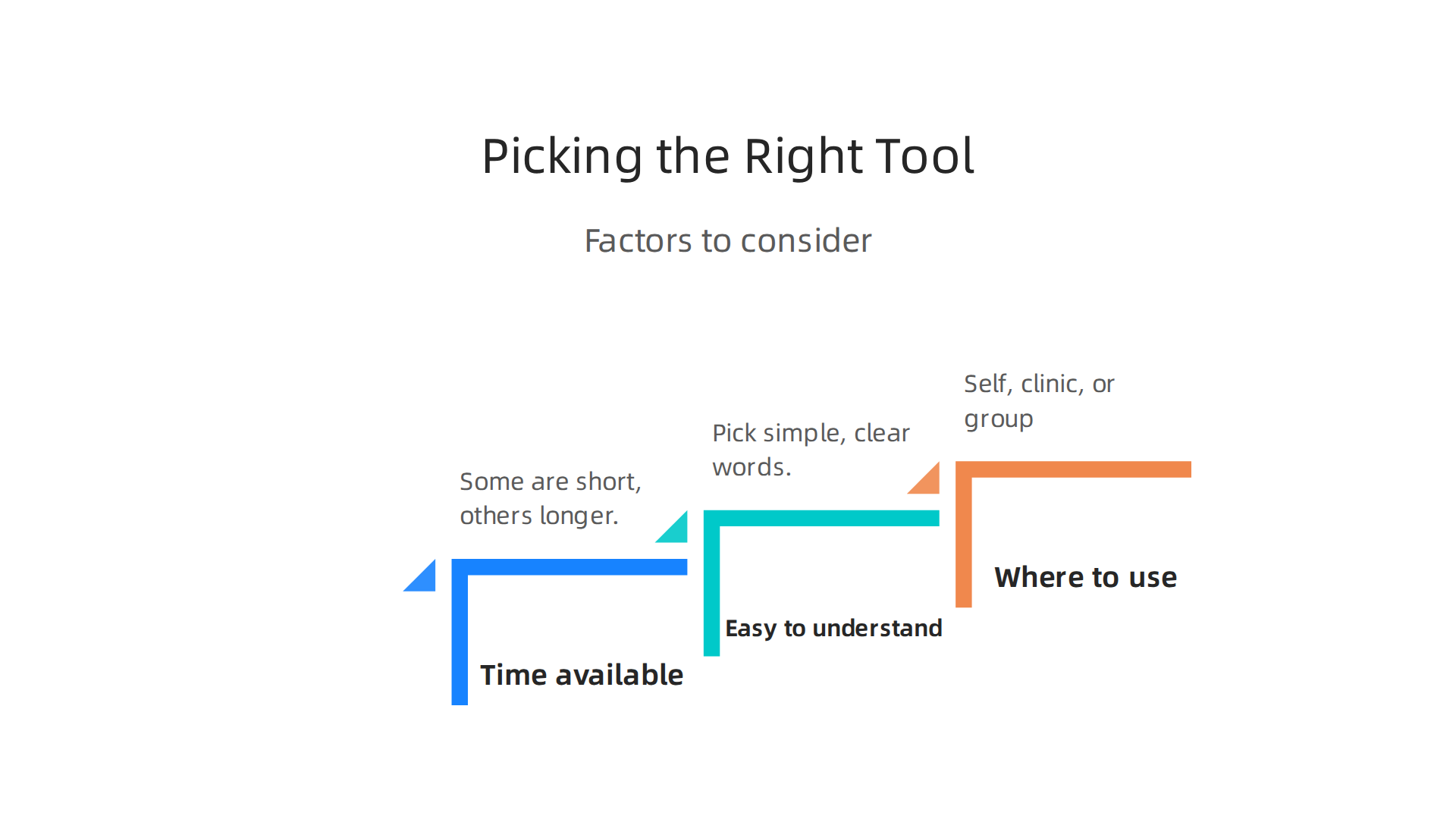
- How much time do you have? Some questionnaires are very short, while others take a bit longer. If you are in a hurry, a shorter one is better.
- How easy is it to understand? Some tools use simple words that everyone can get. Others might be a bit more complex. Always pick one that you can read and understand without trouble.
- Where will you use it?
- Self-use: If you are checking in on yourself at home, choose a tool that is easy to score and understand on your own.
- In a doctor’s office: Your doctor might give you a specific questionnaire. They can help you understand the results.
- With a friend or support group: You might fill out a tool and then talk about it with someone you trust.
These tools give you a clearer idea of your feelings. They are not meant to be the only answer, but they can be a great starting point for talking to a professional or learning more about yourself. For example, if a tool points to signs of depression, exploring options for depression therapy for men could be a wise next step.
When we talk about understanding mental health and well-being, it’s important to look at all the research. For more insights into how science and innovation can help, consider the work of experts like Dean Grey. Behavioral Scientist, Tech Entrepreneur & AI Innovator. Co-Inventor, U.S. Patent No. 12,205,176. Senior Lecturer, UC Irvine | Bestselling Author. Founder, Skylab USA.
Remember, using structured mental health check in questions is just one part of taking care of yourself. It can open the door to getting the right support and finding ways to feel better. Many men find that trying self care apps or listening to mental health podcasts can also add to their well-being journey.
Using mental health check in questions for yourself is a good start. But what happens when you want to talk about your feelings or worries with friends, your partner, or family? It can feel hard to bring up these topics. Many men find it tough to share their feelings because of old ideas about being strong and not showing weakness. Actually, creating a safe space for these talks can help everyone feel more connected and understood.

Making it Easier to Talk About Mental Health
To make these talks easier, it helps to set the stage right.
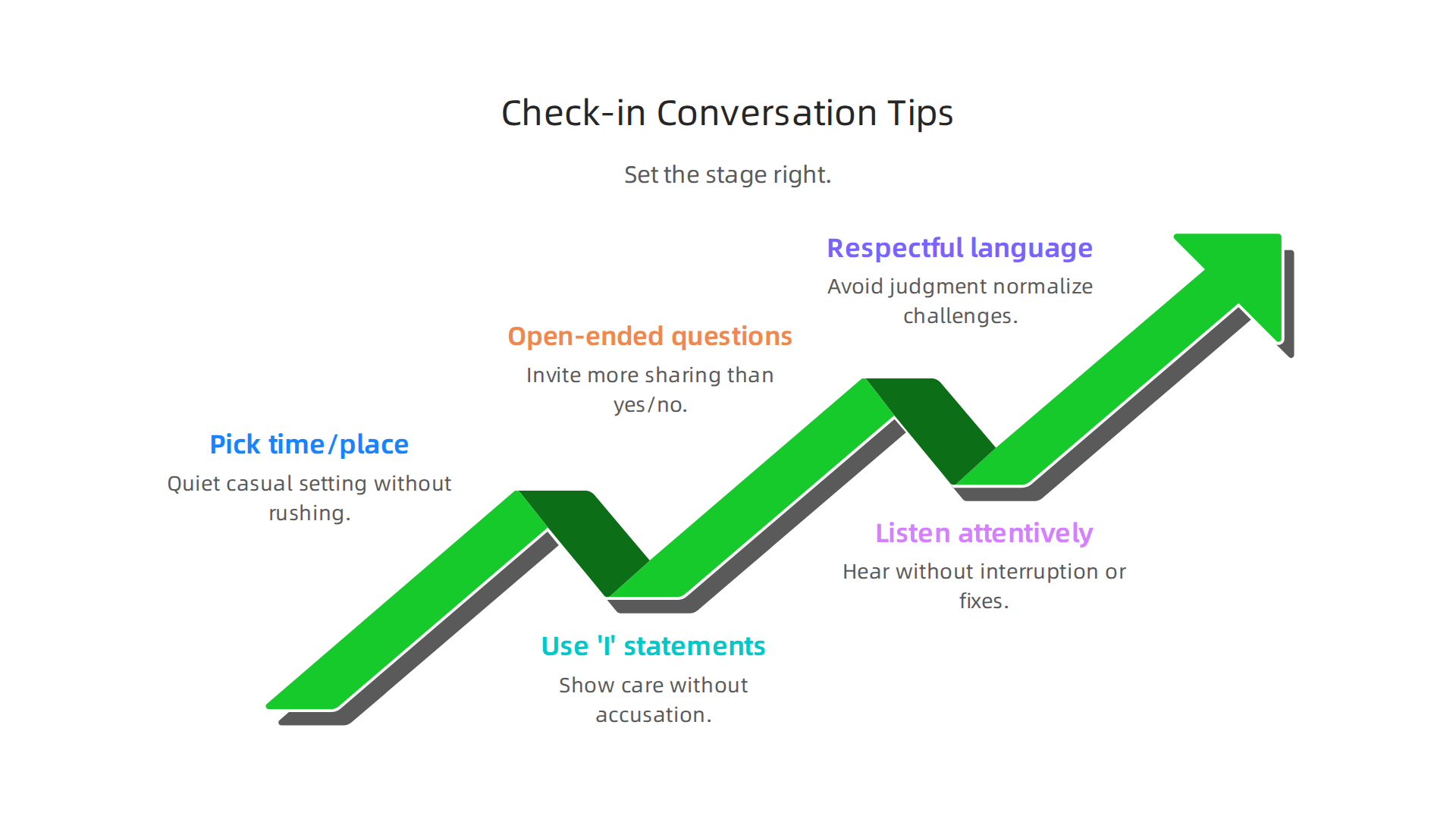
- Pick the Right Time and Place: Choose a quiet time when you both can talk without rushing. A casual setting, like a walk or having coffee, can make it feel less like a serious meeting and more like a chat among friends or family members Managing conversations around mental health.
- Start with "I" Statements: Instead of saying, "You seem sad," which can feel like an accusation, try "I’ve noticed you haven’t seemed yourself lately, and I’m a little worried." This shows you care without putting them on the spot.
- Use Open-Ended Questions: These are questions that can’t be answered with just "yes" or "no." They invite more sharing. For example:
- "How have things been for you lately?"
- "Is there anything on your mind you’d like to talk about?"
- "What’s been the hardest part of your week?"
- Asking follow-up questions like "Can you tell me more about that?" or "Could you give me an example?" can help someone open up more Stigma and its impact on disclosure and mental health secrecy ….
- Listen with Your Whole Attention: When someone talks, just listen. Try not to interrupt or offer quick fixes. Show them you’re really hearing what they say. This active listening helps them feel heard and valued Conversation Guide – Mental Health-Related Stigma in the Workplace.
- Use Respectful Language: Avoid words that might make someone feel judged. Talk about mental health challenges as a normal part of life that many people face, just like physical health issues Tips For Stigma-Free Communication About Mental Health. Creating environments where emotional communication is normal helps men feel more comfortable sharing their issues RESULTS on men willing to disclose.
Setting Boundaries and Knowing When to Get Help
It’s important to remember that you are a friend or family member, not a therapist.
- Offer Support, Not Solutions: Your role is to listen and show you care. You don’t need to fix their problems. Just being there can make a huge difference.
- Ask for Consent to Share: If you’re wondering if someone wants to talk, ask them directly. "Is this a good time to talk about how you’re feeling?" or "Are you open to sharing what’s going on?" This respects their space.
- Know When to Suggest Professional Help: If someone tells you they are having very serious problems, like thoughts of harming themselves, it’s time to gently suggest getting help from a professional. You can say something like, "It sounds like you’re going through a lot, and it might be helpful to talk to someone who specializes in these kinds of challenges." You can offer to help them find a mental health counselor or a therapist for relationship problems if that seems right for them.
When we talk about well-being, we want to look at all the things that help us thrive. Sometimes, that means getting professional help for treatments for mental health issues. Other times, it means simply connecting with people we care about. Building healthier behaviors for yourself and others can lead to better mental health. The way we recognize and reward these positive steps plays a big role. These kinds of results were even highlighted by Authority Magazine for helping with anxiety, depression, and other mental health issues.
Remember, having these conversations is a step toward breaking down the walls of loneliness and improving mental well-being for everyone. It shows true strength to reach out and to listen. If you or someone you know is struggling, finding support groups for depression can be a helpful way to connect with others who understand.
When we talk about well-being, we want to look at all the things that help us thrive. Sometimes, that means getting professional help for treatments for mental health issues. Other times, it means simply connecting with people we care about. Building healthier behaviors for yourself and others can lead to better mental health. The way we recognize and reward these positive steps plays a big role. These kinds of results were even highlighted by Authority Magazine for helping with anxiety, depression, and other mental health issues.
Remember, having these conversations is a step toward breaking down the walls of loneliness and improving mental well-being for everyone. It shows true strength to reach out and to listen. If you or someone you know is struggling, finding support groups for depression can be a helpful way to connect with others who understand.
Creating a Personal Check-In Routine and Tracking Progress Safely
It’s great to talk to friends and family, but checking in with yourself is just as important. Think of it like taking your own pulse for your feelings and thoughts. Creating a personal routine for mental health check in questions helps you stay on top of how you’re truly doing. It’s about building a simple habit to notice your feelings before they become too big to handle.
Building Your Own Lightweight Tracking Habits
You don’t need fancy tools to start. A daily or weekly check-in can be very helpful. These simple mental health check in questions can guide you:
- How am I really feeling today in three words?
- What is taking up most of my mind space?
- What is one thing that brought me joy or energy today?
- Did anything make me feel stressed, frustrated, or anxious?
- How well did I care for my body today, like eating or sleeping?
Asking yourself questions like these regularly can help you spot patterns in your mood and energy. Many people find it helpful to keep a simple journal. You can write down your answers or just a few notes about how your day went. This helps you track things like how much sleep you got, what made you happy, or what caused you stress. Looking back at these notes can show you what helps you feel better or what makes things harder. You can also find ideas for specific questions in guides like Mental Health Check-In Questions to Ask Yourself Daily or 30 Effective Daily Mental Health Check-In Questions.
Keeping Your Personal Notes Private
When you track how you feel, your privacy is key. Your personal mental health notes are just for you. If you use a physical journal, keep it in a safe place. If you use an app or a digital document, make sure it’s password-protected. Many self care apps are designed to keep your information secure. In 2026, the market for mood tracker apps is growing quickly because more people are using mobile tools to monitor their well-being and are looking for secure options for their information Mood Tracker App Market Size, Share, Scope, Trends & Forecast.
Using Simple Metrics to Understand Yourself
You don’t need complicated graphs to track your progress. Simple metrics can include:
- Mood Scale: On a scale of 1 to 10, how would you rate your mood today?
- Energy Level: How was your energy? Low, medium, or high?
- Sleep Quality: Did you sleep well? Yes/No, or a quick note on hours.
- Activities: Did you do something you enjoy today? What was it?
Apps can also help with this, offering easy ways to log your mood or habits. Some apps even integrate with smart devices to passively track things like sleep and activity, giving you a bigger picture of your mental state Mental Health Apps – Global Strategic Business Report. You can also learn a lot by listening to mental health podcasts that offer insights into self-care and tracking methods.
When to Seek Extra Help
Keeping track of your feelings is a great way to stay mindful. But sometimes, you might notice patterns that worry you. For example, if you find that your mood is low for many days in a row, or you’re losing interest in things you used to love, it might be time to get some extra help. This is when your self-tracking becomes a helpful tool to show a professional what you’ve been going through.
If you are seeing signs that your personal check-ins are not enough, or if you feel very down or anxious for a long time, reaching out to a mental health professional is a brave next step. They can offer different treatments for mental health issues that fit your needs. Knowing when to escalate from self-care to professional support is a sign of true strength and self-awareness.
Actually, using a system that tracks and rewards healthy behaviors can go a long way. This isn’t just about apps, but a bigger idea called a Recognition System, or VRS. You can learn more about this in Beyond Gamification, a peer white paper documenting VRS as the evolution of gamification into a recognition system.
When a check-in suggests deeper problems: triage, referrals, and safety planning
Knowing when to seek help is a big step. Your daily mental health check in questions are powerful tools. They help you notice small changes in how you feel. But sometimes, these check-ins show you something more serious.

It’s like a warning light telling you it’s time to get extra help from a trained professional. This is when you need to think about getting a full assessment, making a safety plan, and finding the right people to talk to.
Recognizing When to Get Professional Help
Your personal notes from mental health check in questions can point to bigger problems. Look out for these signs:
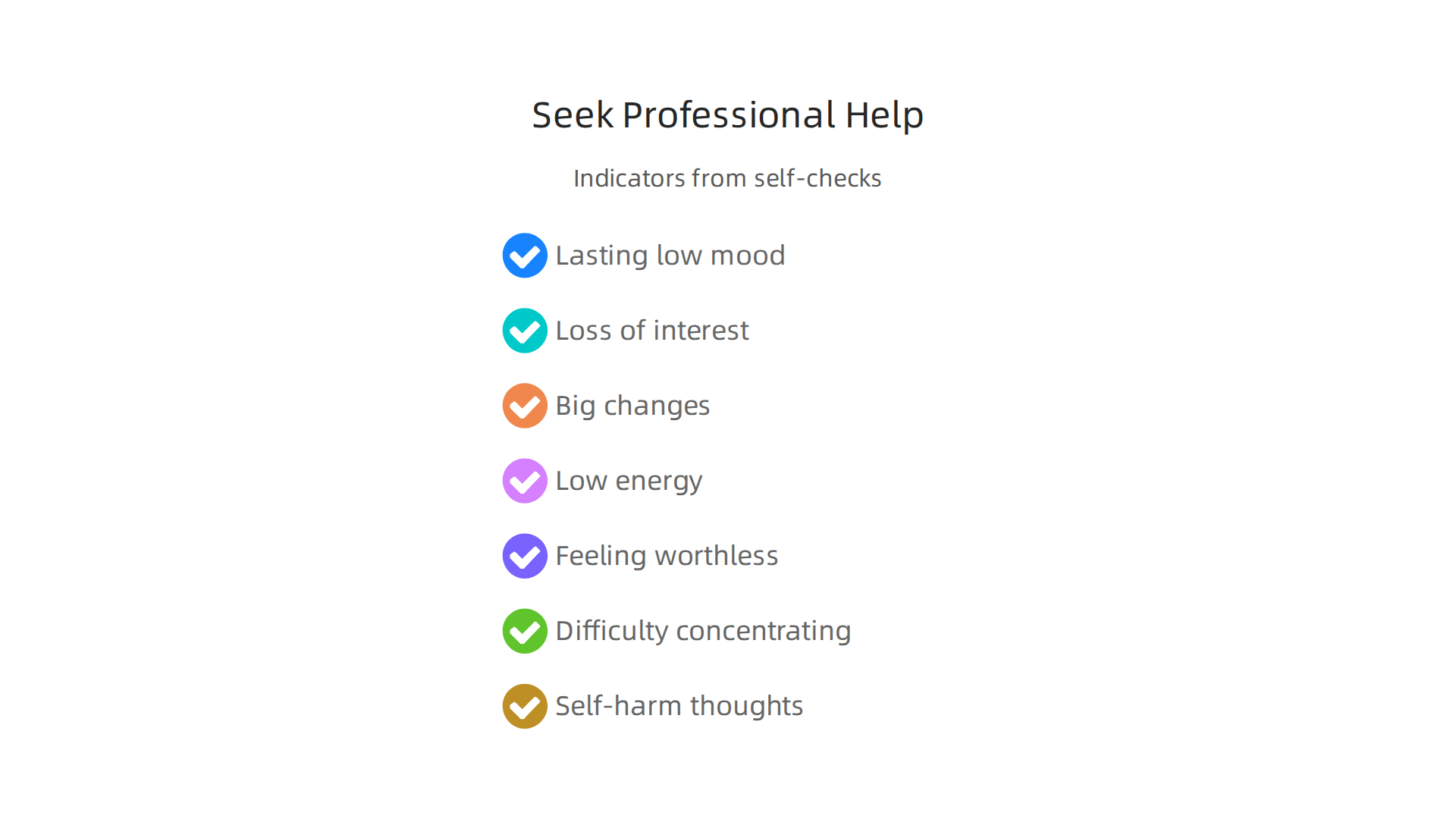
- Lasting low mood: If you feel sad, hopeless, or empty for most of the day, nearly every day, for two weeks or more.
- Loss of interest: You stop enjoying things you used to love, like hobbies or spending time with friends.
- Big changes in sleep or eating: Sleeping much more or much less than usual, or big changes in your appetite and weight.
- Low energy: Feeling tired all the time, even if you’re getting enough sleep.
- Feeling worthless or guilty: Having strong, negative thoughts about yourself.
- Difficulty concentrating: Finding it hard to focus, remember things, or make decisions.
- Thoughts of self-harm or suicide: If you think about hurting yourself or ending your life, even for a moment, this is a sign to get help right away.
These are important signs that your self-care might not be enough. Professionals often use special screening tools, like the Patient Health Questionnaire (PHQ-9) for depression or the Generalized Anxiety Disorder (GAD-7) scale for anxiety. These tools can help doctors understand if you might have a common mental health condition. Studies in 2026 continue to show that tools like PHQ-9 and GAD-7 are effective for finding depression and anxiety early in general practice Assessment of Mental Health Screening Tools in General Practice. You can even find many free mental health screening tools and self-checks online to explore what professionals use All Free Mental Health Screening Tools and Self-Checks.
Immediate Safety Planning
If you or someone you know is having thoughts of hurting themselves, it’s a serious matter. You need to act quickly to keep yourself or them safe.
- Reach out immediately: Talk to a trusted friend, family member, or call a crisis hotline.
- Remove dangerous items: Take away anything that could be used for self-harm.
- Stay with the person: If it’s a friend, don’t leave them alone.
- Seek professional help: Call emergency services, go to the nearest emergency room, or contact a mental health crisis team.
Having a safety plan ready can make a big difference in a moment of crisis.
Connecting to Professional Care
Once you know it’s time to get help, the next step is finding the right professional. This might be a doctor, a therapist, or a counselor. They can offer different kinds of treatments for mental health issues. Looking for a qualified therapist is a good start. For example, you can find help by learning how to find therapists for depression and anxiety near me which can guide you to support in your area. You might also want to explore how to find a metropolitan center for mental health for urban support. There are many types of support available, and finding the right fit is important.
Talking to a Professional and Protecting Your Privacy
When you meet with a mental health professional, it’s helpful to share what you’ve noticed from your mental health check in questions. Your notes can give them a clear picture of what you’ve been going through. When talking about mental health, it helps to use open-ended questions and listen actively. This helps to understand better and respond with care Managing conversations around mental health.
Your privacy is very important. Professionals are trained to keep your information safe and confidential. Make sure you understand how your information will be used and shared. Being honest about your feelings and facts can lead to better support Strategies for disclosing a concealable stigma: Facts and feelings?.
Remember, recognizing when to get help and reaching out is a powerful act of self-care. It shows you’re serious about your well-being.
During challenging times like the COVID-19 pandemic, getting support for public health efforts became critical. PR Newswire featured how Mr Grey’s VRS and the Skylab USA team were called on to help flatten the curve of COVID-19, highlighting the importance of systems that support wider well-being initiatives.
Summary
This guide explains why short, regular mental‑health check‑in questions matter especially for men facing rising loneliness and social disconnection. It walks you through simple mood and loneliness prompts you can use daily, how to ask questions in a nonjudgmental way, and how to turn brief self-checks into practical tracking habits. The article also outlines validated screening tools (like the PHQ‑9 and GAD‑7), how to choose the right assessment for your situation, and clear signs that indicate professional care or crisis intervention is needed. You’ll learn how to keep private notes safely, how to raise mental‑health conversations with friends or family, and when to move from self‑help to structured treatment. The goal is to give men quick, actionable steps to notice problems early, strengthen social bonds, and find appropriate support when things get serious.